 E-mail alert
 Rss
Rss



Groundwater quality evaluation for irrigation using irrigation water quality indexes under GIS framework in Aksum Area, Northern Ethiopia
-
Abstract: This study evaluates the suitability of irrigation water in the semi-arid region of Aksum, northern Ethiopia. An integrated approach combining the Irrigation Water Quality Index (IWQI) and ArcGIS-based spatial analysis was applied to assess the spatial variability of irrigation water quality. Twenty-five groundwater samples were collected and analyzed for key physicochemical parameters and heavy metals using standard laboratory techniques. Exceedances of recommended irrigation water limits were recorded for magnesium (16%), nitrate (32%), salinity hazard (12%), total dissolved solids (20%), total hardness (60%), residual sodium carbonate (16%), kelly index (4%), and magnesium ratio (32%). Based on the Irrigation Water Quality Index (IWQI), 36% of the samples fell under high restriction, 32% under moderate restriction, 24% under severe restriction, and 8% under low restriction for irrigation use. Although most of groundwater sources are suitable based on individual water quality parameters, the IWQI indicates that a significant portion of samples requires restricted use for irrigation. This highlights the need for targeted groundwater management strategies to mitigate localized risks associated with salinity and sodicity. The integrated IWQI-GIS approach demonstrated in this study is readily transferable to other arid and semi-arid regions, providing a robust tool for sustainable irrigation management and climate-resilient agricultural planning.
-
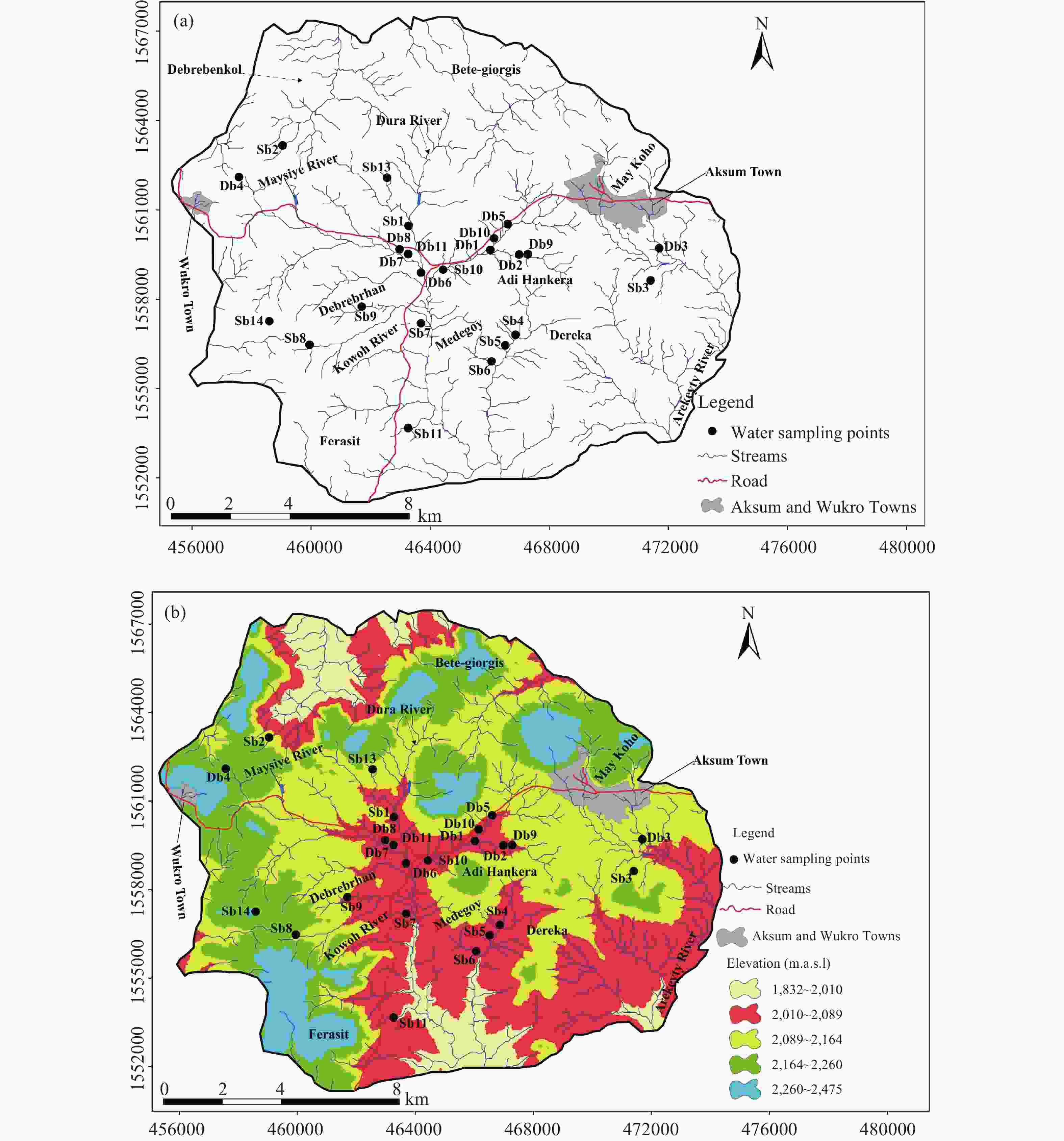
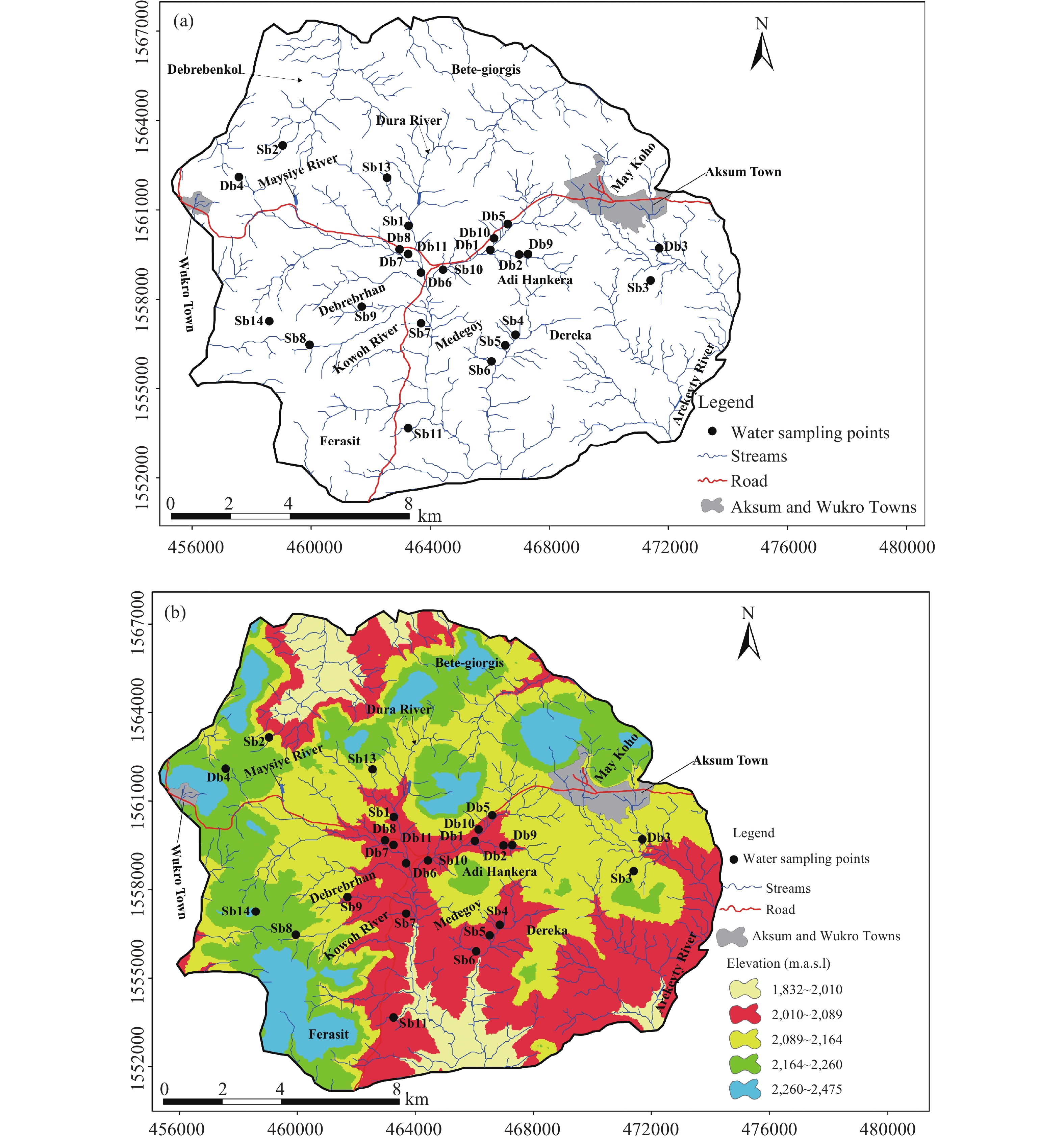
Figure 1. Location and physiographic map of the study area
(a) Study area showing groundwater sampling points, streams and other water bodies; (b) Physiographic map of the study area.
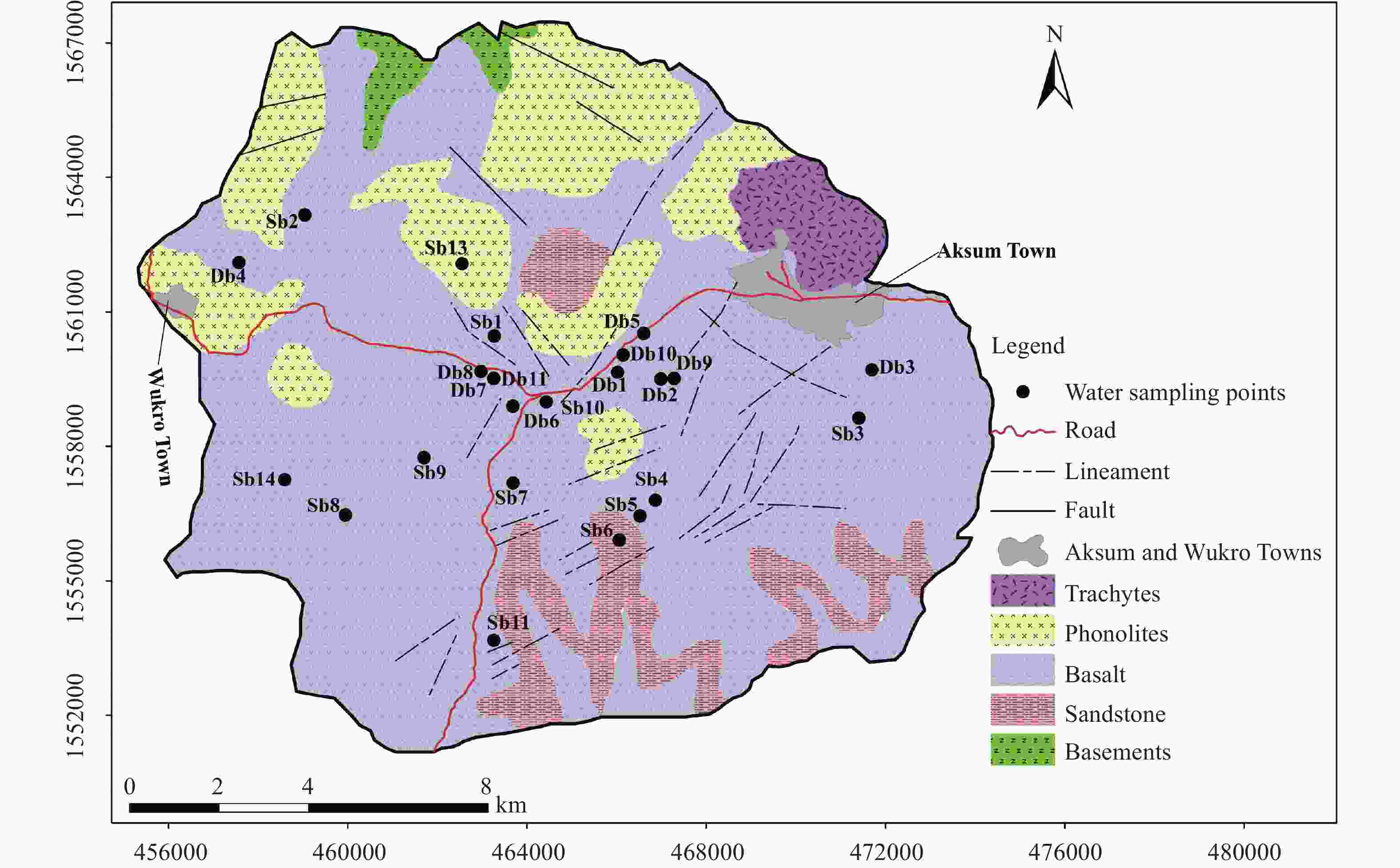
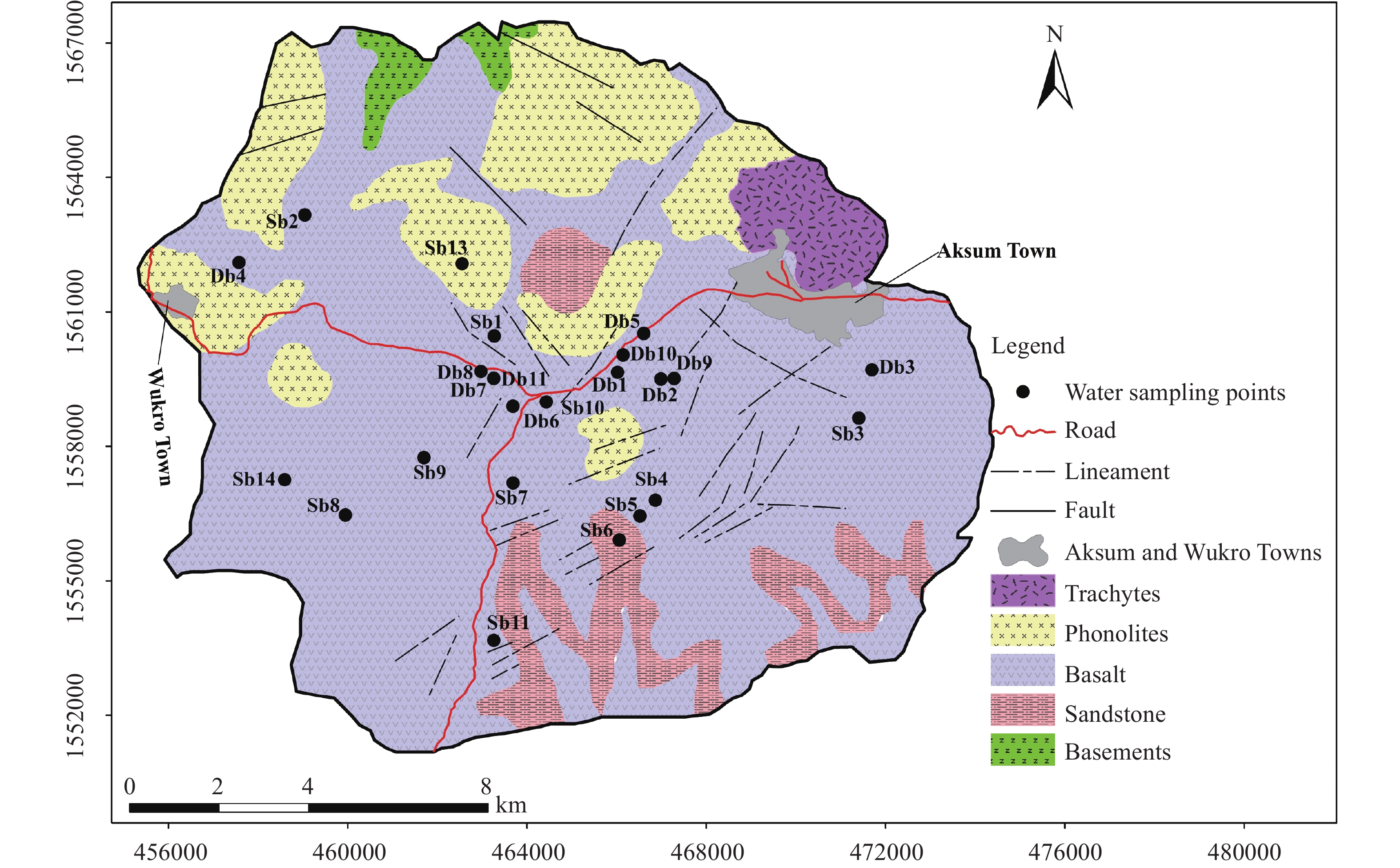
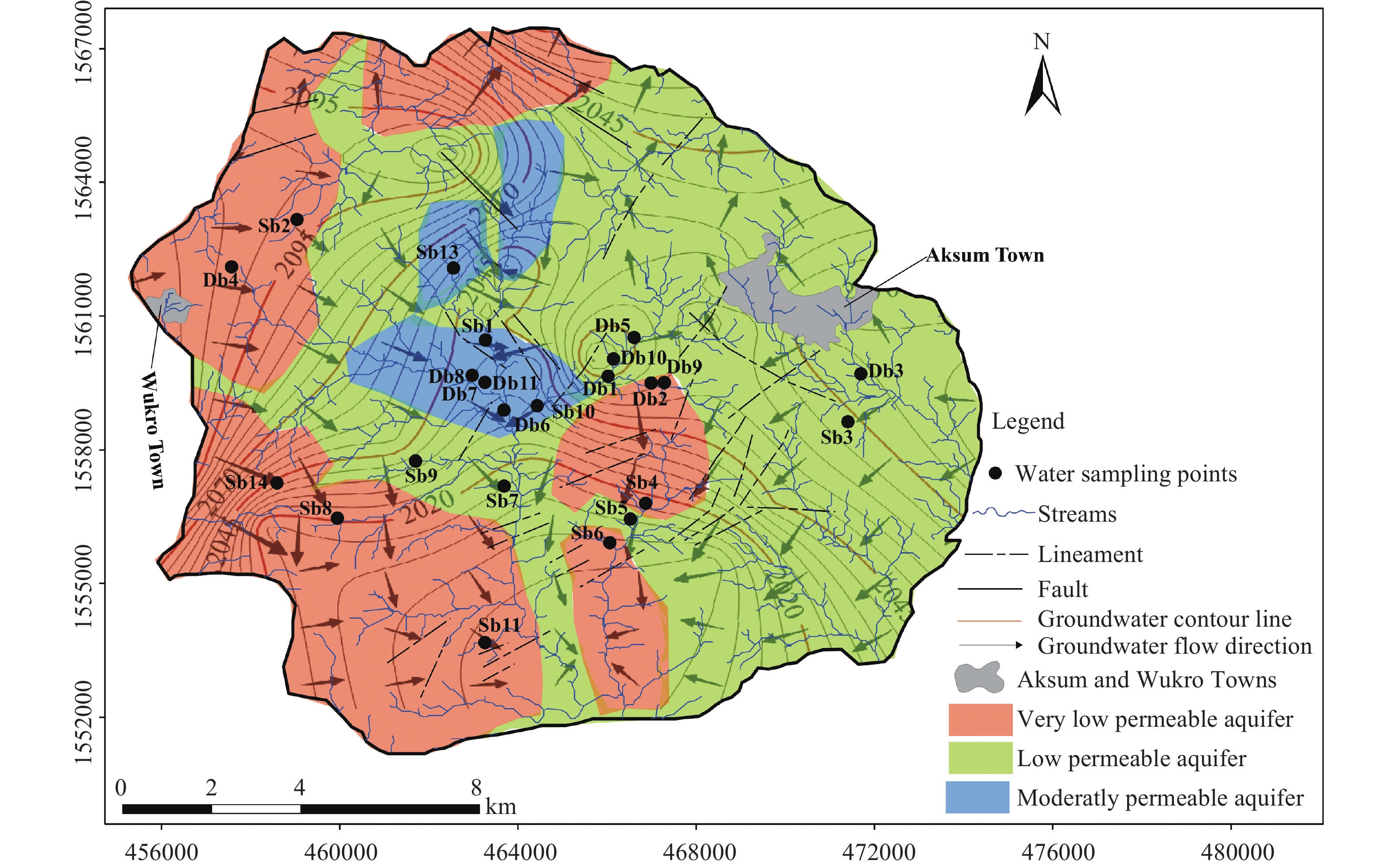
Figure 4. Geological map of the study area with sampling points and major geological structure
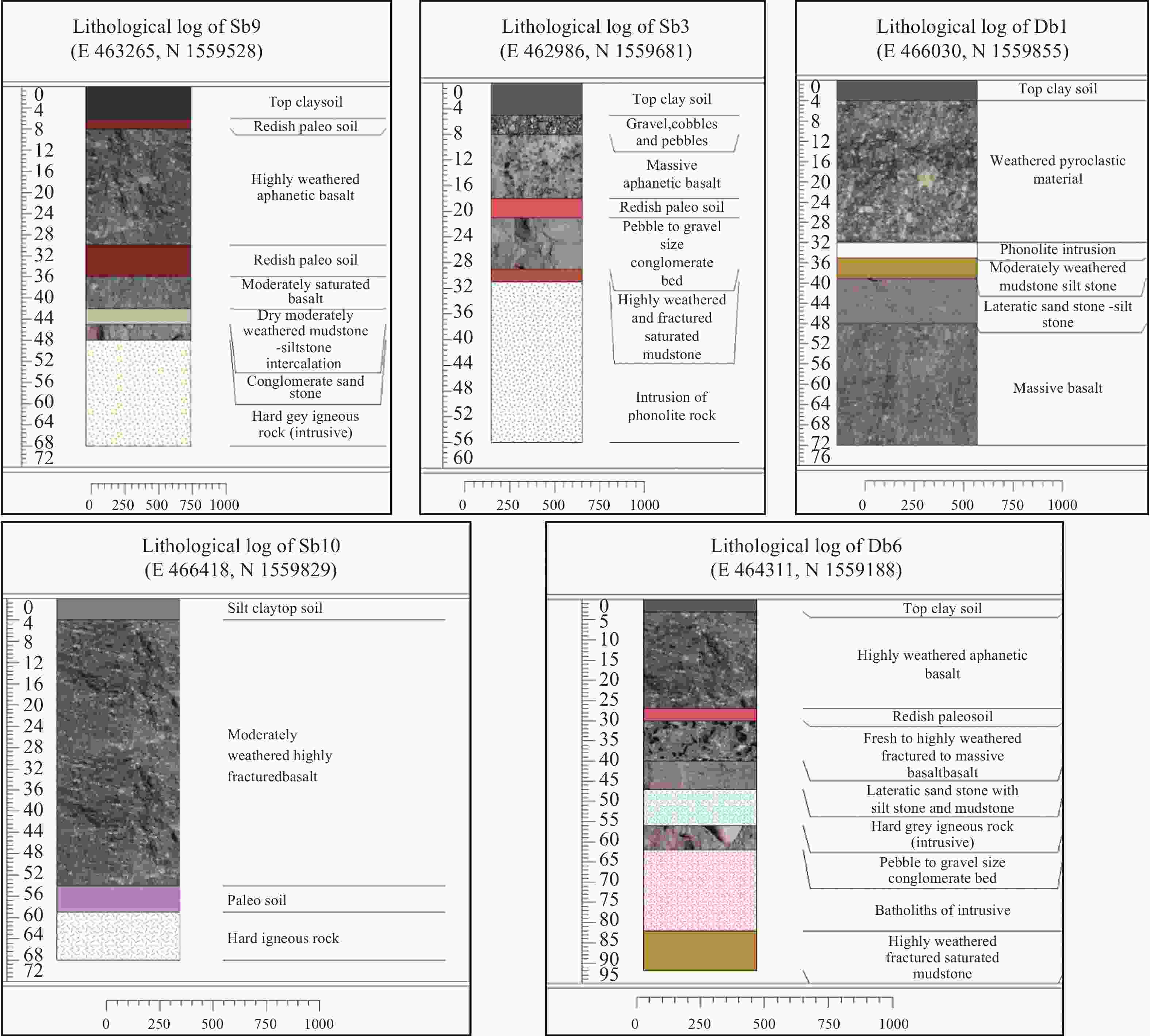
Figure 6. Borehole log of selected areas with borehole samples (Sb9, Sb3, Db1, Sb10 and Db6)
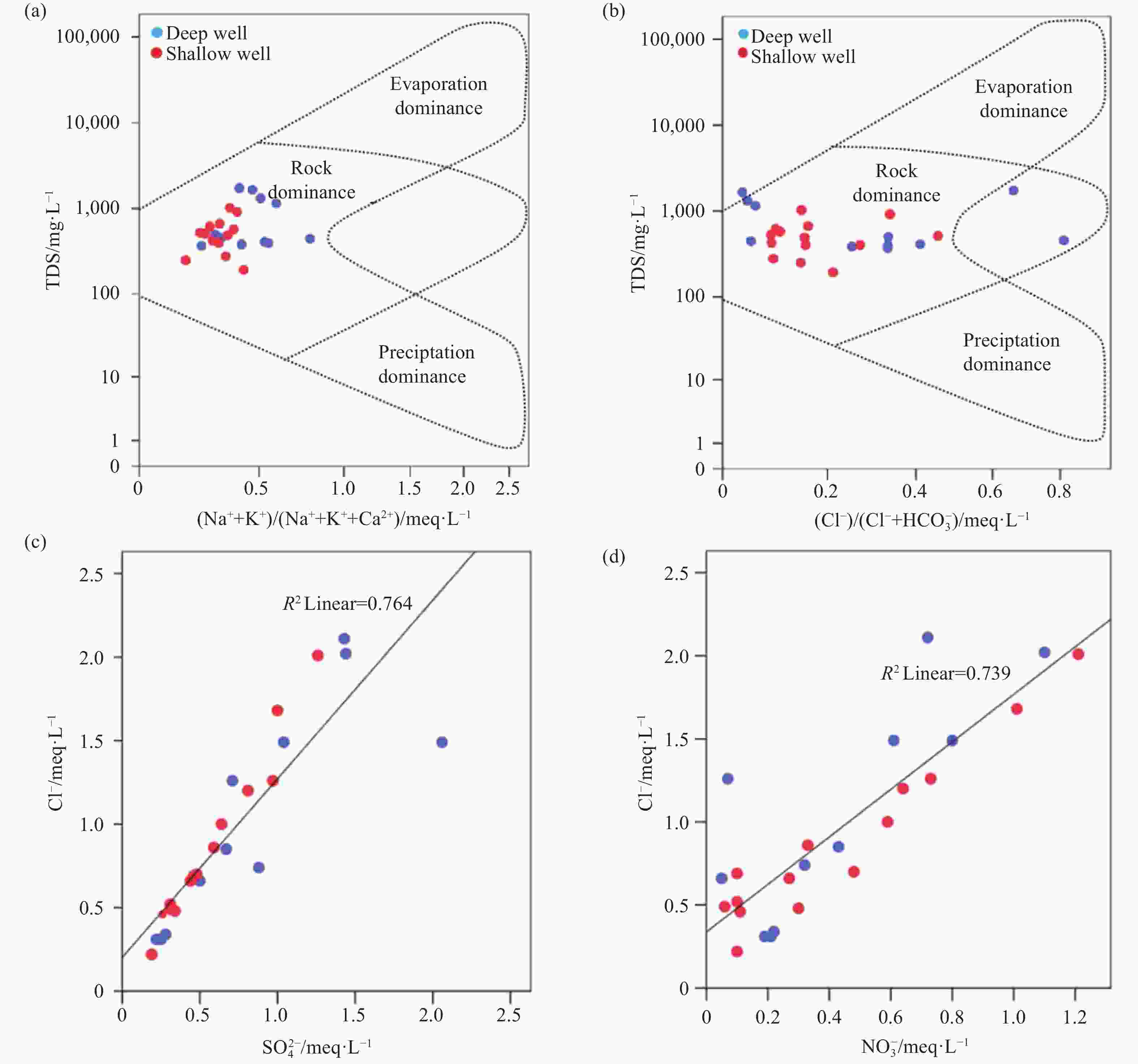
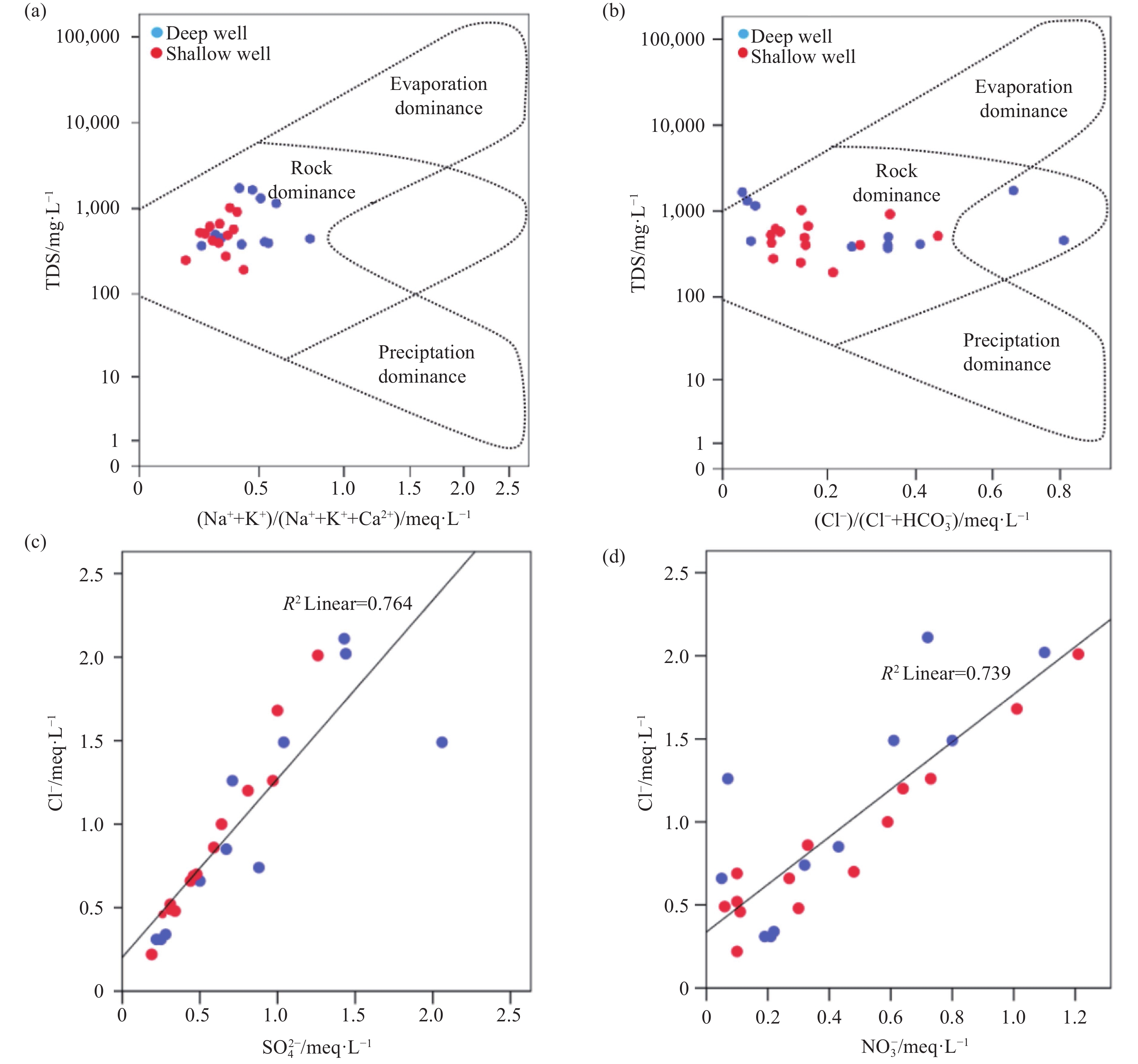
Figure 7. Diagrams illustrating the mechanisms controlling groundwater chemistry
(a, b) Gibbs diagrams showing the mechanisms controlling groundwater chemistry; (c) Scatter diagram of Cl− against SO42−; (d) Scatter diagram of Cl− against NO3−.
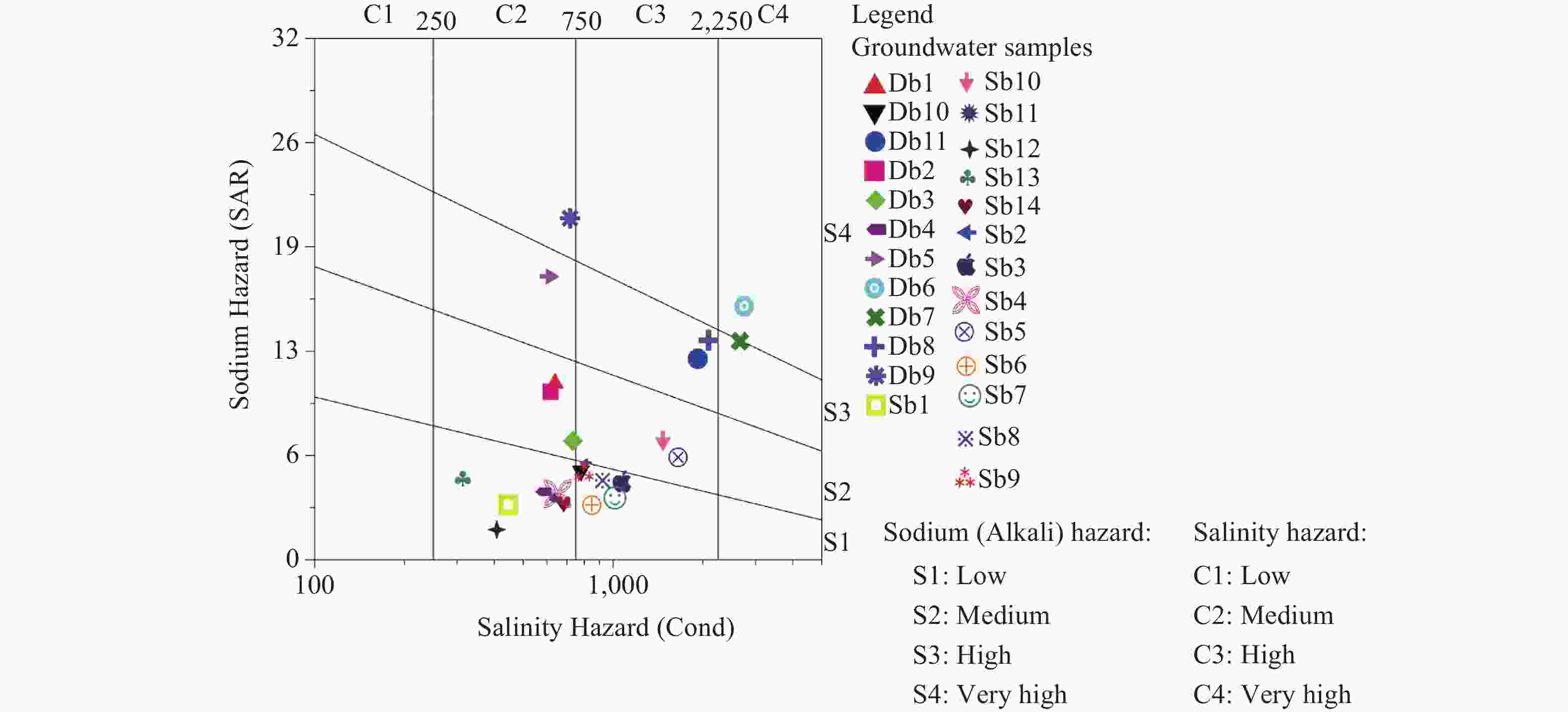
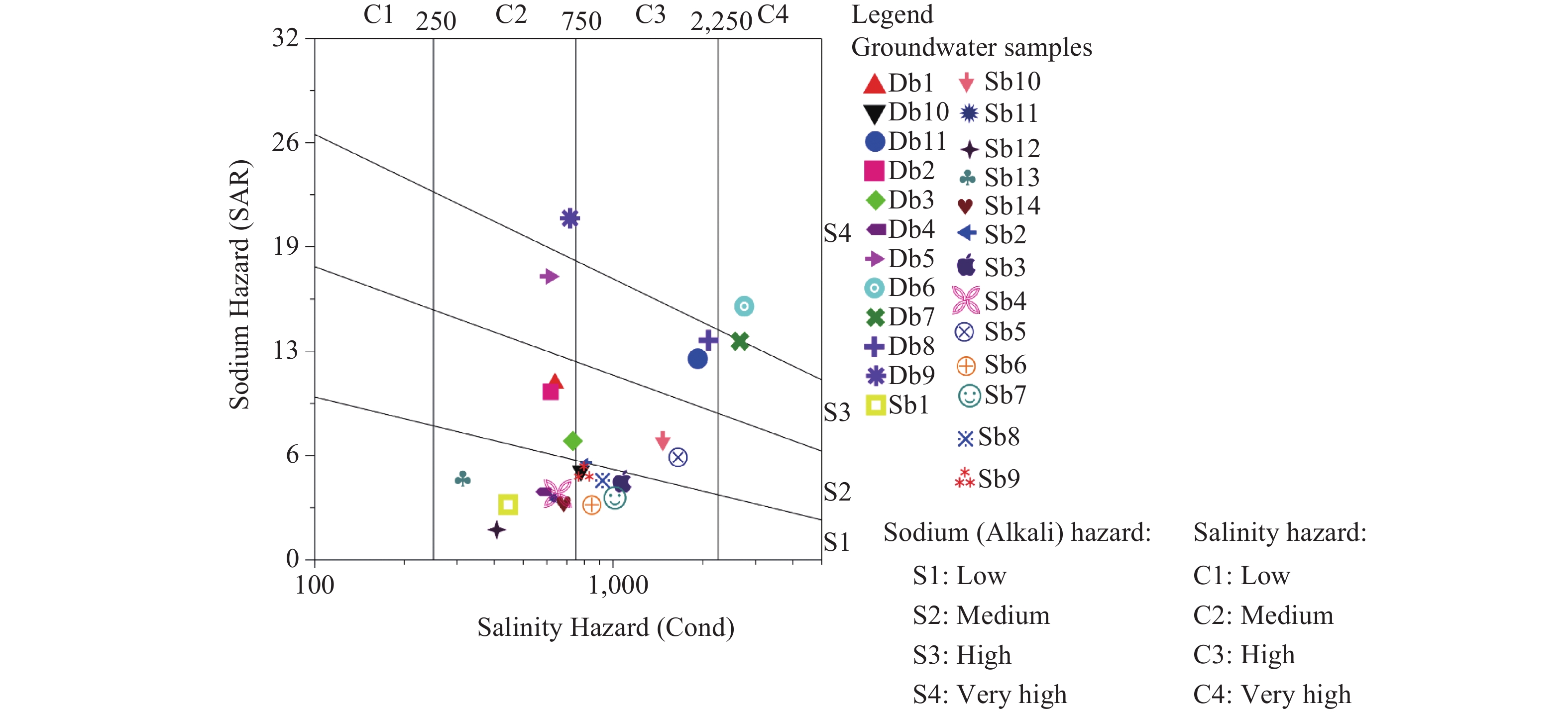
Figure 9. Classification of water samples based on salinity (EC) and sodium hazard (according to Wilcox, 1955)
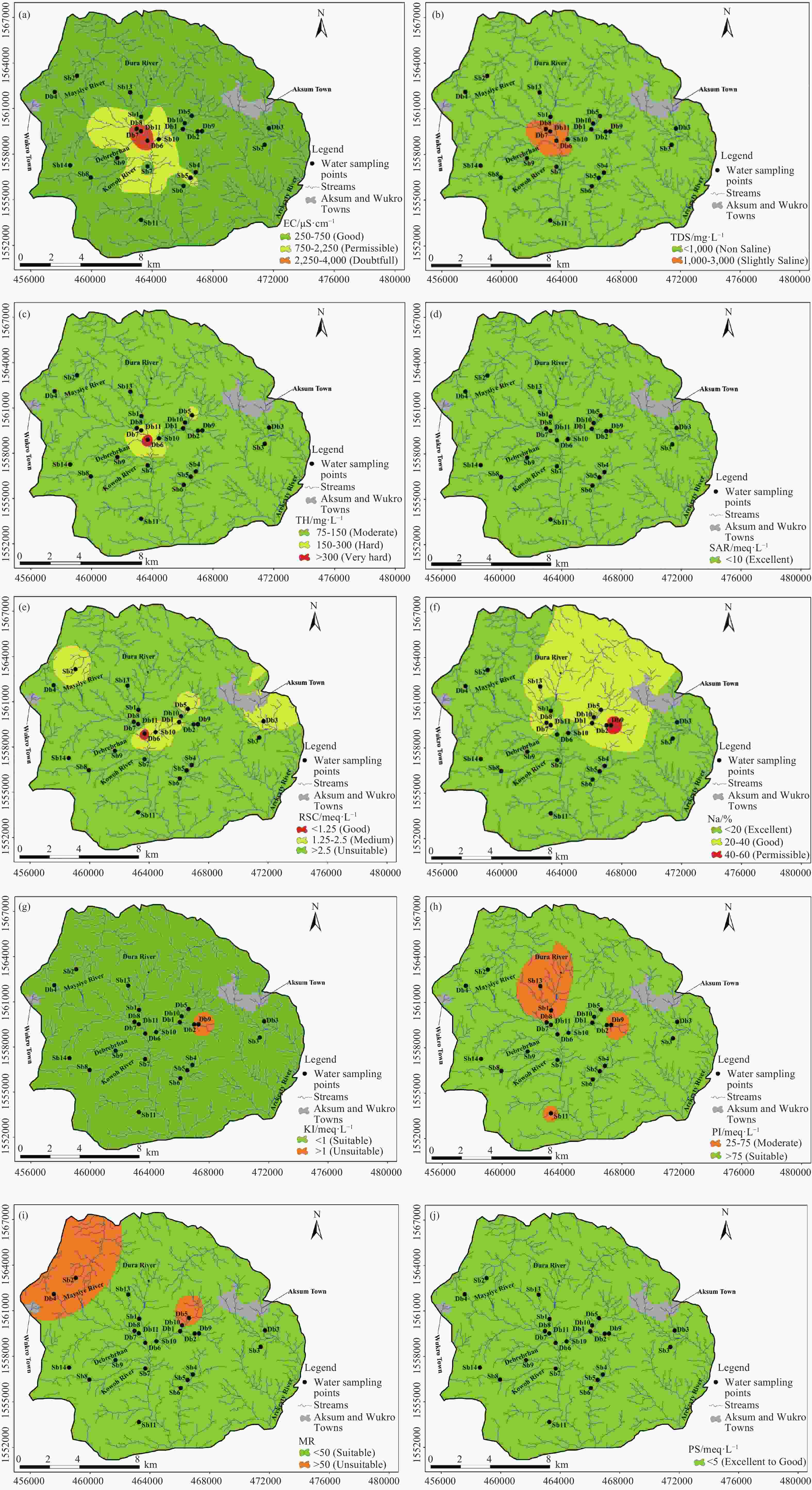
Figure 10. Spatial distribution of irrigation water quality parameters in the study area
Notes: Including electrical conductivity (EC), total dissolved solids (TDS), total hardness (TH), sodium adsorption ratio (SAR), residual sodium carbonate (RSC), sodium percentage (Na%), Kelly index (KI), permeability index (PI), magnesium ratio (MR), and potential salinity (PS). The corresponding classification criteria and suitability classes are indicated in the legend.
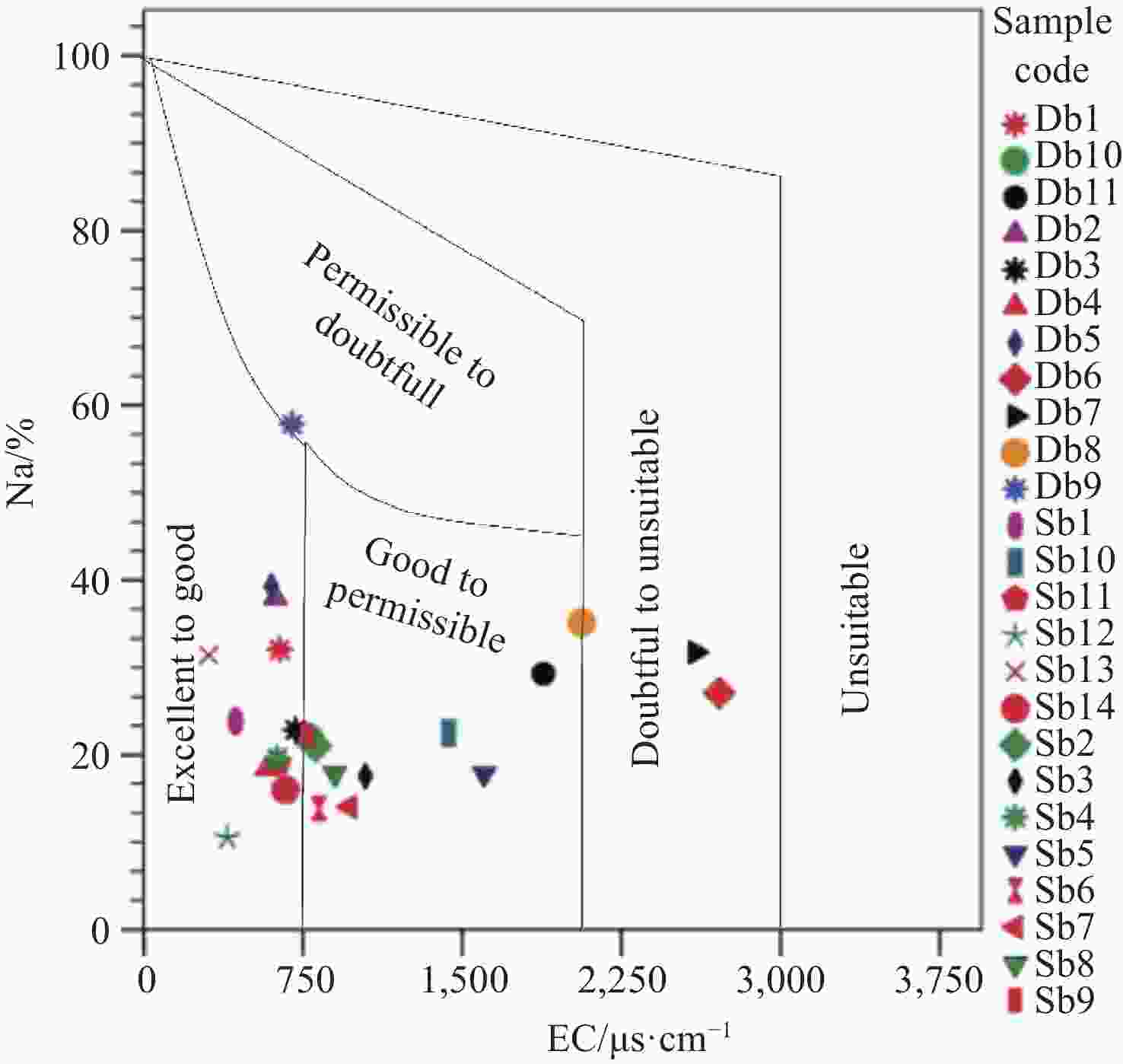
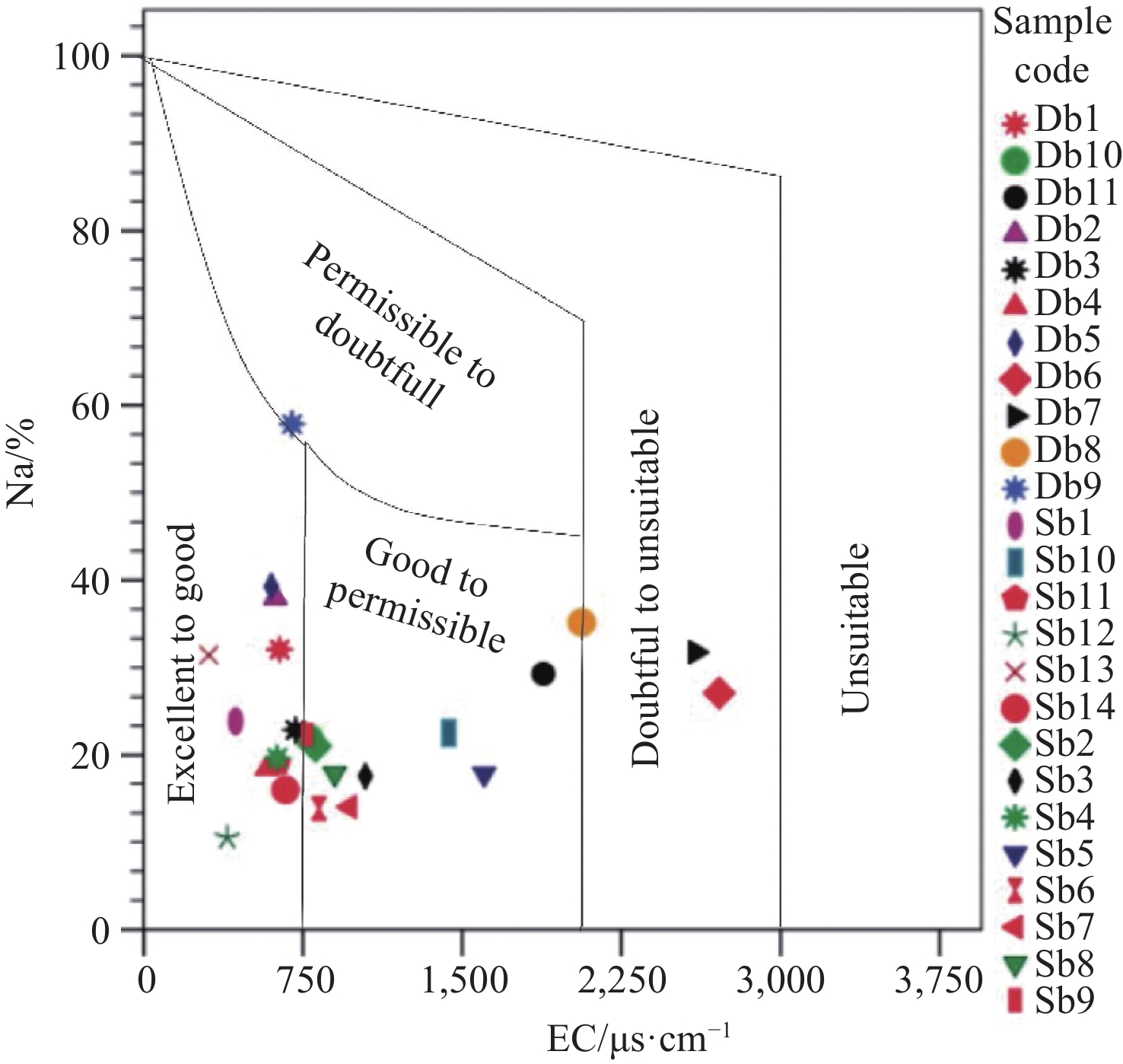
Figure 11. Wilcox's (1955) diagram showing the relation between sodium percent and salinity hazard (EC)
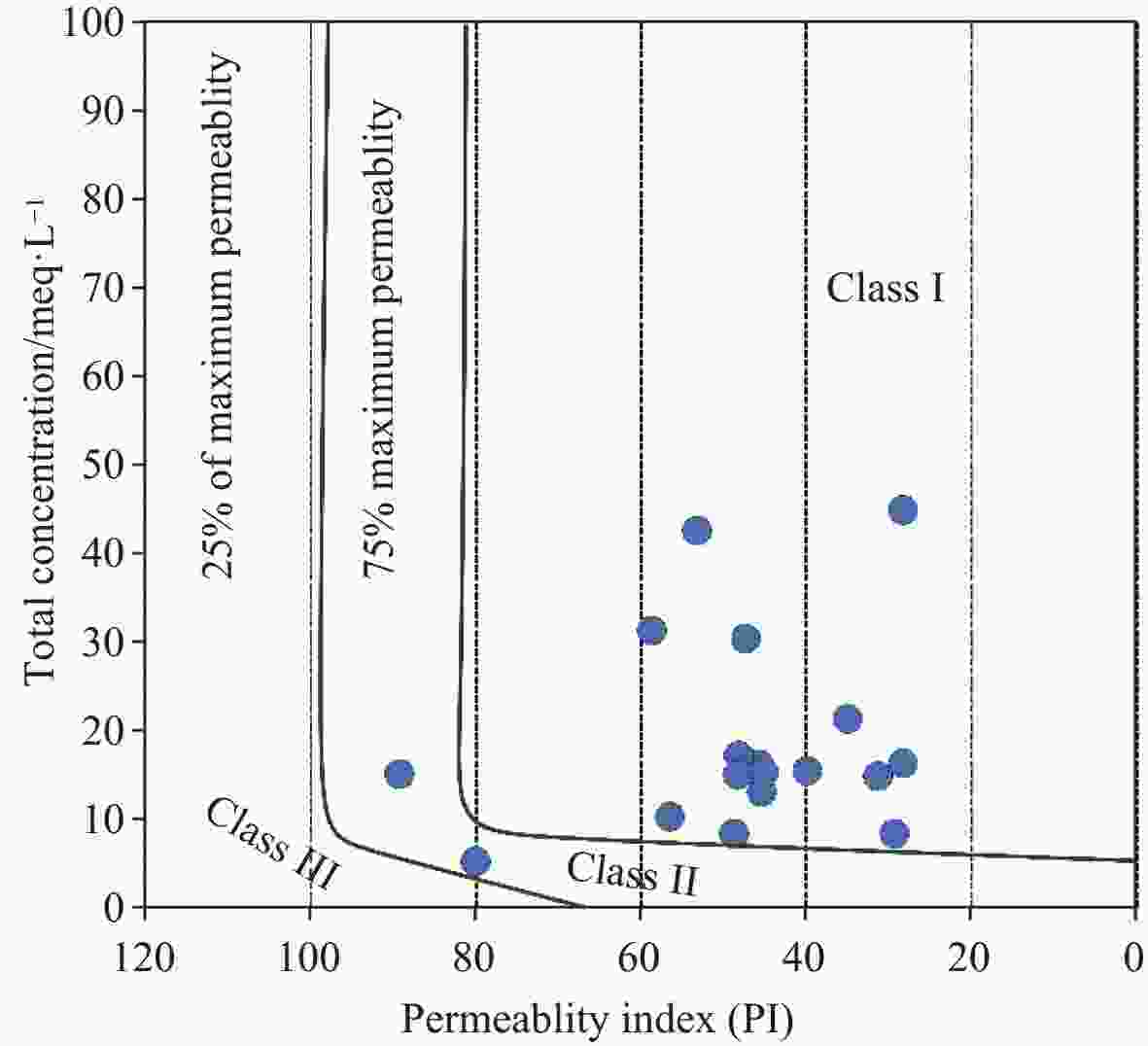
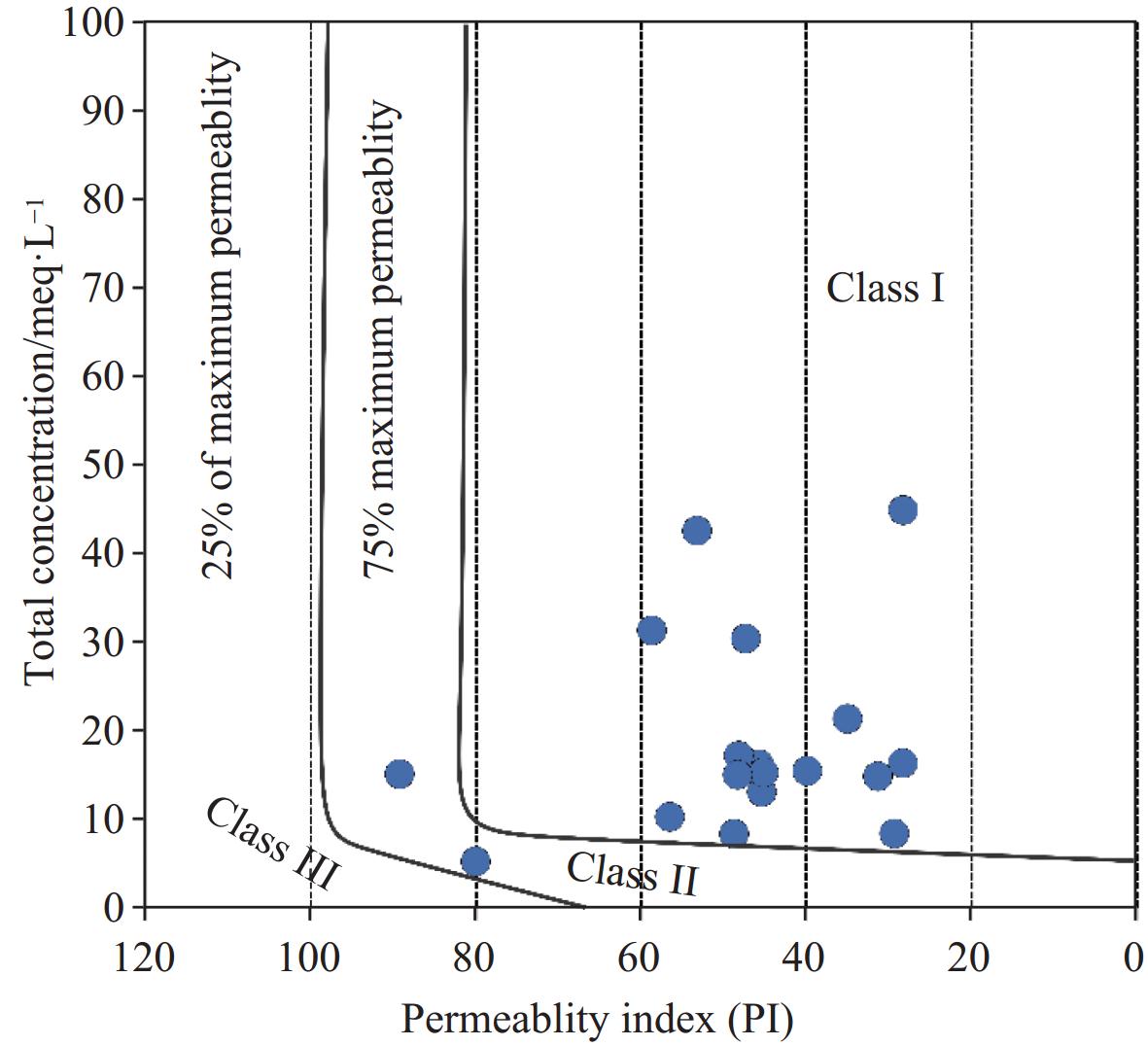
Figure 12. Doneen diagram of permeability index against the total concentration of ions (Doneen, 1975)
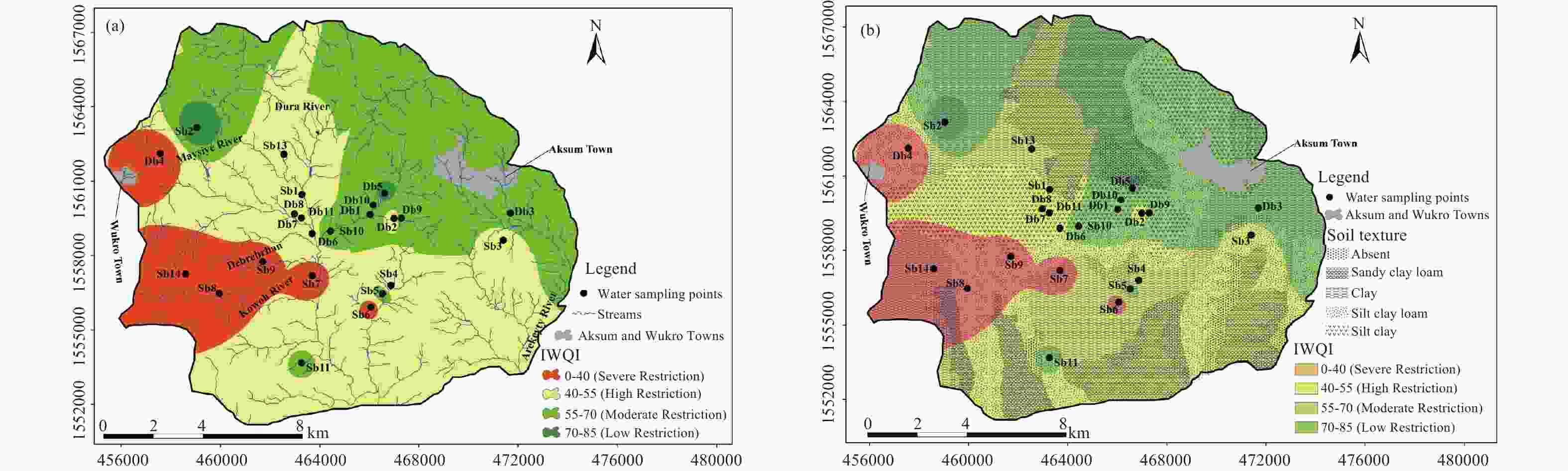
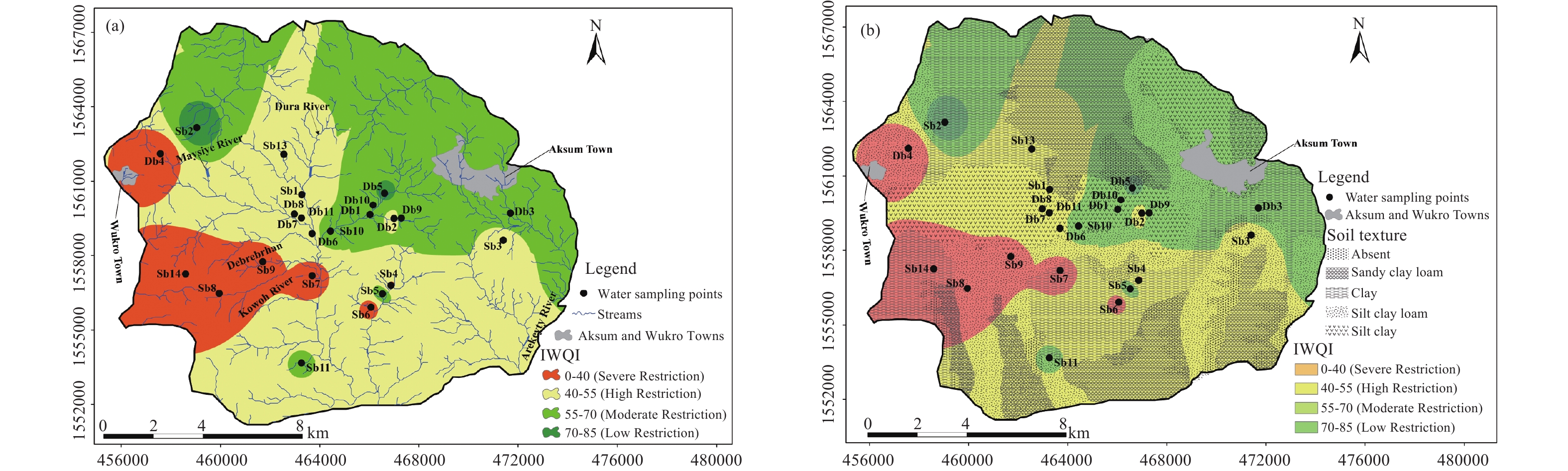
Figure 13. Spatial distribution of the Irrigation Water Quality Index (IWQI) in the study area
(a) Spatial distribution of IWQI in relation to physiographic characteristics; (b) Spatial distribution of IWQI in relation to soil texture classes.
Table 1. Parameters, equations, and irrigation suitability classes used in the study area
Parameters Equations Range Classification References EC (µS/cm) <250 Excellent Richards (1954) 250–750 Good 750–2,250 Permissible 2,250–4,000 Doubtful TDS (mg/L) <1,000 Non-saline Robinove et al. (1958) 1,000–3,000 Slightly saline 3,000–10,000 Moderately saline >10,000 Very saline TH (mg/L) <75 Soft Vasanthavigar (2013) 75–150 Moderate 150–300 Hard >300 Very hard SAR (meq/L) $ {(\text{Na}}^{+})/\sqrt{{[(\text{Ca}}^{2+}+{\text{Mg}}^{2+})/2]} $ <10 Excellent Richards (1954) 10–18 Good 18–26 Doubtful >26 Unsuitable RSC (meq/L) (HCO3−+CO32−)-(Ca2++Mg2+) <1.25 Good Richards (1954) 1.25–2.5 Medium >2.5 Unsuitable Na% $ [({\text{Na}}^{+}+{\mathrm{K}}^{+})/({\text{Ca}}^{2+}+{\text{Mg}}^{2+}+{\mathrm{K}}^{+}+{\text{Na}}^{+})]\times 100 $ <20 Excellent Wilcox (1955) 20–40 Good 40–60 Permissible 60–80 Doubtful >80 Unsuitable KI (meq/L) $ [({\text{Na}}^{+})/{\text{Ca}}^{2+}+{\text{Mg}}^{2+})] $ <1 Suitable Kelly (1963) >1 Unsuitable PI% $ \left[\left[{\text{Na}}^{+}+\sqrt{{{{\text{HCO}}_{3}}}^{-}]}/{\text{Ca}}^{2+}+{\text{Mg}}^{2+}+{\text{Na}}^{+}\right]\right]\times 100 $ <25 Unsuitable Doneen (1975) 25–75 Moderate >75 Suitable MR% $ [({\text{Mg}}^{2+})/{\text{Ca}}^{2+}+{\text{Mg}}^{2+})]\times 100 $ <50 Suitable Paliwal (1976) >50 Unsuitable PS (meq/L) $ {\text{Cl}}^{-}+\dfrac{1}{2}\mathrm{SO}_4^{2-} $ <5 Excellent to good Doneen (1975) 5–10 Good to injurious >10 Injurious to un satisfactory  下载: 导出CSV
Table 2. Normalized weight (wi) for the IWQI calculation and the parameter threshold values for the quality measurement (Qi) calculation (Meireles et al. 2010; Ayers and Westcot, 1985).
Qi EC (dS/m) SAR (meq/L)1/2 Na+ (meq/L) Cl− (meq/L) HCO3− (meq/L) 85–100 0.20 ≤ EC < 0.75 2 ≤ SAR < 3 2 ≤ Na+ < 3 1 ≤ Cl < 4 1 ≤ HCO3− < 1.5 60–85 0.75 ≤ EC< 1.50 3 ≤ SAR< 6 3 ≤ Na+ < 6 4 ≤ Cl <7 1.5 ≤ HCO3− < 4.5 35–60 1.50 ≤ EC < 3.00 6 ≤ SAR < 12 6 ≤ Na+ < 9 7 ≤ Cl < 10 4.5 ≤ HCO3− < 8.5 0–35 EC < 0.2 or EC ≥ 3.00 SAR < 2 or SAR ≥ 12 Na+ < 2 or Na+ ≥ 9 Cl < 1 or Cl ≥ 10 HCO3− < 1 or HCO3− ≥ 8.5 Weight (wi) 0.211 0.189 0.204 0.194 0.202
下载: 导出CSV
Table 3. Water quality index characteristics classification (Meireles et al. 2010)
IWQI Restrictions on water use Recommendation Soil Plant 85–100 No Restriction required (NR) Can be used for the majority of soil types with low probability of causing salinity and sodicity risks, except for soils with extremely low permeability No toxicity risk for most plants 70–85 Low Restriction required (LR) It should be used in light-texture or moderate permeability soils; recommended to avoid its use in soils with high clay levels Avoid salt-sensitive plants 55–70 Moderate Restriction required (MR) May be used in moderate to high soil permeability values of soils Plants with moderate tolerance to salts may be grown 40–55 High Restriction required (HR) May be used in soils with high permeability It can be used for plants with moderate to high salt tolerance 0–40 Severe Restriction required (SR) Should be avoided its use for irrigation under normal conditions Plants with a high tolerance to salt should be irrigated only, except water with extremely low levels of Na+, Cl−, and HCO−3
下载: 导出CSV
Table 4. Descriptive statistics of major ions and miscellaneous chemical parameters (unit=mg/L except pH)
Parameters Min Max Mean SD Maximum allowable limit
(Ayres and Westcot, 1985)% above standard pH 7.2 8.2 7.5 0.32 6–9 0 Ca2+ 22 325 86.8 71.1 <400 0 Mg2+ 8 160 43.5 34.1 <60 16 K+ 0.6 22 3.79 5.59 <20 0 SO42− 8.9 99 33.3 22.1 <960 0 Cl− 7.6 74 33.3 6.9 <106.5 0 NO3− 15.2 37.1 20.5 5.4 <30 32 NO2− 0.01 0.18 0.06 0.044 <1.6 0 HCO3− 103.7 433.1 280 98.6 <610 0 NH4+ 0.12 0.45 0.21 0.09 <5 0 PO43− 0.003 1.02 0.14 0.26 <2 0
下载: 导出CSV
Table 5. Descriptive statistics and recommended maximum levels of heavy metal concentration in water used for irrigation
Parameters (mg/L) Min. Max. Mean Std. Maximum limit
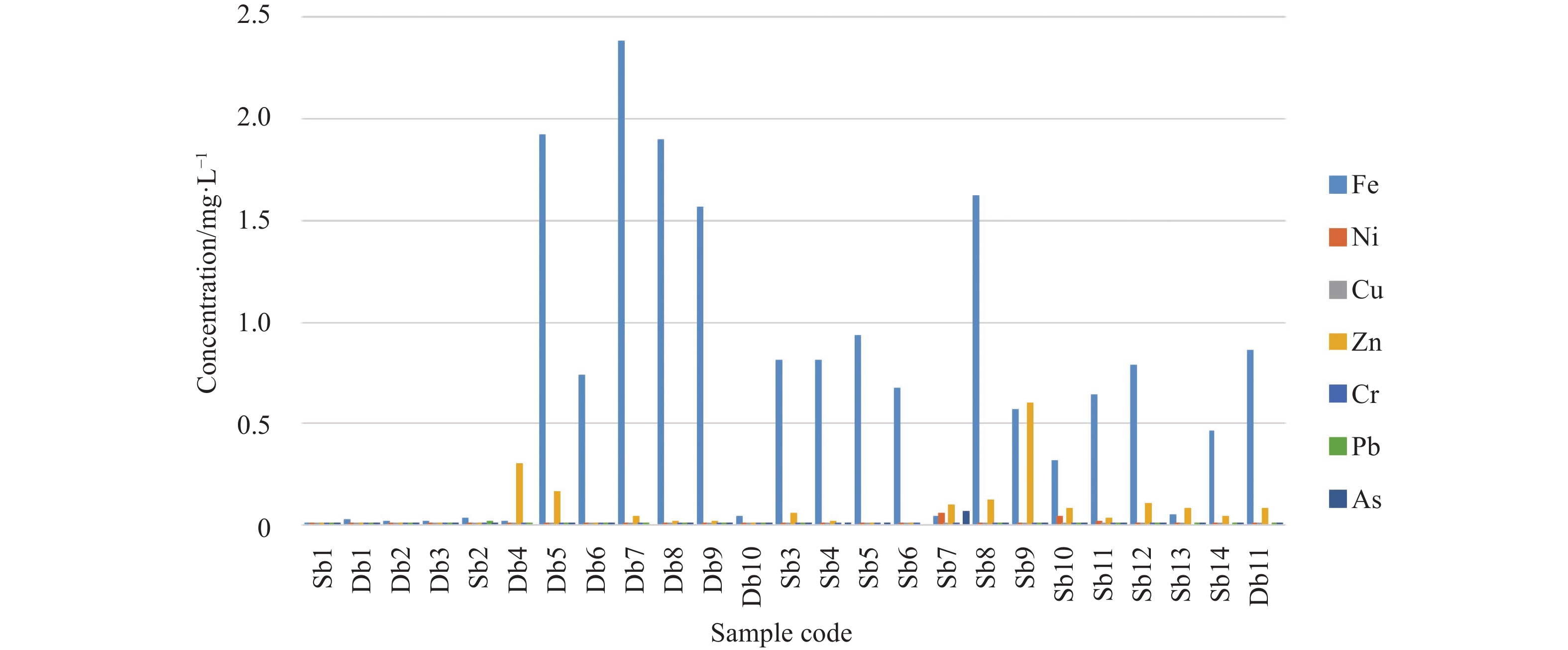
(Ayers and Westcot, 1985)Samples exceed Standard (%) Fe 0.002 2.38 0.68 0.68 5 0 Cu 0.0009 0.01 0.0033 0.0025 0.2 0 Pb 0.00001 0.016 0.0027 0.0034 5 0 Cr 0.000003 0.012 0.0009 0.002 0.1 0 Zn 0.001 0.6 0.076 0.12 2 0 Ni 0.0012 0.06 0.035 0.374 0.2 0 As 0.0001 0.064 0.0039 0.013 0.1 0
下载: 导出CSV
Table 6. Descriptive statistics of irrigation water quality parameters and the calculated indices
Parameters Sample range Min. Max. Mean Std. Standard Range Classification % of samples with standard EC (µS/cm) 306 2,711 1,012.4 647 <250 Excellent 0 250–750 Good 48 750–2,250 Permissible 40 2,250–4,000 Doubtful 12 TDS (mg/L) 195.8 1,735 647.9 414.1 <1,000 Non saline 80 1,000–3,000 Slightly saline 20 3,000–10,000 Moderately saline 0 >10,000 Very saline 0 TH (mg/L) 87.9 1,470.5 395.8 275 <75 Soft 0 75–150 Moderate 8 150–300 Hard 32 >300 Very hard 60 SAR (meq/L) 0.28 3.51 1.33 0.88 <10 Excellent 100 10–18 Good 0 18–26 Doubtful 0 >26 Unsuitable 0 RSC (meq/L) −28.3 9.3 −2 6.95 <1.25 Good 80 1.25–2.5 Medium 4 >2.5 Unsuitable 16 Na% 10.5 57.8 24.8 10 <20 Excellent 40 20–40 Good 56 40–60 Permissible 4 60–80 Doubtful 0 >80 Unsuitable 0 KI (meq/L) 0.11 1.34 0.35 0.24 <1 Suitable 96 >1 Unsuitable 4 PI% 28 89 50.6 15.6 <25 Unsuitable 0 25–75 Moderate 12 >75 Suitable 88 MR% 8.6 71 46 13.7 <50 Suitable 68 >50 Unsuitable 32 PS (meq/L) 0.31 2.8 1.3 0.77 <5 Excellent to good 100 5–10 Good to injurious 0 >10 Injurious to Un satisfactory 0
下载: 导出CSV
Table 7. Irrigation water quality index results of water samples
Sample points WiQi (EC) WiQi (SAR) WiQi (Na+) WiQi (Cl−) WiQi (HCO3−) ∑WiQi ∑Wi IWQI Sb1 19.8 3.3 3.6 3.4 16.0 46.1 1 46.1 Db1 18.6 3.3 15.9 3.4 18.9 60.0 1 60.0 Db2 18.7 3.3 18.4 3.4 3.5 47.3 1 47.3 Db3 18.1 3.3 18.0 18.4 3.5 61.3 1 61.3 Sb2 17.5 3.3 19.3 19.2 17.5 76.9 1 76.9 Db4 18.9 3.3 3.6 3.4 3.5 32.7 1 32.7 Db5 18.8 15.6 7.5 18.9 12.2 73.1 1 73.1 Db6 8.4 16.9 3.6 18.9 3.5 51.3 1 51.3 Db7 8.8 18.0 12.0 3.4 3.5 45.7 1 45.7 Db8 10.7 18.0 13.5 3.4 3.5 49.1 1 49.1 Db9 18.2 15.3 14.7 3.4 9.7 61.3 1 61.3 Db10 17.7 3.3 3.6 18.3 12.6 55.5 1 55.5 Sb3 15.9 3.3 3.6 19.2 9.5 51.4 1 51.4 Sb4 18.6 3.3 3.6 3.4 13.3 42.2 1 42.2 Sb5 12.3 3.3 19.1 19.4 10.5 64.5 1 64.5 Sb6 17.4 3.3 3.6 3.4 11.3 39.0 1 39.0 Sb7 16.4 3.3 3.6 3.4 10.0 36.6 1 36.6 Sb8 16.9 3.3 3.6 3.4 10.4 37.5 1 37.5 Sb9 17.8 3.3 3.6 3.4 11.8 39.9 1 39.9 Sb10 13.1 3.3 18.5 18.4 13.1 66.4 1 66.4 Sb11 18.6 3.3 3.6 18.7 12.1 56.3 1 56.3 Sb12 20.0 3.3 3.6 3.4 14.9 45.2 1 45.2 Sb13 20.5 3.3 3.6 3.4 16.8 47.6 1 47.6 Sb14 18.4 3.3 3.6 3.4 11.1 39.7 1 39.7 Db11 11.3 18.9 14.2 19.2 3.5 67.1 1 67.1
下载: 导出CSV
-
Abadi HT, Alemayehu T, Berhe BA. 2024. Assessing the suitability of water for irrigation purposes using irrigation water quality indices in the Irob catchment, Tigray, Northern Ethiopia. Water Quality Research Journal, 60(1): 177−195. DOI: 10.2166/wqrj.2024.055. Abebe A, Jothimani M, Berhanu G. 2024. Hydrogeochemical evaluation of groundwater quality and its applicability for various purposes in the drought-prone Konso zone, rift valley, Southern Ethiopia. Applied and Environmental Soil Science, 2024(1): 7304847. Adimalla N, Dhakate R, Kasarla A, et al. 2020. Appraisal of groundwater quality for drinking and irrigation purposes in Central Telangana, India. Groundwater for Sustainable Development, 10: 100334. DOI: 10.1016/j.gsd.2020.100334. Aida HB, Vahid N, Zohre K, et al. 2024. Assessment of water quality suitability for agriculture in a potentially leachate-contaminated region. Journal of Groundwater Science and Engineering, 12(3): 281−292. DOI: 10.26599/JGSE.2024.9280021. Alemayehu T, Leis A, Eisenhauer A, et al. 2011. Multi-proxy approach (2H/H, 18O/16O, 13C/12C and 87Sr/86Sr) for the evolution of carbonate-rich groundwater in basalt dominated aquifer of the Axum area, northern Ethiopia. Geochemistry, 71(2): 177−187. DOI: 10.1016/j.chemer.2011.02.007. APHA. 2011. Standard methods for the examination of water and wastewater. American Public Health Association, Water Environment Federation, Washington. DOI: 10.2105/ajph.51.6.940-a. Appelo CAJ, Postma D. 2004. Geochemistry, groundwater, and pollution. CRC Press. Ayers RS, Westcot DW. 1985. Water quality for agriculture. Rome: Food and Agriculture Organization of the United Nations, 29(174): 1−163. DOI: 10.18356/3d544dc3-en. Batarseh M, Imreizeeq E, Tilev S, et al. 2021. Assessment of groundwater quality for irrigation in the arid regions using Irrigation Water Quality Index (IWQI) and GIS-Zoning maps: Case study from Abu Dhabi Emirate, UAE. Groundwater for Sustainable Development, 14: 100611. DOI: 10.1016/j.gsd.2021.100611. Bennett G. 2023. Assessment of temporal and spatial variability of irrigation groundwater quality on the flanks of Mount Meru, northern Tanzania. Groundwater for Sustainable Development, 20: 100880. DOI: 10.1016/j.gsd.2022.100880. Berhanu KG, Hatiye SD, Lohani TK. 2023. Coupling support vector machine and the irrigation water quality index to assess groundwater quality suitability for irrigation practices in the Tana sub-basin, Ethiopia. Water Practice and Technology, 18(4): 884−900. DOI: 10.2166/wpt.2023.055. Berhe BA. 2020. Evaluation of groundwater and surface water quality suitability for drinking and agricultural purposes in Kombolcha town area, eastern Amhara region, Ethiopia. Applied Water Science, 10(6): 127. DOI: 10.1007/s13201-020-01210-6. Berhe GT, Baartman JE, Veldwisch GJ, et al. 2022. Irrigation development and management practices in Ethiopia: A systematic review on existing problems, sustainability issues and future directions. Agricultural Water Management, 274: 107959. DOI: 10.1016/j.agwat.2022.107959. Berhea S, Letab S. 2015. Suitability assessment of water quality of assabol dam for irrigation fish culture and drinking purposes at erob wereda eastern Tigray. International Journal of Science and Research, 4(3): 1388−1394. Debela A. 2017. Characterization and classification of salt-affected soils and irrigation water at Bule Hora district, West Guji zone. Journal of Environment and Earth Sciences, 7(12): 1−8. Djafer KH, Aichour A, Metaiche M, et al. 2024. Groundwater quality assessment for drinking and irrigation purposes in Boumerdes Region, Algeria. Journal of Groundwater Science and Engineering, 12(4): 397−410. DOI: 10.26599/JGSE.2024.9280030. Doneen LD. 1975. Water quality for irrigated agriculture. Plants in saline environments. Berlin, Heidelberg: Springer Berlin Heidelberg: 56−76. DOI: 10.1007/978-3-642-80929-3_5. El Bilali A, Taleb A. 2020. Prediction of irrigation water quality parameters using machine learning models in a semi-arid environment. Journal of the Saudi Society of Agricultural Sciences, 19(7): 439−451. DOI: 10.1016/j.jssas.2019.12.004. El Osta M, Masoud M, Alqarawy A, et al. 2022. Groundwater suitability for drinking and irrigation using water quality indices and multivariate modeling in Makkah Al-Mukarramah province, Saudi Arabia. Water, 14(3): 483. DOI: 10.3390/w14030483. El-Rawy M, Fathi H. 2023. Groundwater pollution sources and their quality in the Kingdom of Saudi Arabia: State of the Art. Groundwater Quality and Geochemistry in Arid and Semi-Arid Regions, 215−235. DOI: 10.1007/698_2023_1050. Eswar D, Karuppusamy R, Chellamuthu S. 2021. Drivers of soil salinity and their correlation with climate change. Current Opinion in Environmental Sustainability, 50: 310−318. DOI: 10.1016/j.cosust.2020.10.015. Gad M, El-Safa A, Magda M, et al. 2021. Integration of water quality indices and multivariate modeling for assessing surface water quality in Qaroun Lake, Egypt. Water, 13(16): 2258. DOI: 10.3390/w13162258. Gaikwad S, Gaikwad S, Meshram D, et al. 2020. Geochemical mobility of ions in groundwater from the tropical western coast of Maharashtra, India: Implications for groundwater quality. Environment, Development and Sustainability, 22: 2591−2624. DOI: 10.1007/s10668-019-00312-9. Gebrehiwot M, Tafesse NT, Habtu S, et al. 2021. The contribution of groundwater to the salinization of reservoir-based irrigation systems. Agronomy, 11(3): 512. DOI: 10.3390/agronomy11030512. Gebru H, Gebreyohannes T, Hagos E. 2024. Evaluation of groundwater quality for irrigation purposes and impact of irrigation on water in Golina River Basin, Northern Ethiopia. Momona, Ethiopian Journal of Science, 16(1): 144−166. DOI: 10.4314/mejs.v16i1.8. Gintamo B, Khan MA, Gulilat H, et al. 2022. Determination of the physicochemical quality of groundwater and its potential health risk for drinking in Oromia, Ethiopia. Environmental Health Insights, 16: 11786302221096051. DOI: 10.1177/11786302221096051. Gurmessa SK, MacAllister DJ, White D, et al. 2022. Assessing groundwater salinity across Africa. Science of the Total Environment, 828: 154283. DOI: 10.1016/j.scitotenv.2022.154283. Habtu S, Erkossa T, Froebrich J, et al. 2020. Integrating participatory data acquisition and modelling of irrigation strategies to enhance water productivity in a small–scale irrigation scheme in Tigray, Ethiopia. Irrigation and Drainage, 69: 23−37. DOI: 10.1002/ird.2235. Hagos M, Gebreyohannes T, Amare K, et al. 2020. Tectonic link between the Neoproterozoic dextral shear fabrics and Cenozoic extension structures of the Mekelle basin, Northern Ethiopia. International Journal of Earth Sciences, 109: 1957−1974. DOI: 10.1007/s00531-020-01882-0. Hedjal S, Zouini D, Benamara A. 2018. Hydrochemical assessment of water quality for irrigation: A case study of the wetland complex of Guerbes-Sanhadja, North-East of Algeria. Journal of Water and Land Development, 38(Ⅶ-Ⅸ): 43−52. DOI: 10.2478/jwld-2018-0041. He ZJ, Fang LP, Liu CP, et al. 2025. A review of research progress on environmental fate and toxic effects of antibiotic-heavy metal co-contamination in soil-crop systems. Rock and Mineral Analysis, 44(4): 658−668. (in Chinese) DOI: 10.15898/j.ykcs.202501280014. Kebede L, Temesgen M, Fanta A, et al. 2023. Effect of locally adapted conservation tillage on runoff, soil erosion, and agronomic performance in semiarid rain-fed farming in Ethiopia. Land, 12(3): 593. DOI: 10.3390/land12030593. Kumari D, Ranpariya KB, Davara MA, et al. 2022. Soil properties as influenced by the use of irrigation water having variable RSC and different varieties of groundnut (Arachis hypogea L.). International Journal of Agricultural Sciences, 18(2): 780−785. DOI: 10.15740/has/ijas/18.2/780-785. Kurniawan DA, Darmaji D, Astalini A, et al. 2023. A study of critical thinking skills, science process skills, and digital literacy: Reviewed based on gender. Jurnal Penelitian Pendidikan IPA, 9(4): 1741−1752. DOI: 10.29303/jppipa.v9i4.1644. Masoud M, El Osta M, Alqarawy A, et al. 2022. Evaluation of groundwater quality for agriculture under different conditions using water quality indices, partial least squares regression models, and GIS approaches. Applied Water Science, 12(10): 244. DOI: 10.1007/s13201-022-01770-9. Mehari H, Hailu B. 2019. Groundwater characterization of Raya Valley for irigation use: The case of Mehoni Agricultural Research Center/Fachagama Experimental Site, Northern Ethiopia. International Journal of Novel Research in Life Science, 6(5): 46−52. Meireles ACM, Andrade EMD, Chaves LCG, et al. 2010. A new proposal for the classification of irrigation water. Revista Ciência Agronô mica, 41: 349−357. DOI: 10.1590/s1806-66902010000300005. Mkumbo NJ, Mussa KR, Mariki EE, et al. 2022. The use of the DRASTIC-LU/LC model for assessing groundwater vulnerability to nitrate contamination in Morogoro Municipality, Tanzania. Earth, 3(4): 1161−1184. DOI: 10.3390/earth3040067. Mukiza P, Bazimenyera JDD, Nkundabose JP, et al. 2021. Assessment of irrigation water quality parameters of Nyandungu Wetlands. Journal of Geoscience and Environment Protection, 9(10): 151−160. DOI: 10.4236/gep.2021.910011. Mutemi M, Njenga M, Lamond G, et al. 2017. Using local knowledge to understand challenges and opportunities for enhancing agricultural productivity in Western Kenya. Sustainable Intensification in Smallholder Agriculture: 177−195. DOI: 10.4324/9781315618791-12. Nedaw D. 2010. Water balance and groundwater quality of the Koraro area, Tigray, Northern Ethiopia. Momona, Ethiopian Journal of Science, 2(2): 110−127. DOI: 10.4314/mejs.v2i2.57678. Paliwal KV, Gandhi AP. 1976. Effect of salinity, SAR, Ca: Mg ratio in irrigation water, and soil texture on the predictability of exchangeable sodium percentage. Soil Science, 122(2): 85−90. DOI: 10.1097/00010694-197608000-00004. Palmate SS, Kumar S, Poulose T, et al. 2022. Comparing the effect of different irrigation water scenarios on an arid region pecan orchard using a system dynamics approach. Agricultural Water Management, 265: 107547. DOI: 10.1016/j.agwat.2022.107547. Richards LA. 1954. Diagnosis and improvement of saline and alkali soils. US Government Printing Office. DOI: 10.2134/agronj1954.00021962004600060019x. Robinove CJ, Langford RH, Brookhart JW. 1958. Saline-water resources of North Dakota (Vol. 1428). US Government Printing Office. DOI: 10.3133/wsp1428. Saad Eddin MR, Hassan AM, Hegazi AA, et al. 2023. Effects of root watering system on yield, water use efficiency, and fruit quality of date palm (cv Siwi): A case study in the arid climate, Egypt. Irrigation Science, 41(5): 589−601. DOI: 10.1007/s00271-022-00840-9. Shitu K, Hymiro A, Tesfaw M. 2022. Review on baste soil improving approaches for waterlogging and soil salinization problems in agricultural land of Ethiopia. Soil Water Science, 6: 229−235. DOI: 10.36959/624/449. Subramanian T, Raj Mohan N, Elango L. 2010. Groundwater geochemistry and identification of hydrogeochemical processes in a hard rock region, southern India. Environmental Monitoring and Assessment, 162: 123−137. DOI: 10.1007/s10661-009-0781-4. Swistock B. 2016. Interpreting irrigation water tests. Penn State Extension. Tadesse N, Bairu A, Bheemalingeswara K. 2011. Suitability of groundwater quality for irrigation with reference to hand-dug Wells, Hantebet Catchment, Tigray, Northern Ethiopia. Momona Ethiopian Journal of Science, 3(2): 31−47. DOI: 10.4314/mejs.v3i2.67711. Tadesse N, Bheemalingeswara K, Berhane A. 2009. Groundwater suitability for irrigation: A case study from Debre Kidane Watershed, Eastern Tigray, Ethiopia. Momona Ethiopian Journal of Science, 1(1): 36−58. DOI: 10.4314/mejs.v1i1.46040. Tarolli P, Luo J, Park E, et al. 2024. Soil salinization in agriculture: Mitigation and adaptation strategies combining nature-based solutions and bioengineering. Iscience, 27(2): 1−9. DOI: 10.1016/j.isci.2024.108830. Tegegne AM, Lohani TK, Eshete AA. 2023. Evaluation of groundwater quality for drinking and irrigation purposes using proxy indices in the Gunabay watershed, Upper Blue Nile Basin, Ethiopia. Heliyon, 9(4): e15263. DOI: 10.1016/j.heliyon.2023.e15263. Tian XH, Jia LL, Luo JX. 2025. Hydrochemical characteristics and water-quality evaluation of groundwater in the Ziya River Plain, Hai River Basin. Rock and Mineral Analysis, 44(4): 735−746. (in Chinese) DOI: 10.15898/j.ykcs.202411180236. Tomaz A, Palma P, Fialho S, et al. 2020. Spatial and temporal dynamics of irrigation water quality under drought conditions in a large reservoir in Southern Portugal. Environmental Monitoring and Assessment, 192: 1−17. DOI: 10.1007/s10661-019-8048-1. Vasanthavigar M, Srinivasamoorthy K, Prasanna MV. 2013. Identification of groundwater contamination zones and its sources by using the multivariate statistical approach in the Thirumanimuttar sub-basin, Tamil Nadu, India. Environmental Earth Sciences, 68: 1783−1795. DOI: 10.1007/s12665-012-1868-8. Wahyuningsih S, Novita E, Ramadhan RN. 2023. Determination of suitable plant types in an irrigation command area using the IWQI Method. Jurnal Takin Pertanian Lampung (Journal of Agricultural Engineering), 12(4): 795. DOI: 10.23960/jtep-l.v12i4.795-806. Wilcox L. 1955. Classification and use of irrigation waters (No. 969). US Department of Agriculture. Woldemariyam F, Ayenew T. 2016. Identification of hydrogeochemical processes in groundwater of Dawa River basin, southern Ethiopia. Environmental Monitoring and Assessment, 188(8): 481. DOI: 10.1007/s10661-016-5480-3. Zhou H, Shi H, Yang Y, et al. 2024. Insights into plant salt stress signaling and tolerance. Journal of Genetics and Genomics, 51(1): 16−34. DOI: 10.1016/j.jgg.2023.08.007. Zhu M, Wang S, Kong X, et al. 2019. Interaction of surface water and groundwater influenced by groundwater over-extraction, wastewater discharge, and water transfer in Xiong'an New Area, China. Water, 11(3): 539. DOI: 10.3390/w11030539. -

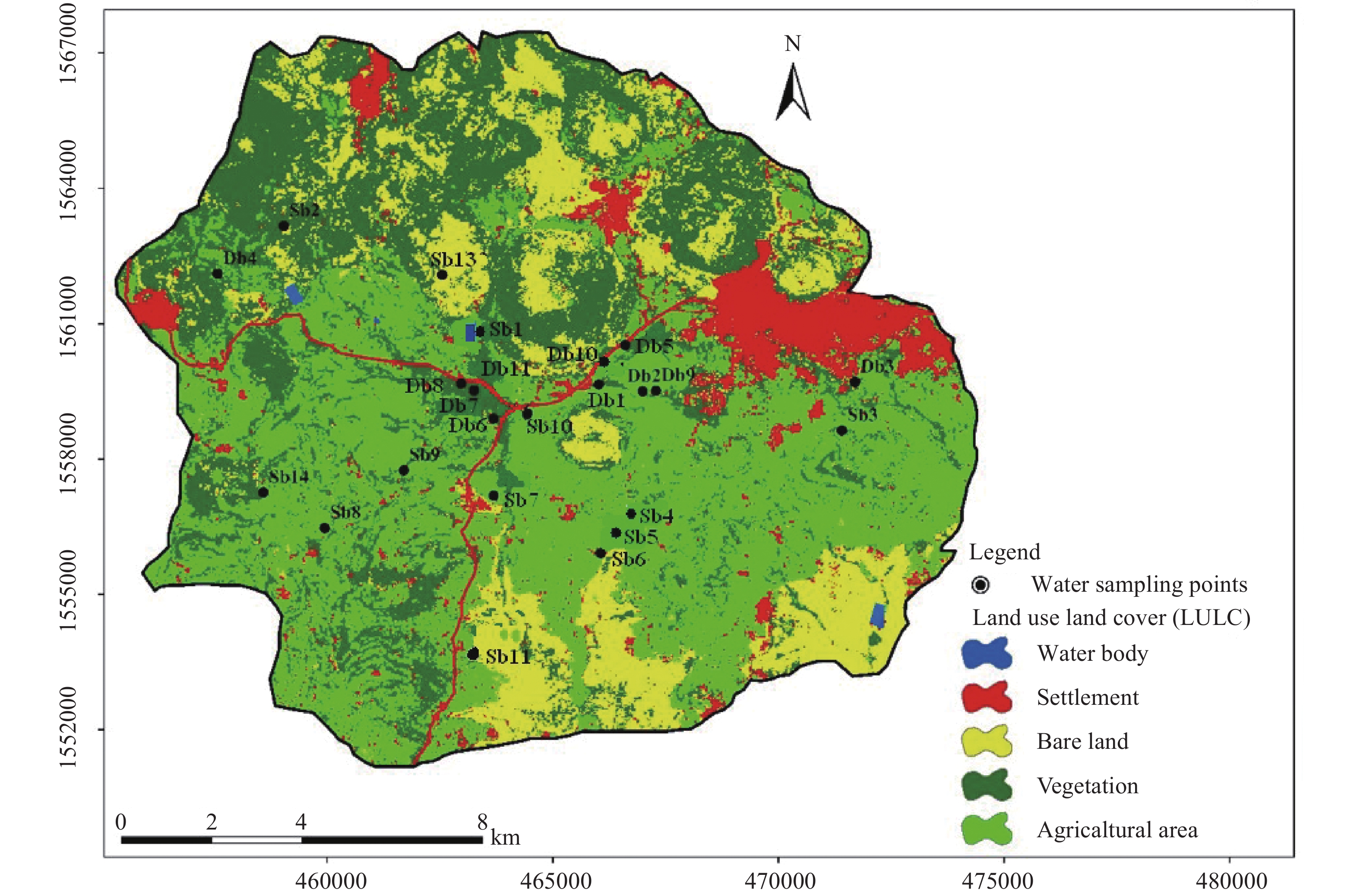
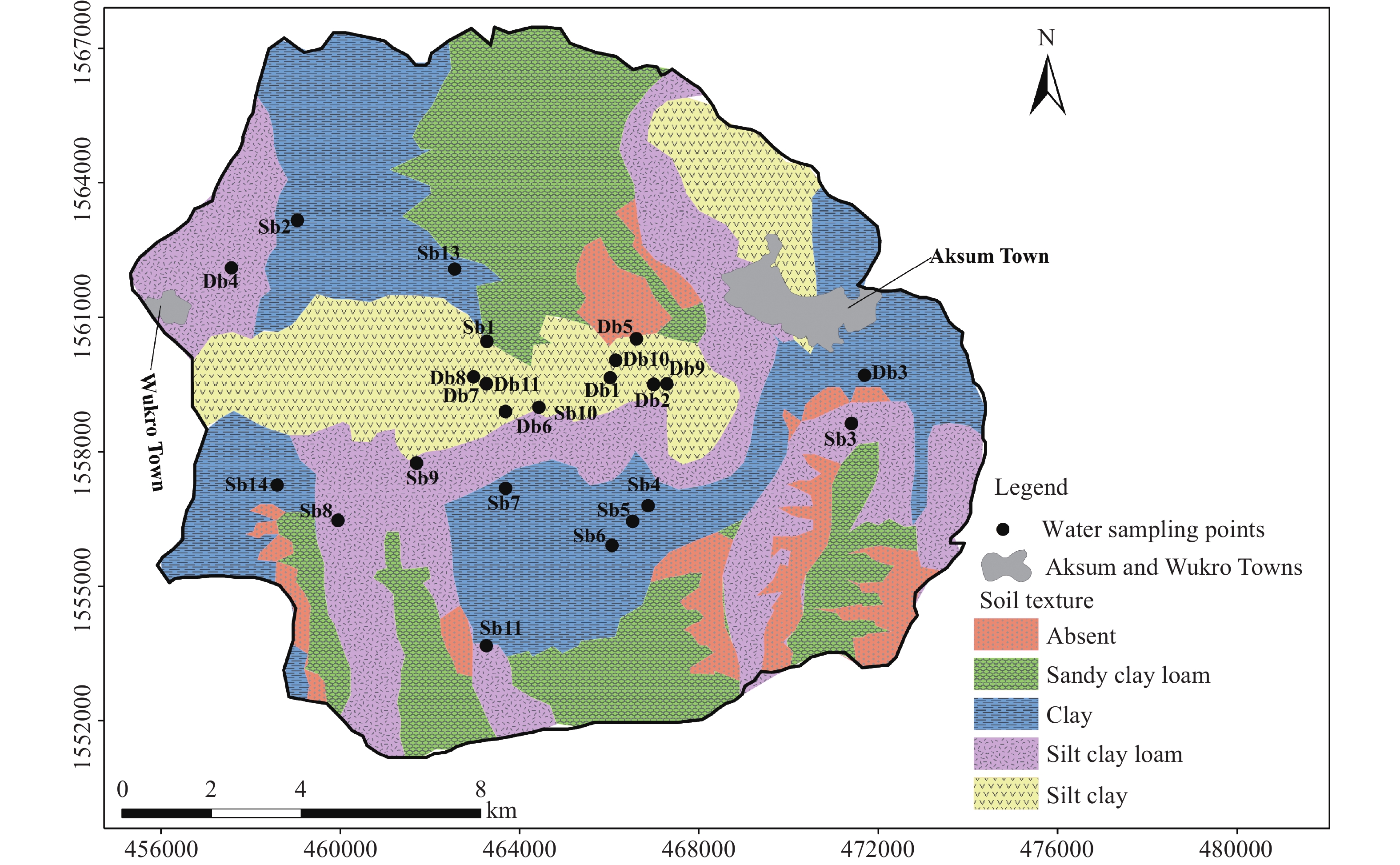


 点击查看大图
计量
- 文章访问数: 3616
- HTML全文浏览量: 1544
- PDF下载量: 100
- 被引次数: 0


