 E-mail alert
 Rss
Rss



The effect of beach slope variation on saltwater intrusion dynamics in the unconfined coastal aquifer (experimental and numerical)
-
Abstract: Over-exploitation of groundwater resources often causes seawater to intrude into coastal aquifers. This study aims to evaluate how different beach slopes (90°, 75°, 60°, and 45°) affect the extent and behavior of seawater intrusion in unconfined coastal aquifers under transient conditions. A three-dimensional laboratory model was constructed to simulate seawater intrusion under varying beach slopes. Experimental data were analyzed using image processing techniques, and results were validated using the SEAWAT numerical model. Key parameters—including wedge toe length, height, and area—were measured over time to assess the transient response of the saltwater wedge. The results showed that under static conditions, flatter slopes produced larger saltwater wedges. During transient conditions following a groundwater-level decline, the wedge toe advanced approximately 57% further in the vertical slope than in the 45° slope, while the final wedge size remained smaller on the steeper beach. The wedge height stabilized earlier than the toe length and area during intrusion, whereas in the recession stage, all three indices reached equilibrium almost simultaneously. The geometry of the beach slope has a significant effect on both the extent and temporal behavior of seawater intrusion. The toe length index showed a strong relationship with wedge area and can serve as a reliable indicator of intrusion volume under both steady and transient conditions. These findings emphasize the importance of considering beach slope in the design and management of coastal aquifer systems. Understanding how slope geometry influences the evolution of the saltwater wedge can improve the prediction and control of seawater intrusion in response to groundwater-level fluctuations.
-
Key words:
- Seawater /
- Image processing /
- Laboratory model /
- SEAWAT /
- Saltwater wedge
-
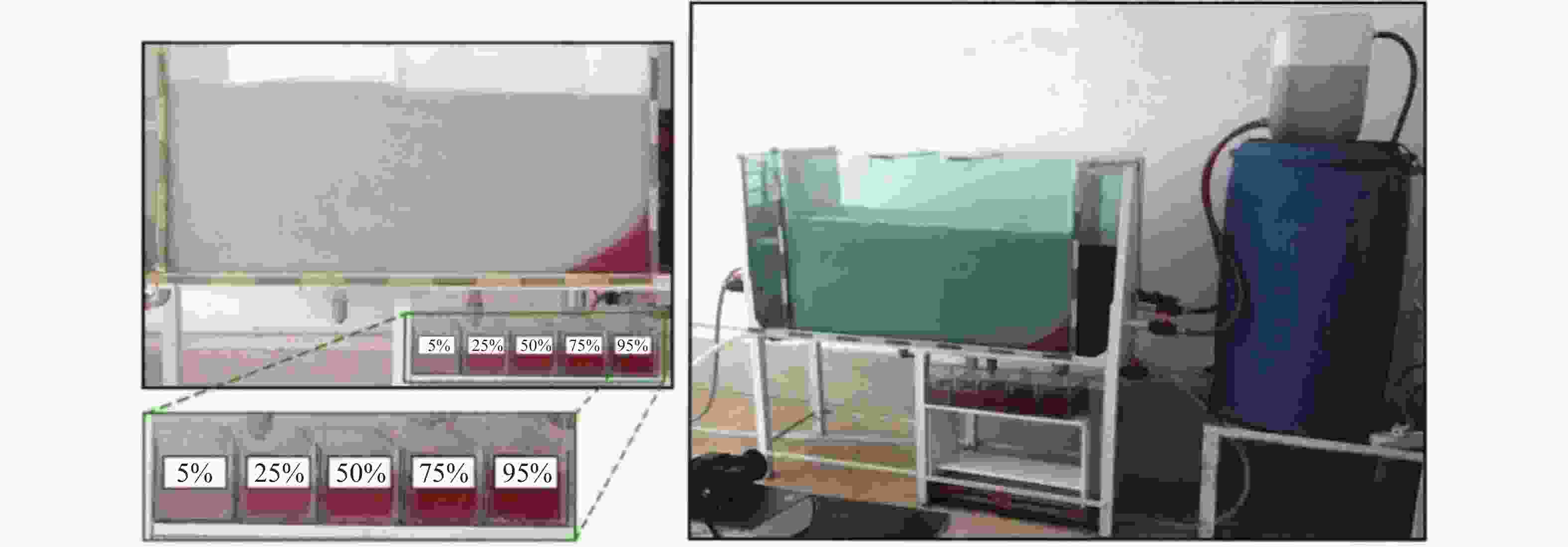
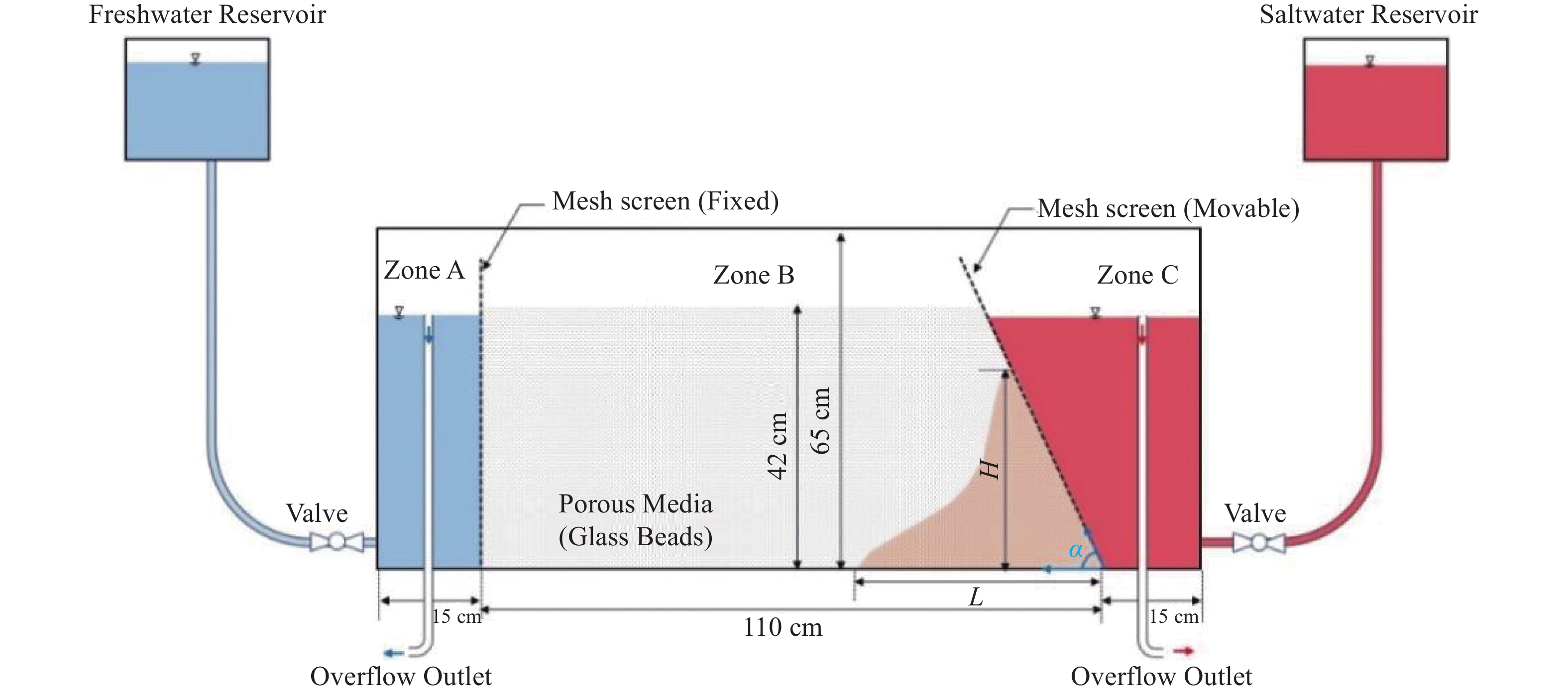
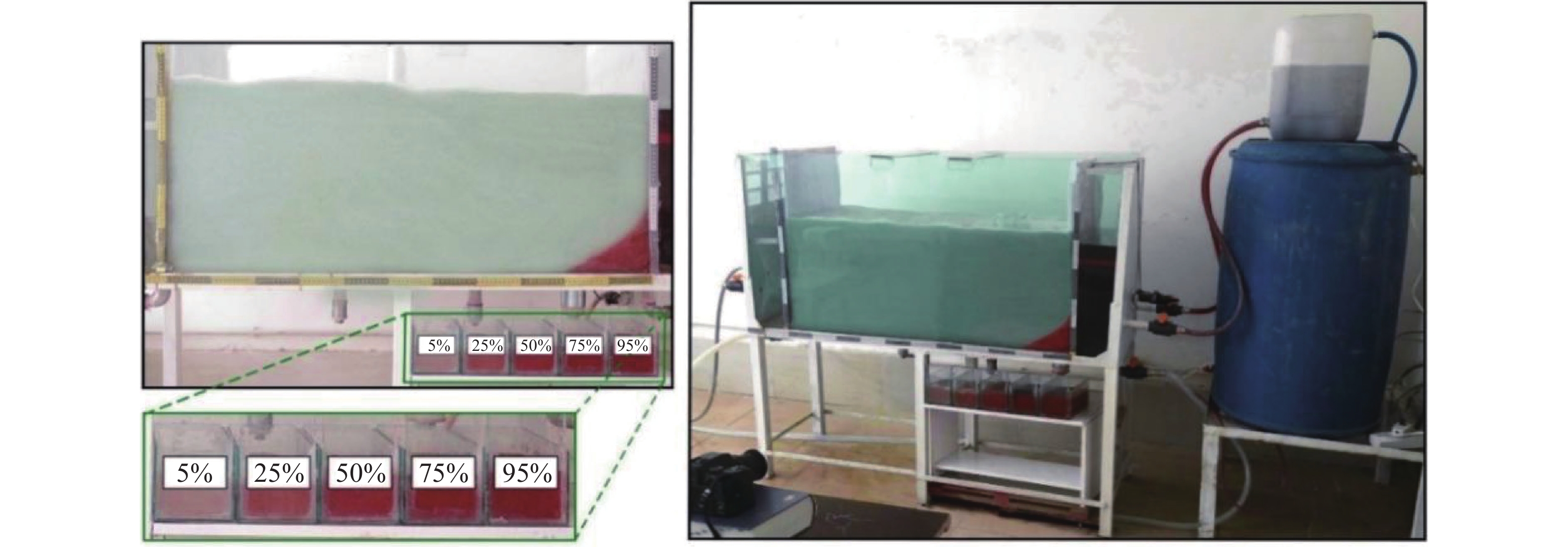
Figure 4. Laboratory model with porous medium boxes with specific saltwater concentration fourth Steps
Note: After obtaining the numerical value equivalent to saltwater with a concentration of 50% ($ {C}^{50\% } $) and the corrected pixel values of each model image at each time step ($ {C}_{i,j} $), the contour lines of saltwater with 50% concentration were drawn in MATLAB software. After drawing the above contour line, the position of the toe of the saltwater wedge and the height of the wedge are determined.
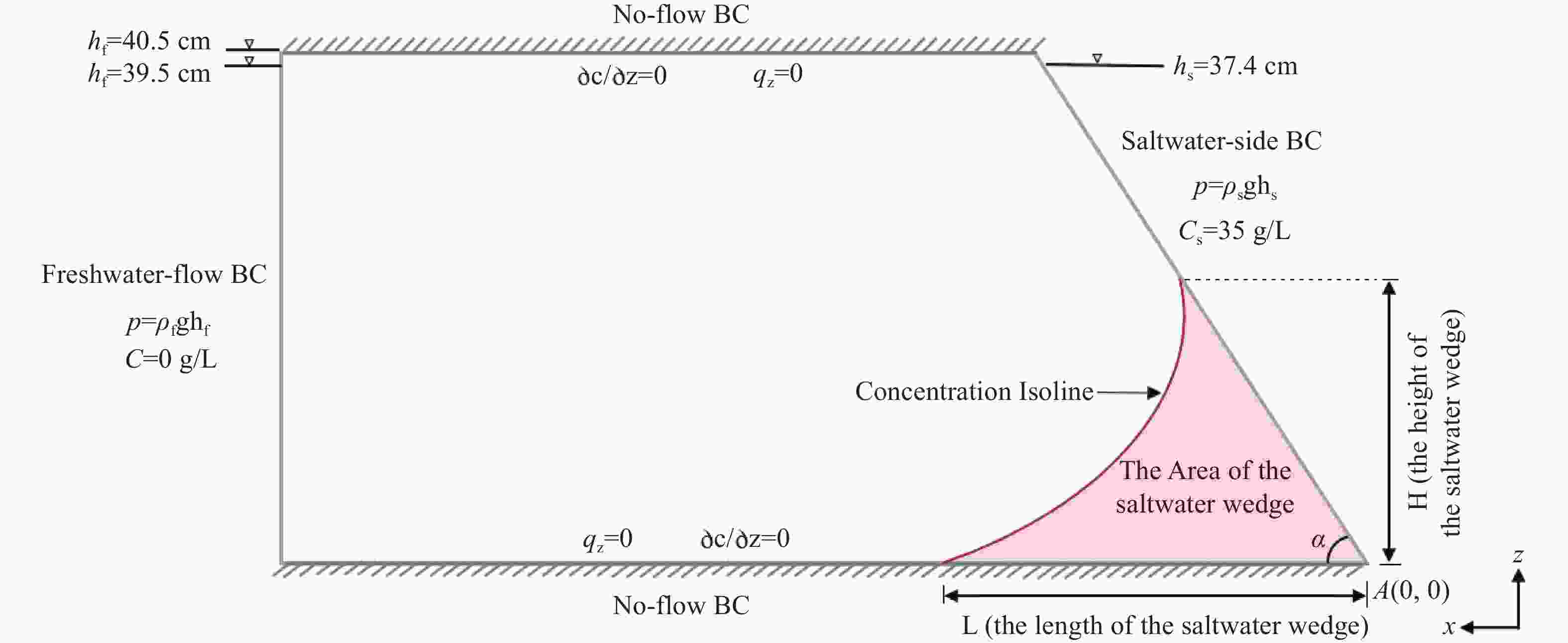
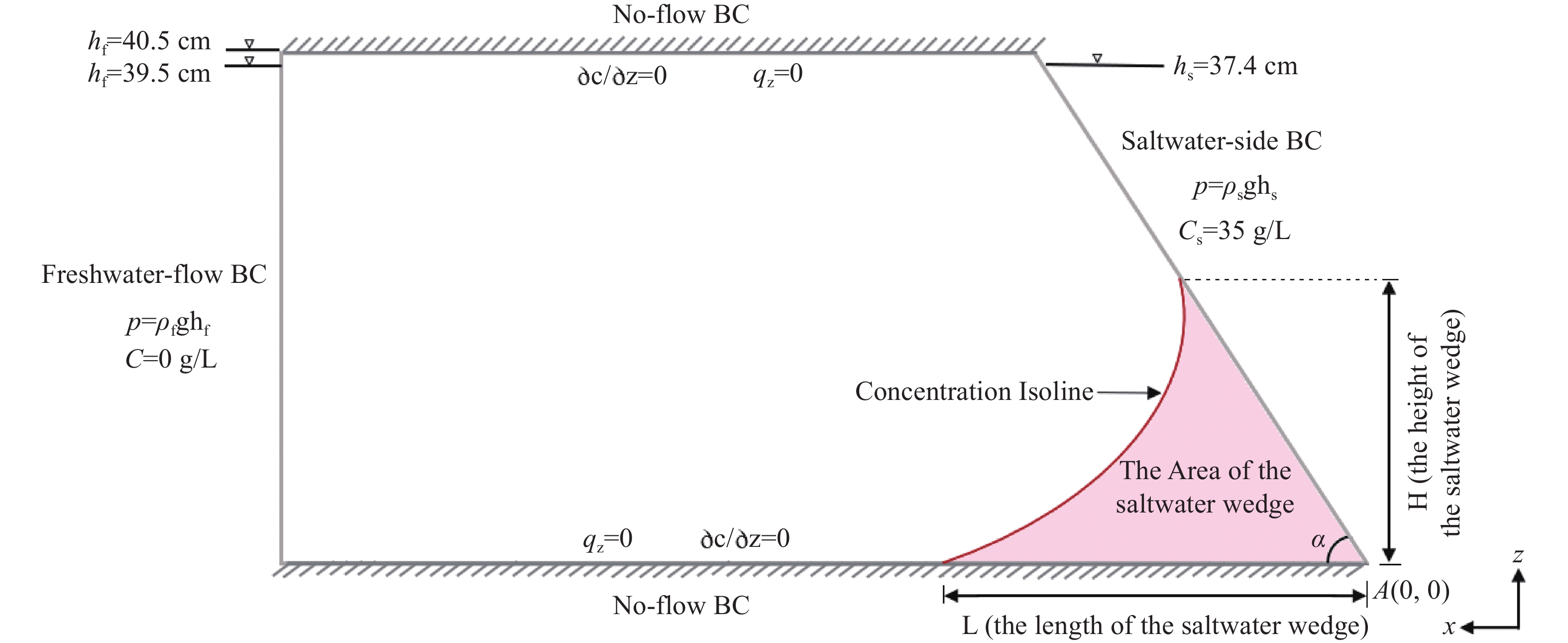
Figure 5. Conceptual model and boundary conditions used to simulate the numerical model
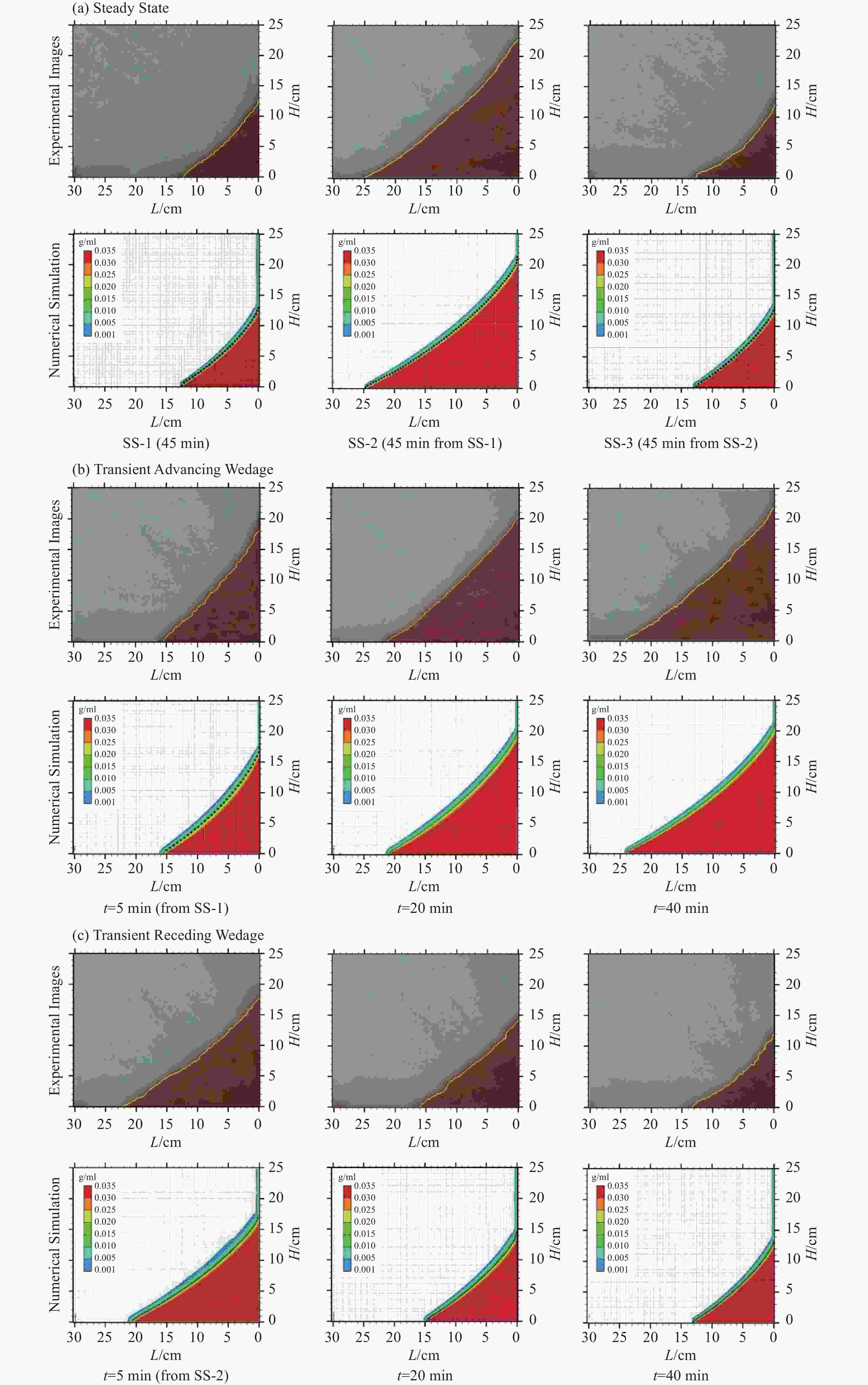
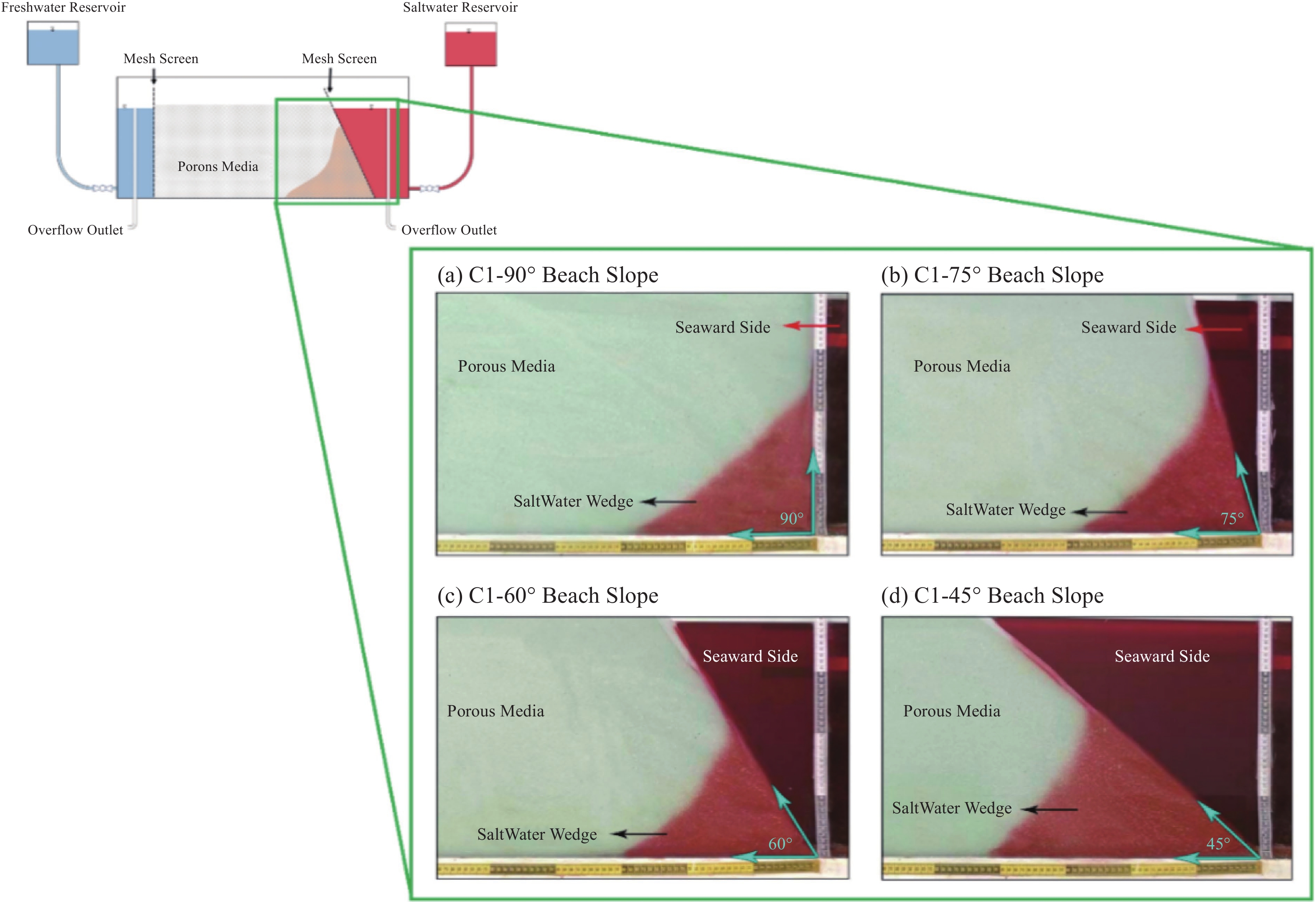
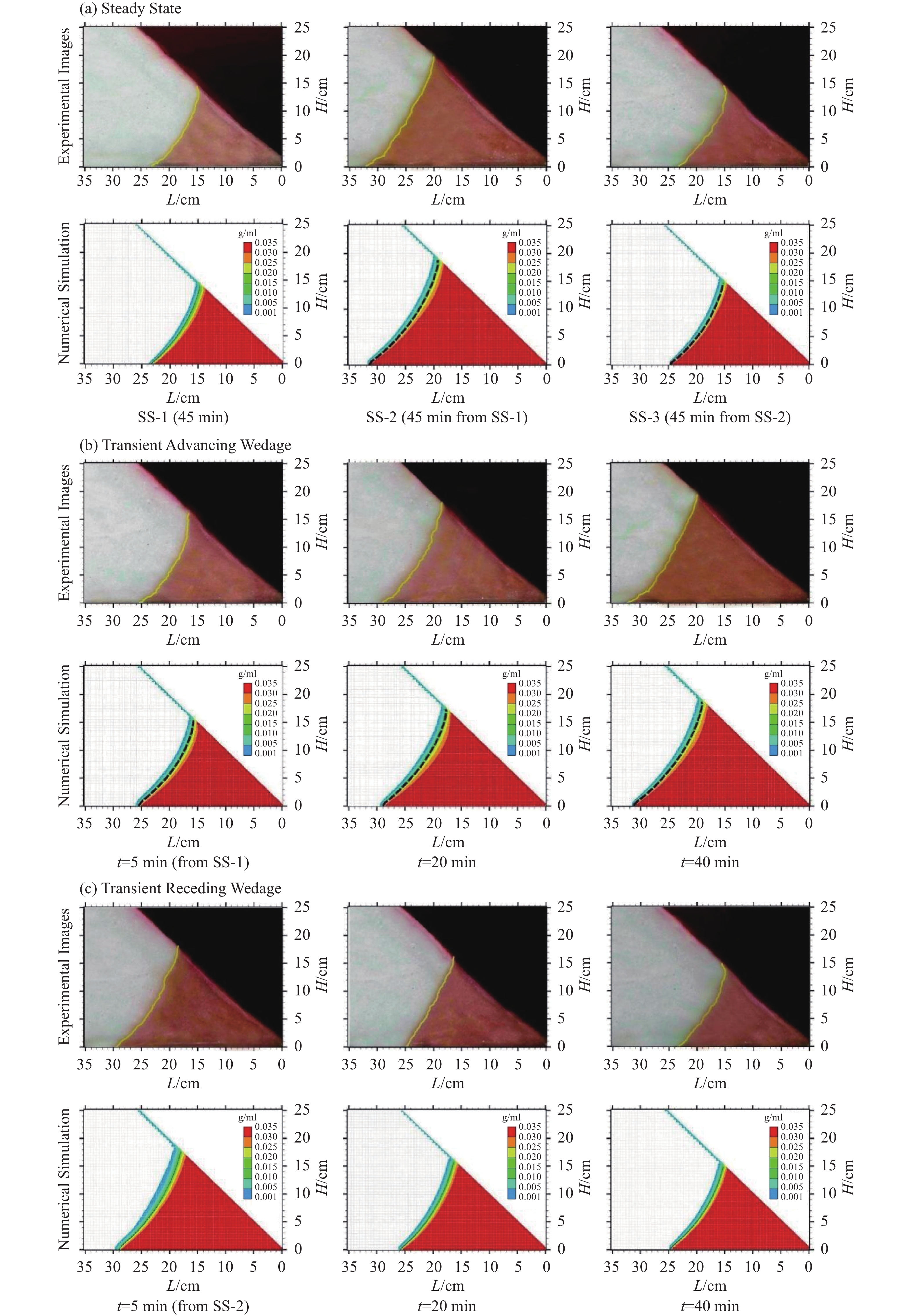
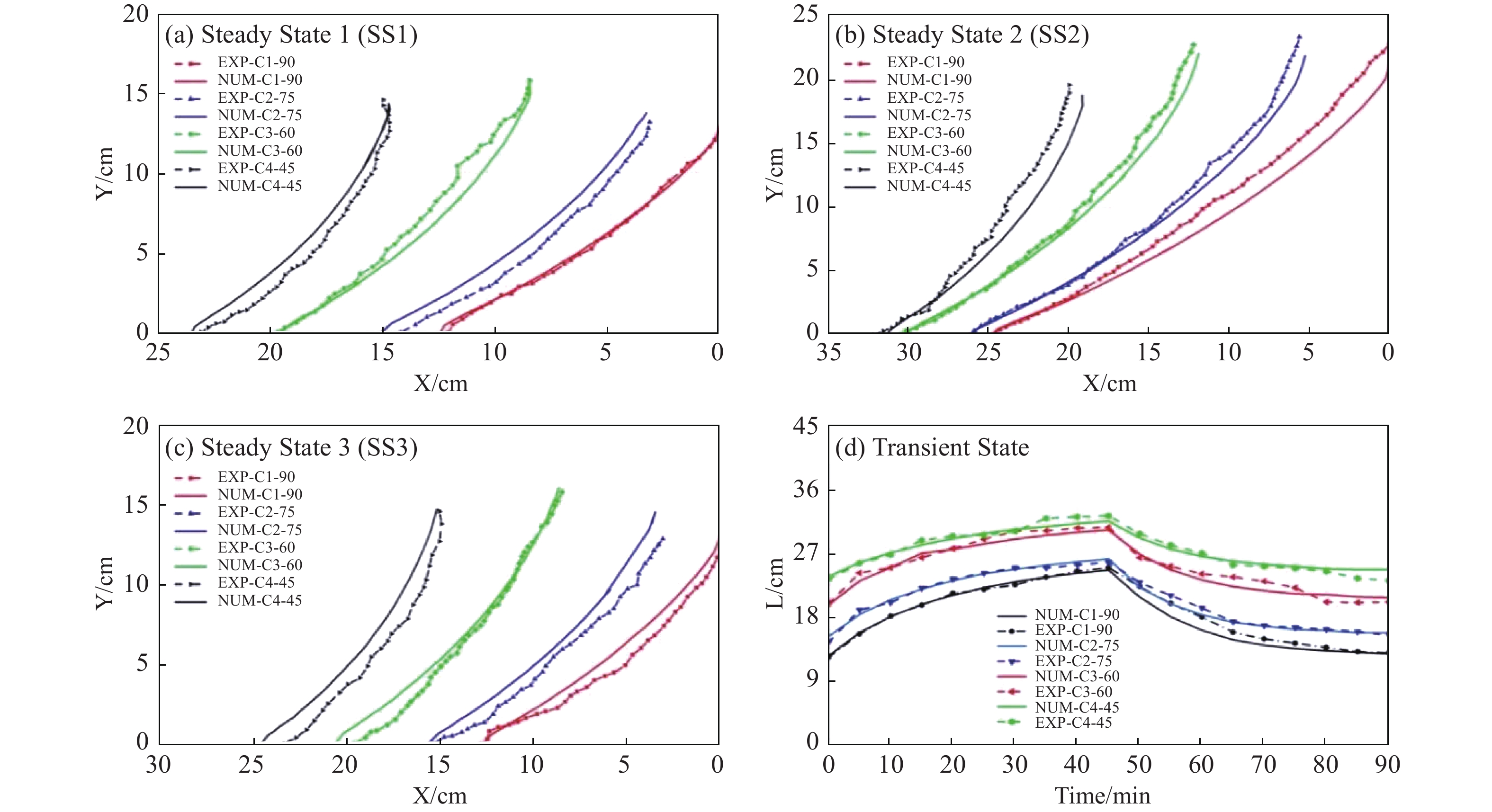
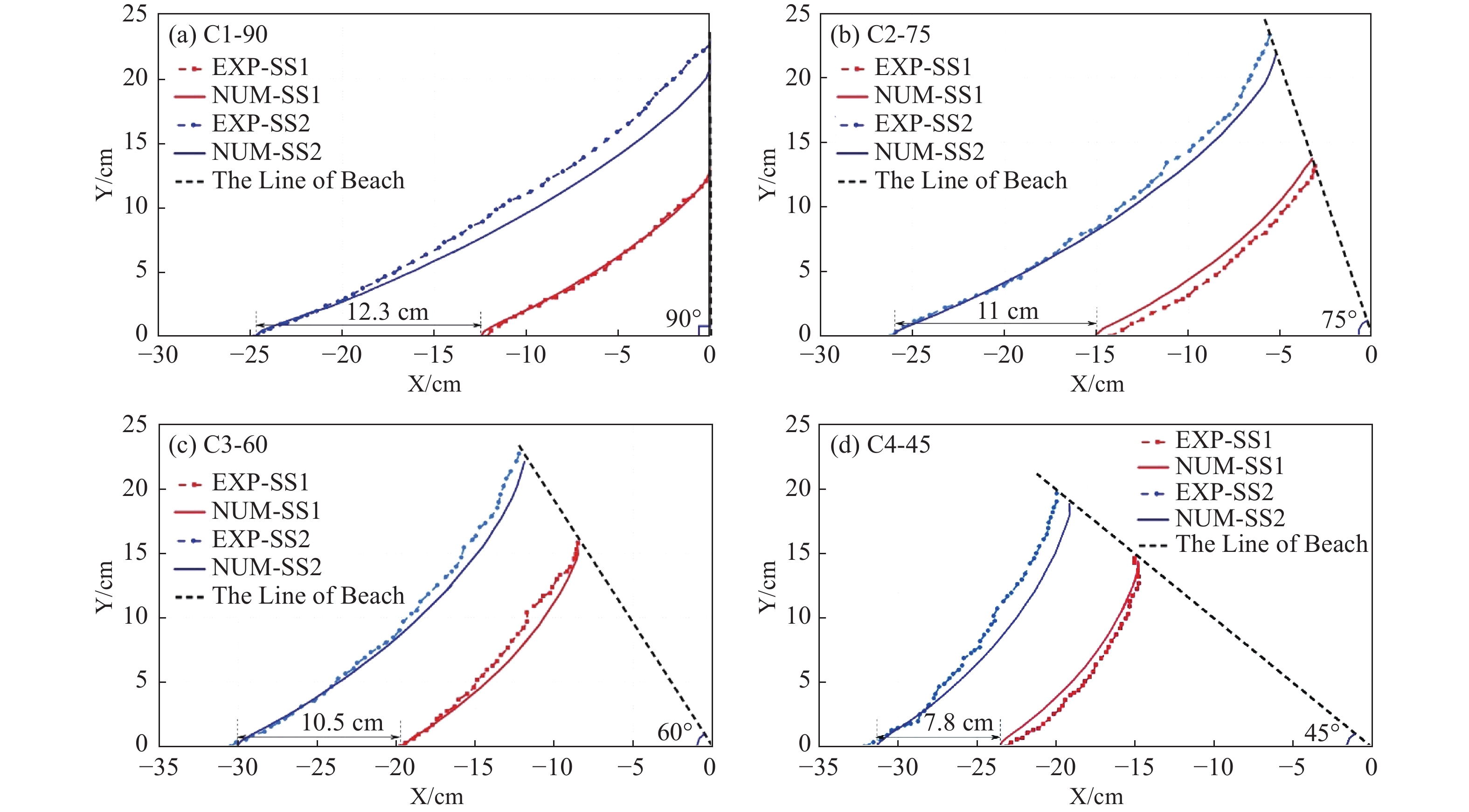
Figure 6. Laboratory experiments and numerical simulations of the advancing and receding saltwater wedge for a 90° slope beach (C1-90)
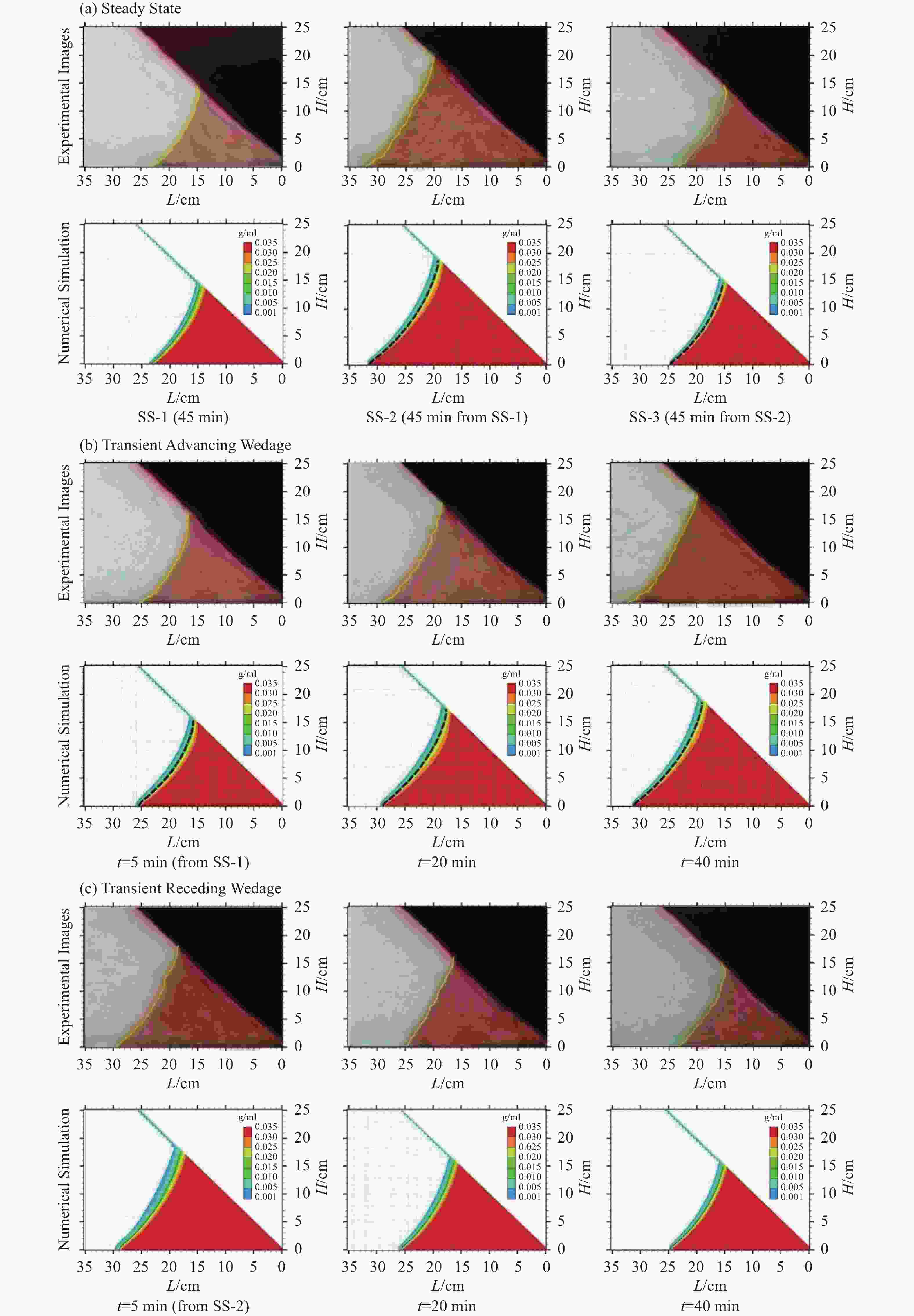
Figure 7. Laboratory experiments and numerical simulations of the advancing and receding saltwater wedge for a 45° slope beach (C4-45)
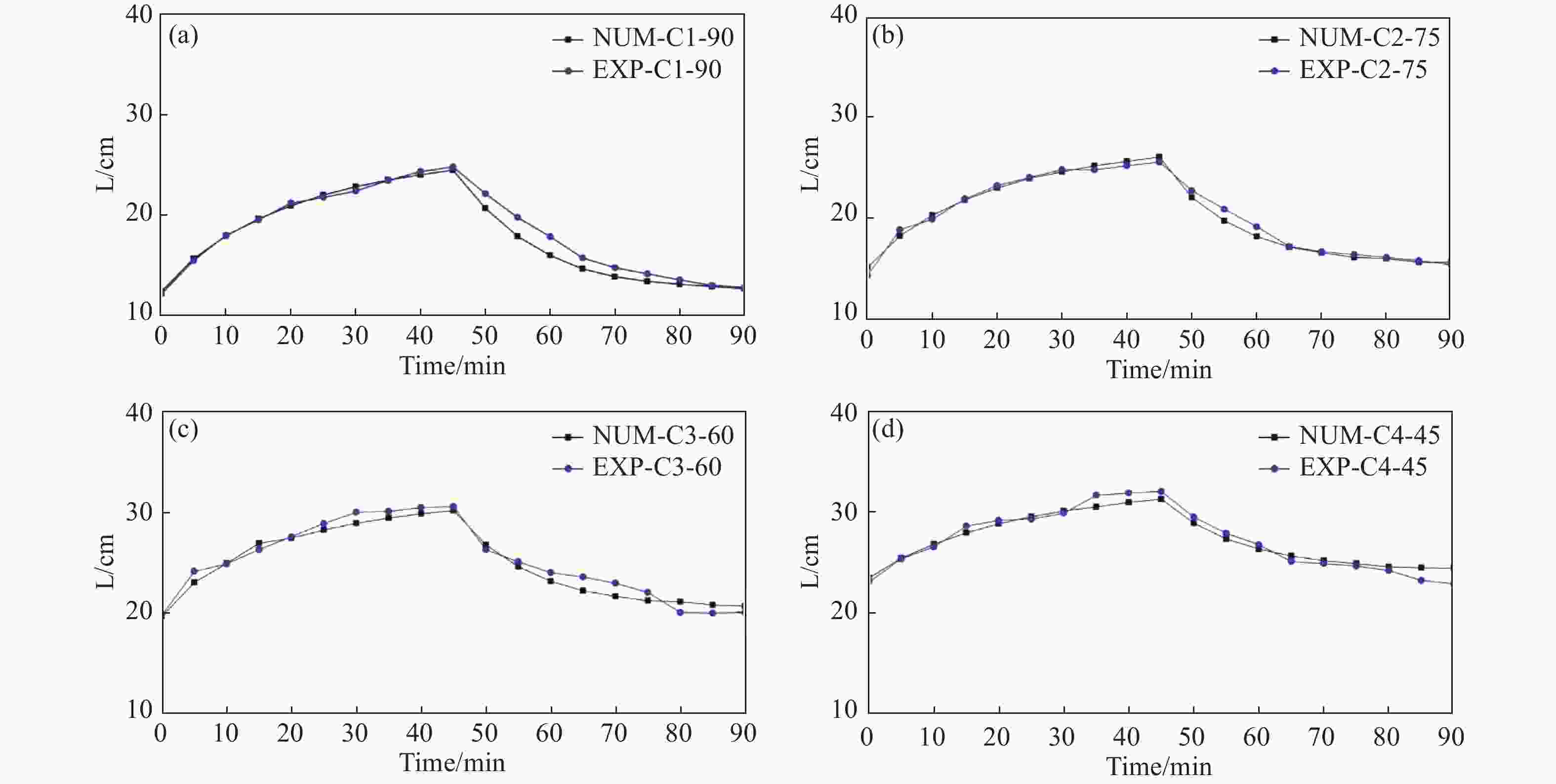
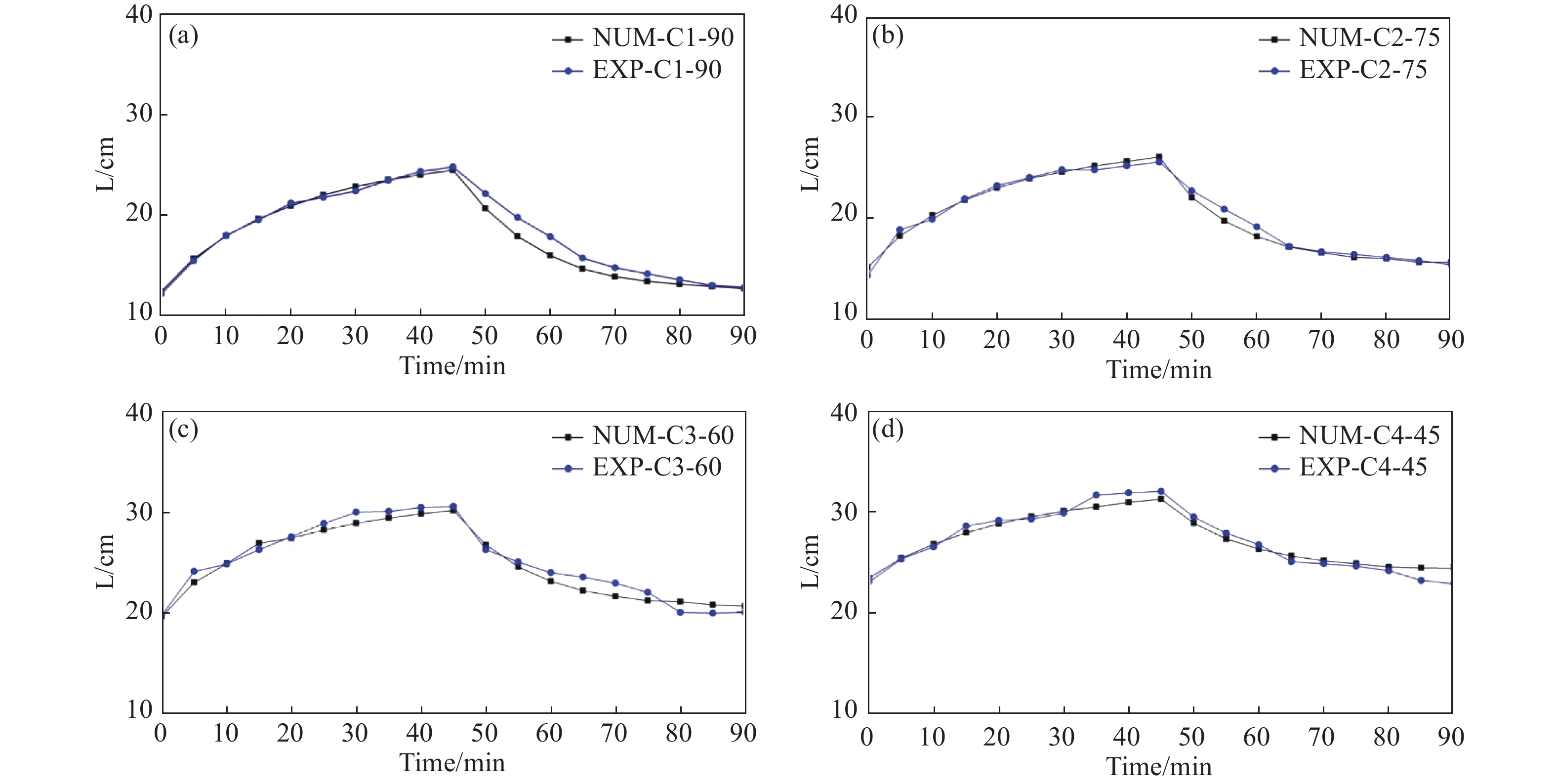
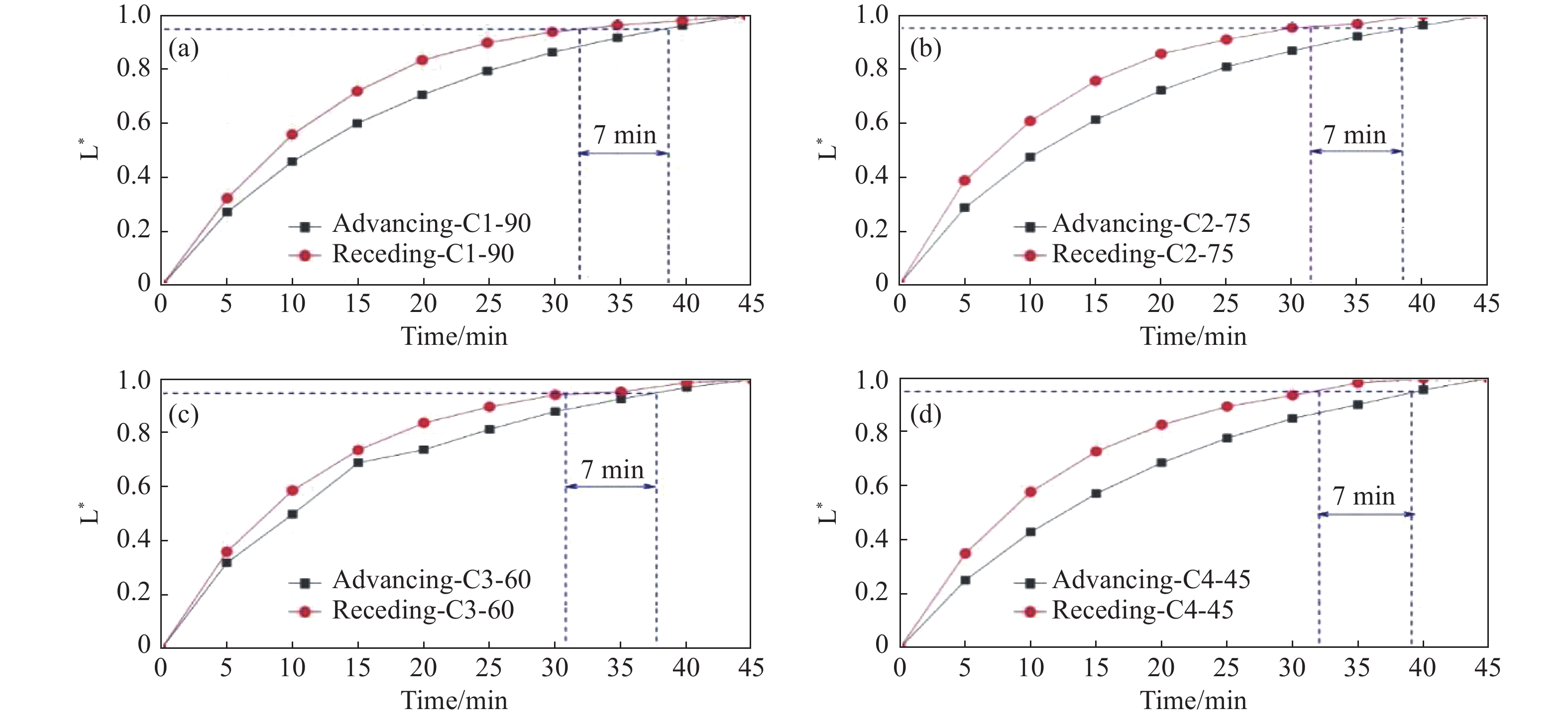
Figure 8. Changes in the saltwater wedge toe length index for beaches with the desired slopes under transient conditions
(a) C1-90, (b) C2-75, (c) C3-60 (d) C4-45, The beginning of the wedge recede stage is from t=45 min
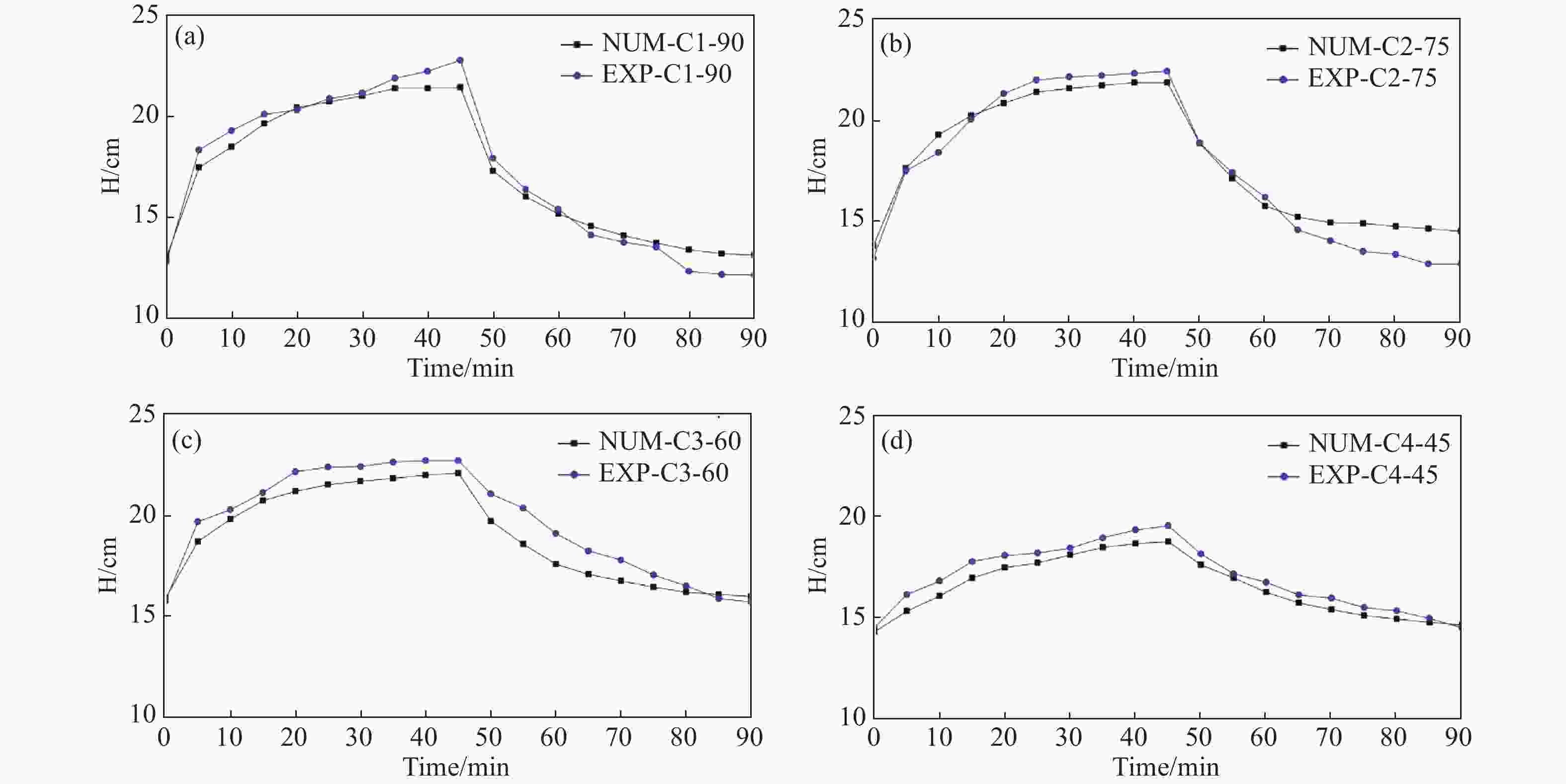
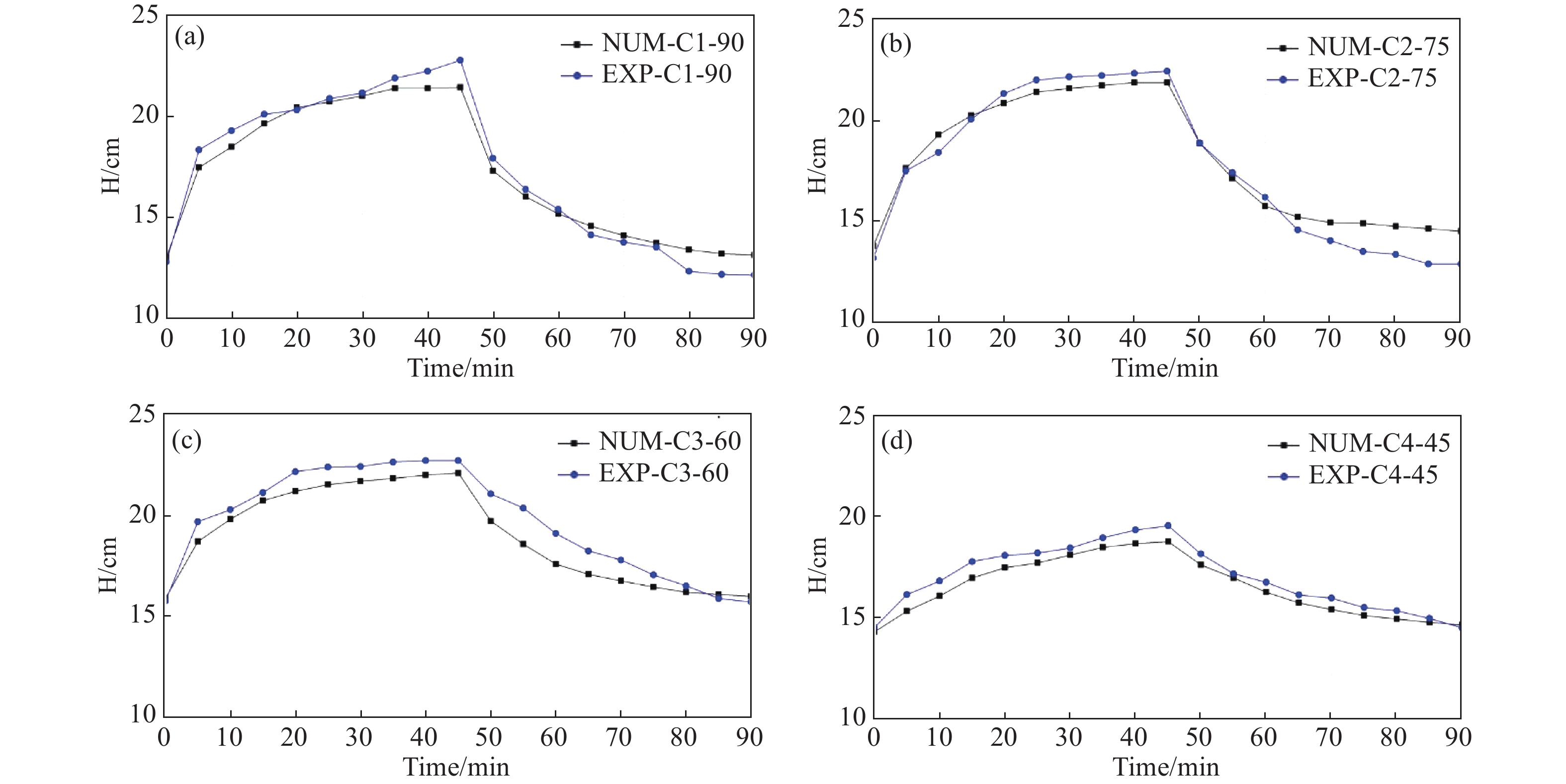
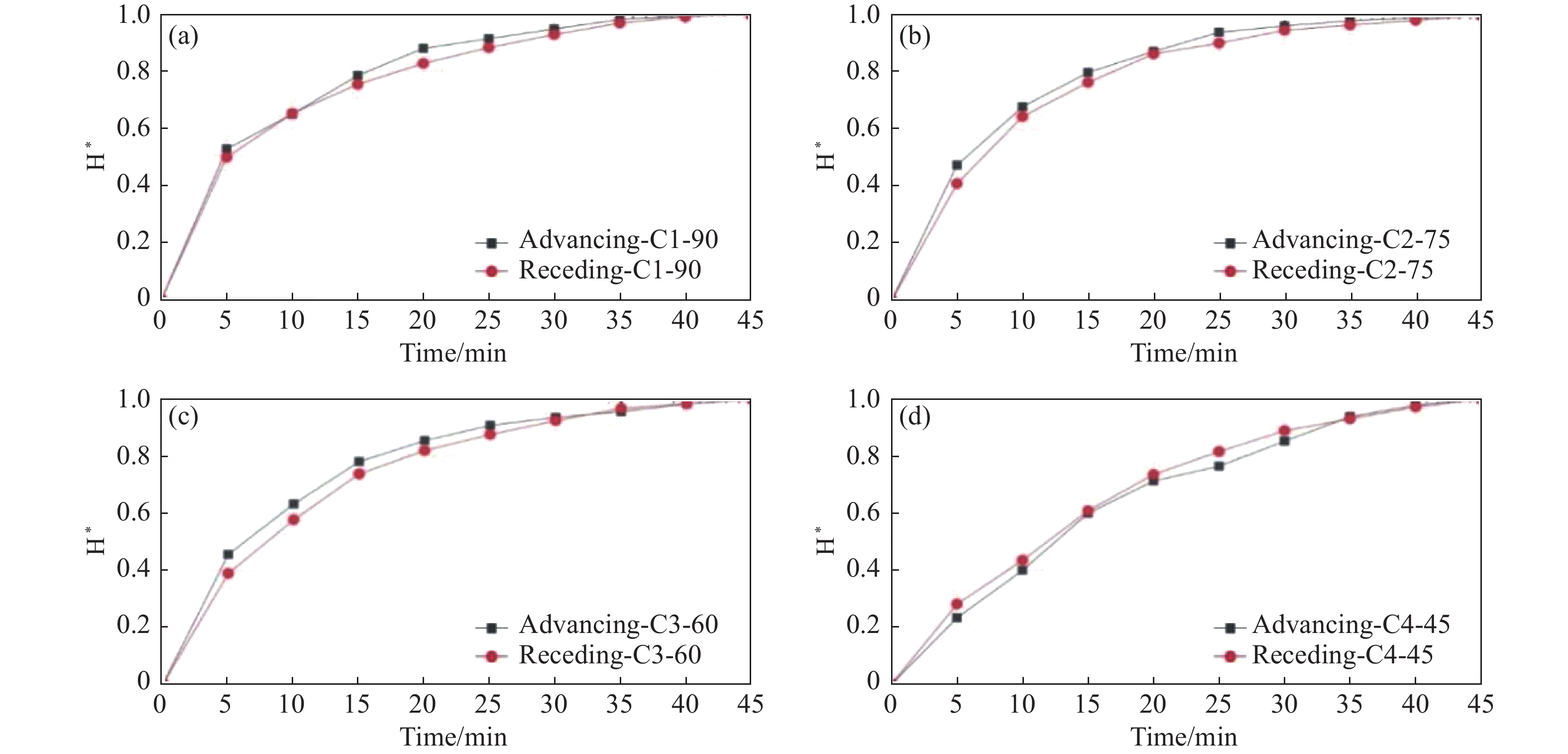
Figure 9. Changes in the saltwater wedge height index for beaches with the desired slopes under transient conditions
(a) C1-90, (b) C2-75, (c) C3-60, (d) C4-45. The beginning of the wedge recede stage is from t=45 min
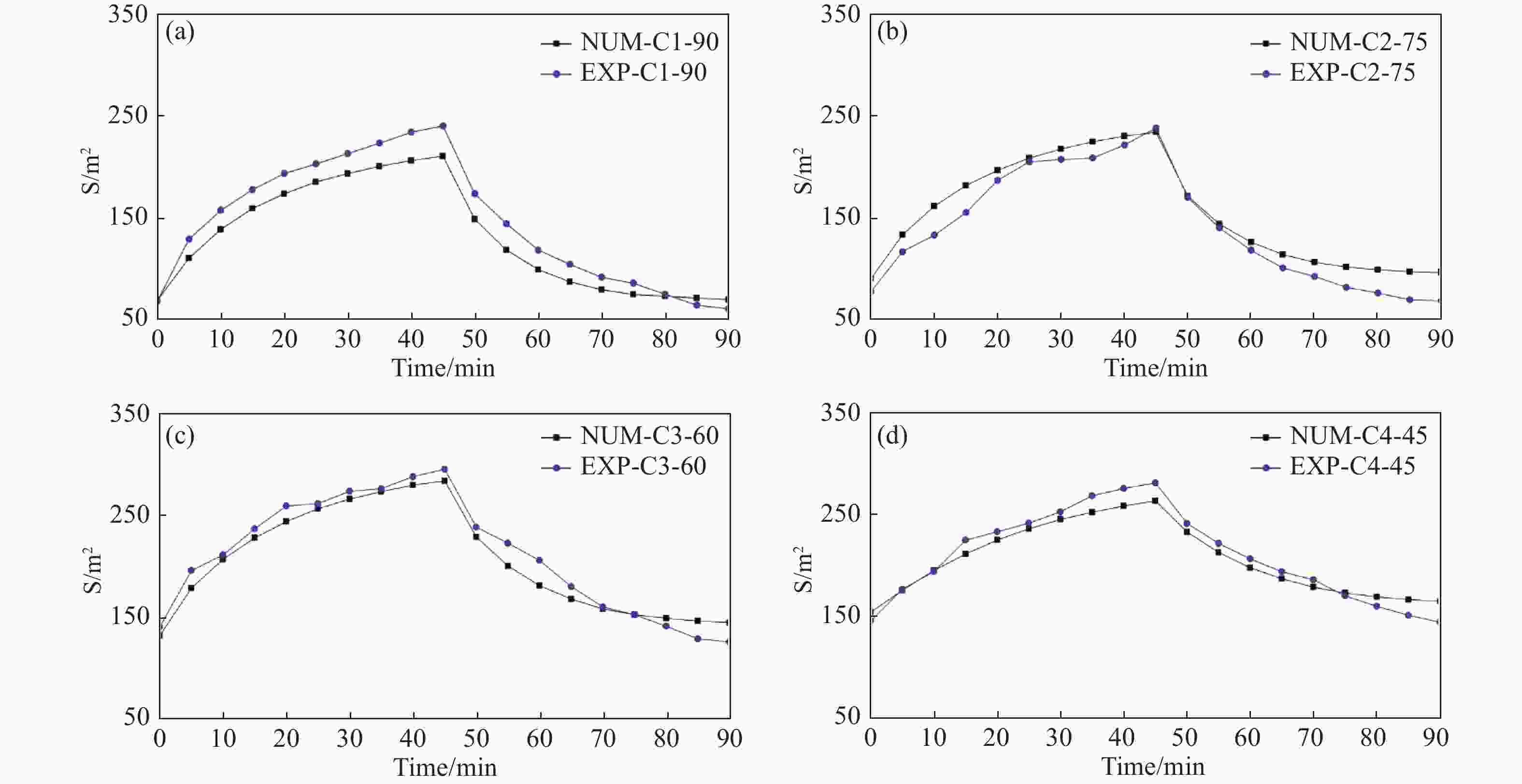
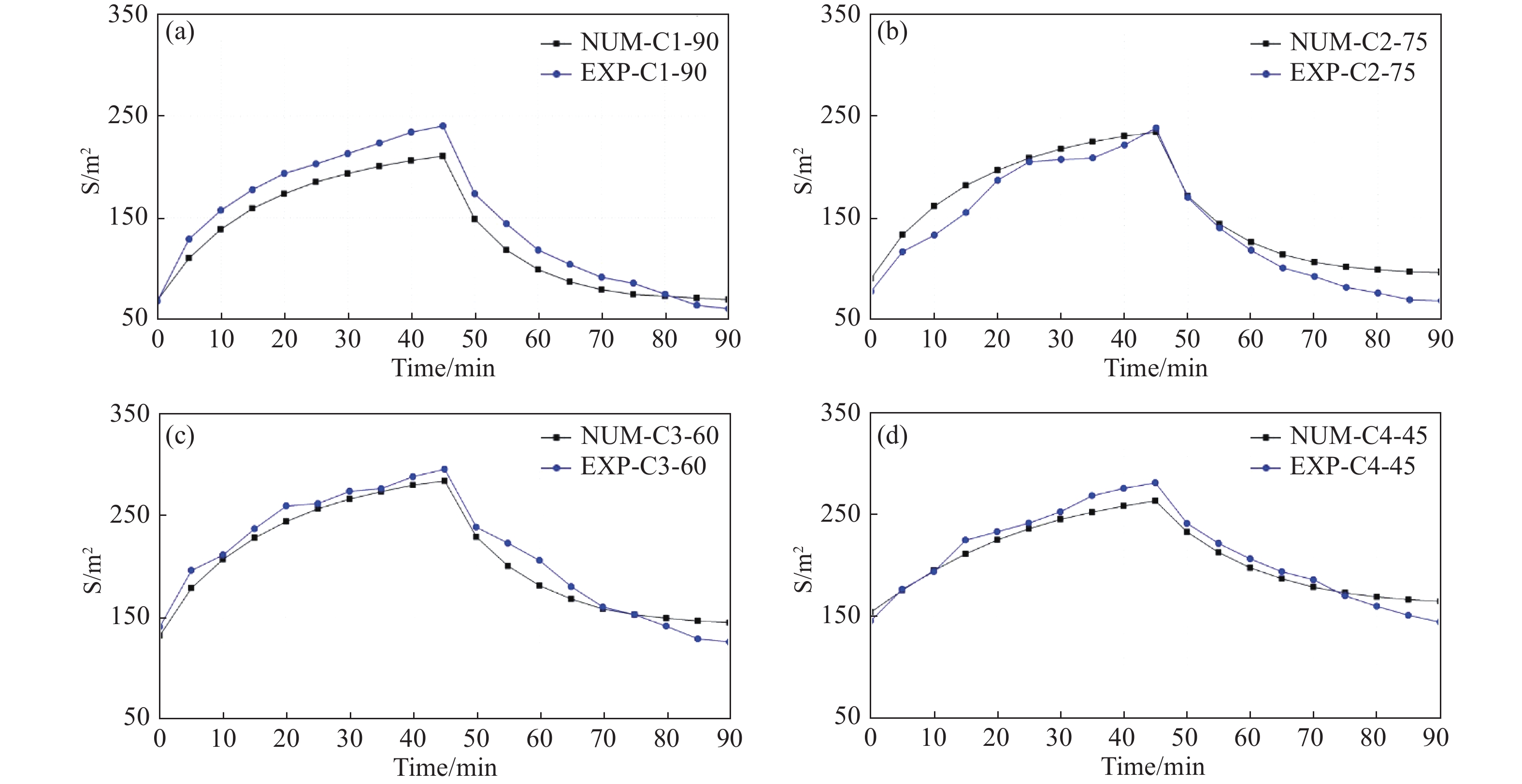
Figure 10. Changes in the saltwater wedge area index for beaches with the desired slopes under transient conditions
(a) C1-90, (b) C2-75, (c) C3-60, (d) C4-45. The beginning of the wedge recede stage is from t=45 m
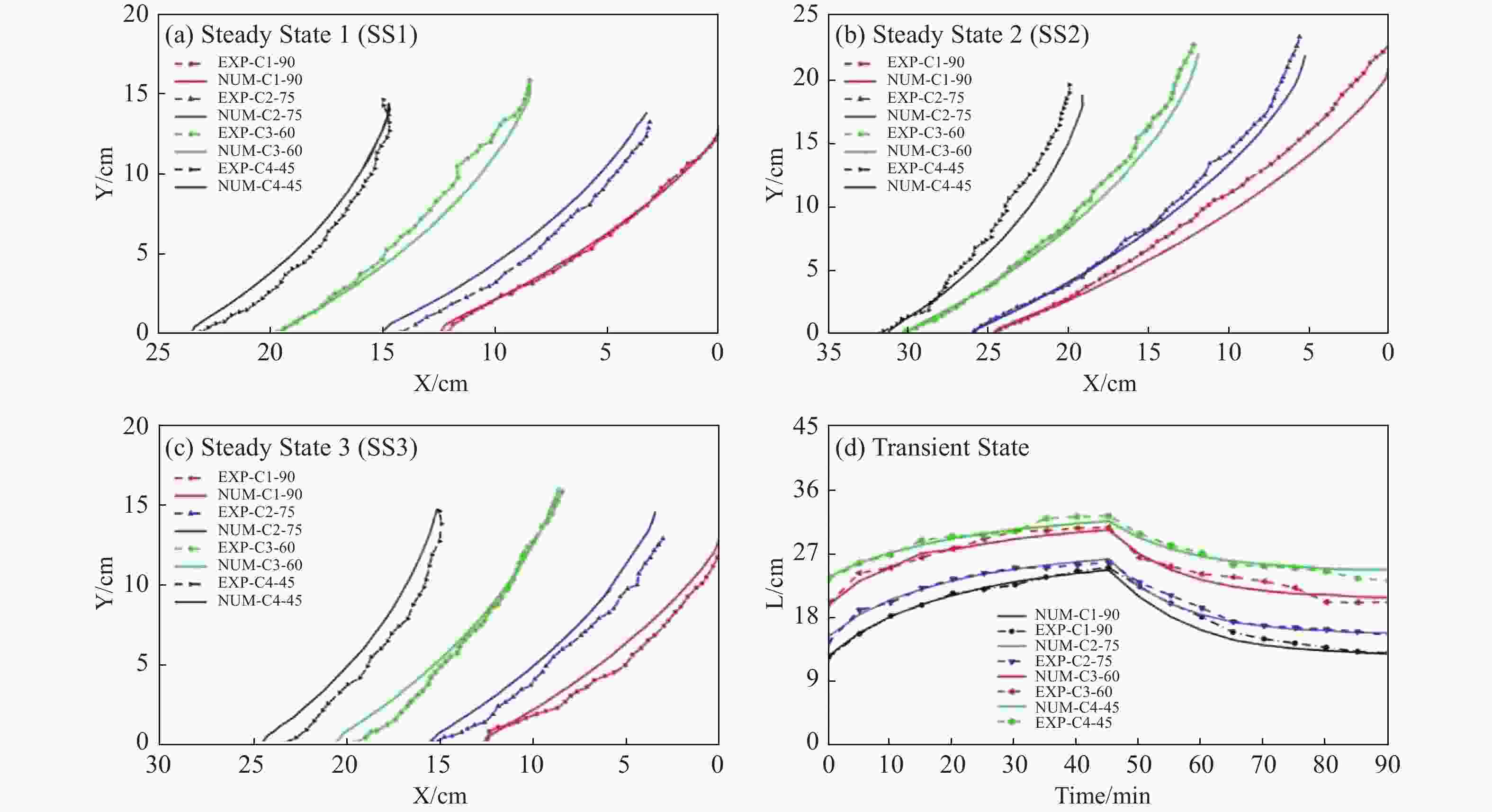
Figure 11. Changes in the toe length index of the saltwater wedge for beaches with different slopes during the advance and recede stages of the wedge
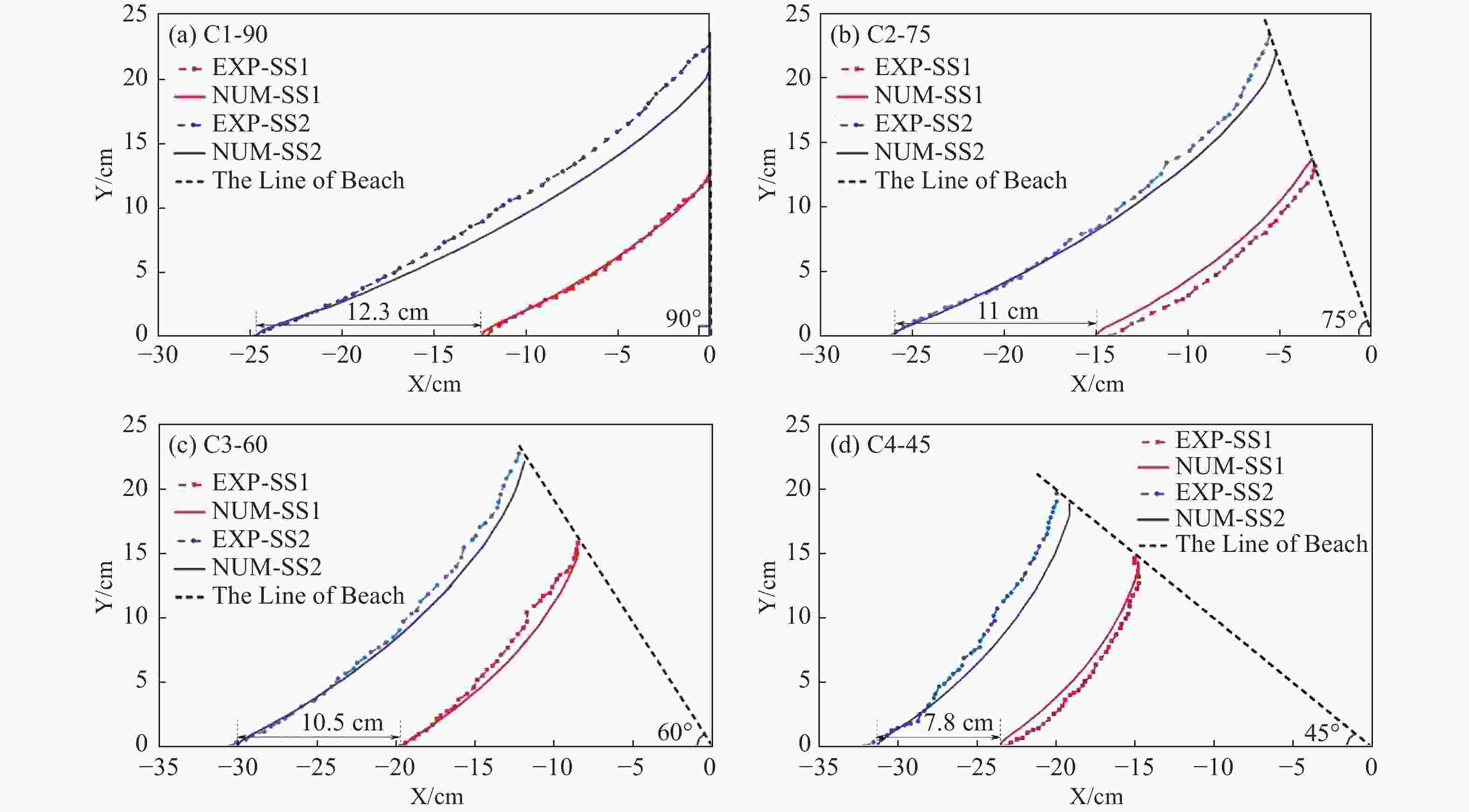
Figure 12. Changes in the saltwater wedge toe length index during the advancing process of (a) C1-90, (b) C2-75, (c) C3-60, and (d) C4-45
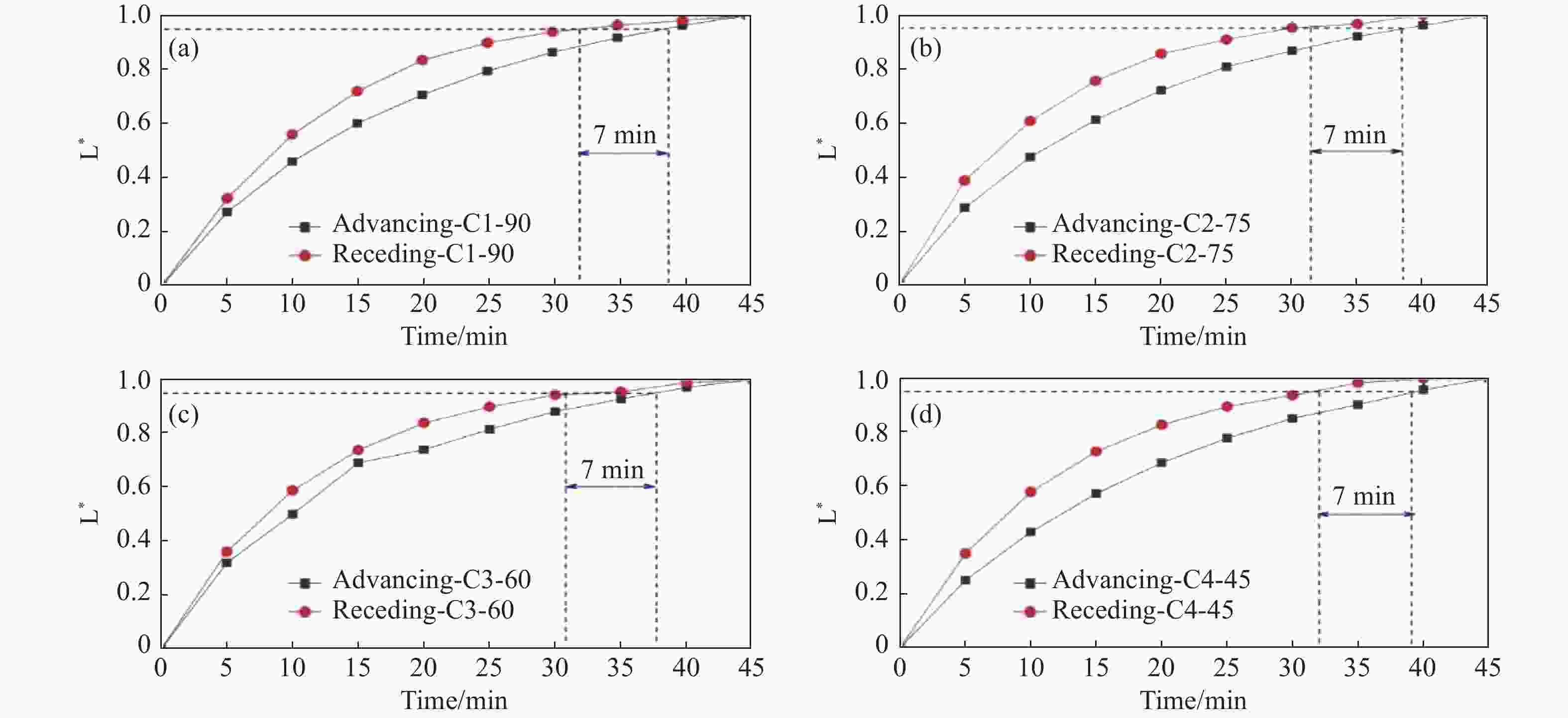
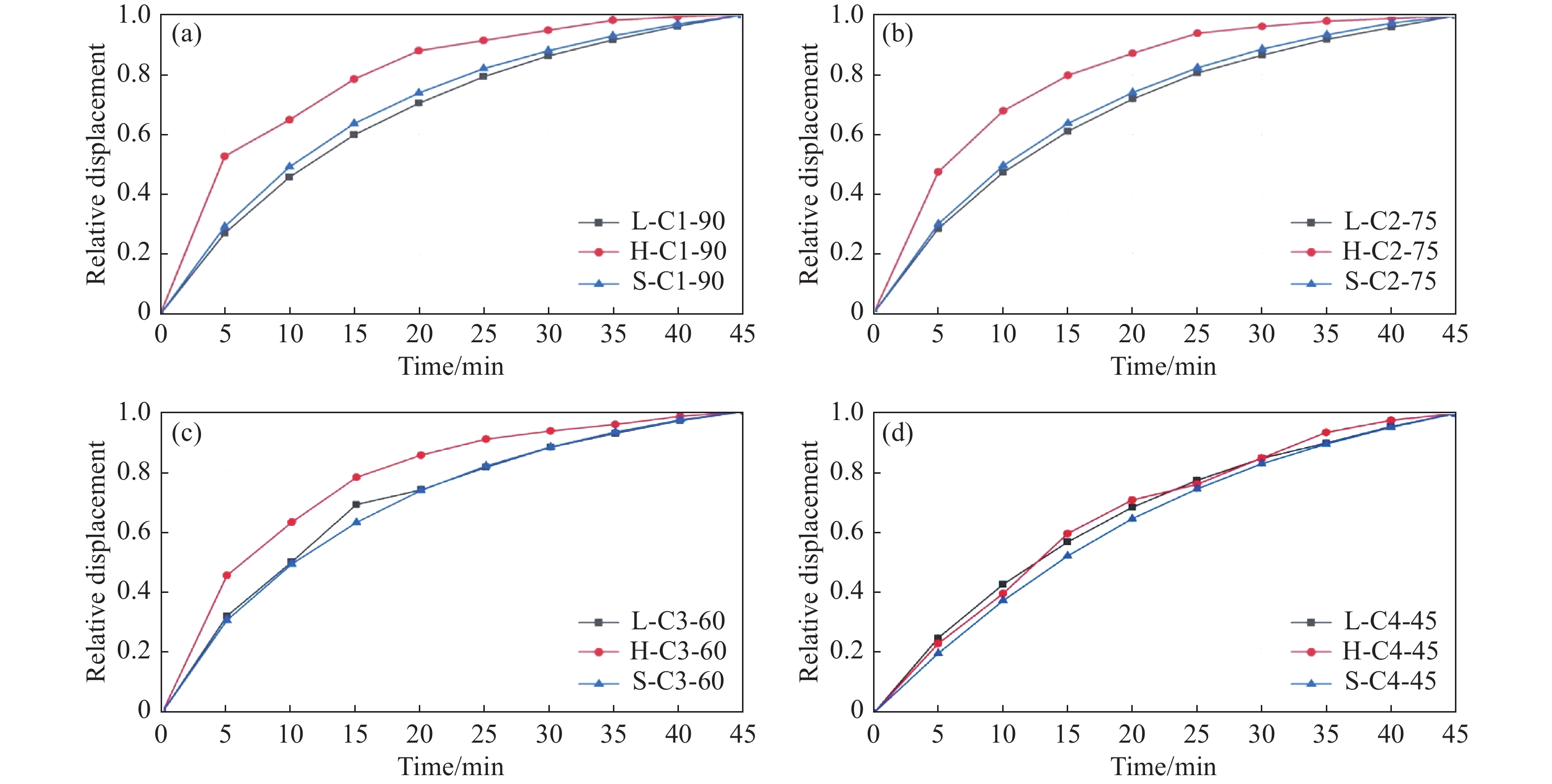
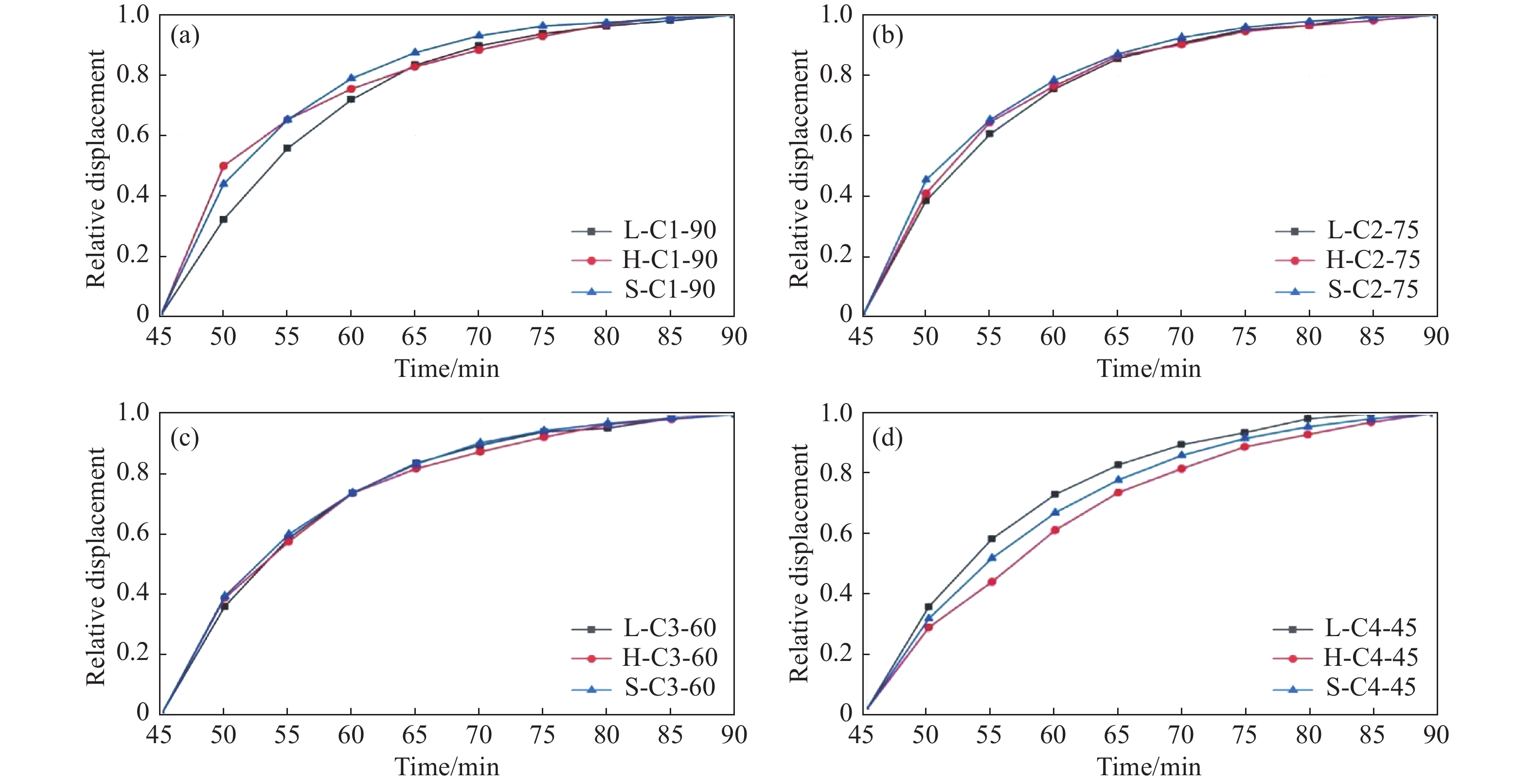
Figure 13. Changes in the relative displacement of the toe length of the saltwater wedge in the advance and recede stages (a) C1-90, (b) C2-75, (c) C3-60, (d) C4-45
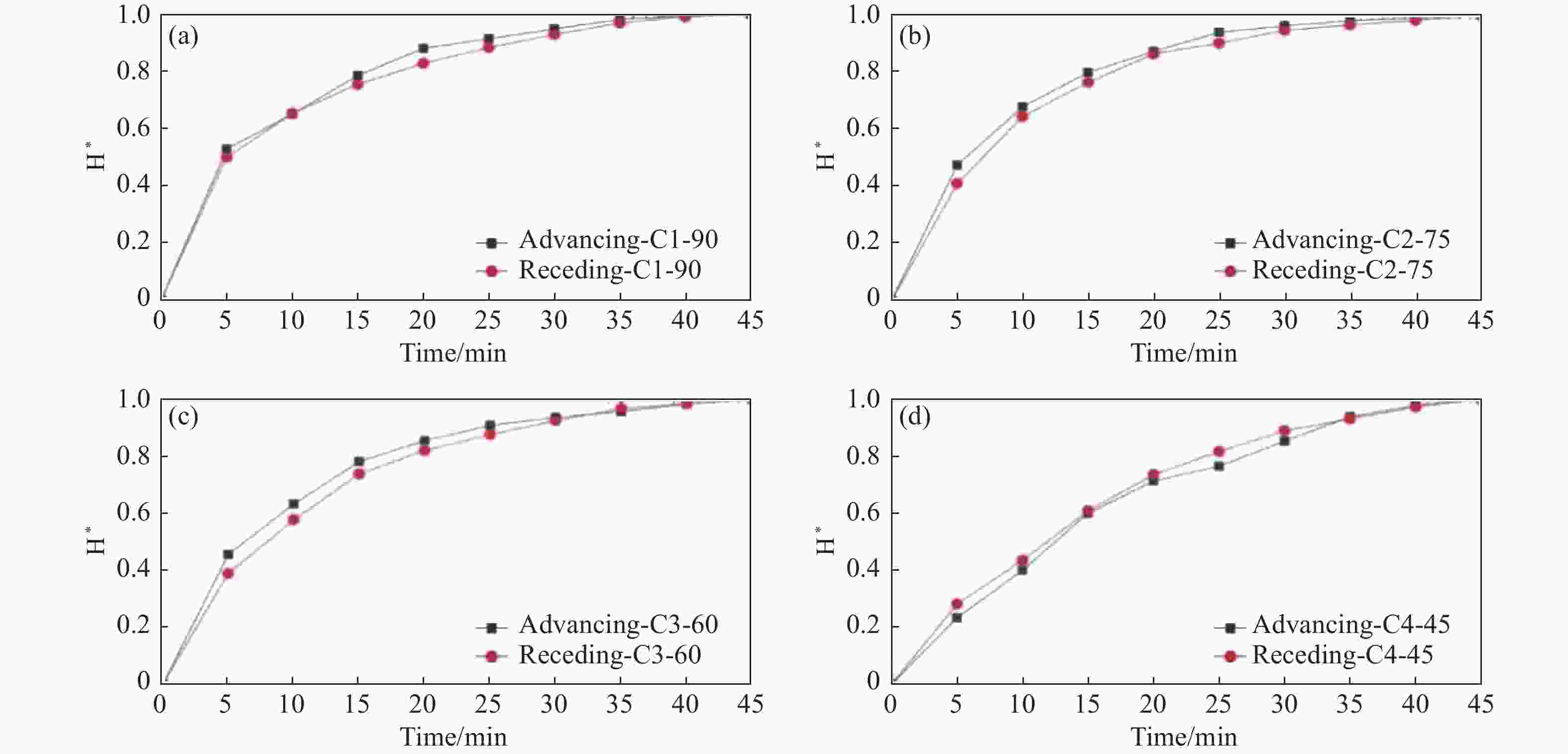
Figure 14. Changes in the relative displacement of the height of the saltwater wedge in the advance and recede stages (a) C1-90, (b) C2-75, (c) C3-60, (d) C4-45
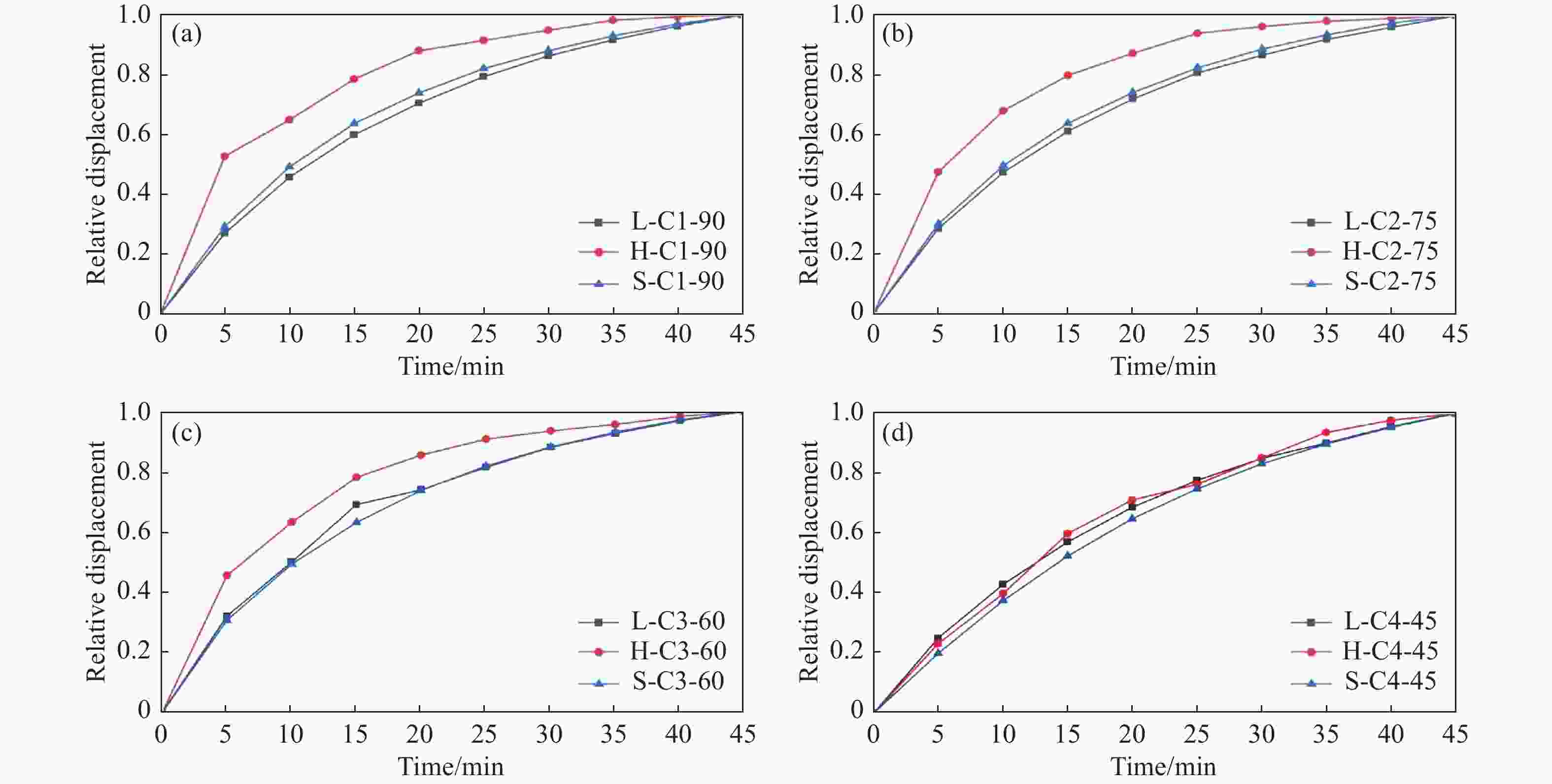
Figure 15. Changes of selected indicators of saltwater wedge over time in the advance stage
(a) C1-90, (b) C2-75, (c) C3-60, (d) C4-45
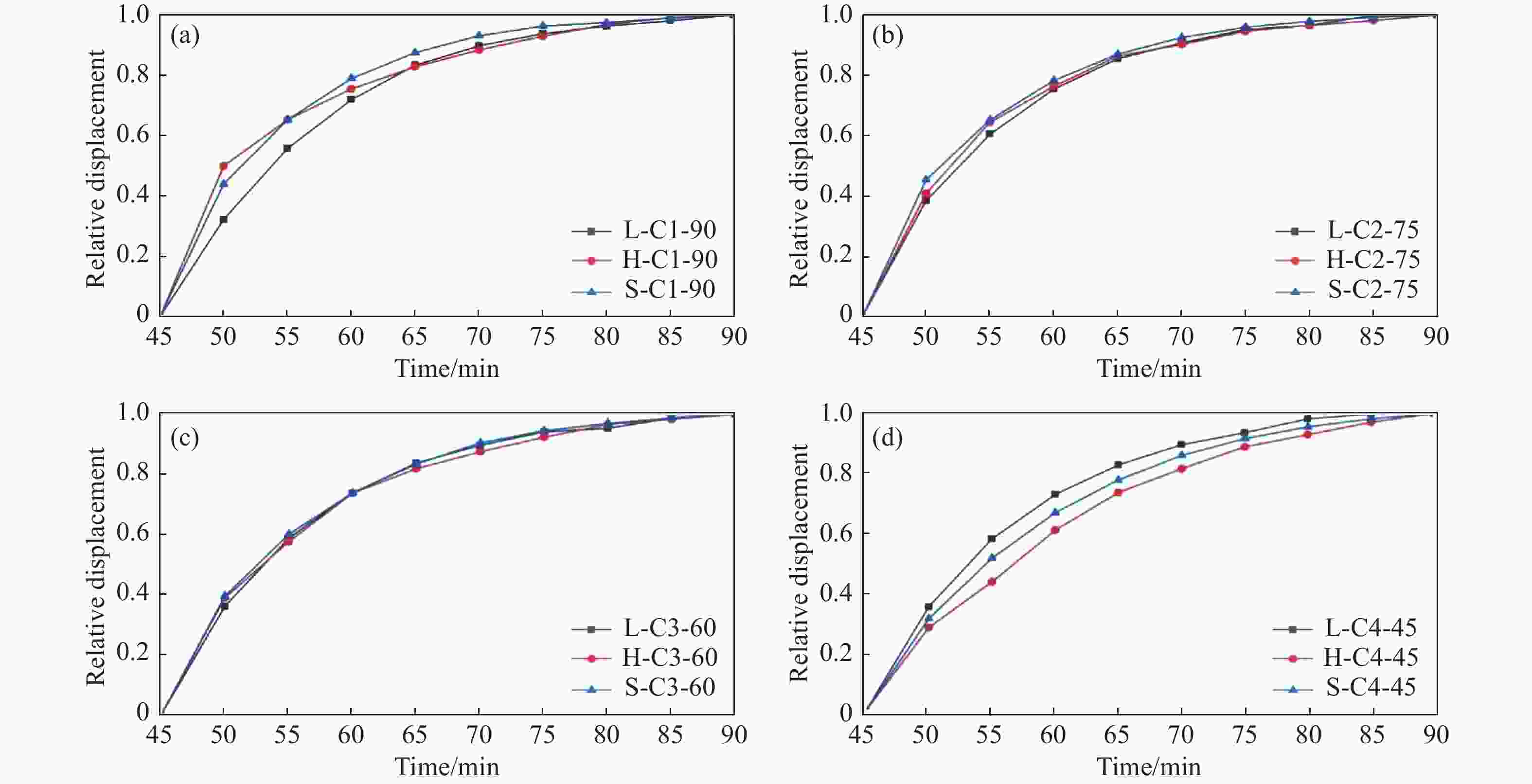
Figure 16. Changes in selected indicators of the saltwater wedge over time in the recede stage
(a) C1-90, (b) C2-75, (c) C3-60, (d) C4-45
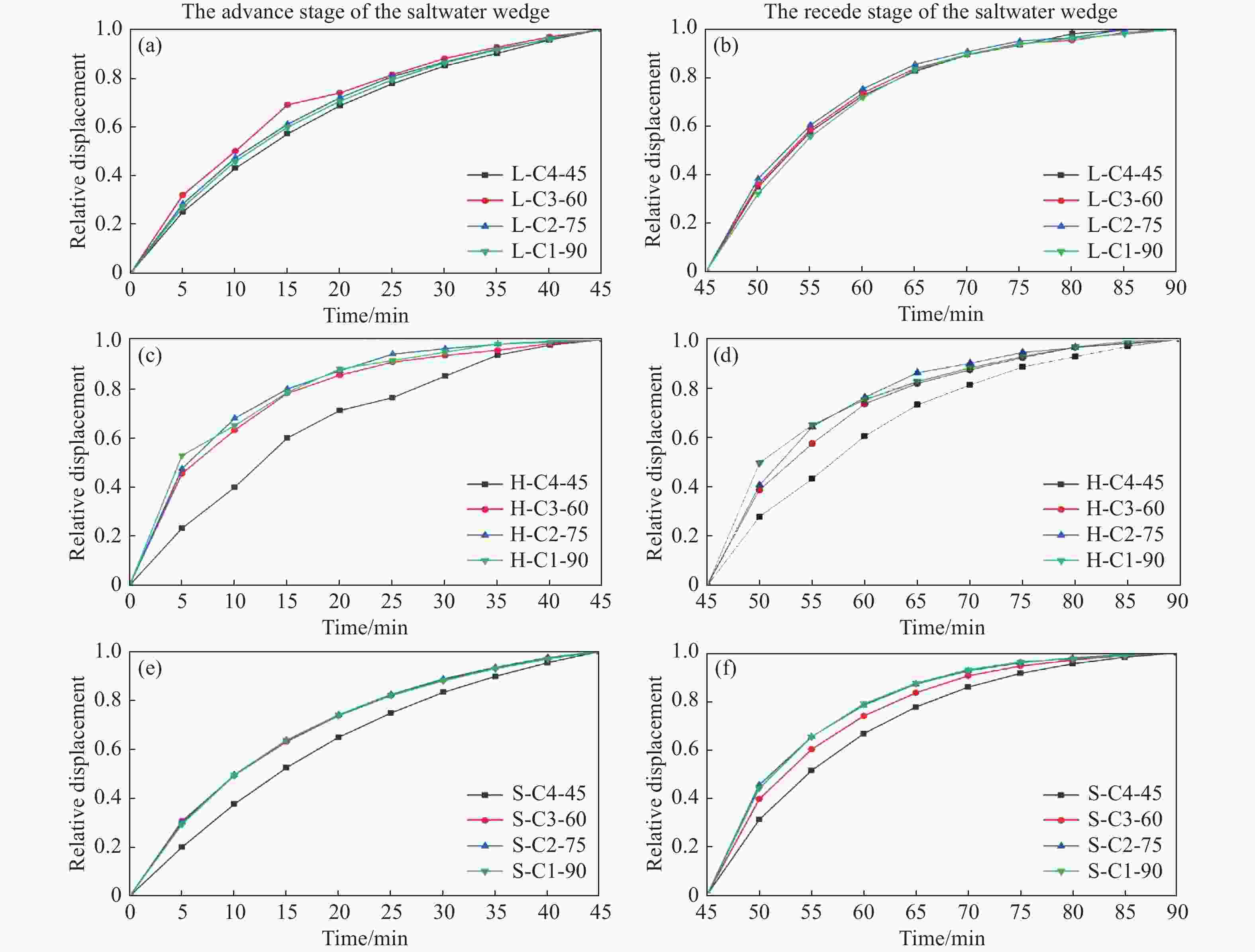
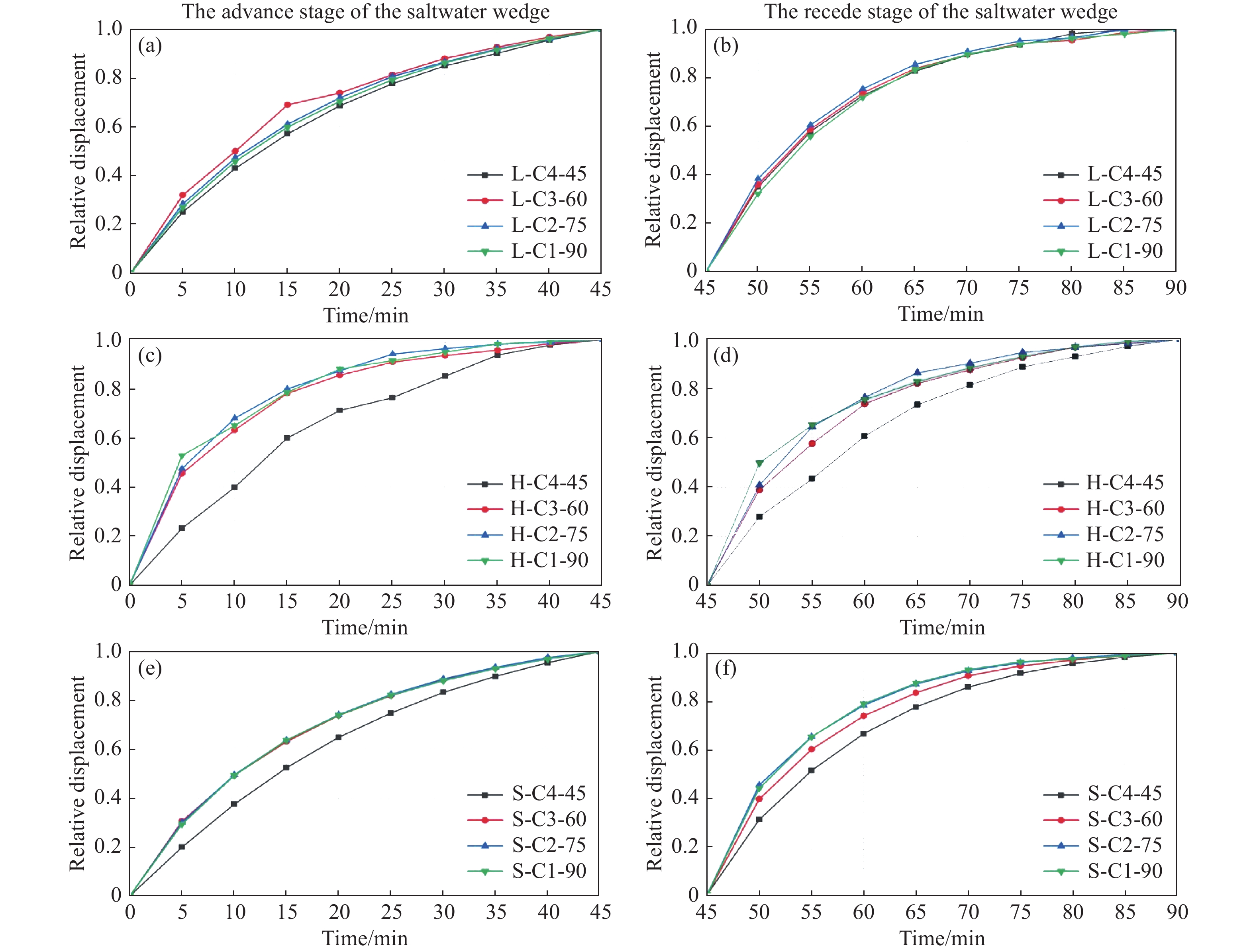
Figure 17. Changes in saltwater wedge indices for beaches with desired slopes in transient conditions
Notes: (a) the toe length of the wedge in the advance stage, (c) the height of the wedge in the advance stage, (e) the area of the wedge in the advance stage, (b) the toe length of the wedge in the recede stage, (d) the height of the wedge in the recede stage, (f) the area of the wedge in the recede stage
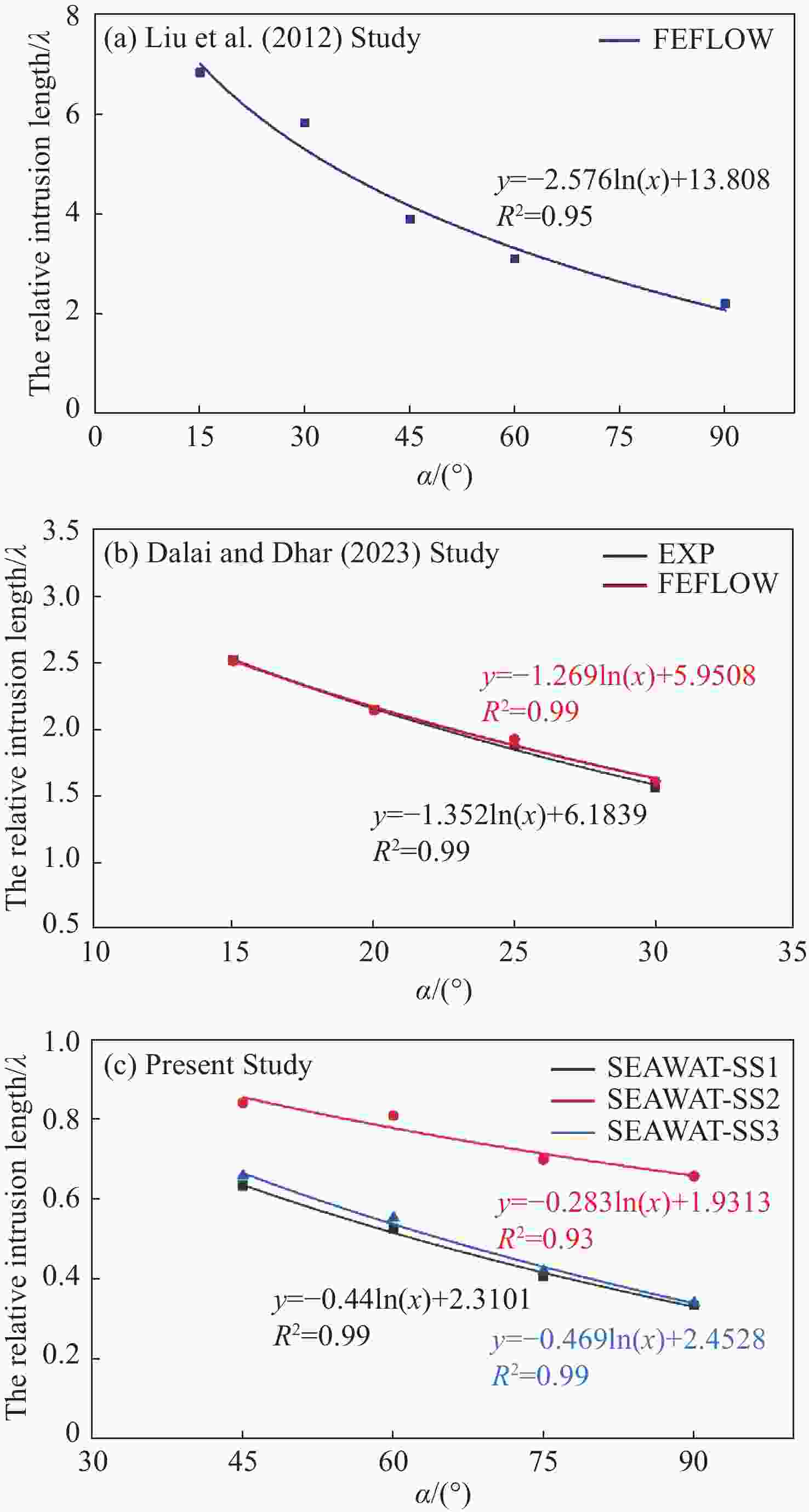
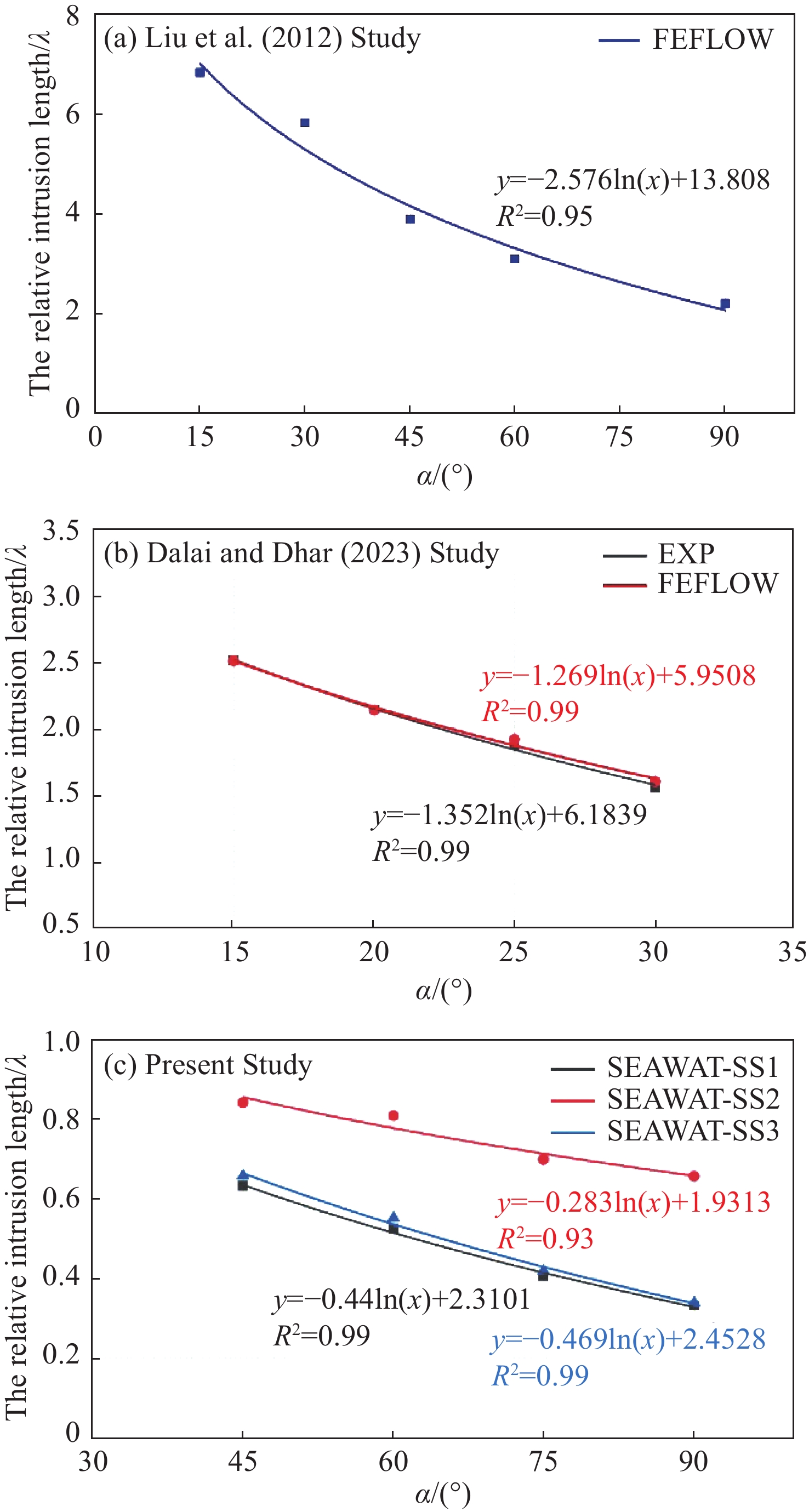
Figure 18. Relationships between the relative intrusion length (λ) and the beach angle (α)
(a) The results of Liu et al. (2012) research, (b) The results of this research in steady state conditions
Table 2. Summary of the numerical simulation parameters
Input parameters Value Unit Domain length 110 cm Domain height 42 cm Domain width 40 cm Hydraulic conductivity 33 cm/min Longitudinal dispersivity 0.1 cm Transversal dispersivity 0.01 cm Freshwater density 998 g/L Saltwater density 1024 g/L Saltwater concentration 35 g/L Porosity 0.385 - Saltwater level 37.4 cm Freshwater level 40.5 and 39.5 cm  下载: 导出CSV
Table 3. Statistical indices values during the advance stage of the saltwater wedge
Cases Indicators of Saltwater Wedge Statistical indicators R2 CE C1-90 Toe length (L) 0.996 0.995 Height (H) 0.974 0.938 Area (S) 0.993 0.832 C1-75 Toe length (L) 0.985 0.983 Height (H) 0.985 0.965 Area (S) 0.971 0.896 C1-60 Toe length (L) 0.978 0.962 Height (H) 0.987 0.881 Area (S) 0.991 0.953 C1-45 Toe length (L) 0.977 0.953 Height (H) 0.982 0.821 Area (S) 0.992 0.929
下载: 导出CSV
Table 4. Statistical indices values during the recede stage of the saltwater wedge
Cases Indicators of Saltwater Wedge Statistical indicators R2 CE C1-90 Toe length (L) 0.976 0.923 Height (H) 0.991 0.940 Area (S) 0.976 0.887 C1-75 Toe length (L) 0.977 0.970 Height (H) 0.980 0.862 Area (S) 0.990 0.889 C1-60 Toe length (L) 0.927 0.921 Height (H) 0.925 0.784 Area (S) 0.947 0.918 C1-45 Toe length (L) 0.973 0.922 Height (H) 0.984 0.905 Area (S) 0.970 0.917
下载: 导出CSV
-
Abarca E, Carrera J, Sanchez-Vila X, et al. 2007. Quasi-horizontal circulation cells in 3D seawater intrusion. Journal of Hydrology, 339: 118−129. DOI: 10.1016/j.jhydrol.2007.02.017. Abd-Elaty I, Polemio M. 2023. Saltwater intrusion management at different coastal aquifers bed slopes considering sea level rise and reduction in fresh groundwater storage. Stochastic Environmental Research and Risk Assessment, 37: 2083−2098. DOI: 10.1007/s00477-023-02381-9. Abdelgawad AM, Abdoulhalik A, Ahmed AA, et al. 2018. Transient investigation of the critical pumping rate in a laboratory-scale coastal aquifer. Water Resources Management, 32: 3563−3577. DOI: 10.1007/s11269-018-1988-3. Abd-Elhamid HF, Javadi AA. 2011. A cost-effective method to control seawater intrusion in coastal aquifers. Water Resources Management, 25: 2755−2780. DOI: 10.1007/s11269-011-9837-7. Abd-Elhamid HF, Sherif MM. 2020. Effects of aquifer bed slope and sea level on saltwater intrusion in coastal aquifers. Hydrology, 7(1): 5. DOI: 10.3390/hydrology7010005. Abdoulhalik A, Ahmed A, Abdelgawad A, et al. 2022. The impact of a low-permeability upper layer on transient seawater intrusion in coastal aquifers. Journal of Environmental Management, 307: 114602. DOI: 10.1016/j.jenvman.2022.114602. Abdoulhalik A, Ahmed AA. 2017a. The effectiveness of cutoff walls to control saltwater intrusion in multi-layered coastal aquifers: Experimental and numerical study. Journal of Environment Management, 199: 62−73. DOI: 10.1016/j.jenvman.2017.05.040. Abdoulhalik A, Ahmed AA. 2017b. Transient investigation of saltwater upconing in a laboratory-scale coastal aquifer. Estuarine Coastal and Shelf Science, 214: 149−160. DOI: 10.1016/j.ecss.2018.09.024. Ataie-Ashtiani B, Volker RE, Lockington DA. 1999. Tidal effects on sea water intrusion in unconfined aquifers. Journal of Hydrology, 216: 17−31. DOI: 10.1016/S0022-1694(98)00275-3. Ataie-Ashtiani B, Werner A, Simmons C, et al. 2013. How important is the impact of land surface inundation on seawater intrusion caused by sea-level rise? Hydrogeology Journal, 21: 1673−1677. DOI: 10.1007/s10040-013-1021-0. Cao X, Li Y, Wang Z, et al. 2024. Experimental and SEAWAT numerical study on seawater intrusion patterns in relation to beach slope and sea-level changes. Water, 16(3457): 1−15. Chang SW, Clement TP. 2012. Experimental and numerical investigation of saltwater intrusion dynamics in flux-controlled groundwater systems. Water Resources Management, 48: 1−10. DOI: 10.1029/2012WR012134. Cheng ZS, Su C, Wang WZ, et al. 2026. Hydrogeological flow patterns and hydrochemical driving forces of groundwater in a typical coastal hilly region of the Jinjiang watershed, Southeast China: Recommendations for water pollution control and management. China Geology, 9(2): 1−17. DOI: 10.31035/cg2024185. Dalai C, Dhar A. 2023. Impact of beach face slope variation on saltwater intrusion dynamics in the unconfined aquifer under tidal boundary conditions. Flow Measurement and Instrumentation, 89: 102298. DOI: 10.1016/j.flowmeasinst.2022.102298. Dalai C, Munusamy SB, Dhar A. 2020. Experimental and numerical investigation of saltwater intrusion dynamics on sloping sandy beach under static seaside boundary condition. Flow Measurement and Instrumentation, 75: 101794. DOI: 10.1016/j.flowmeasinst.2020.101794 Deng B, Zhang W, Yao Y, et al. 2022. A laboratory study of the effect of varying beach slopes on bore-driven swash hydrodynamics. Frontiers in Marine Science, 9: 956379. DOI: 10.3389/fmars.2022.956379. Fang Y, Zheng T, Wang H, et al. 2021. Experimental and numerical evidence on the influence of tidal activity on the effectiveness of subsurface dams. Journal of Hydrology, 603: 127149. DOI: 10.1016/j.jhydrol.2021.127149. Flowers TC, Hunt JR. 2007. Viscous and gravitational contributions to mixing during vertical brine transport in water-saturated porous media. Water Resources Management, 43(1): W01407. DOI: 10.1029/2005WR004773. Goswami RR, Clement TP. 2007. Laboratory‐scale investigation of saltwater intrusion dynamics. Water Resources Management, 43(4): W04418. DOI: 10.1029/2006WR005151. Gao C, Kong J, Wang J, et al. 2023. Combined effect of subsurface dam and layered heterogeneity on groundwater flow and salinity distribution in stratified coastal aquifers. Acta Oceanologica Sinica, 42(8): 49−60. DOI: 10.1007/s13131-023-2255-x. Guo W, Bennett GD. 1998. SEAWAT version 1.1: A computer program for simulation of groundwater flow of variable density. Missimer International Inc, Fort Myers. Johannsen K, Kinzelbach W, Oswald S, et al. 2002. The salt-pool benchmark problem Numerical simulation of saltwater upconing in a porous medium. Advances in Water Resources, 25(3): 335 – 348. Kolditz O, Görke UJ, Shao H, et al. 2016. Thermo-Hydro-Mechanical chemical processes in fractured porous media: Modelling and benchmarking. Springer International Publishing. DOI: 10.1007/978-3-319-29224-3 Li FL, Chen XQ, Liu CH, et al. 2018. Laboratory tests and numerical simulations on the impact of subsurface barriers to saltwater intrusion. Natural Hazards, 91: 1223−1235. DOI: 10.1007/s11069-018-3176-4. Liu Y, Shang SH, Mao XM. 2012. Tidal effects on groundwater dynamics in coastal aquifer under different beach slopes. Journal of Hydrodynamics, 24: 97−106. DOI: 10.1016/S1001-6058(11)60223-0. Lu C, Xin P, Kong J, et al. 2016. Analytical solutions of seawater intrusion in sloping confined and unconfined coastal aquifers. Water Resources Research, 52(9): 6989−7004. DOI: 10.1002/2016WR019101. Lyu P, Song J, Wu J, et al. 2021. A numerical simulation study for controlling seawater intrusion by using hydraulic and physical barriers. Hydrogeology and Engineering Geology, 48(4): 32−40. (in Chinese) DOI: 10.16030/j.cnki.issn.1000-3665.202007068. Mazi K, Koussis AD, Destouni G. 2013. Tipping points for seawater intrusion in coastal aquifers under rising sea level. Environmental Research Letters, 8(1): 1−6. DOI: 10.1088/1748-9326/8/1/014001. Nam B, Solorzano-Rivas C, Jazayeri A, et al. 2025. Tidal, freshwater-saltwater interactions: Three-dimensional sand-tank experiments. Journal of Hydrology, 653: 132696. DOI: 10.1016/j.jhydrol.2025.132696. Narayanan D, Eldho TI. 2025. Investigations on the saline groundwater pumping method and its impact on active saltwater intrusion on a layered aquifer system. Journal of Environmental Management, 373: 123747. DOI: 10.1016/j.jenvman.2024.123747. Noorabadi S, Sadraddini AA, Nazemi AH, et al. 2017. Laboratory and numerical investigation of saltwater intrusion into aquifers. Journal of Materials and Environmental Science, 8(12): 4273−4283. DOI: 10.26872/jmes.2017.8.12.450. Oswald SE, Kinzelbach W. 2004. Three-dimensional physical benchmark experiments to test variable-density flow models. Journal of Hydrology, 290: 22−42. DOI: 10.1016/j.jhydrol.2003.11.037. Rezapour AB, Saghravani SFA, Ahmadifard AR. 2018. Studying the phenomenon of saltwater inflow to coastal aquifers in transient conditions using image processing and numerical modeling. Journal of Iranian Hydraulic Association. Robinson G, Hamill G, Ahmed AA. 2015. Automated image analysis for experimental investigations of salt water intrusion in coastal aquifers. Journal of Hydrology, 530: 350−360. DOI: 10.1016/j.jhydrol.2015.09.046. Schotting RJ, Moser H, Hassanizadeh SM. 1999. High-concentration-gradient dispersion in porous media: Experiments, analysis and approximations. Advances in Water Resources, 22(7): 665−680. DOI: 10.1016/S0309-1708(98)00052-9. Sharma V, Chakma S. 2024. Experimental investigation to check the feasibility of an under-surface barrier for stratified layers to remediate seawater intrusion considering an inclined boundary. Journal of Hydrology, 636: 131283. DOI: 10.1016/j.jhydrol.2024.131283. Shen Y, Xin P, Yu X. 2020. Combined effect of cutoff wall and tides on groundwater flow and salinity distribution in coastal unconfined aquifers. Journal of Hydrology, 581: 124444. DOI: 10.1016/j.jhydrol.2019.124444. Voss C, Provost A. 2010. SUTRA—a Model for saturated–unsaturated, variable density, Ground-water flow with Solute or energy transport. US Geological Survey Water-Resources Investigations Report, 02-4231. Voss CI, Souza WR. 1987. Variable density flow and solute transport simulation of regional aquifers containing a narrow freshwater-saltwater transition zone. Water Resource Research, 23(10): 1851−1866. DOI: 10.1029/WR023i010p01851. Walther M, Graf T, Kolditz O, et al. 2017. How significant is the slope of the sea-side boundary for modelling seawater intrusion in coastal aquifers? Journal of Hydrology, 551: 648−659. DOI: 10.1016/j.jhydrol.2017.02.031. Wang F, Li JF, Shi PX, et al. 2019. The impact of sea-level rise on the coast of Tianjin-Hebei, China. China Geology, 2(1): 26−39. DOI: 10.31035/cg2018061. Wang J, Guo Z, Tian Y, et al. 2022. Development and application of sea water intrusion models. Hydrogeology and Engineering Geology, 49(2): 184−194. (in Chinese) DOI: 10.16030/j.cnki.issn.1000-3665.202105037. Watson SJ, Barry DA, Schotting RJ, et al. 2002. Validation of classical density dependent solute transport theory for stable, high-concentration-gradient brine displacements in coarse and medium sands. Advance in Water Resource, 25(6): 611−635. DOI: 10.1016/S0309-1708(02)00022-2. Werner AD, Bakker M, Post VE, et al. 2013. Seawater intrusion processes, investigation, and management: Recent advances and future challenges. Advance in Water Resource, 51: 3−26. DOI: 10.1016/j.advwatres.2012.03.004. Yang X, Cao H, Werner AD, et al. 2024. Experimental and numerical investigation of the effect of air injection on seawater intrusion mitigation. Journal of Hydrology, 642: 131850. DOI: 10.1016/j.jhydrol.2024.131850. Ye Y, Tang T, Xie Y, et al. 2025. Saltwater intrusion in estuarine aquifers through tidal river-groundwater interactions: Three-dimensional experiments and fully-coupled numerical simulations. Journal of Hydrology, 659: 133281. DOI: 10.1016/j.jhydrol.2025.133281. Yu X, He L, Yao R, et al. 2024. Effects of beach nourishment on seawater intrusion in layered heterogeneous aquifers. Journal of Hydrology, 633: 131018. DOI: 10.1016/j.jhydrol.2024.131018. Zhang Q, Volker RE, Lockington DA. 2002. Experimental investigation of contaminant transport in coastal groundwater. Advance in Environment Research, 6(3): 229−237. DOI: 10.1016/S1093-0191(01)00054-5. Zhao S, Su X, Zhang W. 2025. Numerical simulation of thermal effects on seawater intrusion management by coastal cutoff walls. Journal of Environmental Management, 381: 125262. DOI: 10.1016/j.jenvman.2025.125262. Zheng C, Wang PP. 1999. MT3DMS: A modular three-dimensional multispecies transport model for simulation of advection, dispersion, and chemical reactions of contaminants in groundwater systems. Documentation and User's Guide, (No. SERDP991). -


 点击查看大图
计量
- 文章访问数: 4687
- HTML全文浏览量: 1939
- PDF下载量: 22
- 被引次数: 0


