 E-mail alert
 Rss
Rss



Water control structure of loess plateau fill slopes: Composite of low-permeability interbedded strata and anti-erosion surface layer
-
Abstract: The extensive fill engineering slopes formed by major projects such as "managing the ditch and creating land" in the Loess Plateau region face severe challenges of rainfall-induced instability. Inspired by the self-stable structure of natural loess-paleosol sequences and the Nature-based Solutions (NbS) concept, the water-control structure for loess fill slopes was propose, which is a composite of erosion-resistant surface layer (modified cellulose-treated) and low-permeability layers (mimicking paleosol properties using lime-improved loess). Indoor soil mechanics tests (liquid/plastic limits, compaction, permeability, shear strength) and Scanning Electron Microscopy (SEM) analysis revealed that both modified materials significantly enhance soil strength and reduce permeability (e.g., lime treatment reduced saturated permeability by 95.18%). Artificial rainfall model experiments demonstrated that slopes with water—control structure exhibit delayed infiltration response (up to 1,565 minutes), reduced erosion volume (71.6% less than untreated slopes), and shifted failure modes from fluidized collapse to gradual shear-slip. Numerical simulations (GeoStudio) further optimized the low-permeability layer configuration, identifying a 3 m-thick, 2°-inclined layer as optimal for maximizing stability. This study reveals that the NbS structure effectively regulates rainfall infiltration and erosion processes, significantly reducing erosion volume and altering failure modes. Consequently, the NbS-based water-control structure provides a theoretical basis and key technical support for the prevention and control of instability in loess fill slopes.
-
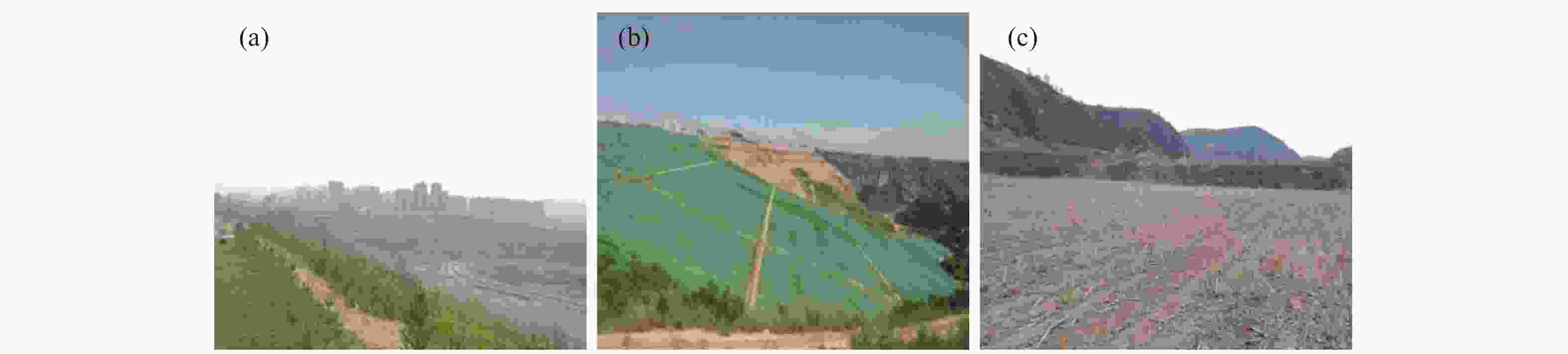
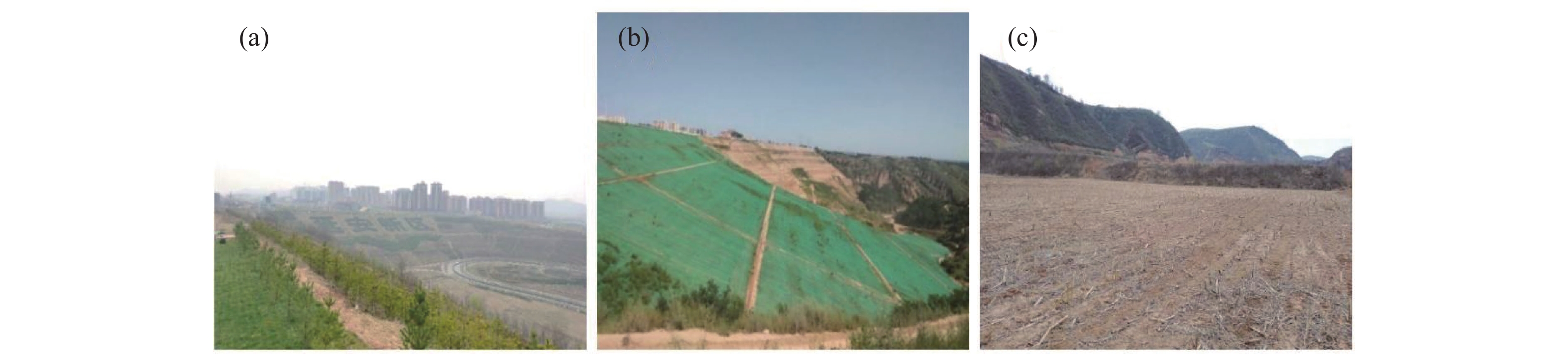
Figure 1. Filling slopes produced by three managed projects on the loess plateau (a. "building a city on leveled mountain" plan, b. the project of "consolidating the ditch and protecting the plateau", c. warp land dam)
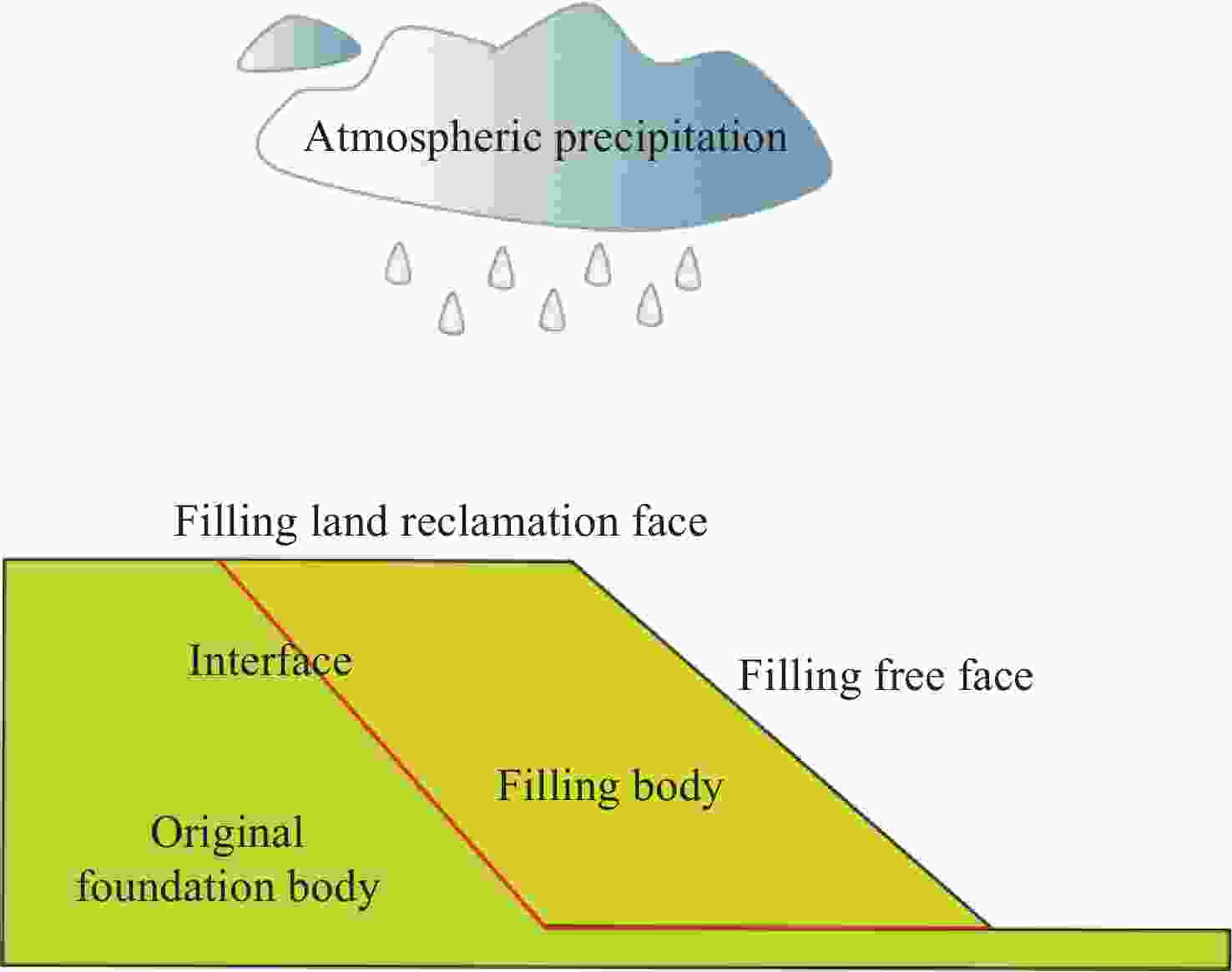
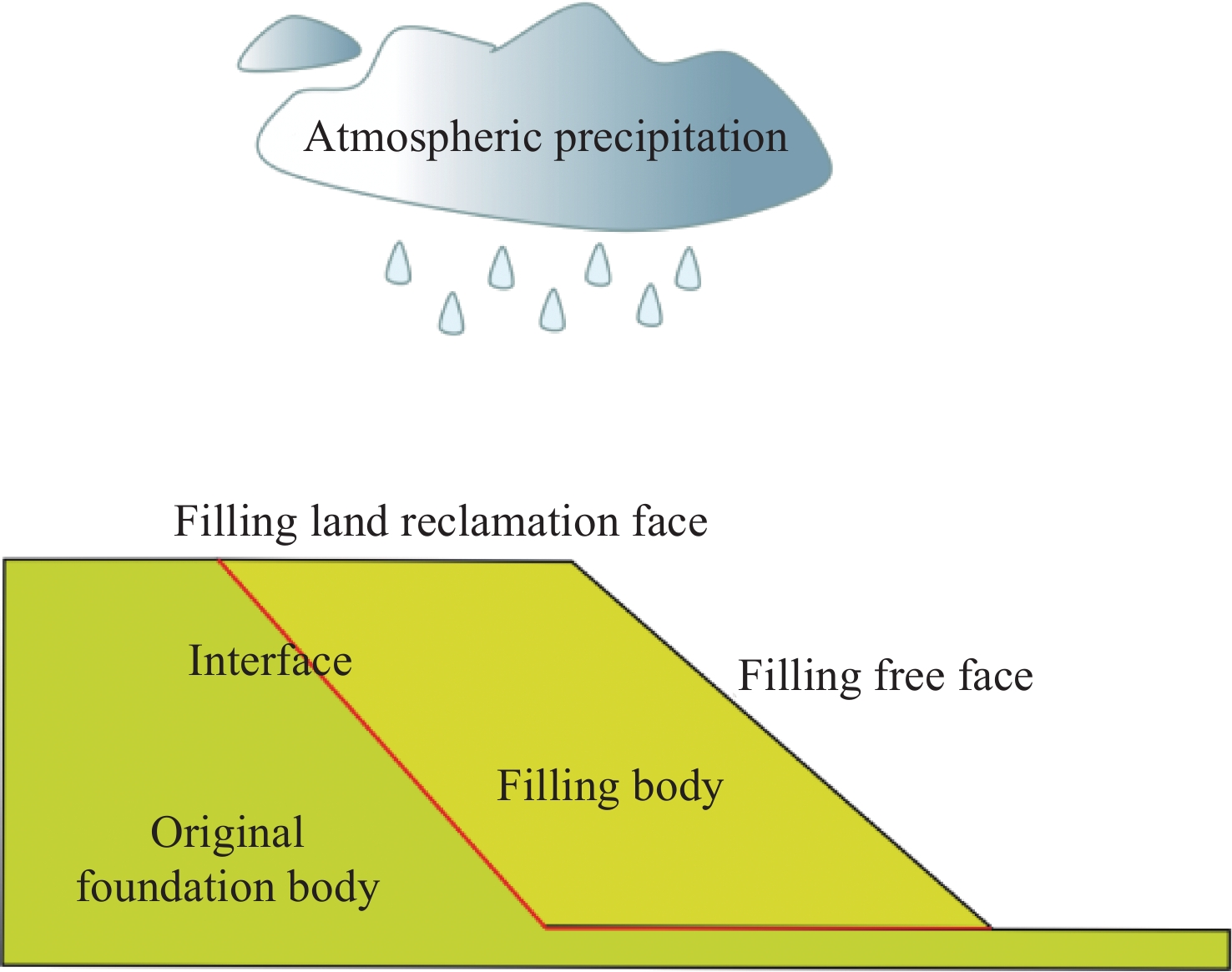
Figure 2. “Three sides, two bodies and one water structure” of a loess filling engineering slope
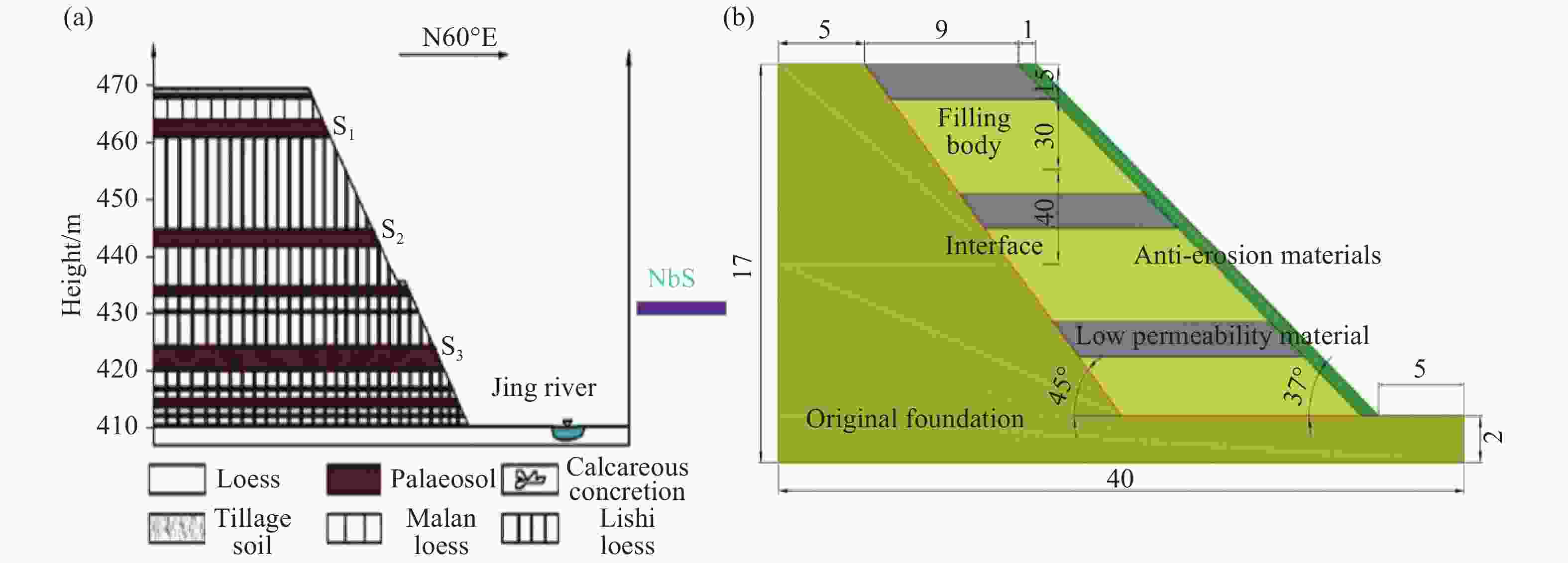
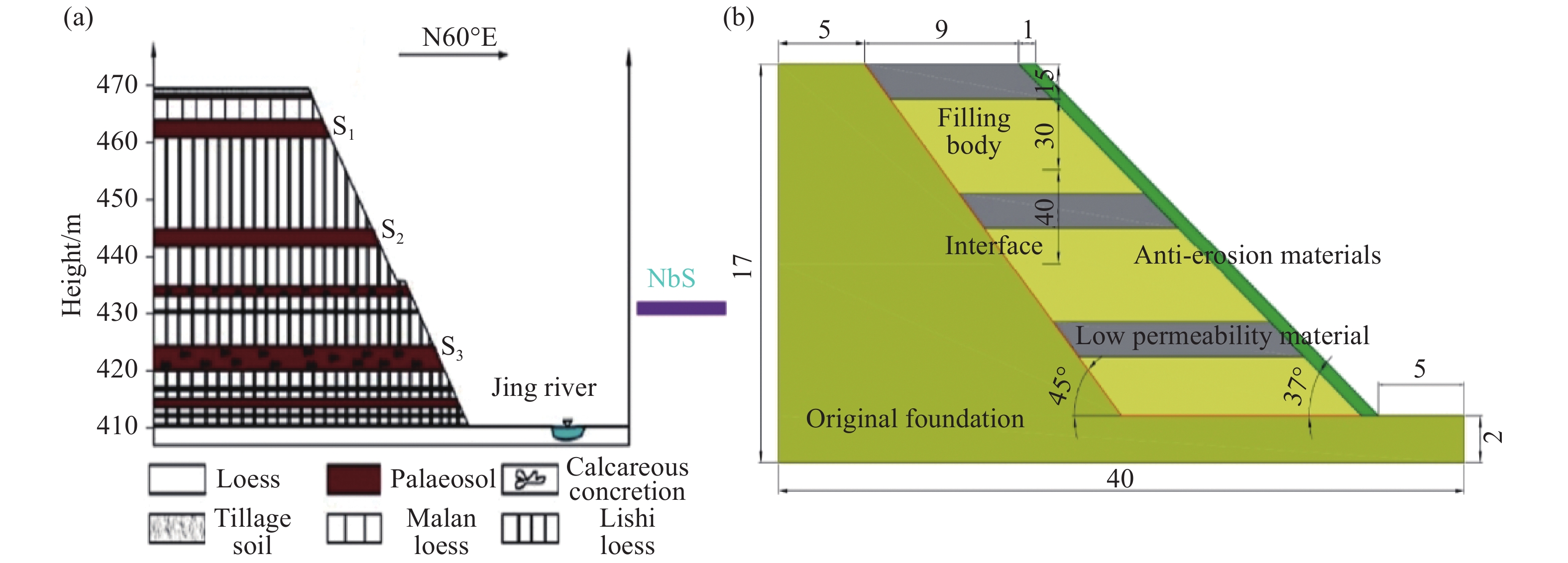
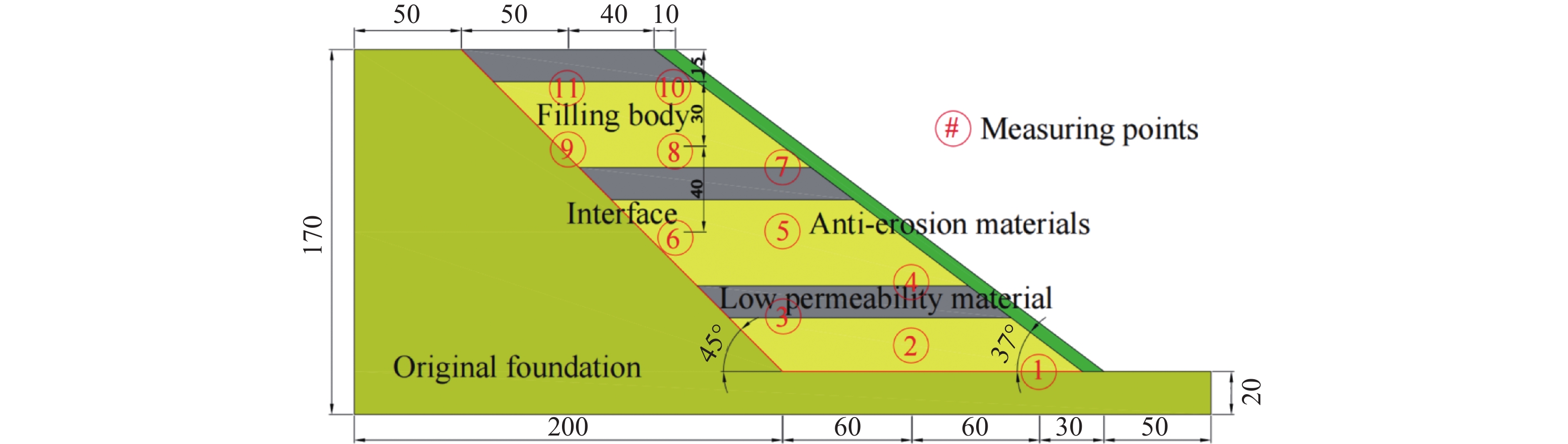
Figure 4. Water-control structure of loess filling slope based on the NbS concept (a. schematic diagram of the overall slope structure, b. detailed view of the slope water control structure)
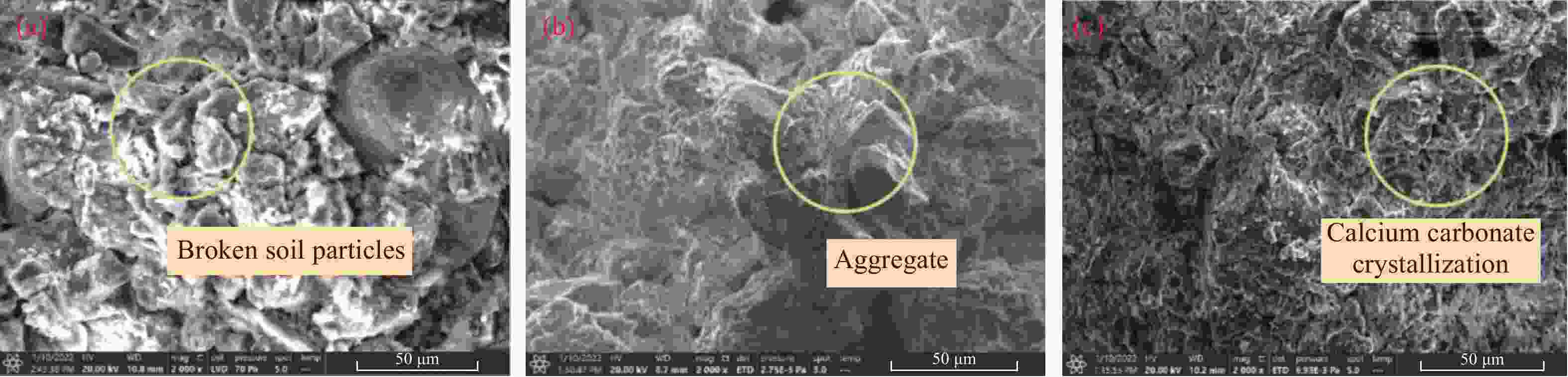
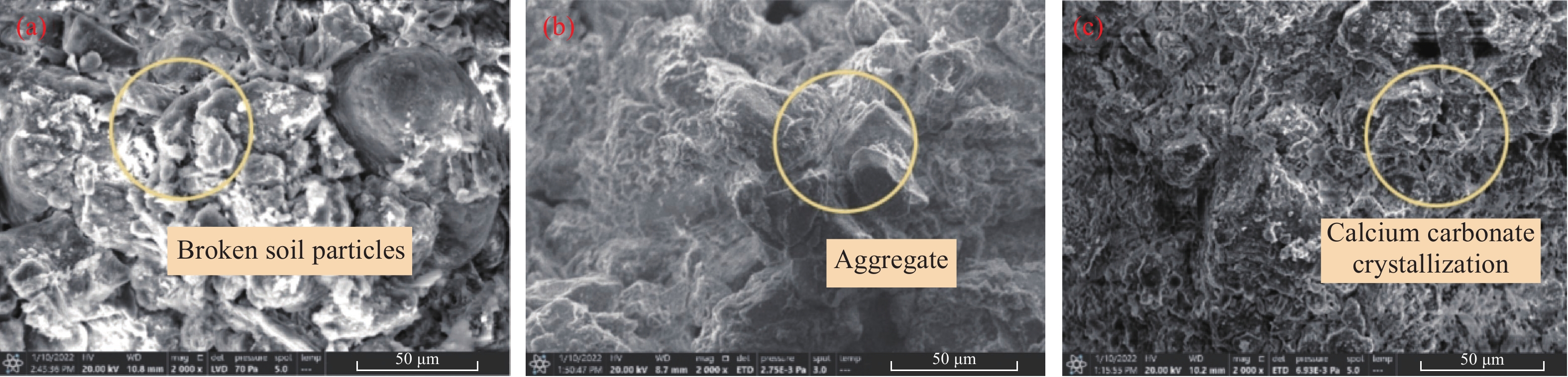
Figure 7. Microstructure of loess magnified 2000 times (90% compaction degree) (a. the remolded loess, b. lime-amended loess, c. the modified cellulose-improves loess)

Figure 11. Failure mode of slope surface without a water-control structure (a. rainfall beginning on 2024.8.13 at 13:00, b. rainfall duration on 2024.8.16 at 2:12, c. rainfall ending on 2024.8.16 at 17:46, d. three-dimensional deformation model diagram)

Figure 12. Failure mode of slope with a water-control structure (a. rainfall beginning on 2024.8.23 at 10:00, b. rainfall duration on 2024.8.25 at 08:35, c. rainfall ending on 2024.8.29 at 9:00, d. three-dimensional deformation model diagram)
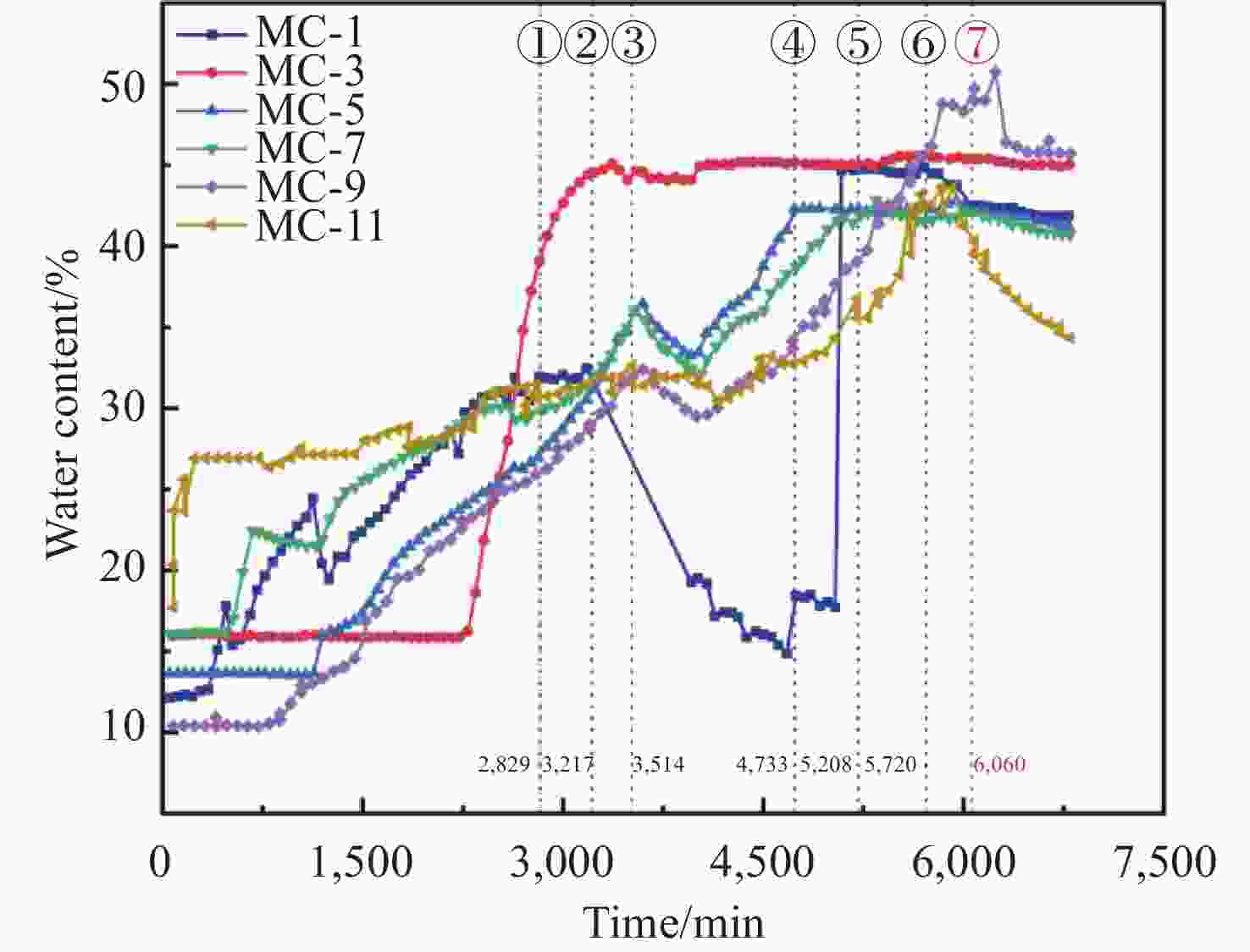
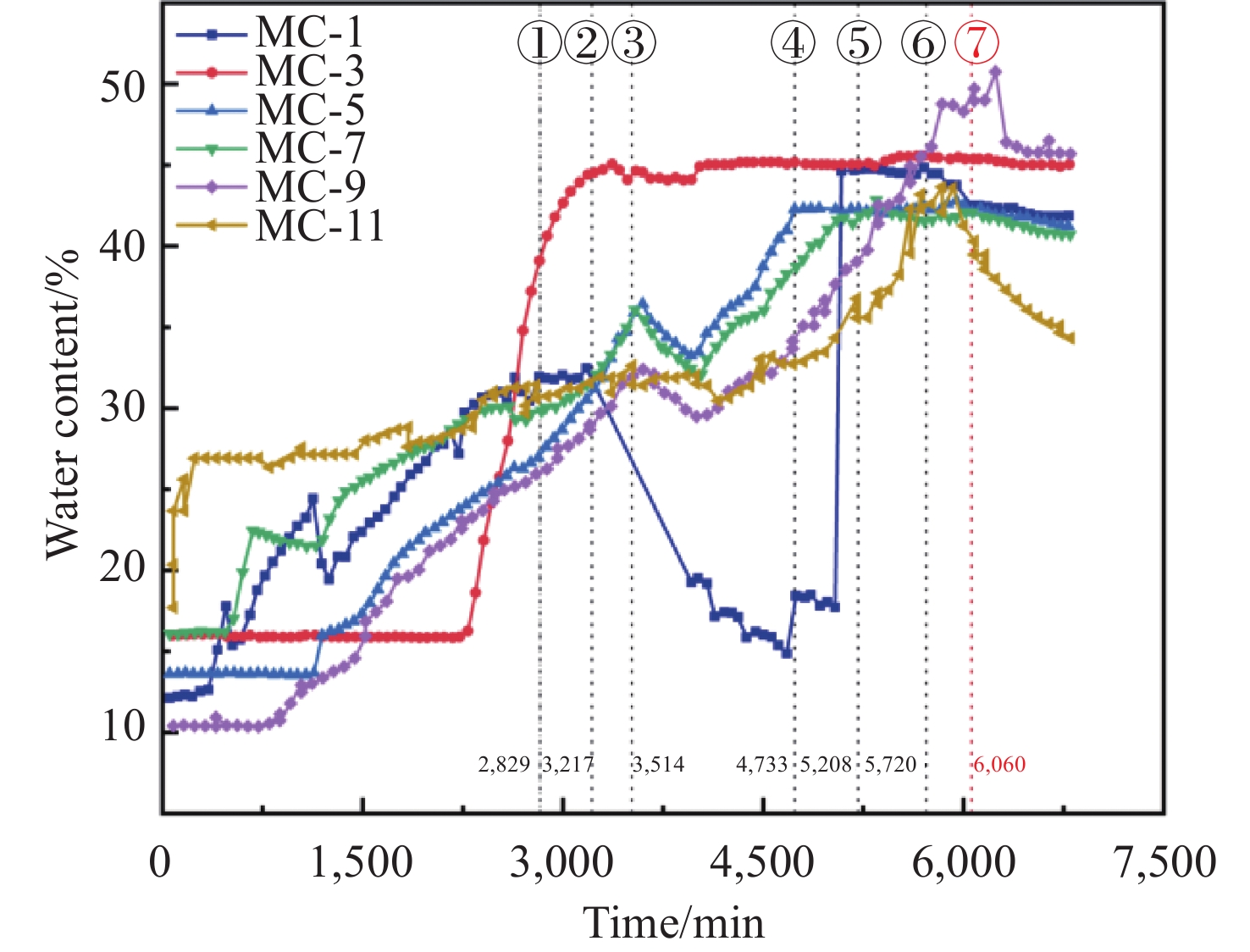
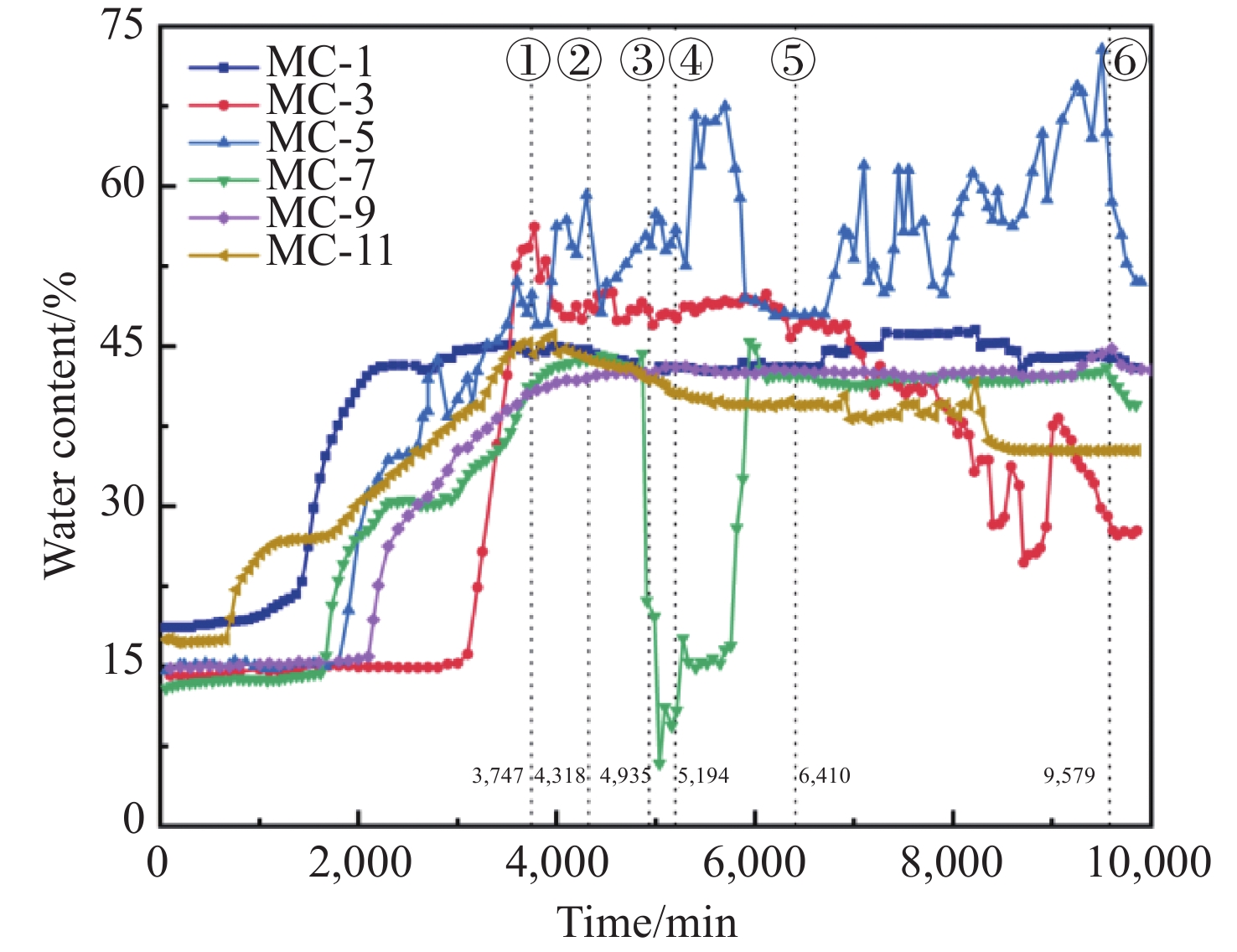
Figure 13. Curve of water content with time at the main measurement points of slopes without water-control structure
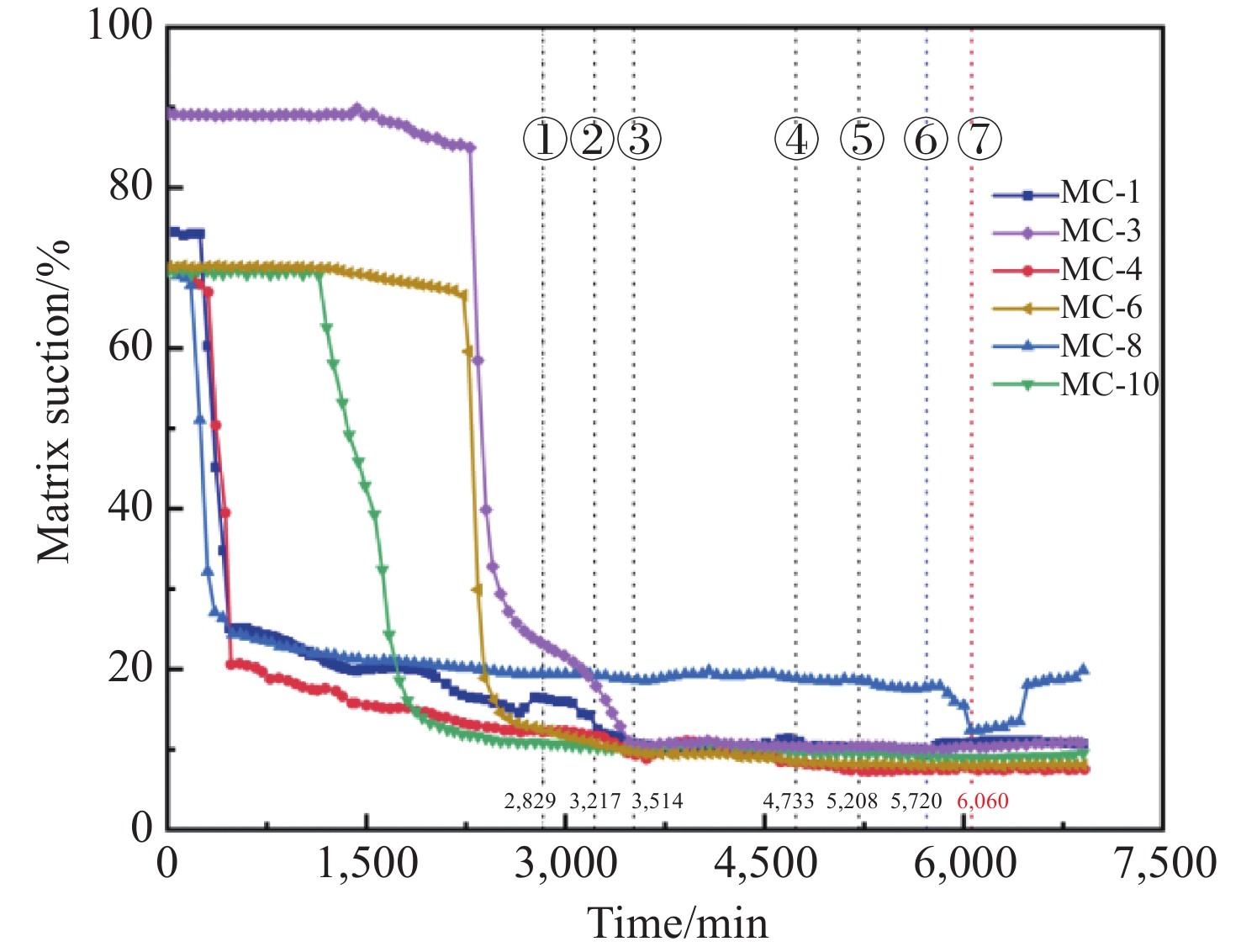
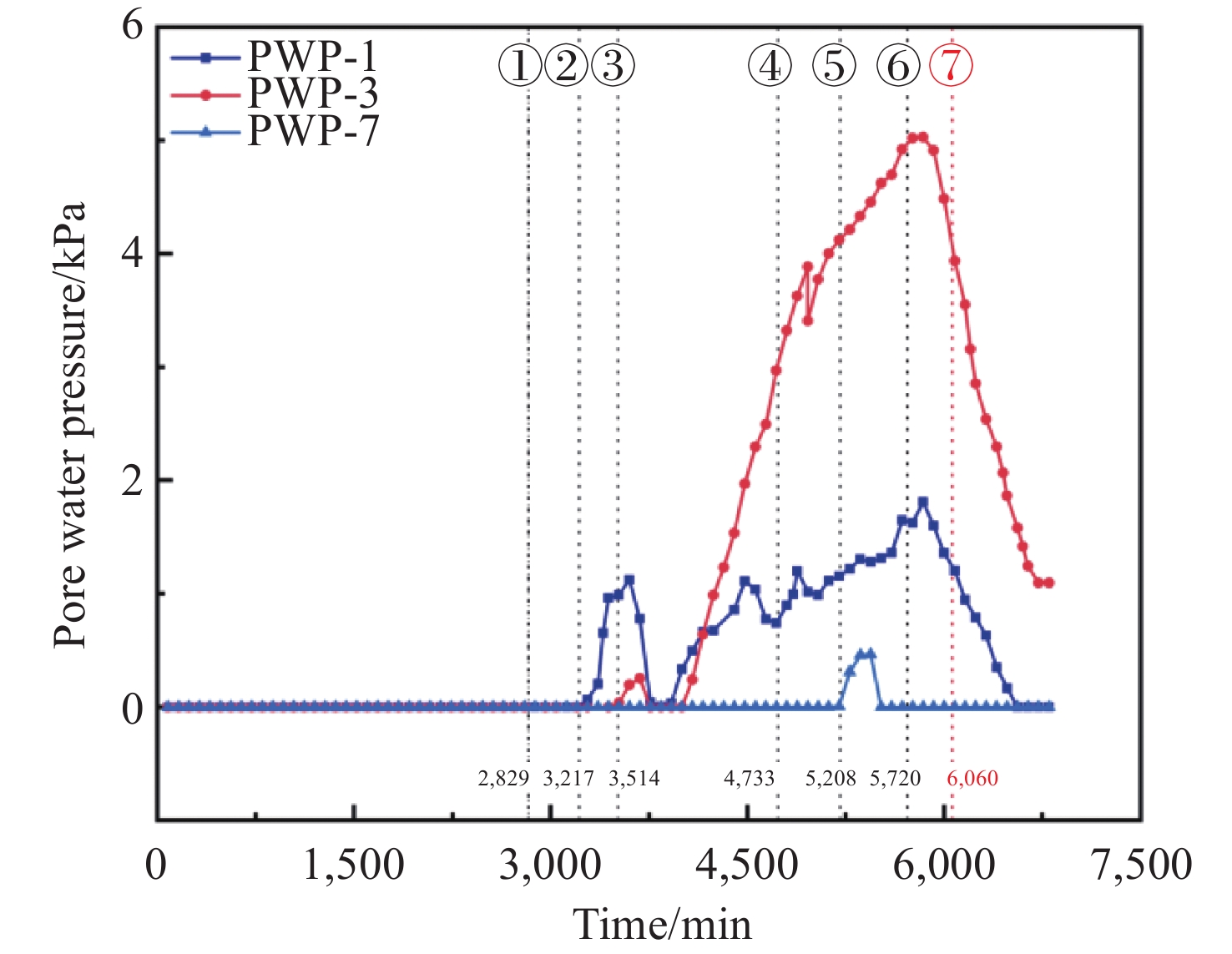
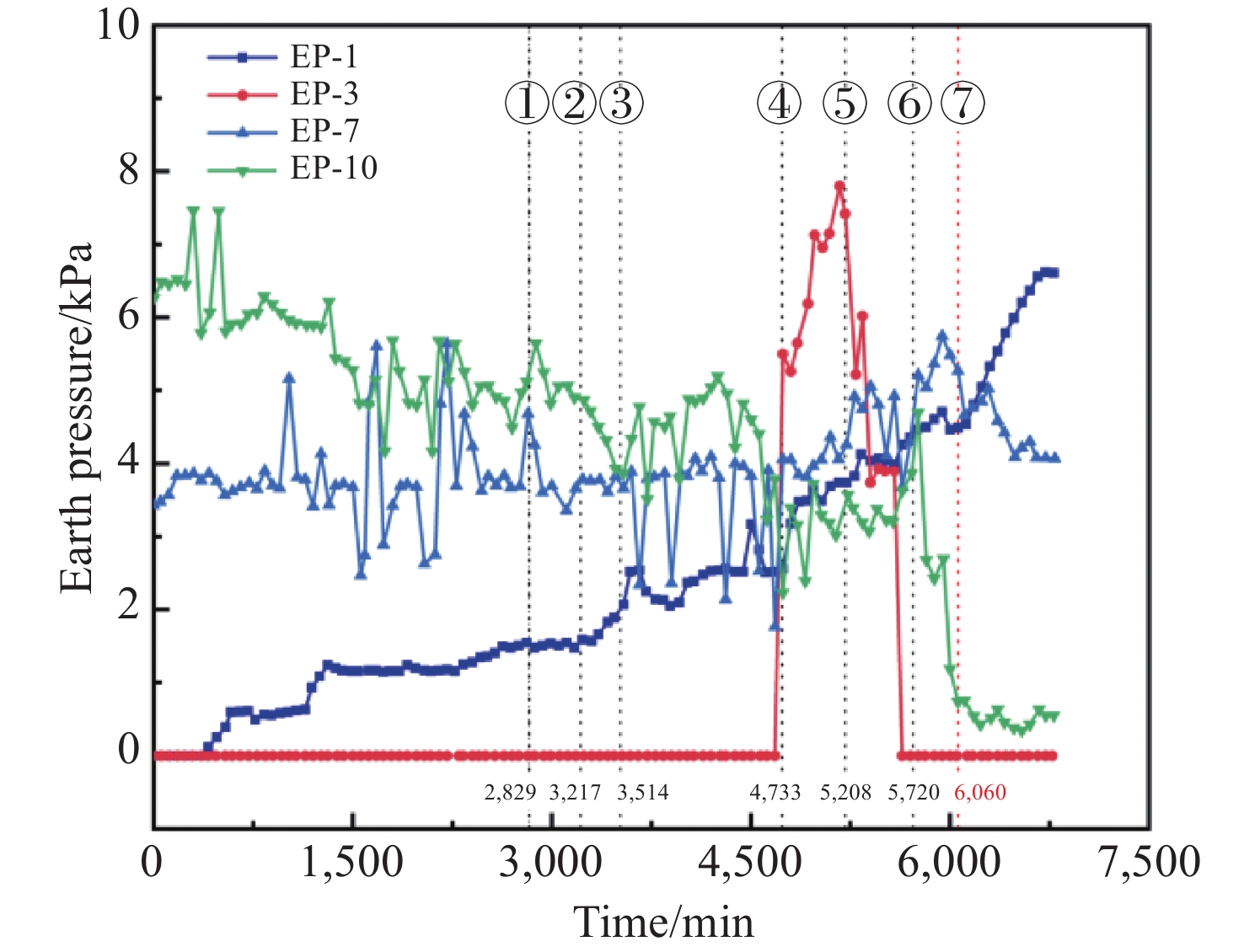
Notes: ① Microcrack development at the interface; ② interface cracks continue to expand; ③ local collapse of the slope foot; ④ slope shoulder crack development; ⑤ localized collapse in the middle of the slope and crack developement at the top of the slope; ⑥ slope shoulder began to collapse; ⑦ rainfall stopped
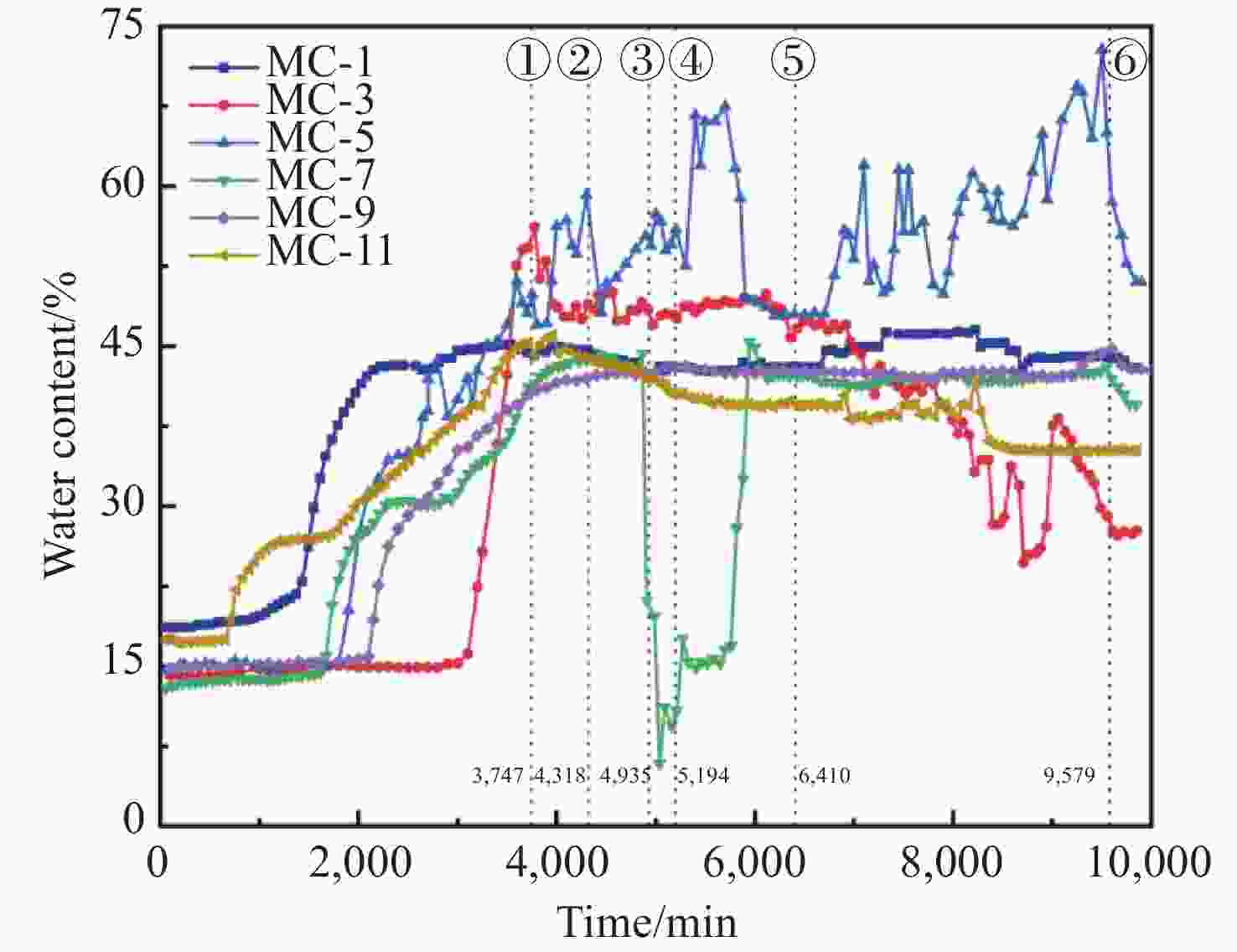
Figure 14. Curve of water content with time at the main measurement points of slopes with water-control structure
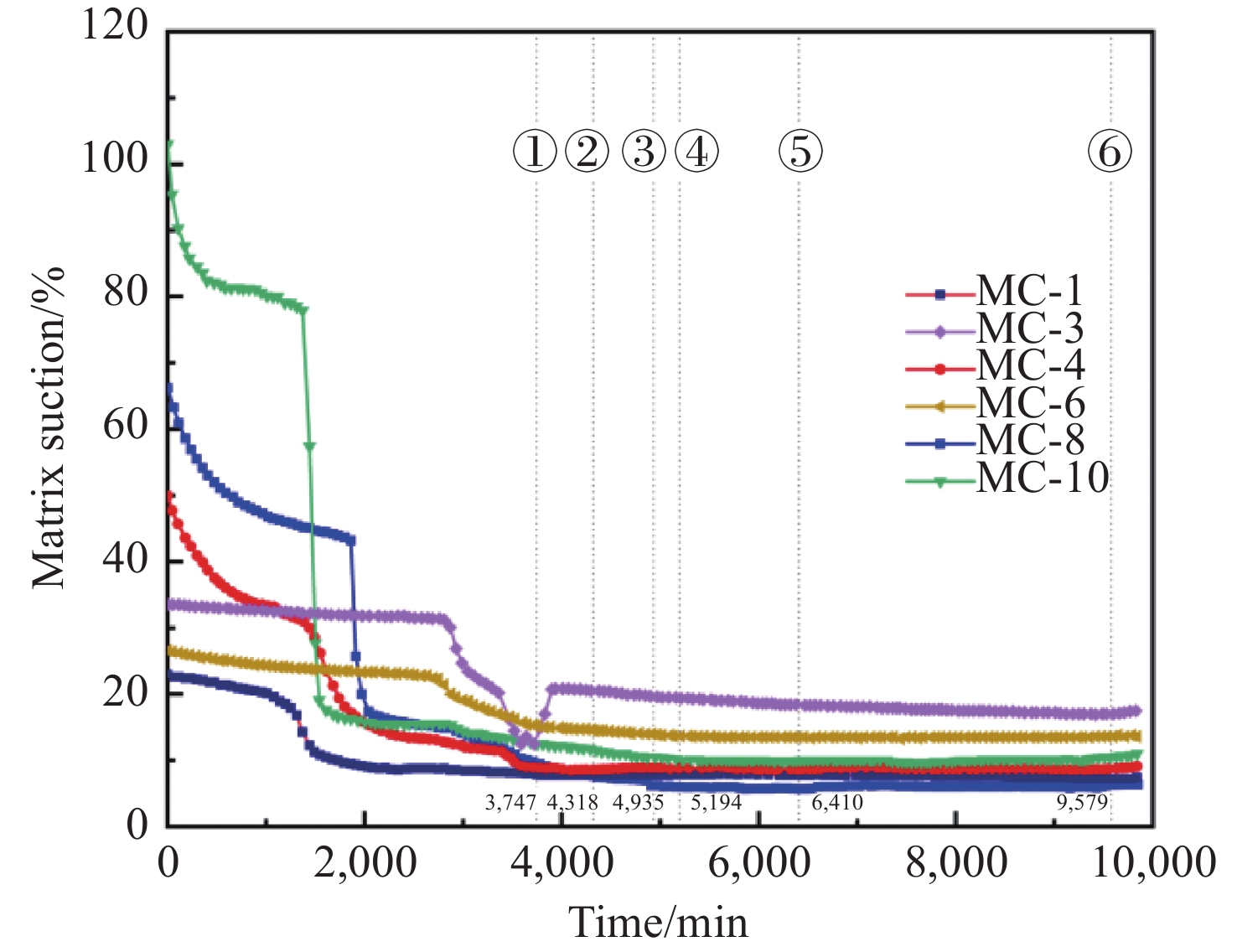
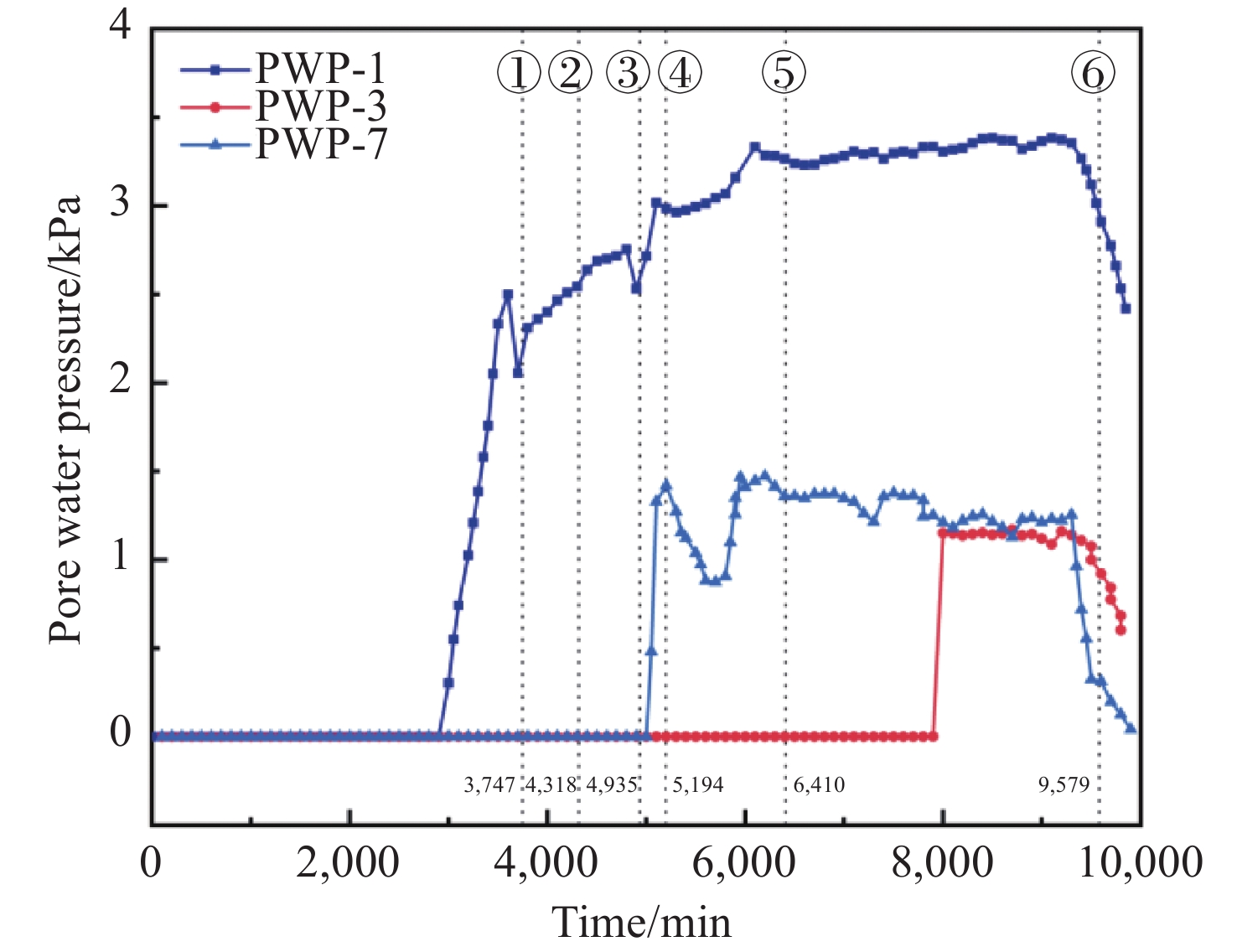
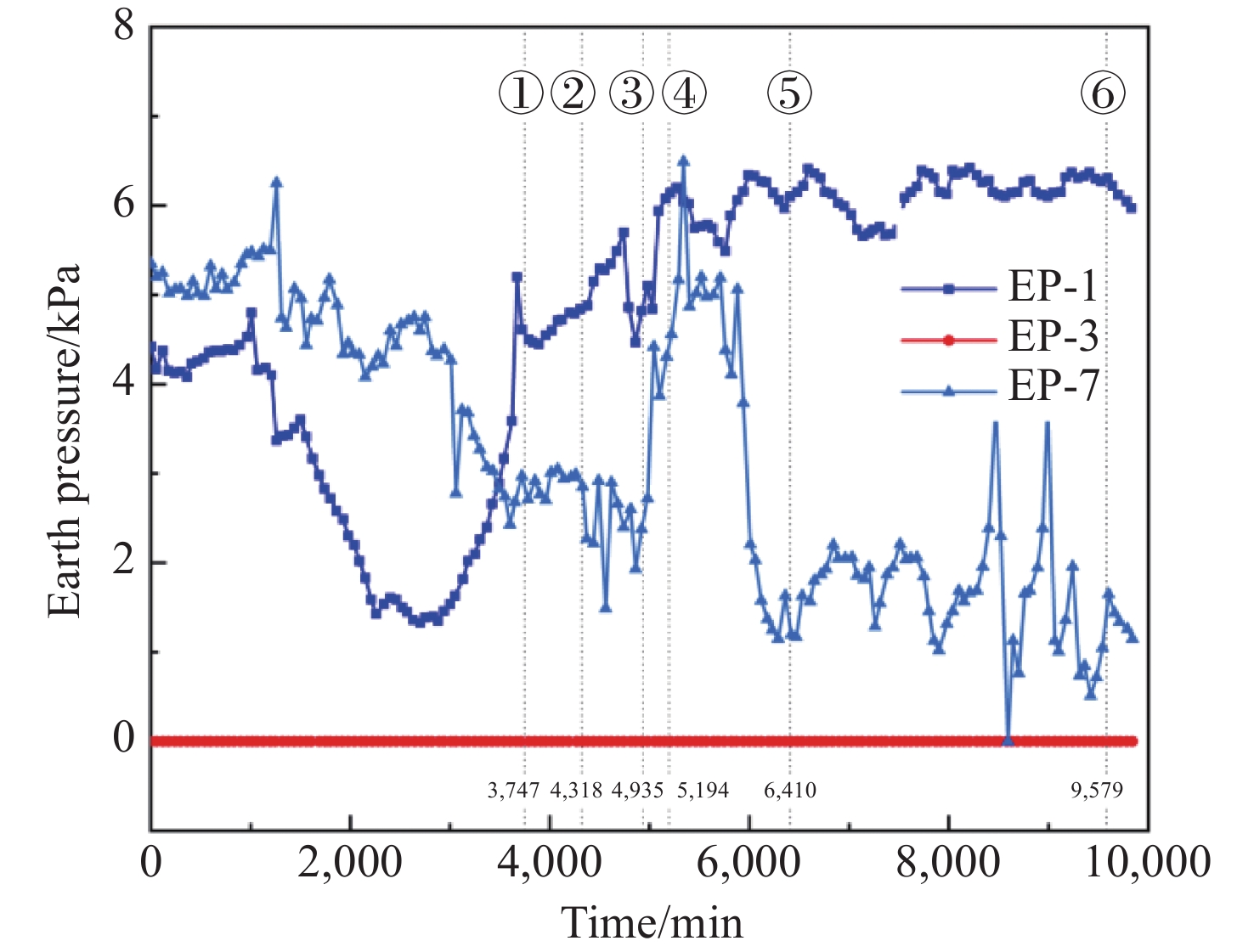
Notes: ① Slope toe slid overall; ② the back wall of the landslide saturated by rainfall; ③ the second sliding and slope top tension crack development; ④ the third sliding; ⑤ slope shoulder collapsed; ⑥ rainfall stopped
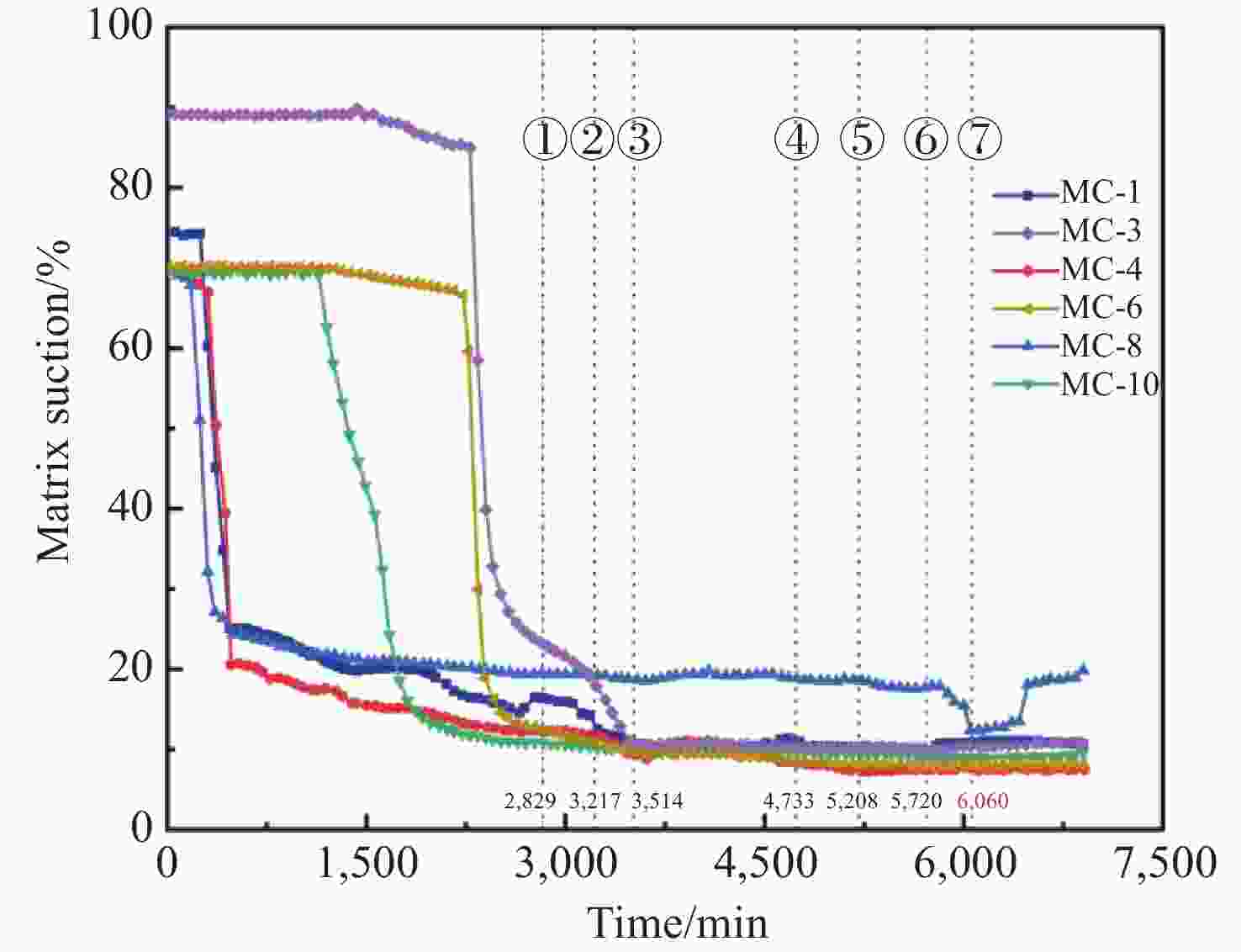
Figure 15. Matrix suction curves with time at the main measurement points of slopes without water-control structure (①-⑦ are slope destruction stages, consistent with Fig. 13)
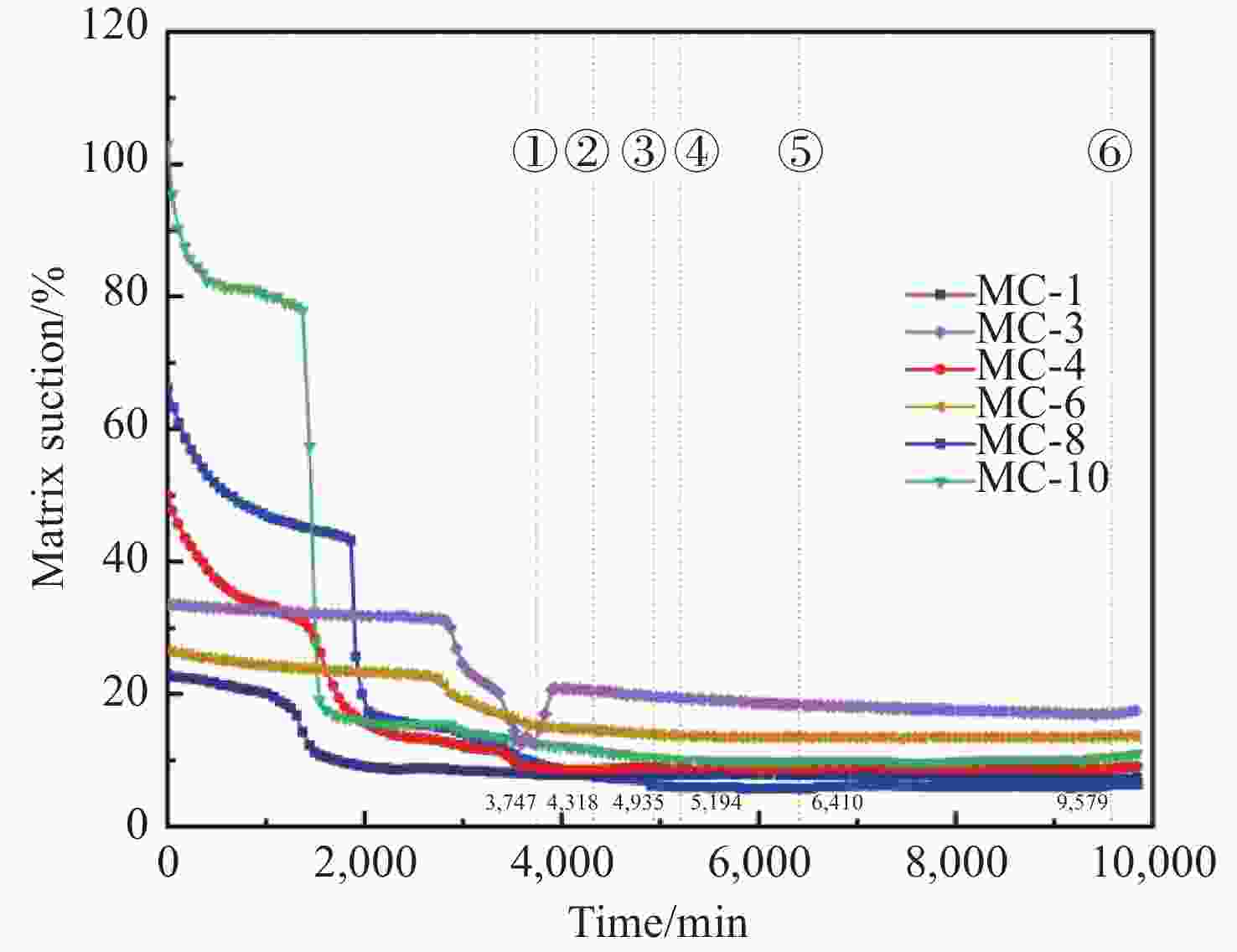
Figure 16. Matrix suction curves with time at the main measurement points of slopes with water-control structure (①-⑥ are slope destruction stages, consistent with Fig. 14)
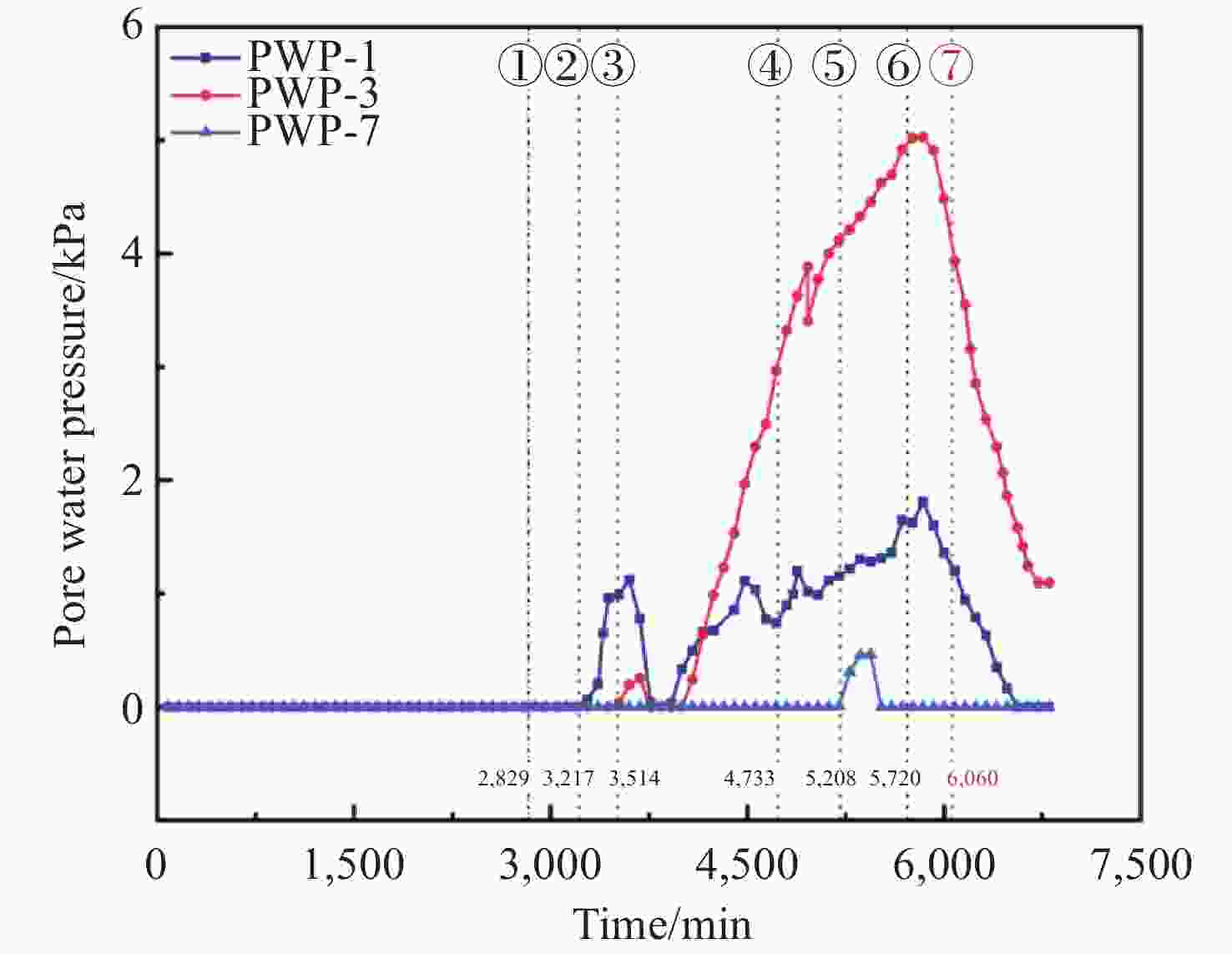
Figure 17. Pore water pressure curves with time at the main measurement points of slopes without water-control structure (①-⑦ are slope destruction stages, consistent with Fig. 13)
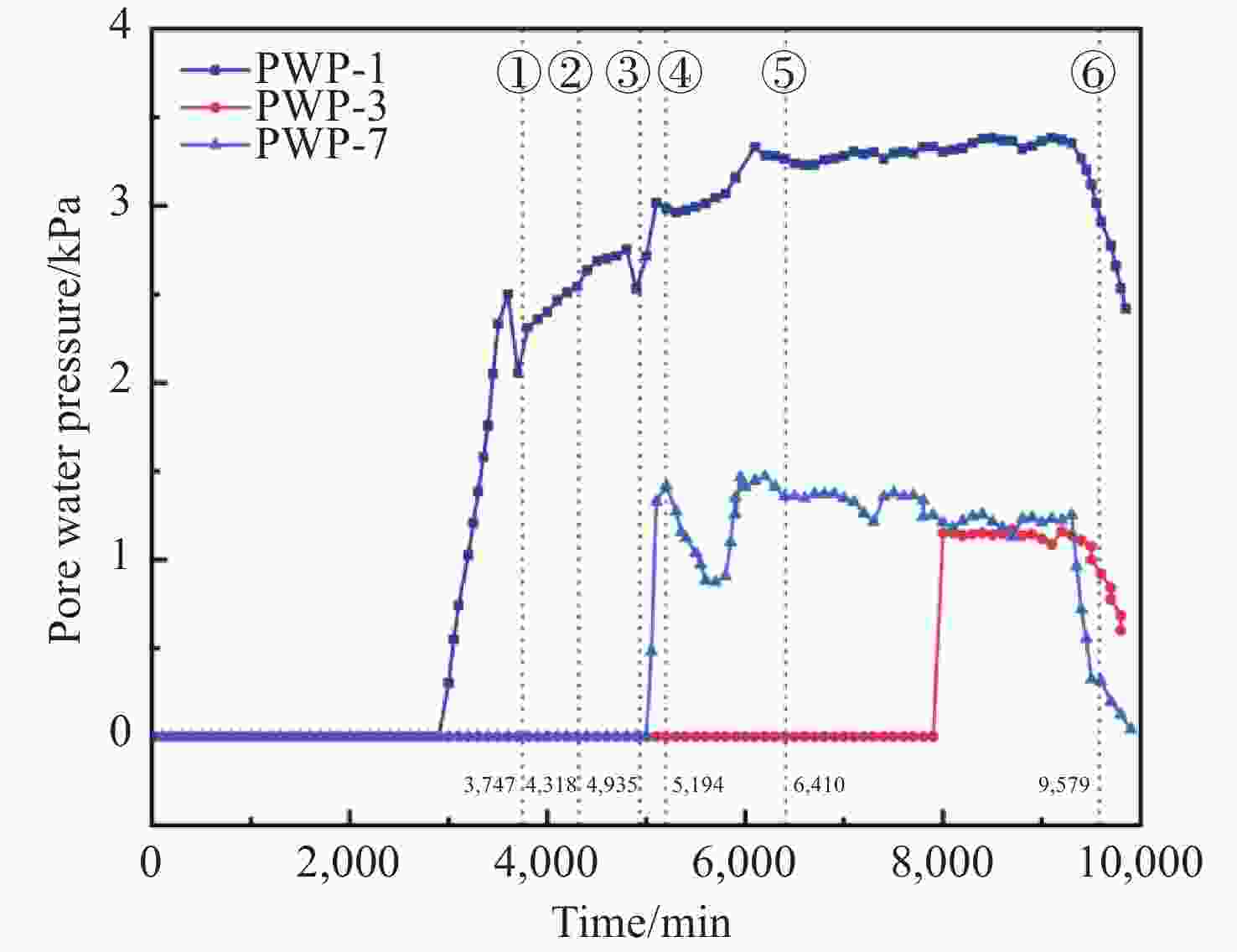
Figure 18. Pore water pressure curves with time at the main measurement points of slopes with water-control structure (①-⑥ are slope destruction stages, consistent with Fig. 14)
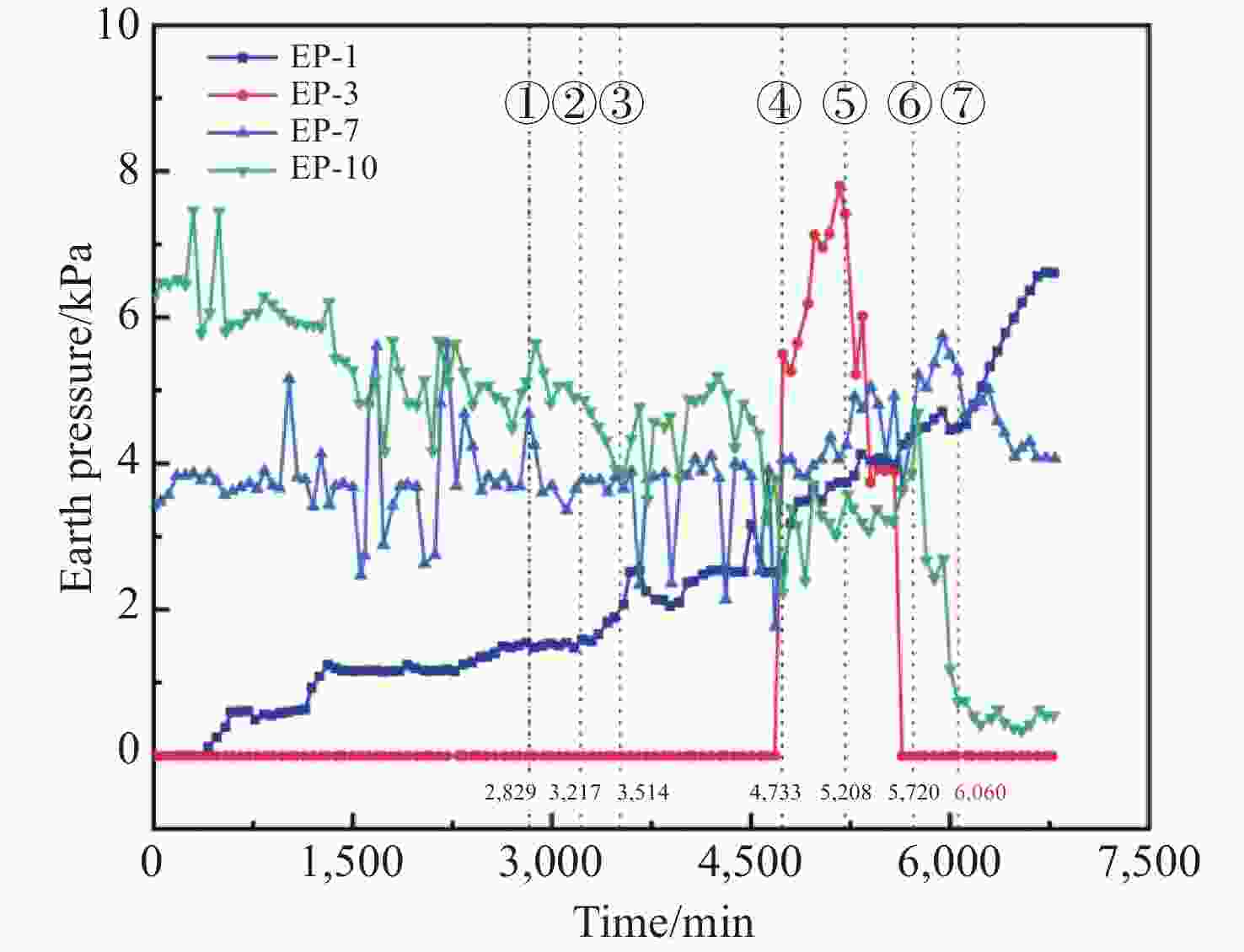
Figure 19. Earth pressure curves with time at the main measurement points of slopes without water-control structure (①-⑦ are slope destruction stages, consistent with Fig. 13)
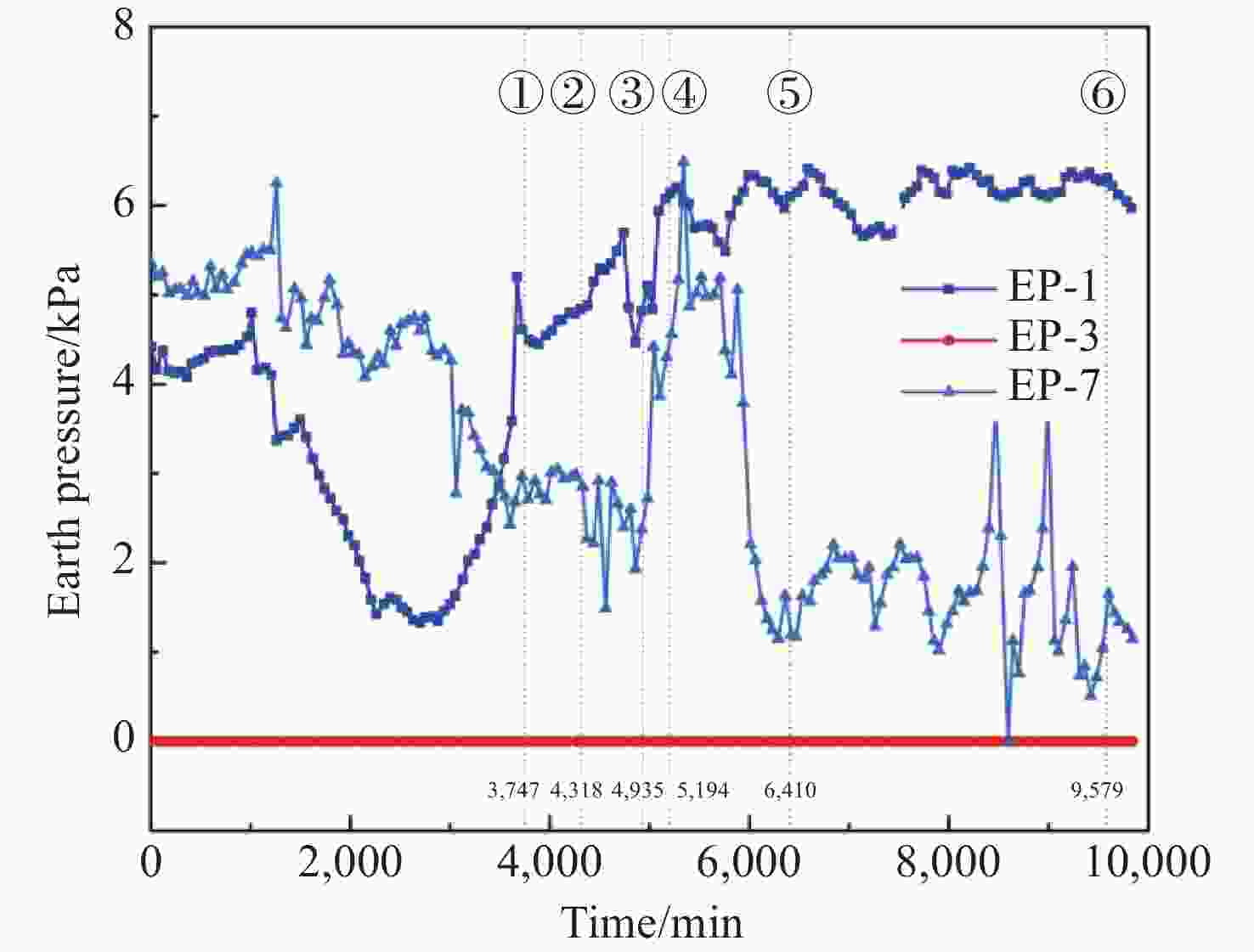
Figure 20. Earth pressure curves with time at the main measurement points of slopes with water-control structure (①-⑥ are slope destruction stages, consistent with Fig. 14)
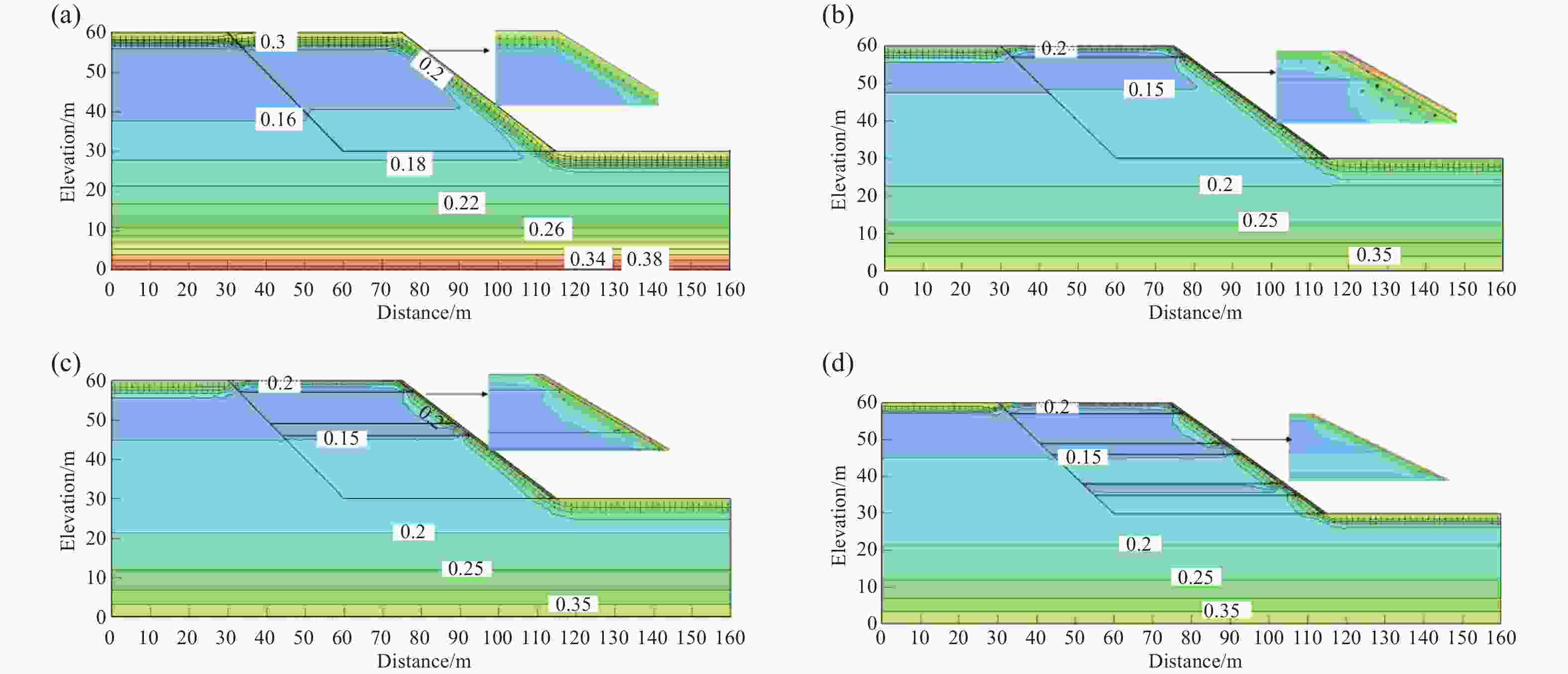
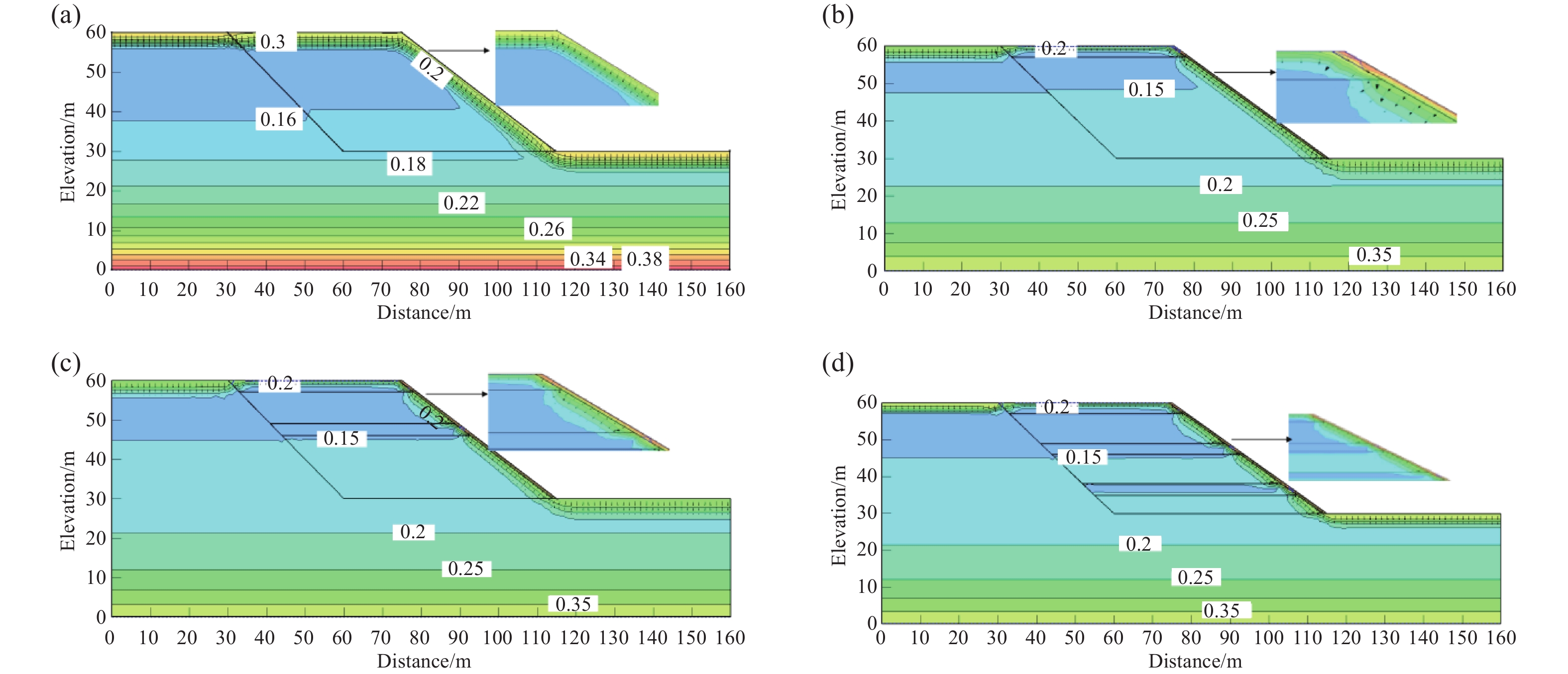
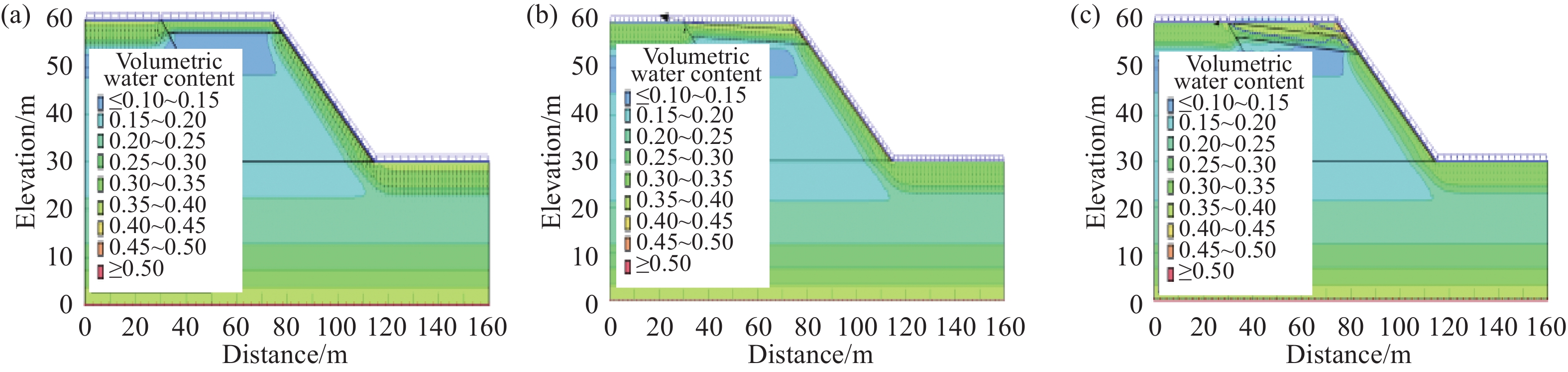
Figure 22. Transient distribution diagram of volumetric moisture content of the loess filling slope at 10 d rainfall (a. pure loess filling slope without a low-permeability layer, b. the loess filling slope with one low-permeability layer, c. the loess filling slope with two low-permeability layers, d. the loess filling slope with three low-permeability layers)
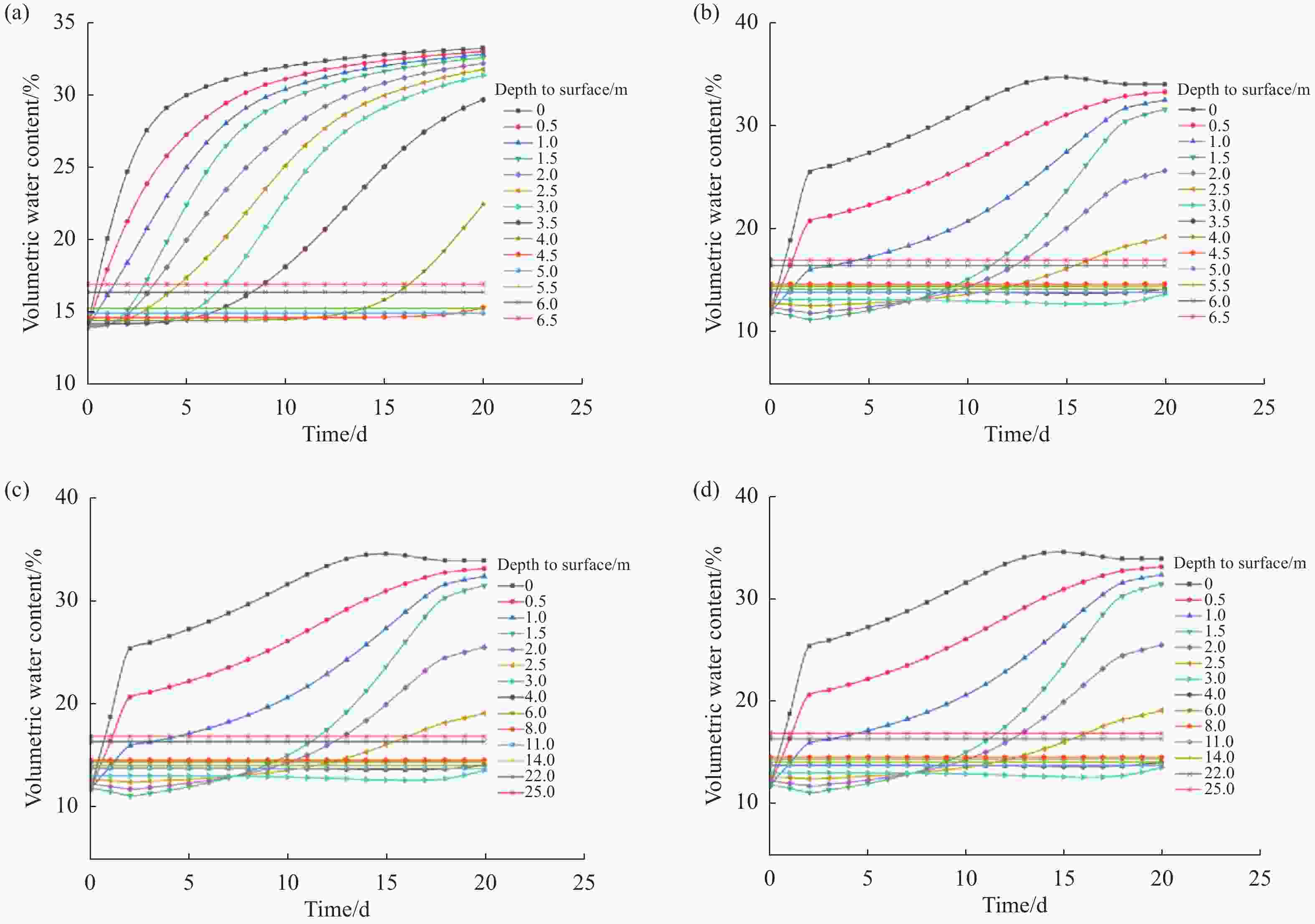
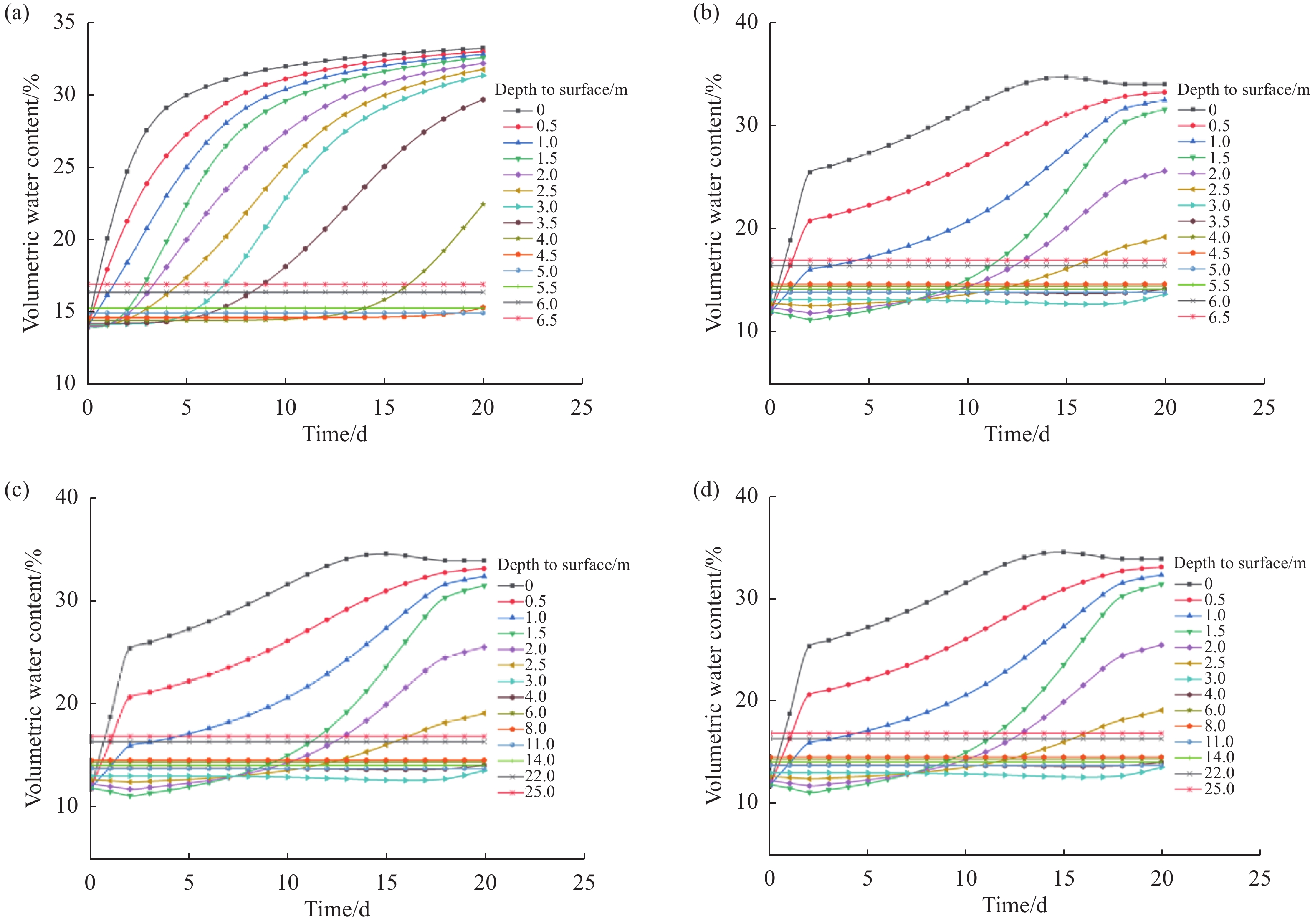
Figure 23. Variation curve of moisture content of the monitoring line of the loess filling slope with rainfall time (a. pure loess filling slope without a low-permeability layer, b. the loess filling slope with one low-permeability layer, c. the loess filling slope with two low-permeability layers, d. the loess filling slope with three low-permeability layers)
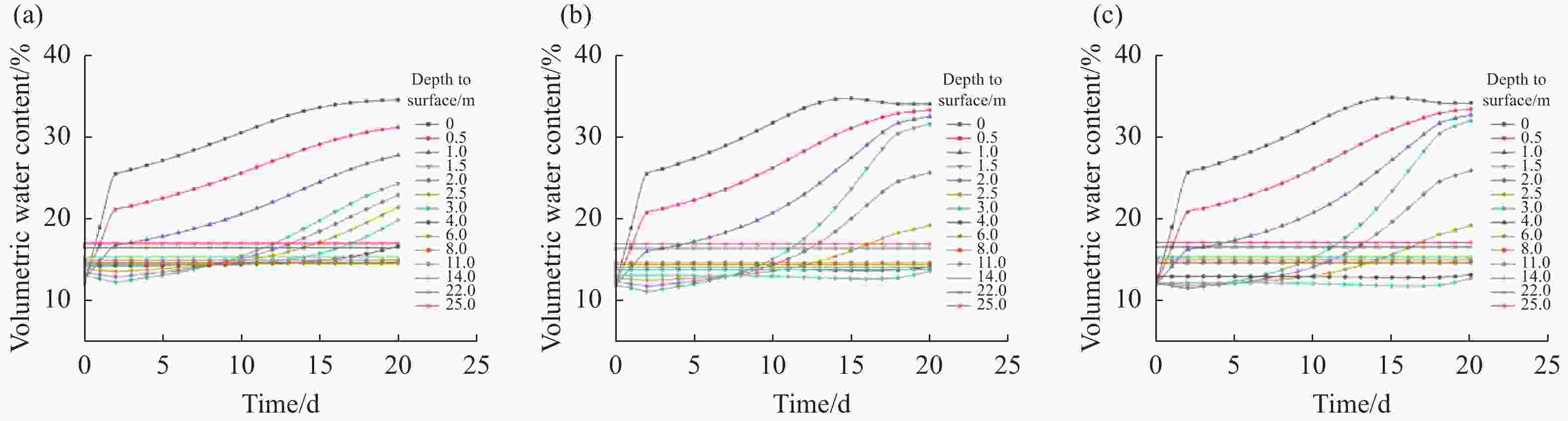
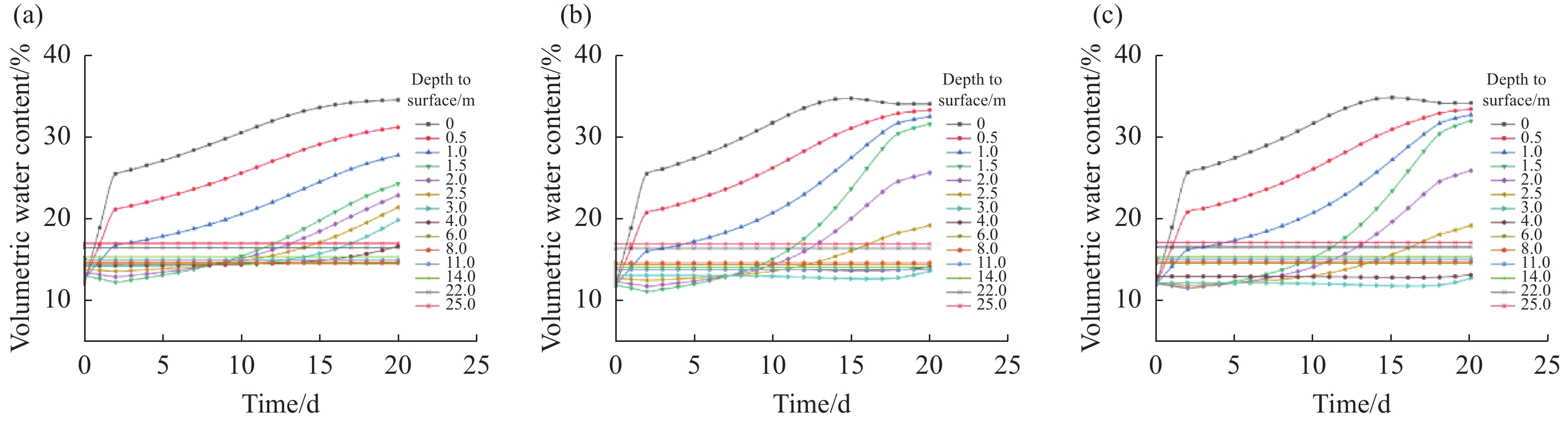
Figure 24. The variation curve of moisture content of the loess filling slope with rainfall time (a. the thickness of the low-permeability layer was 1.5 m, b. the thickness of the low-permeability layer was 3.0 m, c. the thickness of the low-permeability layer was 4.5 m)
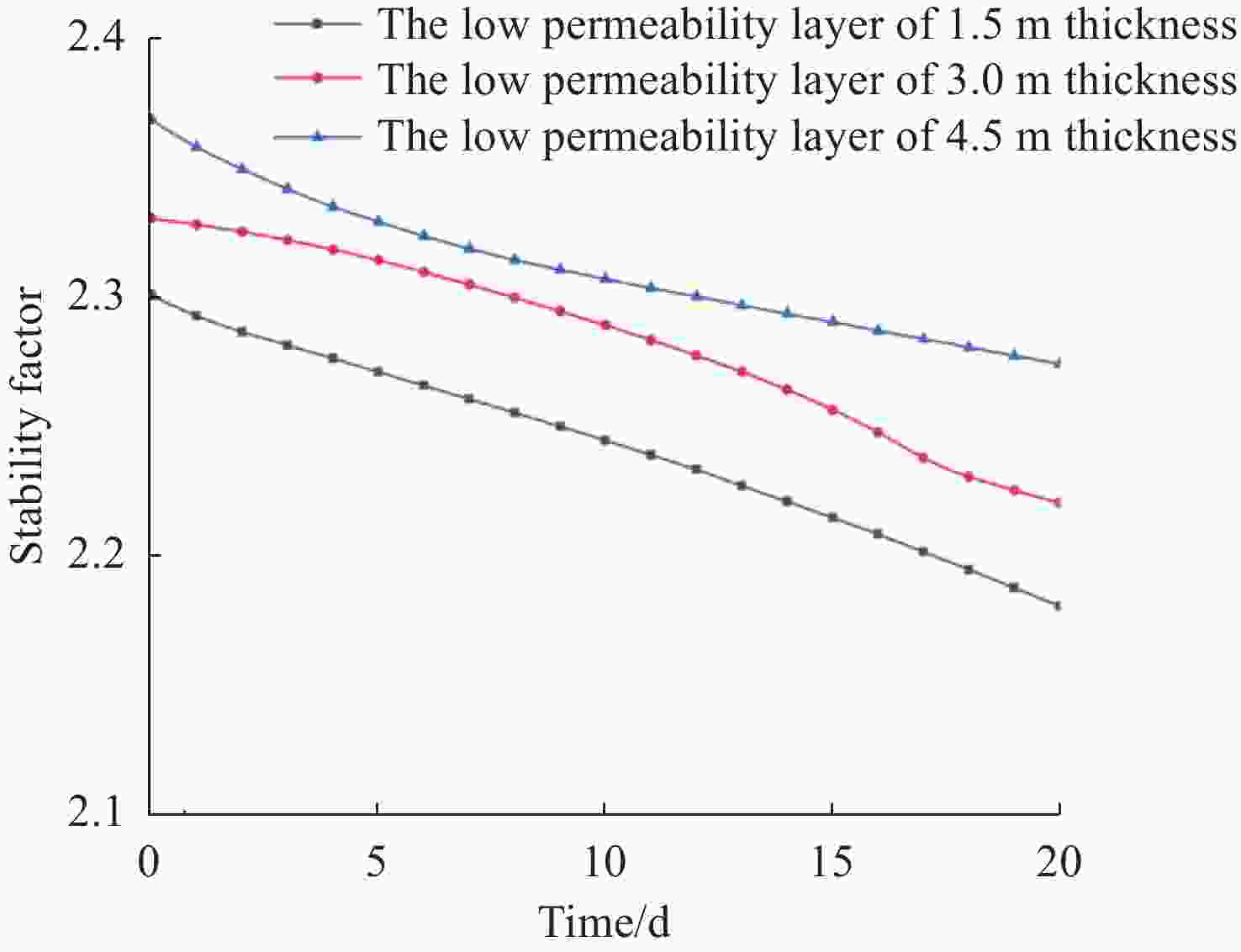
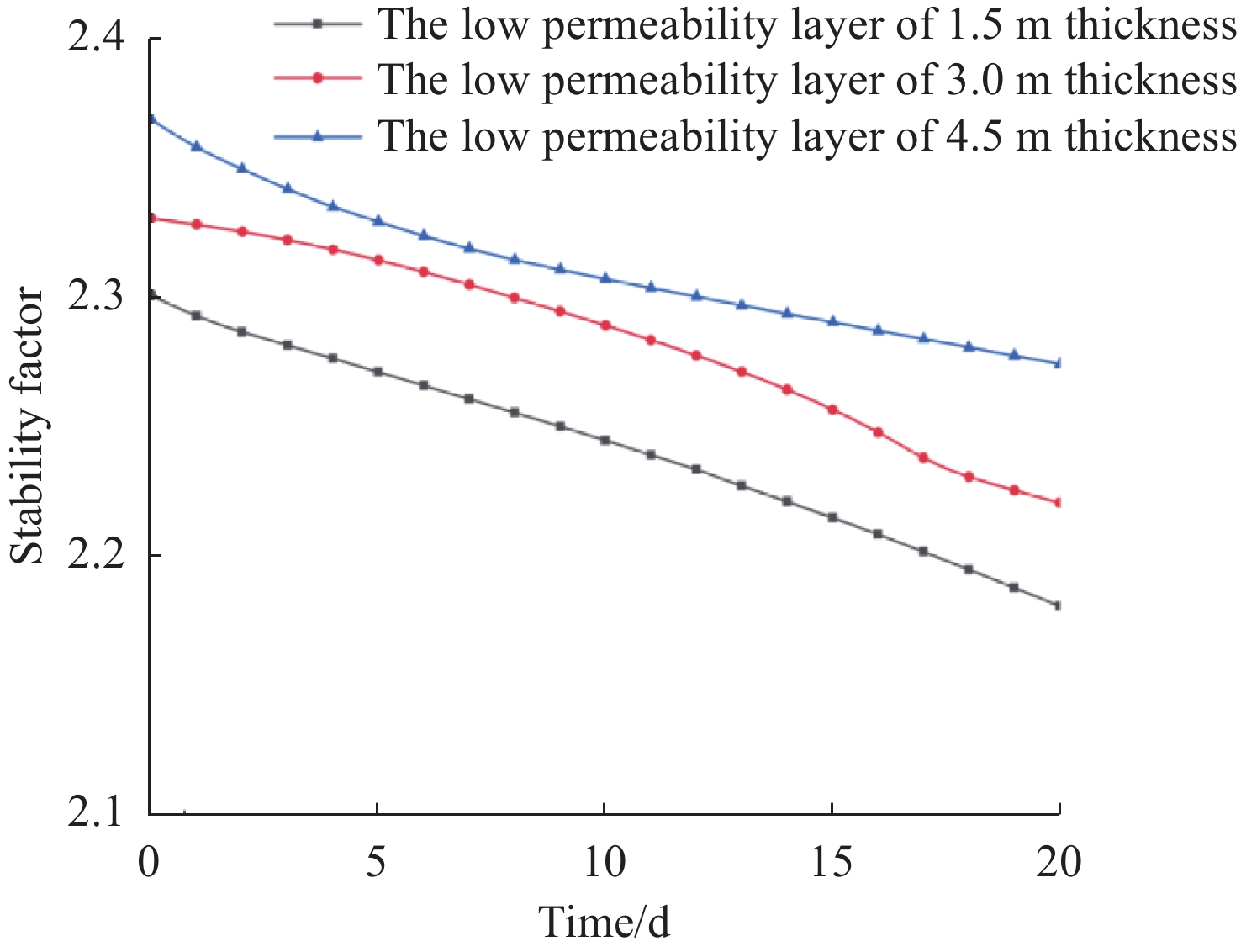
Figure 25. Effect of low-permeability layer thickness on the stability of the loess filling slope
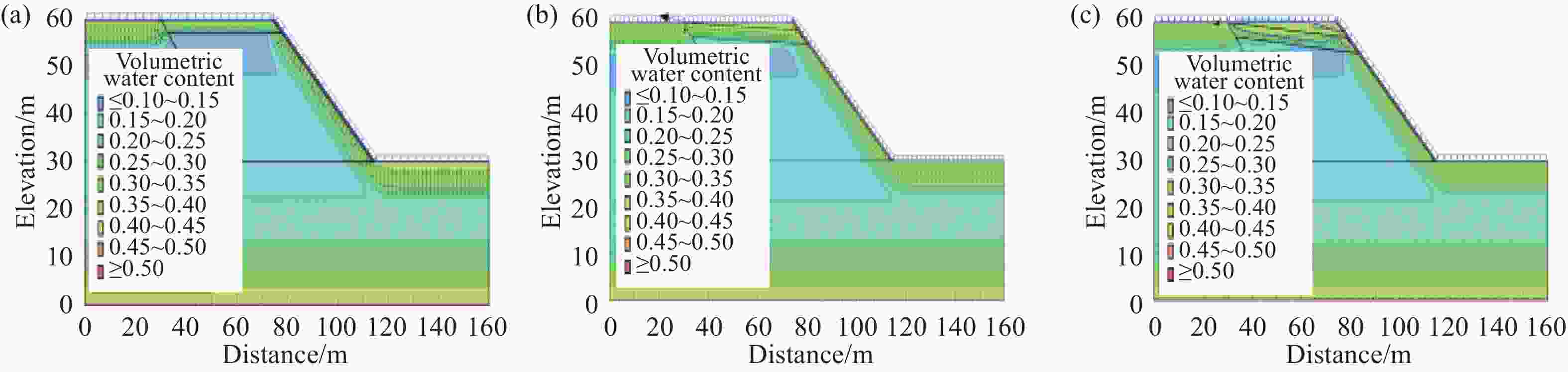
Figure 26. Effect of low-permeability dip angle on the stability of loess filling slope (a. the dip angle of the low-permeability layer was 0°, b. the dip angle of the low-permeability layer was 2°, c. the dip angle of the low-permeability layer was 4°)
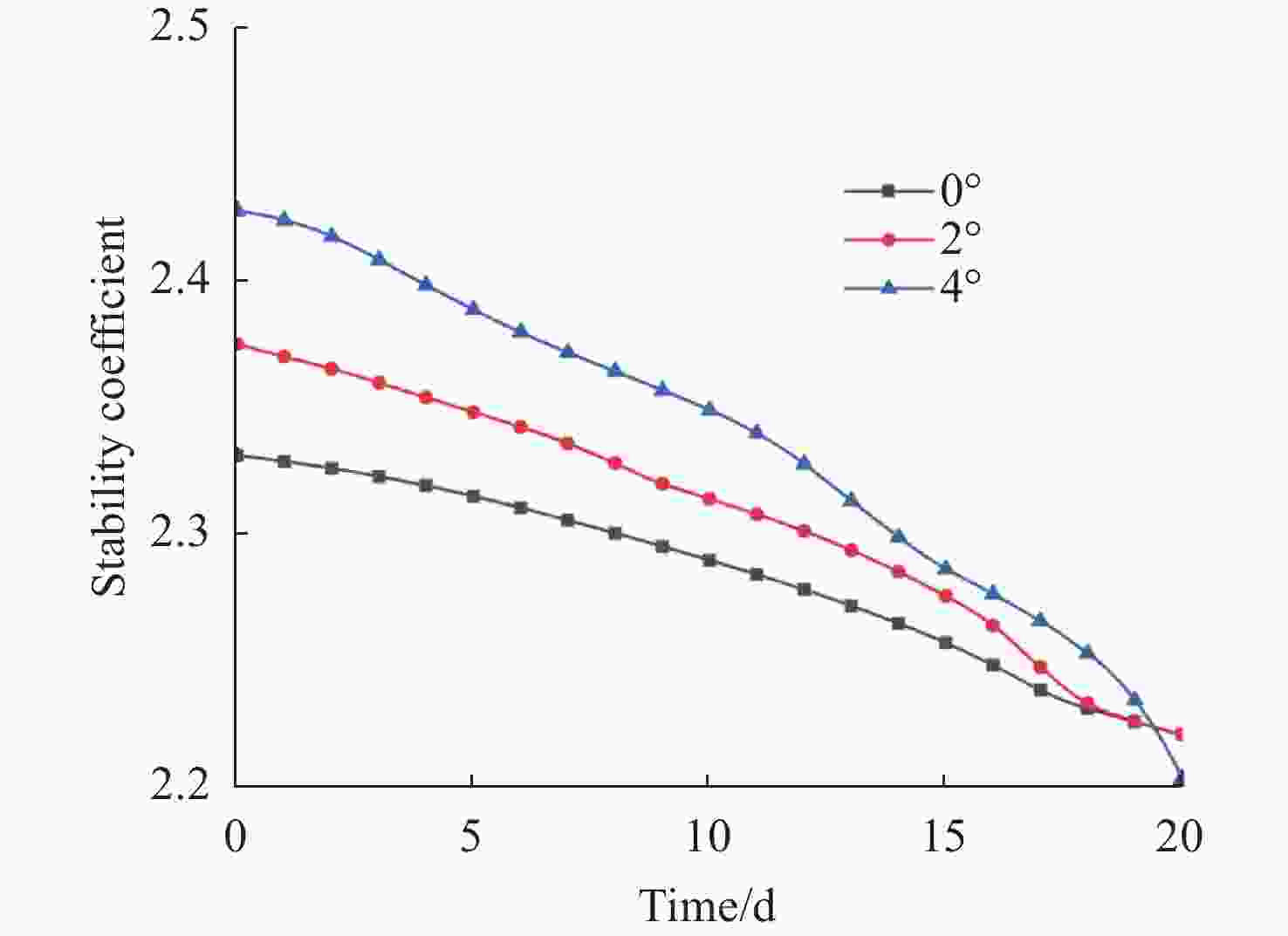
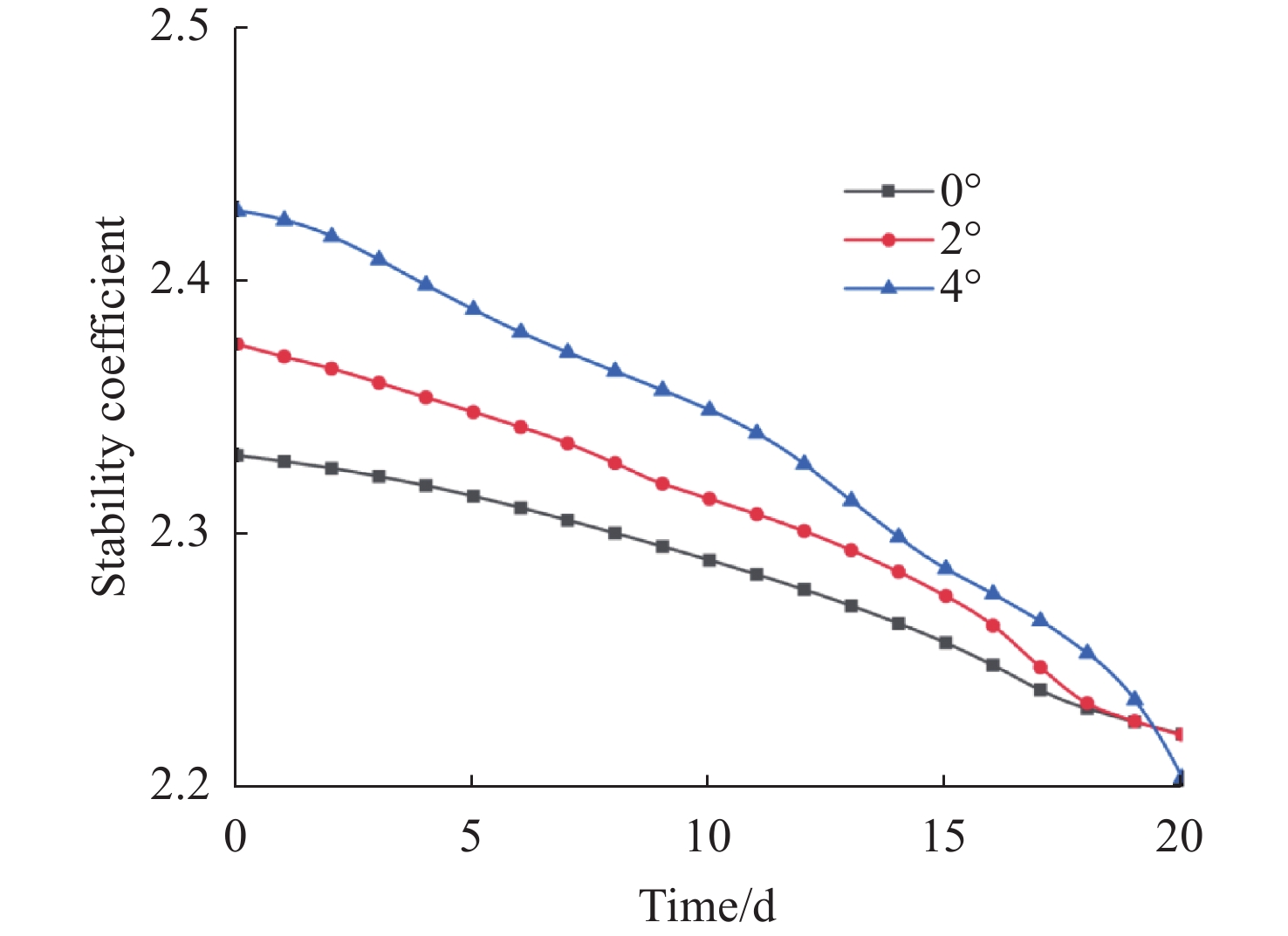
Figure 27. Effect of low-permeability dip angle on the stability of loess filling slope
Table 1. The basic physical and mechanical parameters of experimental soil samples
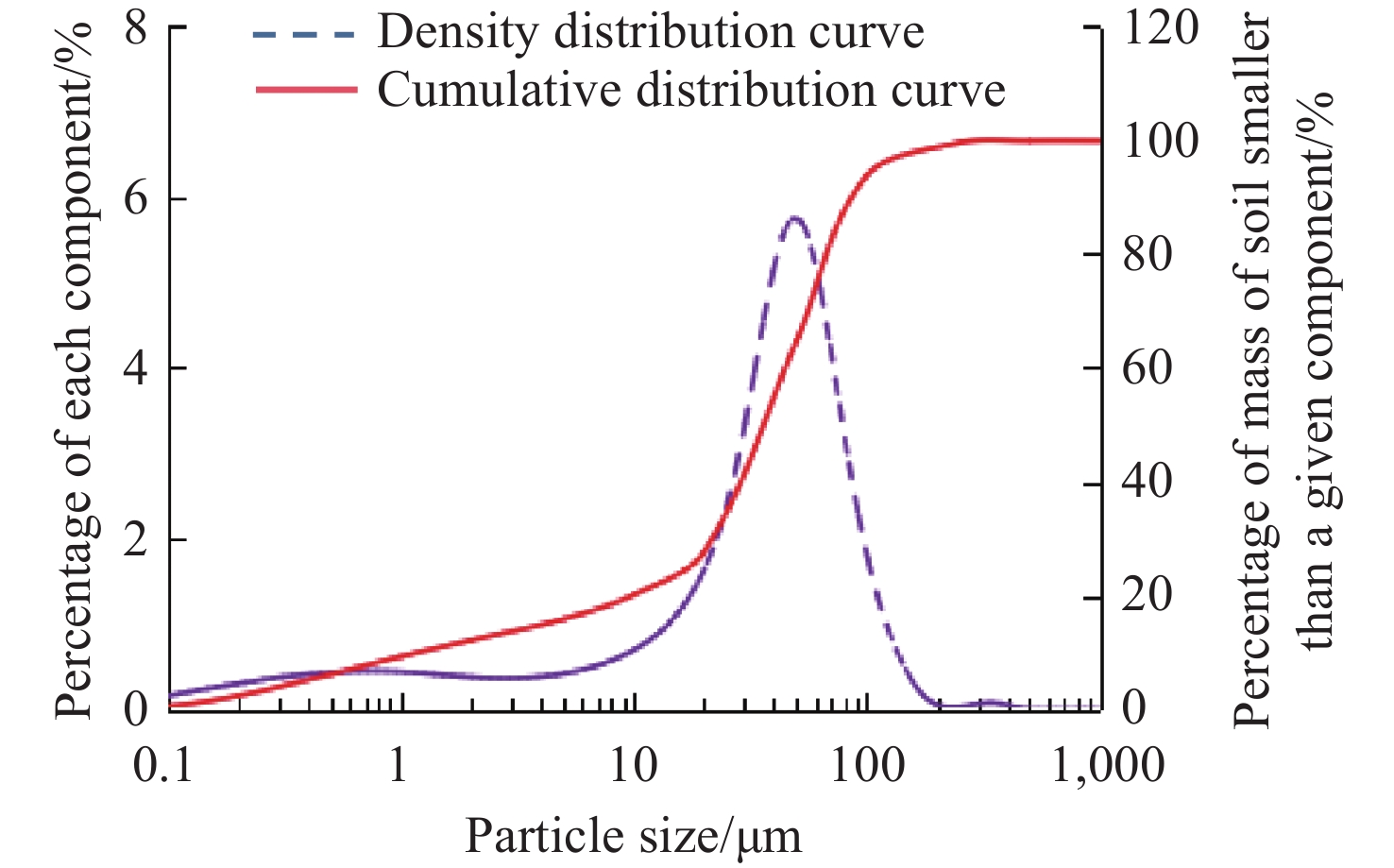
Name Natural moisture content/% Specific gravity Sand gravel >0.075 mm/% Powder particle 0.005–0.075 mm/% Clay particle <0.005 mm/% Liquid limit/wI Plastic limit/wp Plasticity limit index/Ip Yan'an loess 10.65 2.71 14.89 69.23 15.88 28.84 16.53 12.31  下载: 导出CSV
Table 2. Determination of engineering properties of remolded loess and improved loess
Soil sample name Liquid limit/wI Plastic limit/wp Plasticity limit index/Ip Maximum dry density/
g/cm3Optimum moisture content/
%Saturated permeability coefficient Ksat/m·s−1 Cohesive force/
kPaInternal friction angle/° Remodeled loess 28.84 16.53 12.31 1.73 16 8.39×10⁻⁶ 17.05 25.32 9% lime-amended loess 33.53 20.19 11.49 1.62 20 9.57×10⁻⁷ 32.03 26.68 0.34% modified cellulose-improved loess 42.17 23.95 18.22 1.73 20 4.04×10⁻⁷ 57.10 28.87
下载: 导出CSV
Table 3. Main similarity relationships in loess filling slope model
The physical quantity Notation Dimension of
quantityRelationship of
similaritySimilar
constantSlope dimension (the basic quantity) $ l $ $ L $ $ {C}_{l}=n $ $ n $ Soil density (the basic quantity) $ \rho $ $ M{L}^{-3} $ $ {C}_{\rho }=1 $ 1 Gravitation acceleration (the basic quantity) $ g $ $ L{T}^{-2} $ $ {C}_{g}=1 $ 1 Elastic modulus $ E $ $ M{L}^{-1}{T}^{-2} $ $ {C}_{E}=1 $ 1 Poisson's ratio $ \mu $ 1 $ {C}_{\mu }=1 $ 1 Stress $ \sigma $ $ M{L}^{-1}{T}^{-2} $ $ {C}_{\sigma }={C}_{l}{C}_{\rho }{C}_{g} $ $ n $ Deformation $ \varepsilon $ 1 $ {C}_{\varepsilon }=1 $ 1 Pore water pressure $ u $ $ M{L}^{-1}{T}^{-2} $ $ {C}_{u}={C}_{l}{C}_{\rho }{C}_{g} $ $ n $ Soil cohesive force $ c $ $ M{L}^{-1}{T}^{-2} $ $ {C}_{c}=1 $ 1 Internal friction angle $ \varphi $ 1 $ {C}_{\varphi }=1 $ 1 Permeability coefficient $ k $ $ L{T}^{-1} $ $ {C}_{k}=1 $ 1 Moisture content $ w $ 1 $ {C}_{w}=1 $ 1 Displacement $ d $ $ L $ $ {C}_{d}=n $ $ n $ Rainfall intensity $ q $ $ L{T}^{-1} $ $ {C}_{q}=\sqrt{{C}_{l}}\sqrt{{C}_{g}} $ $ \sqrt{n} $ Time $ t $ $ T $ $ {C}_{t}=\dfrac{\sqrt{{C}_{l}}}{\sqrt{{C}_{g}}} $ $ \sqrt{n} $
下载: 导出CSV
-
Bao H, Liu C, Lan H, et al. 2022. Time-dependency deterioration of polypropylene fiber reinforced soil and guar gum mixed soil in loess cut-slope protecting. Engineering Geology, 311: 106895. DOI: 10.1016/j.enggeo.2022.106895. Bauduceau N, Berry P, Cecchi C, et al. 2015. Towards an EU research and innovation policy agenda for nature-based solutions & re-naturing cities. Final report of the Horizon 2020 expert group on nature-based solutions and re-naturing cities. Brussels: 1–70. DOI: 10.2777/765301. Chen H, Lee CF, Law KT. 2004. Causative mechanisms of rainfall-induced fill slope failures. Journal of Geotechnical and Geoenvironmental Engineering, 130: 593−602. Chen Y, Li P, Wang Y, et al. 2024. Unraveling the mystery of water-induced loess disintegration: A comprehensive review of experimental research. Sustainability, 16(6): 2463. DOI: 10.3390/su16062463. Cheng H, Xu R, Wang GL, et al. 2023. Study on the stability of loess high fill slope in Yan'an New Area. Coal Geology of China, 35(10): 52−57. (in Chinese) DOI: 10.3969/j.issn.1674-1803.2023.10.09. Derbyshire E, Dijkstra TA, Smalley IJ, et al. 1994. Failure mechanisms in loess and the effects of moisture content changes on remoulded strength. Quaternary International, 24: 5−15. DOI: 10.1016/1040-6182(94)90032-9. Fredlund DG, Morgenstern NR, Widger RA. 1978. The shear strength of unsaturated soils. Canadian Geotechnical Journal, 15: 313−321. DOI: 10.1139/t78-029. Gabet EJ, Mudd SM. 2006. The mobilization of debris flows from shallow landslides. Geomorphology, 74: 207−218. DOI: 10.1016/j.geomorph.2005.08.013. Gao Y, Qian H, Yang J, et al. 2016. Laboratory test study on permeability of remolded Malan loess. South- and North- Water Transfers and Water Science & Technology, 14: 7. (in Chinese) Göksel Türk. 1982. Markov Chain analysis. Mathematical Geosciences, 14: 539−542. DOI: 10.1007/bf01077538. Hallstein J, Metzsch - Zilligen E, Pfaendner R. 2024. Long - term thermal stabilization of poly. Lactic Acid, 17(11): 1996−1944. DOI: 10.3390/ma17112761. Hungr O, Evans SG, Bovis MJ, et al. 2001. A review of the classification of landslides of the flow type. Environmental and Engineering Geoscience, 7: 221−238. DOI: 10.2113/gseegeosci.7.3.221. Jiang Y, Ma Z, Gao Y, et al. A review on the impact of water in accelerated carbonation: Implications for producing sustainable construction materials. Cement and Concrete Composites, 2025, 157. DOI: 10.1016/j.cemconcomp.2024.105902. Jiang Y, Hu X, Liang H, et al. 2023. A physically based model for the sequential evolution analysis of rainfall-induced shallow landslides in a catchment. Water Resources Research, 59: e2022WR032716. DOI: 10.1029/2022WR032716. Konagai K, Karunawardena A, Bandara K N, et al. 2023. Early warning system against rainfall-induced landslide in Sri Lanka. Progress in Landslide Research and Technology, Cham: Springer International Publishing, 1(1): 217−235. Leng Y, Peng J, Wang Q, et al. A fluidized landslide occurred in the Loess Plateau: A study on loess landslide in South Jingyang tableland. Engineering Geology, 2017: 129−136. DOI: 10.1016/j.enggeo.2017.05.006. Li HX, Han SB, Wu X, et al. 2021. Distribution, characteristics and influencing factors of fresh groundwater resources in the Loess Plateau, China. China Geology, 4(3): 509−526. DOI: 10.31035/cg2021057. Li M, Zhang X, Yang Z, et al. 2020. The rainfall erosion mechanism of high and steep slopes in loess tablelands based on experimental methods and optimized control measures. Bulletin of Engineering Geology and the Environment, 79: 4671−4681. DOI: 10.1007/s10064-020-01854-3. Li PY, Li JH, Wu JH, et al. 2024. Effects of loess-paleosol interbedding on soil moisture transport and soil microstructure. Hydrogeology & Engineering Geology, 51(3): 1−11. (in Chinese) DOI: 10.16030/j.cnki.issn.1000-3665.202403039. Lu XS, Jiang Y, Wang NQ, et al. 2023. Progressive deformation and failure mechanism of loess fill slopes induce by rainfall: Insights from flume model tests. Bulletin of Engineering Geology and the Environment, 82: 385. DOI: 10.1007/s10064-023-03413-y. Ma JL, Wang Q, Zhong XM, et al. 2025. Experimental analysis of rainfall - induced instability and failure patterns in loess fill slopes. Advances in Civil Engineering, 2025(1): 5233914. DOI: 10.1155/adce/5233914. Nan J, Peng J, Zhu F, et al. 2021. Multiscale characteristics of the wetting deformation of Malan loess in the Yan'an area, China. Journal of Mountain Science, 18: 1112−1130. DOI: 10.1007/s11629-020-6490-8. Peng J, Fan Z, Wu D, et al. 2015. Heavy rainfall triggered loess – mudstone landslide and subsequent debris flow in Tianshui, China. Engineering Geology, 186: 79−90. DOI: 10.1016/j.enggeo.2014.08.015. Peng JB, Wang QY, Zhuang JQ, et al. 2020. Dynamic formation mechanism of landslide disaster on the Loess Plateau. International Journal of Geomechanics, 26: 714−730. (in Chinese) DOI: 10.12090/j.issn.1006-6616.2020.26.05.059. Ren T, Zhu LJ, Pei X, et al. 2021. Study on compression test and mechanism of double polymer double cross - linked solidified loess. Yellow River, 43(6): 140−144. (in Chinese) DOI: 10.3969/j.issn.1000-1379.2021.06.028. Regmi RK, Jung K, Nakagawa H, et al. 2014. Study on mechanism of retrogressive slope failure using artificial rainfall. Catena, 122: 27−41. DOI: 10.1016/j.catena.2014.06.001. Tan Wj, Huang QB, Chen X, et al. 2022. Physical model test on the interface of loess fill slope. Land, 11: 372−1372. DOI: 10.3390/land11081372. Xiao J, Porter SC, An ZS, et al. 1995. Grain size of quartz as an indicator of winter monsoon strength on the Loess Plateau of Central China during the Last 130, 000 Yr. Quaternary Research, 43: 22−29. DOI: 10.1006/qres.1995.1003. Xu Q, Pu CH, Wang XH, et al. 2025. Revealing terrestrial uplift in large-scale land creation areas on the loess plateau using InSAR time series data. Engineering Geology, 347(1): 107946−107946. DOI: 10.1016/j.enggeo.2025.107946. Yang, KH, Thuo JN. 2018. Numerical evaluation of reinforced slopes with various backfill-reinforcement-drainage systems subject to rainfall infiltration. Computers and Geotechnics, 102: 218−227. DOI: 10.1016/j.compgeo.2017.10.012. Yu FD, Qiao G, Wang K, et al. 2023. Investigation of groundwater characteristics and its influence on Landslides in Heifangtai Plateau using comprehensive geophysical methods. Journal of Groundwater Science and Engineering, 11(2): 171−182. DOI: 10.26599/JGSE.2023.9280015. Yu GQ, Wang Q, Zhu LF, et al. 2023. Regulation of vegetation pattern on the hydrodynamic processes of erosion on hillslope in Loess Plateau, China. Journal of Groundwater Science and Engineering, 11(1): 4−19. DOI: 10.26599/JGSE.2023.9280002. Zhang H, Hu C, Liu B, et al. 2003. Mechanical properties experiment of compacted loess - lime. Journal of Traffic Transportation Engineering, 3: 13−16. Zhang Q, Qian H, Xu P, et al. 2022. Microscale evidence for and formation mechanisms of shear-strength anisotropy of a loess-paleosol sequence since the late Early Pleistocene: The case study of the Xiushidu profile, Southern Chinese loess Plateau. Catena, 213: 106228. DOI: 10.1016/j.catena.2022.106228. Zhang S, Zhang X, Pei X, et al. 2019. Model test study on the hydrological mechanisms and early warning thresholds for loess fill slope failure induced by rainfall. Engineering Geology, 258: 105135. DOI: 10.1016/j.enggeo.2019.05.012. Zhang X, Zhong Y, Pei X, et al. 2021. A cross - linked polymer soil stabilizer for hillslope conservation on the Loess Plateau. Frontiers in Earth Science, 9: 771316. DOI: 10.3389/feart.2021.771316. Zhao ZF, Zhu YP, Ye SH, et al. 2025. Experimental study on the failure characteristics of the loess high slope under the coupled effects of soil consolidation, rainfall, and evaporation. Engineering Failure Analysis, 171: 109383. DOI: 10.1016/j.engfailanal.2025.109383. Zhou X, Yan Y, Li Y, et al. 2025. Application of cellulose-rich organic resource improves soil quality and plant growth by recruiting beneficial microorganisms. Applied Soil Ecology, 207: 105909. DOI: 10.1016/j.apsoil.2025.105909. Zhu R, Xie W, Liu Q, et al. 2022. Shear behavior of sliding zone soil of loess landslides via ring shear tests in the South Jingyang Plateau. Bulletin of Engineering Geology and the Environment, 81: 267. DOI: 10.1007/s10064-022-02719-7. -



 点击查看大图
计量
- 文章访问数: 5922
- HTML全文浏览量: 2350
- PDF下载量: 24
- 被引次数: 0


