 E-mail alert
 Rss
Rss



Mechanism of seepage heat transfer in thermal reservoirs of high temperature metamorphic rocks in the Yanggao-Tianzhen basin
-
Abstract: A typical high-temperature metamorphic rock geothermal reservoir was newly discovered in the Tianzhen geothermal field in Datong City, China. However, due to the complex geological structure and thermal properties, the seepage heat transfer mechanism of metamorphic rock reservoirs is still unclear, seriously impeding the efficient development and sustainable utilization of geothermal resources. This study established a percolation-heat transfer model through tracer testing and numerical simulation to reveal the percolation mode and heat transfer mechanism of high-temperature metamorphic rock reservoirs during the reinjection process. We also predicted the distribution characteristics of various physical fields in the geothermal reservoir after the geothermal system has been in operation for 100 a, analyzed the influence of different reinjection schemes on seepage heat transfer in the geothermal reservoir, and proposed an optimization strategy for the reinjection scheme. The results show that: (1) The connectivity between production and injection wells is poor, and there are water-conducting fractures connecting the shallow and bottom layers; (2) The seepage channels through fractures guide the migration of the reinjected fluid and form a cold front surface with a protruding shape towards the mining well in the temperature field, resulting in temperature changes in the production well; (3) Seepage heat transfer in thermal reservoirs is greatly affected by the reinjection flow rate and the distance between production and reinjection wells, but less by the reinjection temperature. As the reinjection temperature drops, the flow rate increases, the well spacing decreases, and the temperature variation range of the production well becomes greater; (4) Under the current reinjection test conditions, the temperature of the mining well decreased by approximately 4°C after 100 a of geothermal reinjection operation, and a thermal breakthrough occurred at 78 a. Under the condition of maintaining a reinjection flow rate of 60 m3/h and a reinjection temperature of 80°C unchanged, the well spacing should be no less than 470 m to ensure that the well temperature does not cause a thermal breakthrough during the reinjection operation for 100 a. This research provides a theoretical basis and optimization methods for the efficient development of high-temperature metamorphic rock thermal reservoirs.
-

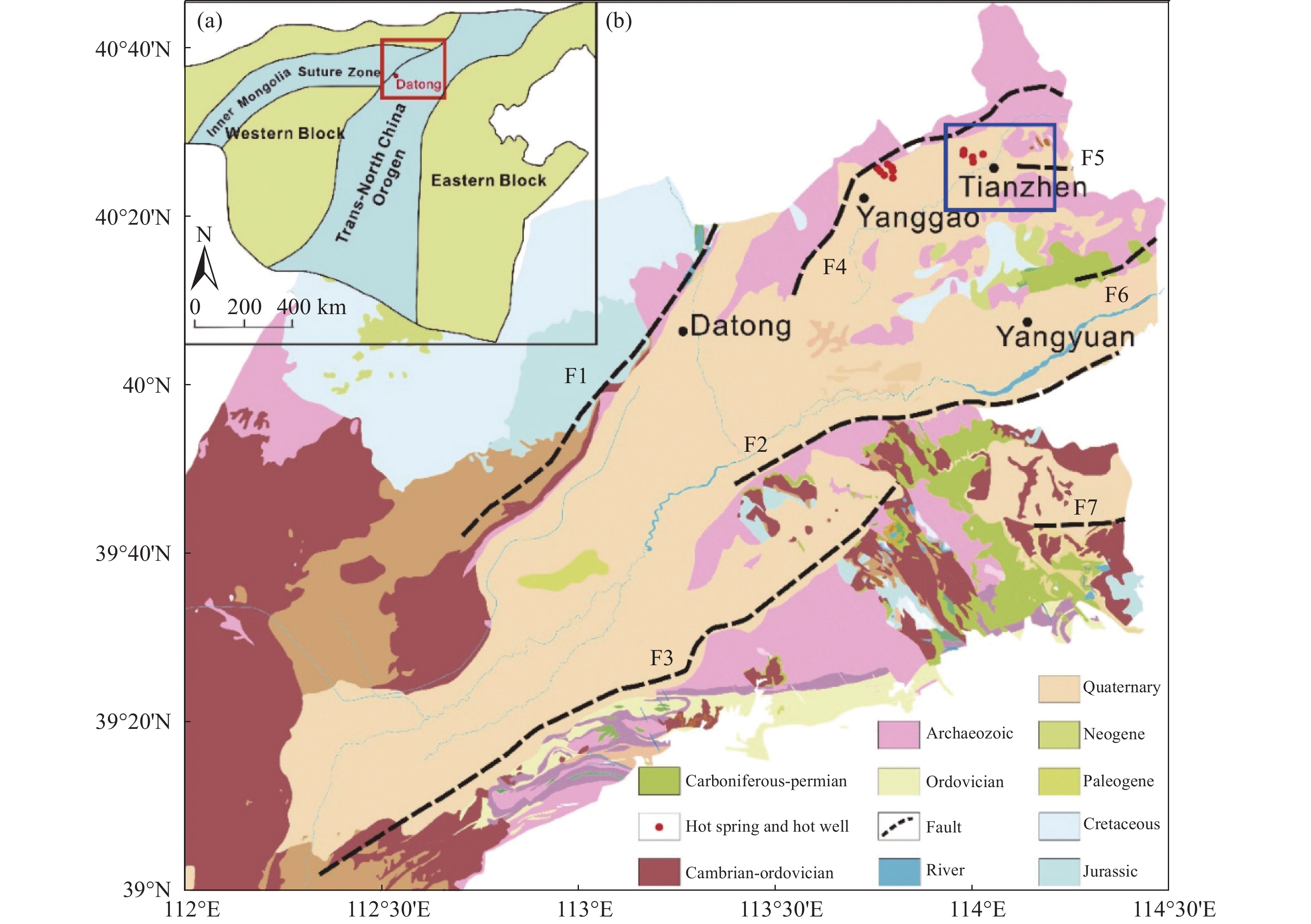
Figure 1. (a) Location of the North China Craton, with a red box indicating the Datong Basin; (b) Tectonic background of the Datong Basin (blue box indicating the study area) (Kusky and Li, 2003; Zhou et al., 2020)

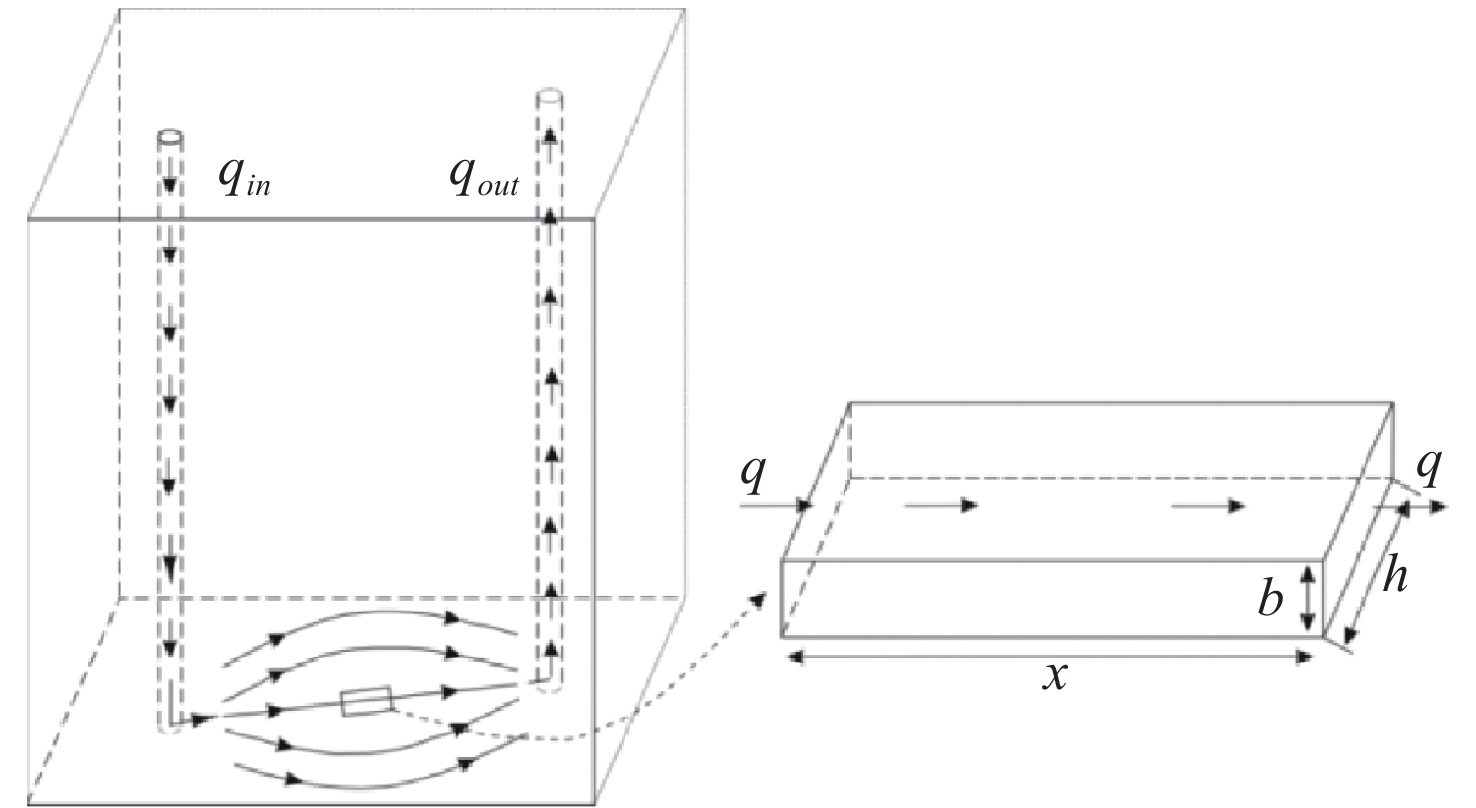
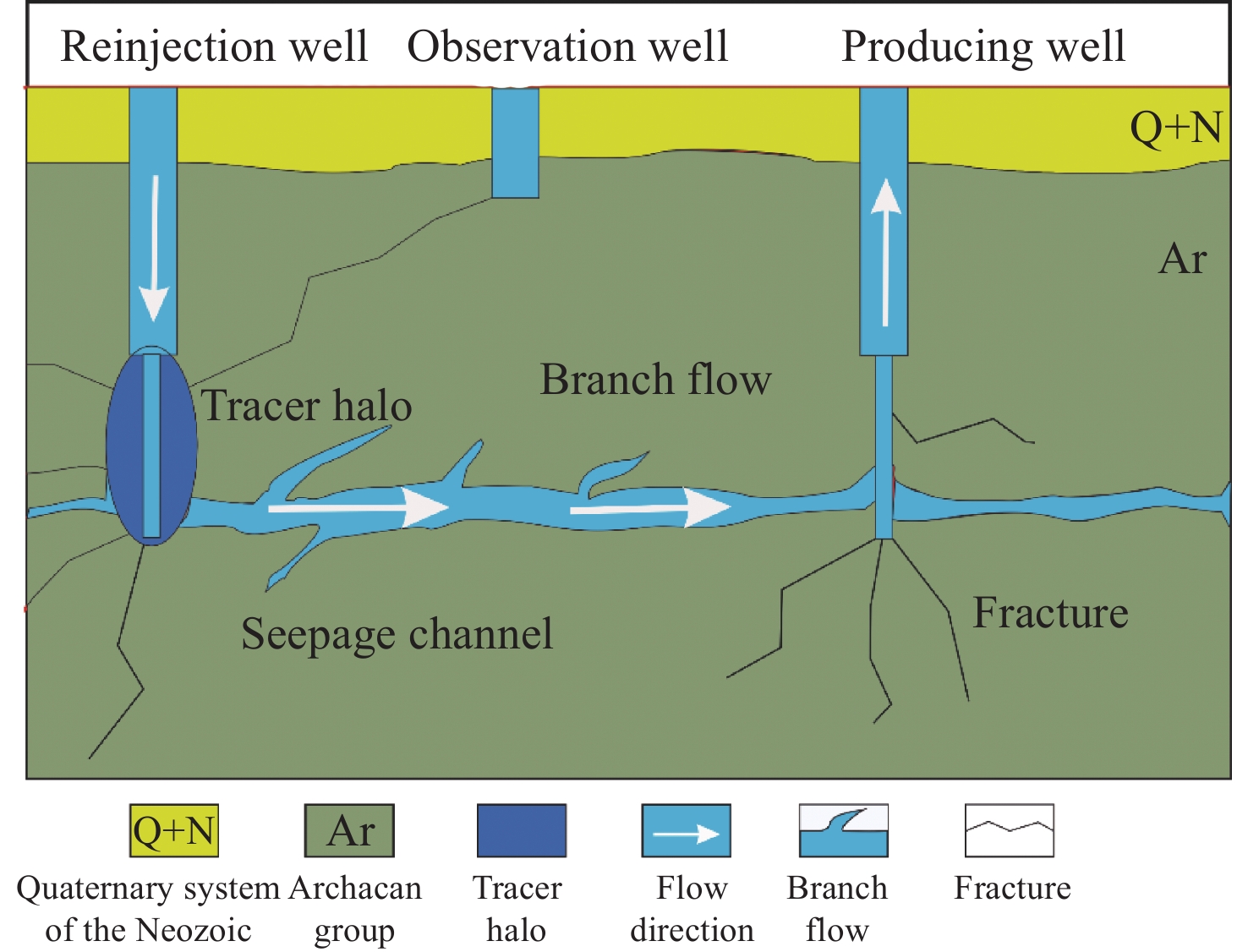
Figure 4. Schematic diagram of the seepage channel model of a deep thermal reservoir (Li et al., 2020)

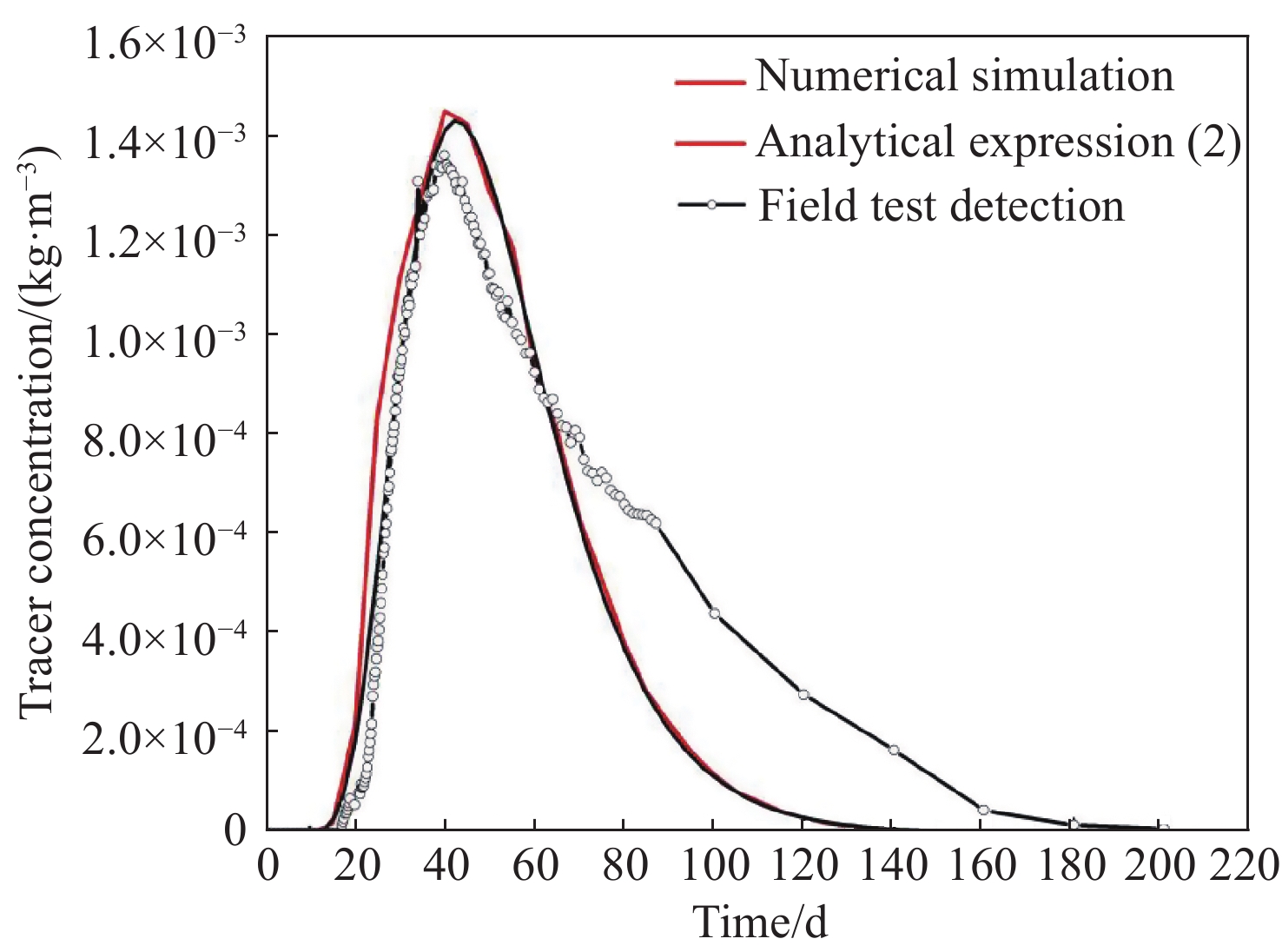
Figure 6. Numerical simulation results, analytical Equation (2), and on-site test results

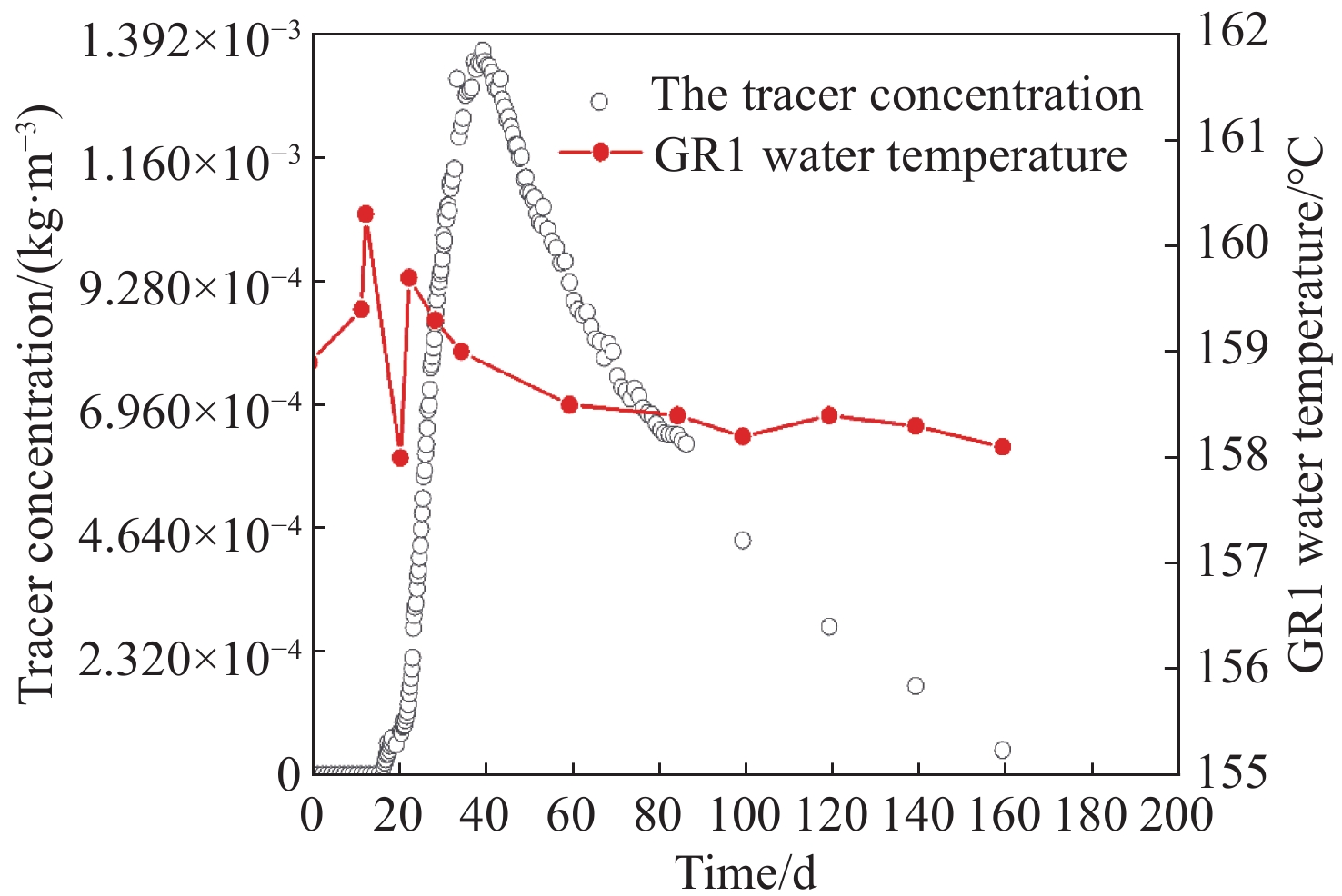
Figure 7. Tracer concentration detection (left axis) and temperature detection (right axis) in well GR1

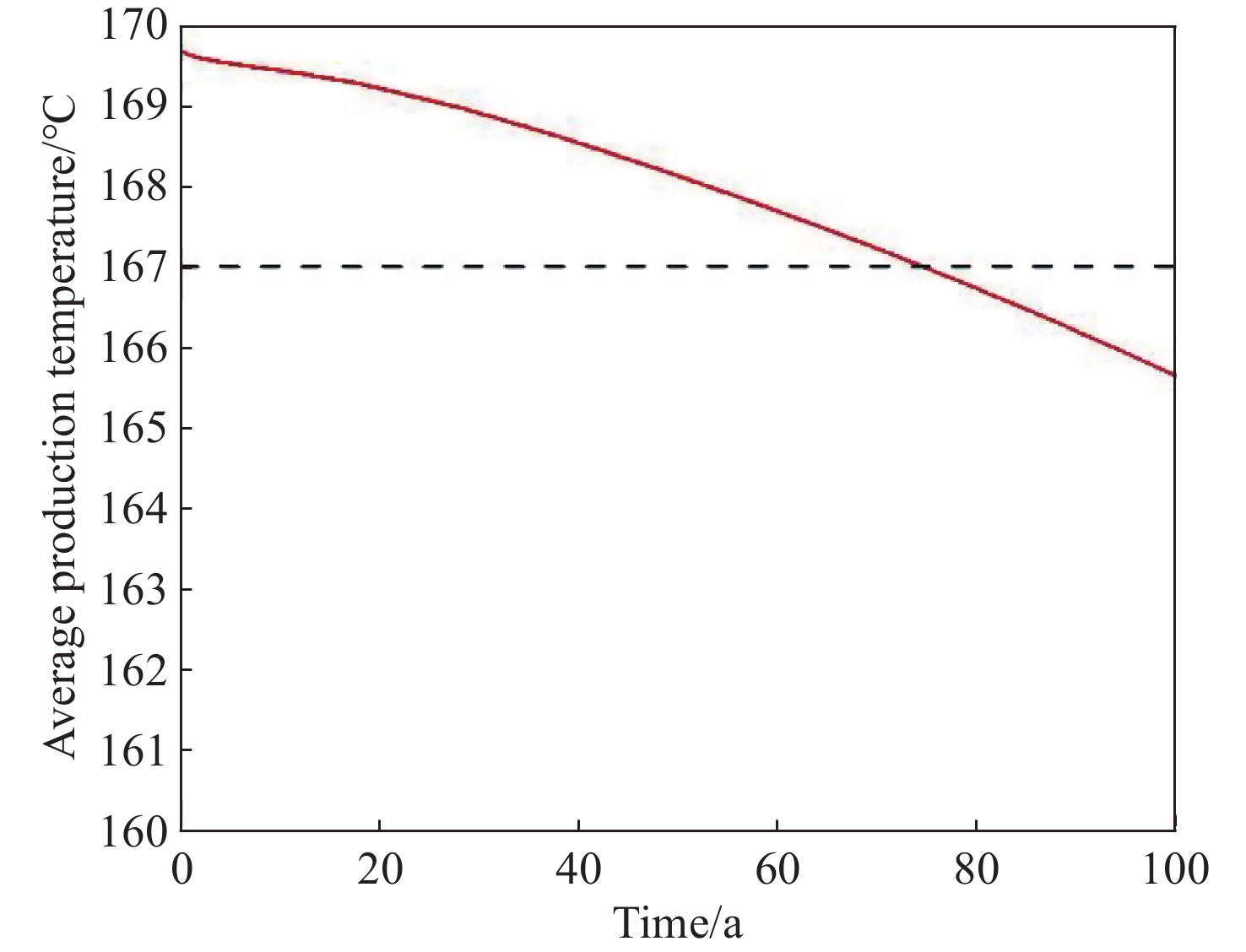
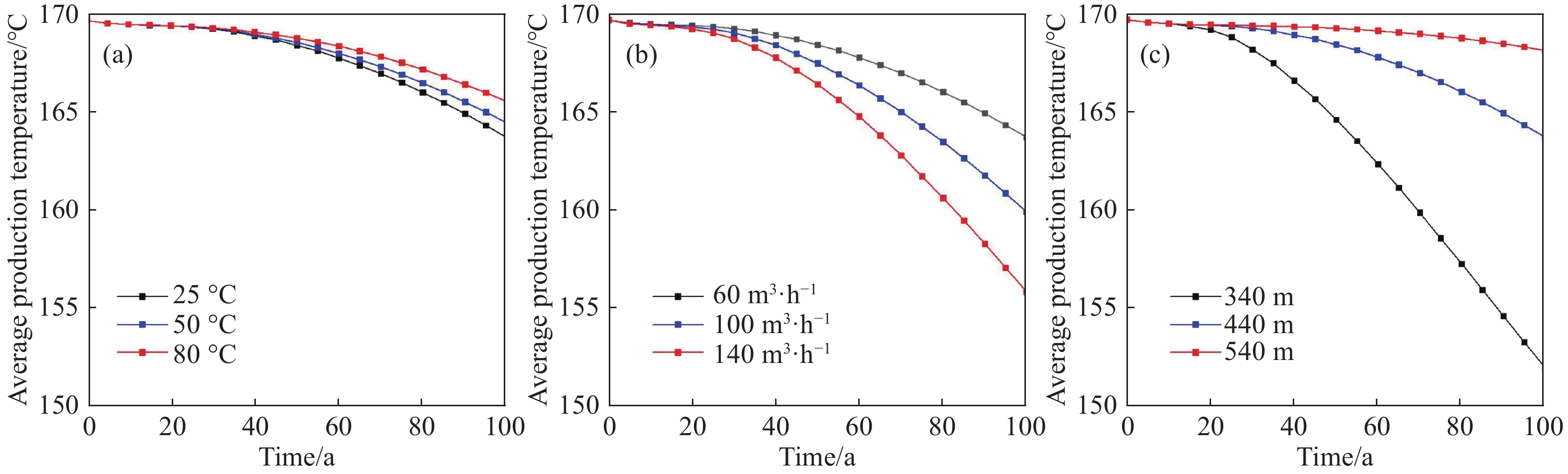
Figure 13. Average temperature variation of production well under different reinjection schemes
Table 1. Governing equations for each physical field
Description Governing equation Seepage equations in thermal reservoirs $ \dfrac{\partial }{\partial t}({\rho }_{\mathrm{f}}\varphi )+\nabla \cdot ({\rho }_{\mathrm{f}}{\mathbf{u}}_{\mathrm{f}})={Q}_{\mathrm{m}} $ Heat transfer equation in thermal reservoir $ (\rho {C}_{p}{)}_{\text{eff}}\dfrac{\partial T}{\partial t}+{\rho }_{\mathrm{f}}{C}_{\mathrm{p},\mathrm{f}}{\mathbf{u}}_{\mathrm{f}}\cdot \nabla T-\nabla \cdot \left({k}_{\text{eff}}\nabla T\right)={q}_{f} $ Solute transport equations in thermal reservoirs $ \dfrac{\partial C}{\partial t}=D\dfrac{{\partial }^{2}C}{\partial {x}^{2}}-u\dfrac{\partial C}{\partial x} $ Heat transfer equation of wellbore $ {\rho }_{\mathrm{f}}{A}_{\mathrm{w}}{C}_{\mathrm{p},\mathrm{f}}\dfrac{\partial T}{\partial t}+{\rho }_{\mathrm{f}}A{C}_{\mathrm{p},\mathrm{f}}{\bar{u}}_{\mathrm{w}}\cdot \nabla T=\nabla \cdot Ak\nabla T+{f}_{\mathrm{D}}\dfrac{{\rho }_{\mathrm{f}}A}{2{d}_{\mathrm{i}}}{\left| u\right| }^{3}+{Q}_{\text{wall}} $ Notes: Where: t is time (s), $ {\rho }_{\mathrm{f}} $ is the fluid density (kg/m3), Qm is the fluid mass source (kg/(m3∙s)), $ {C}_{\mathrm{p},\mathrm{f}} $ is the specific heat capacity of the fluid under constant pressure (J/kg/K), T is the temperature (K), $ {q}_{f} $ is the heat source (W/m3), and (ρCp)eff is the equivalent volumetric heat capacity of the reservoir rock mass keff is the effective thermal conductivity of the reservoir rock mass (W/m/K), C is the tracer concentration/(kg/m3); t is time (s), x is the channel axial coordinate (m); D is the tracer axial dispersion coefficient (m2/s); u is the average flow rate of the fluid (m/s); Aw is the cross-sectional area of the geothermal well (m2); uw is the average flow velocity along the shaft axis (m/s); Qwall is the heat exchange between the fluid and the surrounding rocks through the geothermal well wall, and f D is the Darcy friction factor.  下载: 导出CSV
Table 2. Model parameter table
Parameters Value Parameters value Reinjection temperature 80°C Reservoir density 2,689 kg/m³ Thermal reservoir temperature 169°C Reservoir porosity 2.5% Reinjection flow 60 m3/h Thermal conductivity of reservoir rock 7 W/(m·K) Fluid density 1,000 kg/m³ Reservoir permeability 2×10⁻¹⁶ m2 Fluid heat capacity 4,200 J/(kg·°C) Reservoir heat capacity 920 J/(kg·°C)
下载: 导出CSV
Table 3. Grid sensitivity analysis
Grid division mode Number of grids Calculate the peak concentration of tracer in the mining well (t = 40 d) (×10−3/m3) Refine the mesh 46,371 1.4525 Ultra-fine grid 135,351 1.4523 Extremely fine grid 224,470 1.4519
下载: 导出CSV
Table 4. Tracer concentration statistics of observation wells and well GR1
Time(d) Tracer concentration by well (×10−6 kg/m3) K4 K6 K13 GR1 8 8.10 50.34 24.82 Tracer was not detected 16 13.39 49.42 12.95 Tracer was not detected 26 28.07 29.00 17.17 480.24 42 10.05 21.16 12.09 1,320.08 61 9.93 23.90 11.23 890.88 69 12.85 16.84 10.90 809.68 78 10.25 15.45 12.30 679.76 86 10.58 13.50 11.23 621.76
下载: 导出CSV
Table 5. Seepage channel parameter table
Parameter Inversion result Tracer recovery rate 15.1% Channel length 468 m Seepage velocity 11.6 m/d Longitudinal dispersion 35 m Dispersion coefficient 0.00413 m2/s Channel cross-sectional area 7.91 m2
下载: 导出CSV
Table 6. Parameter description of the reinjection scheme
Parameter/unit Value Reinjection temperature/°C 25 50 80 Reinjection flow/(m3/h) 60 100 140 Production and reinjection well spacing/m 240 440 640
下载: 导出CSV
Table 7. Temperature variation and thermal breakthrough time of the mining well after 100 a of the geothermal system operation under different reinjection schemes
Well spacing Reinjection flow Reinjection temperature 25°C 50°C 80°C 340 m 60 m3/h 152°C/38a 154°C/41a 157°C/46a 100 m3/h 143.9°C/28a 146.3°C/29a 150.7°C/33a 140 m3/h 135.8°C/23a 139.6°C/24a 145.49°C/30a 440 m 60 m3/h 163.7°C/70a 164.5°C/74a 165.6°C/78a 100 m3/h 159.9°C/54a 161.3°C/58a 163°C/65a 140 m3/h 155.8°C/46a 157.8°C/49a 160.2°C/55a 540 m 60 m3/h 168.1°C/No thermal breakthrough 168.3°C/No thermal breakthrough 168.5°C/No thermal breakthrough 100 m3/h 167.2°C/No thermal breakthrough 167.5°C/No thermal breakthrough 167.9°C/No thermal breakthrough 140 m3/h 166.2°C/90a 166.7°C/96a 167.2°C/No thermal breakthrough Notes: "165.6°C/78a" represents the temperature value of the extraction well after the geothermal system has been in operation for 100 a, the time of thermal breakthrough under the current reinjection scheme.
下载: 导出CSV
-
Al-Khoury R, Bonnier PG, Brinkgreve RBJ. 2005. Efficient finite element formulation for geothermal heating systems. Part I: Steady state. International Journal for Numerical Methods in Engineering, 63(7): 988−1013. DOI: 10.1002/nme.1313. Al Khoury R, Bonnier P. 2006. Efficient finite element formulation for geothermal heating systems. Part II: transient. International journal for numerical methods in engineering, 67(5): 725−745. DOI: 10.1002/nme.1662. Allen A, Milenic D. 2003. Low-enthalpy geothermal energy resources from groundwater in fluvioglacial gravels of buried valleys. Applied Energy, 74(1): 9−19. DOI: 10.1016/S0306-2619(02)00126-5. Aquilina L, de Dreuzy JR, Bour O, et al. 2004. Porosity and fluid velocities in the upper continental crust (2 to 4 km) inferred from injection tests at the Soultz-sous-Forêts geothermal site. Geochimica et Cosmochimica Acta, 68(11): 2405−2415. DOI: 10.1016/j.gca.2003.08.023. Axelsson G, Björnsson G, Montalvo F. 2005. Quantitative interpretation of tracer test data. Proceedings World Geothermal Congress Antalya, Turkey: 24−29. Cao Q, Fang CH, Li Y, et al. 2021. Development status and enlightenment of geothermal reinjection at home and abroad. Oil Drilling and Production Technology, 43(02): 203−211. DOI: 10.13639/j.odpt.2021.02.011. Cen M, Dong S, Shi W, et al. 2015. Structural analysis on the formation mechanism of Datong Basin. Geological Review, 61(6): 1235−1247. DOI: 10.16509/j.georeview.2015.06.004. Cui YL, Zhu J, Twaha S, et al. 2018. A comprehensive review on 2D and 3D models of vertical ground heat exchangers. Renewable and Sustainable Energy Reviews, 94: 84−114. DOI: 10.1016/j.rser.2018.05.063. Diaz AR, Kaya E, Zarrouk SJ. 2016. Reinjection in geothermal fields−A worldwide review update. Renewable and Sustainable Energy Reviews, 53: 105−162. DOI: 10.1016/j.rser.2015.07.151. Du L, Zhao L, Qiao Y, et al. 2019. Study on the influence of fracture orientation and injection velocity on the micro seepage law of reinjection water in fracture geothermal reservoir. Shandong Chemical Industry, 48(20): 139−141,146. (in Chinese) DOI: 10.19319/j.cnki.issn.1008-021x.2019.20.052. Fan Y, Duan Z, Yang Y, et al. 2023. Impact of reservoir characteristics on the well spacing of sandstone geothermal reservoir: A case study of Jiyang Depression. Hydrogeology and Engineering Geology, 51(1): 215−223. DOI: 10.16030/j.cnki.issn.1000-3665.202301033. Hawkins AJ, Fox DB, Becker MW, et al. 2017. Measurement and simulation of heat exchange in fractured bedrock using inert and thermally degrading tracers. Water Resources Research, 53(2): 1210−1230. DOI: 10.1002/2016WR019617. He Y, Jia X, Zhang Z, et al. 2023. A study of the formation mechanism and resource developmentprospect of the high-temperature geothermal systemin the Yanggao-Tianzhen area. Hydrogeology and Engineering Geology, 50(4): 39−49. (in Chinese) DOI: 10.16030/j.cnki.issn.1000-3665.202302065. He YY, Bai B, Hu SB, et al. 2016. Effects of surface roughness on the heat transfer characteristics of water flow through a single granite fracture. Computers and Geotechnics, 80: 312−321. DOI: 10.1016/j.compgeo.2016.09.002. Huang Y, Zhang Y, Yu Z, et al. 2019. Experimental investigation of seepage and heat transfer in rough fractures for enhanced geothermal systems. Renewable Energy, 135: 846−855. DOI: 10.1016/j.renene.2018.12.063. Huang YB, Zhang YJ, Gao XF, et al. 2021. Experimental and numerical investigation of seepage and heat transfer in rough single fracture for thermal reservoir. Geothermics, 95: 102163. DOI: 10.1016/j.geothermics.2021.102163. Juliusson E, Horne RN. 2013. Characterization of fractured reservoirs using tracer and flow-rate data. Water Resources Research, 49(5): 2327−2342. DOI: 10.1002/wrcr.20220. Kamila Z, Kaya E, Zarrouk SJ. 2021. Reinjection in geothermal fields: An updated worldwide review 2020. Geothermics, 89: 1−88. DOI: 10.1016/j.geothermics.2020.101970. Kuo CH, Song SR, Rose P, et al. 2018. Reactive tracer experiments in a low temperature geothermal field, Yilan, Taiwan. Geothermics, 74: 298−304. DOI: 10.1016/j.geothermics.2017.11.017. Kusky TM, Li J. 2003. Paleoproterozoic tectonic evolution of the North China Craton. Journal of Asian Earth Sciences, 22(4): 383−397. DOI: 10.1016/S1367-9120(03)00071-3. Li TX, Cai YF, Liu YG, et al. 2020. Tracer test and simulation of thermal energy storage in carbonate rocks of the Xian County geothermal field. Earth Science Frontiers, 27(01): 152−158. DOI: 10.13745/j.esf.2020.1.16. Liu GH, Pu H, Zhao ZH, et al. 2019a. Coupled thermo-hydro-mechanical modeling on well pairs in heterogeneous porous geothermal reservoirs. Energy, 171: 631−653. DOI: 10.1016/j.energy.2019.01.022. Liu HJ, Wang HW, Lei HW, et al. 2020. Numerical modeling of thermal breakthrough induced by geothermal production in fractured granite. Journal of Rock Mechanics and Geotechnical Engineering, 12(4): 900−916. DOI: 10.1016/j.jrmge.2020.01.002. Liu JR. 2003. The status of geothermal reinjection. Hydrogeology and Engineering Geology, 30(3): 100−104. (in Chinese) Liu M, Cui X, Liu F. 2004. Cenozoic rifting and volcanism in eastern China: A mantle dynamic link to the Indoa-Asian collision? Tectonophysics, 393(1-4): 29−42. DOI: 10.1016/j.tecto.2004.07.029. Liu YG, Liu GH, Zhao ZH, et al. 2019b. Theoretical model of geothermal tail water reinjection based on an equivalent flow channel model: A case study in Xianxian, North China Plain. Energy Exploration and Exploitation, 37(2): 849−864. DOI: 10.1177/0144598718822401. Liu YG, Long XT, Liu F. 2022. Tracer test and design optimization of doublet system of carbonate geothermal reservoirs. Geothermics, 105: 102533. DOI: 10.1016/j.geothermics.2022.102533. Ma YQ, Zhang YJ, Hu ZJ, et al. 2019a. Experimental study of the heat transfer by water in rough fractures and the effect of fracture surface roughness on the heat transfer characteristics. Geothermics, 81: 235−242. DOI: 10.1016/j.geothermics.2019.05.009. Ma YQ, Zhang YJ, Huang YB, et al. 2019b. Experimental study on flow and heat transfer characteristics of water flowing through a rock fracture induced by hydraulic fracturing for an enhanced geothermal system. Applied Thermal Engineering, 154: 433−441. DOI: 10.1016/j.applthermaleng.2019.03.114. O'Sullivan MJ, Pruess K, Lippmann MJ. 2001. State of the art of geothermal reservoirs simulation. Geothermics, 30(4): 395−429. DOI: 10.1016/S0375-6505(01)00005-0. Pan L, Meng L, Sun F, et al. 2023. Geothermal geological characteristics and resourcepotential in the north of Datong Basin, Shanxi Province. Geology in China, 50(6): 1632−1645. (in Chinese) DOI: 10.12029/gc20220304001. Pandey SN, Vishal V, Chaudhuri A. 2018. Geothermal reservoir modeling in a coupled thermo-hydro-mechanical-chemical approach: A review. Earth-Science Reviews, 185: 1157−1169. DOI: 10.1016/j.earscirev.2018.09.004. Qiao Y, Li S, Yan K, et al. 2023. Karst thermal reservoir tracer test and seepage characteristics analysis in Niutuozhen geothermal field in Xiongan New Area. Frontiers in Earth Science, 11: 01−09. DOI: 10.3389/feart.2023.1132095. Radilla G, Sausse J, Sanjuan B, et al. 2012. Interpreting tracer tests in the Enhanced Geothermal System (EGS) of Soultz-sous-Forêts using the equivalent stratified medium approach. Geothermics, 44: 43−51. DOI: 10.1016/j.geothermics.2012.07.001. Ren YQ, Kong YL, Pang ZH, et al. 2023. A comprehensive review of tracer tests in enhanced geothermal systems. Renewable and Sustainable Energy Reviews, 182: 113393. DOI: 10.1016/j.rser.2023.113393. Rose PE, Benoit WR, Kilbourn PM. 2001. The application of the polyaromatic sulfonates as tracers in geothermal reservoirs. Geothermics, 30(6): 617−640. DOI: 10.1016/S0375-6505(01)00024-4. Sanford WE, Cook PG, Robinson NI, et al. 2006. Tracer mass recovery in fractured aquifers estimated from multiple well tests. Groundwater, 44(4): 564−573. DOI: 10.1111/j.1745-6584.2006.00161.x. Stefansson V. 1997. Geothermal reinjection experience. Geothermics, 26(1): 99−139. DOI: 10.1016/S0375-6505(96)00035-1. Tang JP, Qiu YM. 2023. Analysis of the influence of the distance between producing Wells on the enhancedgeothermal system. Chinese Journal of Computational Mechanics, 40(01): 126−132. DOI: jslxxb.cn/index.php/jslxxb/article/view/4256. Wang GL, Liu YG, Zhu X, et al. 2020a. The status and development trend of geothermal resources in China. Earth Science Frontiers, 27(01): 1−9. DOI: 10.13745/j.esf.2020.1.1. Wang GL, Lu C. 2023. Stimulation technology development of hot dry rock and Enhanced geothermal system driven by carbon neutrality target. Geology and Resources, 32(01): 85−95. DOI: 10.13686/j.cnki.dzyzy.2023.01.011. Wang GS, Song XZ, Shi Y, et al. 2020b. Comparison of production characteristics of various coaxial closed-loop geothermal systems. Energy Conversion and Management, 225: 113437. DOI: 10.1016/j.enconman.2020.113437. Wang B, Okiambe E, Omenda P, et al. 2014. A numerical solution to estimate hydro-geologic parameters of a fractured geothermal porous medium based on fluorescein thermal decay correction. Geothermics, 51: 124−129. DOI: 10.1016/j.geothermics.2013.11.003. Wang Y, Liu Y, Bian K, et al. 2021. Influence of low temperature tail water reinjection on seepage and heat transfer of carbonate reservoirs. Energy Exploration ang Exploitation, 39(6): 2062−2079. DOI: 10.1177/01445987211020416. Yao J, Zhang X, Huang Z, et al. 2022. Numerical simulation of thermo–hydraulic coupling processes in fractured karst geothermal reservoirs. Natural Gas Industry, 9(6): 511−520. DOI: 10.1016/j.ngib.2022.11.003. Yu C, Zhang Y, Tan Y, et al. 2023. Simulation study of novel methods for water reinjection efficiency improvement of a doublet system in guantao sandstone geothermal reservoir. Geothermics, 111: 102709. DOI: 10.1016/j.geothermics.2023.102709. Zhang P, Zhang Y, Huang Y. 2021. Experimental study of convective heat transfer characteristics of fractures with different morphologies based on fractal theory. Case Studies in Thermal Engineering, 28: 101499. DOI: 10.1016/j.csite.2021.101499. Zhao Z, Dou Z, Liu G, et al. 2021. Equivalent flow channel model for doublets in heterogeneous porous geothermal reservoirs. Renewable Energy, 172: 100−111. DOI: 10.1016/j.renene.2021.03.024. Zheng J, Li P, Dou B, et al. 2022. Impact research of well layout schemes and fracture parameters on heat production performance of enhanced geothermal system considering water cooling effect. Energy, 255: 124496. DOI: 10.1016/j.energy.2022.124496. Zhou LM, Zhu ZD, Xie XH, et al. 2022. Coupled thermal–hydraulic–mechanical model for an enhanced geothermal system and numerical analysis of its heat mining performance. Renewable Energy, 181: 1440−1458. DOI: 10.1016/j.renene.2021.10.014. Zhou W, Hu X, Yan S, et al. 2020. Genetic analysis of geothermal resources and geothermal geological characteristics in Datong basin, Northern China. Energies, 13(7): 1792. DOI: 10.3390/en13071792. Zhu R, Xu Y, Zhu G, et al. 2012. Destruction of the North China craton. Science China Earth Sciences, 55: 1565−1587. DOI: 10.1007/s11430-012-4516-y. Zinsalo JM, Lamarche L, Raymond J. 2020. Injection strategies in an enhanced geothermal system based on discrete fractures model. Applied Thermal Engineering, 169: 114812. DOI: 10.1016/j.applthermaleng.2019.114812. -

 点击查看大图
计量
- 文章访问数: 346
- HTML全文浏览量: 142
- PDF下载量: 15
- 被引次数: 0


