 E-mail alert
 Rss
Rss



Groundwater contamination risk from refinery-derived water-soluble fractions: A comprehensive assessment of organic carbon, hydrocarbons, and oxygenated organic compounds
-
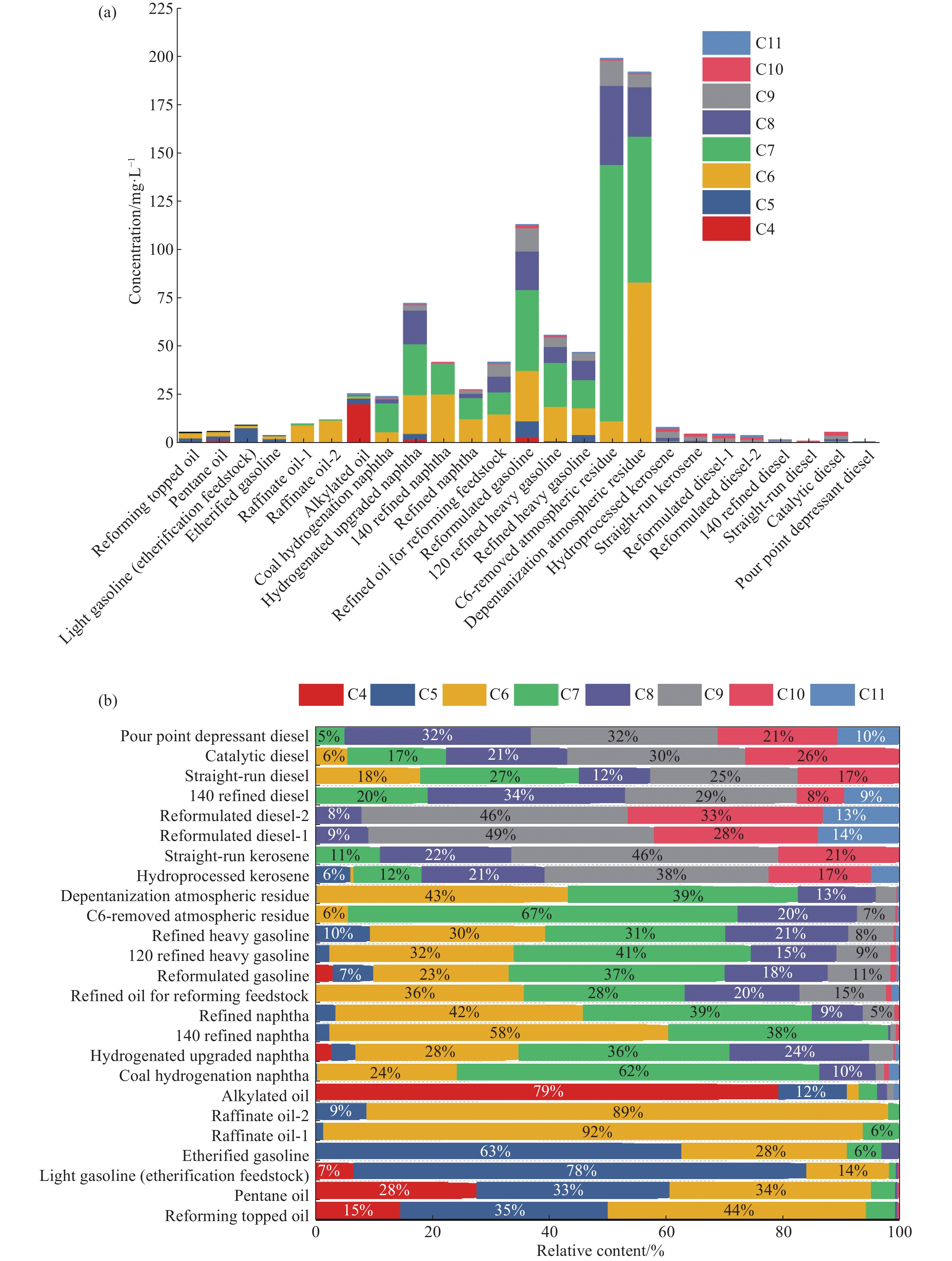
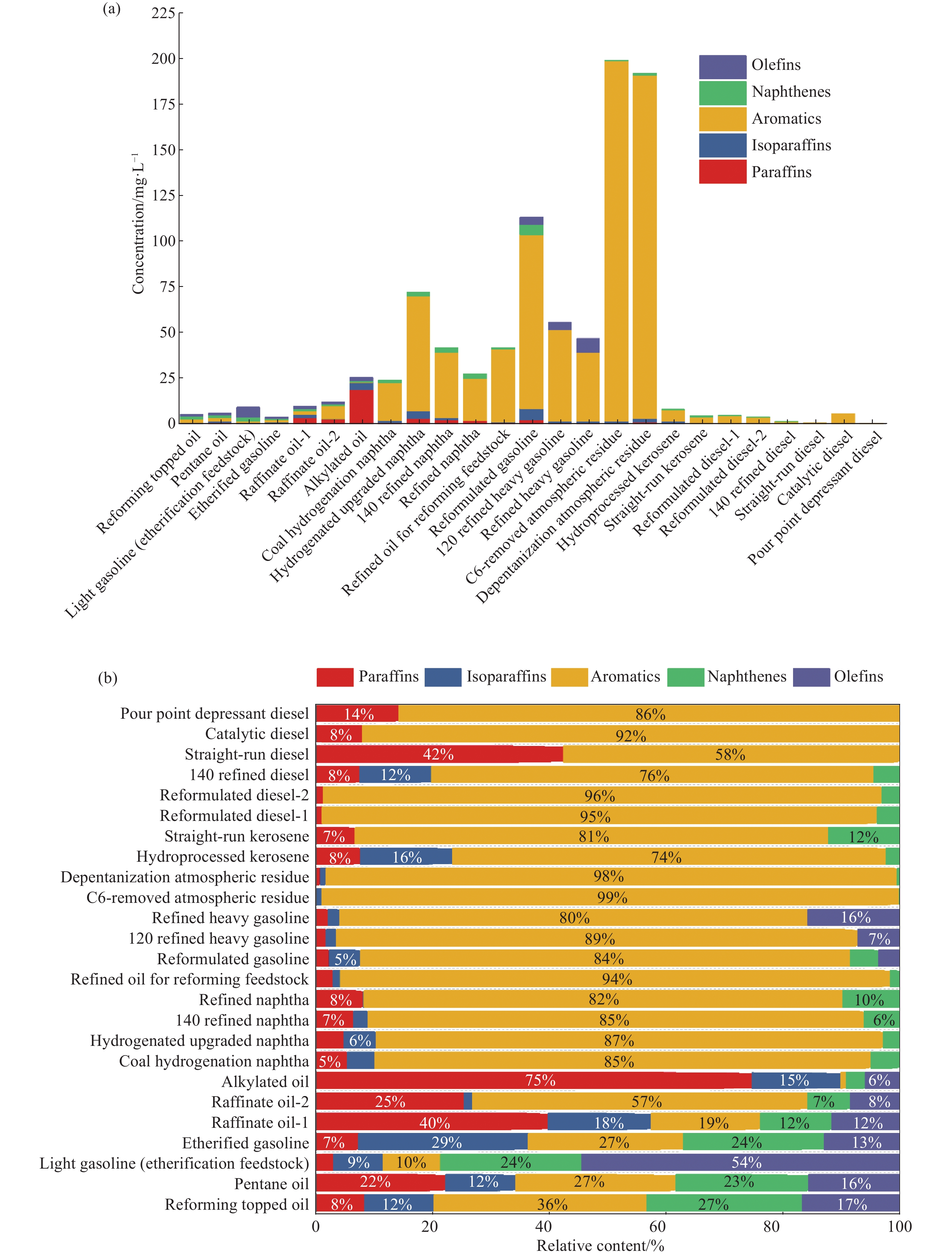
Concentration of OCOCs in some oil samples. Oil WSFs samples MTBE (mg/g-oil) TAME (mg/g-oil) Note: "ND" indicates not detected (below the method detection limit). Etherified gasoline ND 312.6 Raffinate oil-2 18.9 0.2 Alkylated oil 0.1 ND Refined naphtha 0.3 0.1 Reformulated gasoline 7.1 0.8 Refined heavy gasoline 6.0 114.2 NPOC recovery from standard aqueous solutions of MTBE and TAME. MTBE TAME Nominal concentration (mg/L) Measured concentration (mg/L) \begin{document}$ \dfrac{\bf{Measured}~\bf{concentration}}{\bf{Nominal}~\bf{concentration}} $\end{document} Nominal concentration (mg/L) Measured concentration (mg/L) \begin{document}$ \dfrac{\bf{Measured}~\bf{concentration}}{\bf{Nominal}~\bf{concentration}} $\end{document} 5 3.66 73.2% 5 2.01 10 6.24 62.4% 10 4.11 41.1% 20 15.93 79.7% 20 6.76 33.8% 50 32.28 64.6% 50 17.71 35.4% 100 66.32 66.3% 100 34.32 34.3% Schematic diagram of the slow-stirring experimental setup. The carbon number distribution 25 oil samples. The groups distribution of VPH within 25 oil samples.
Corresponding author: rubpmj@sina.com
-
Abstract: Petroleum products can contaminate groundwater through dissolution of their Water-Soluble Fractions (WSFs), yet the composition and dissolution behavior of WSFs from different refined products remain insufficiently understood. In this study, oil-water equilibrium WSFs of 25 refined petroleum products from the same refinery were generated using a slow-stirring method and analyzed for Total Organic Carbon (TOC), Total Petroleum Hydrocarbons (TPH), Volatile Petroleum Hydrocarbons (VPH), Extractable Petroleum Hydrocarbons (EPH), and Ooxygen-Containing Organic Compounds (OCOCs). The results showed that the dissolved organic concentrations of WSFs varied by 1–2 orders of magnitude among different product types. Gasoline, naphtha, and atmospheric residues produced WSFs with relatively high TOC and TPH concentrations, dominated by C6-C9 aromatic hydrocarbons. In contrast, kerosene, diesel, and most gasoline blending components exhibited much lower dissolved hydrocarbon concentrations. In several gasoline-related products, oxygenated additives such as Methyl Tert-Butyl Ether (MTBE) and Tert-Amyl Methyl Ether (TAME) were detected at high levels and dominated the dissolved organic composition, resulting in elevated OCOCs/TPH ratios. In addition, butane was identified as a characteristic dissolved compound in the WSF of alkylated oil. These results demonstrate pronounced differences in the chemical composition and distribution patterns of dissolved constituents among refined petroleum products.
-
Key words:
- Groundwater remediation /
- Molecular composition /
- Petroleum hydrocarbons /
- Risk assessment /
- Contaminated site
Concentration of OCOCs in some oil samples. Oil WSFs samples MTBE (mg/g-oil) TAME (mg/g-oil) Note: "ND" indicates not detected (below the method detection limit). Etherified gasoline ND 312.6 Raffinate oil-2 18.9 0.2 Alkylated oil 0.1 ND Refined naphtha 0.3 0.1 Reformulated gasoline 7.1 0.8 Refined heavy gasoline 6.0 114.2 NPOC recovery from standard aqueous solutions of MTBE and TAME. MTBE TAME Nominal concentration (mg/L) Measured concentration (mg/L) $ \dfrac{\bf{Measured}~\bf{concentration}}{\bf{Nominal}~\bf{concentration}} $ Nominal concentration (mg/L) Measured concentration (mg/L) $ \dfrac{\bf{Measured}~\bf{concentration}}{\bf{Nominal}~\bf{concentration}} $ 5 3.66 73.2% 5 2.01 10 6.24 62.4% 10 4.11 41.1% 20 15.93 79.7% 20 6.76 33.8% 50 32.28 64.6% 50 17.71 35.4% 100 66.32 66.3% 100 34.32 34.3% Schematic diagram of the slow-stirring experimental setup. The carbon number distribution 25 oil samples. The groups distribution of VPH within 25 oil samples.
注释:1) Appendix 1. Numerical method for calculating the surface area of the Ellipsoidal model: -
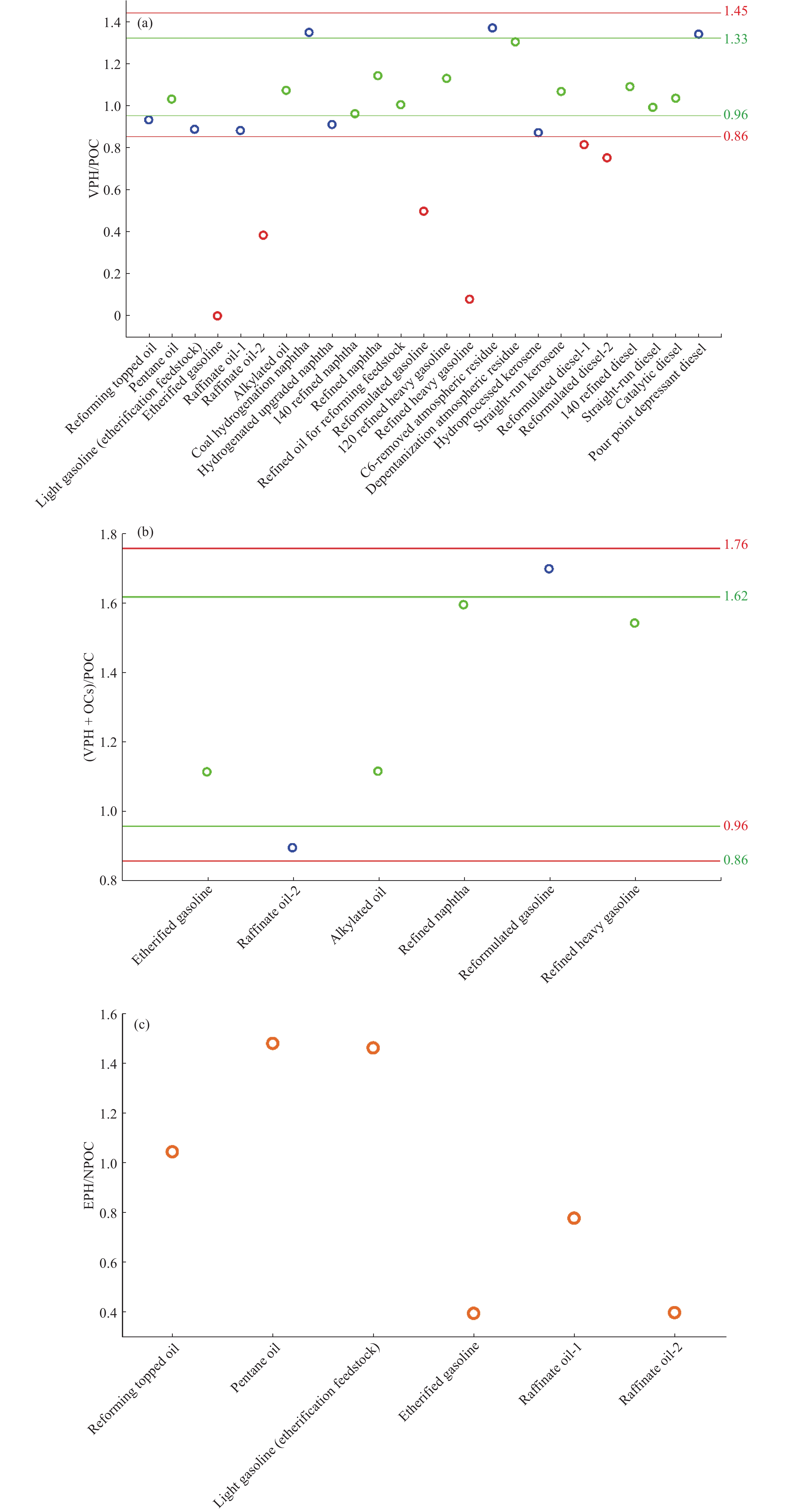
Table 1. TOC, TPH, OCOCs values and comparative ratios of oil WSFs
Oil WSFs samples Oil types TOC/(mg/L) TPH/(mg/L) OCOCs/(mg/L) Comparative ratios POC NPOC VPH EPH MTBE TAME VPH/
POCEPH/
NPOCTPH/
TOC(VPH+
OCOCs)/
POC(TPH+
OCOCs)/
TOCOCOCs/
(VPH+
OCOCs)Conc. RSD Conc. RSD Conc. RSD Conc. RSD Conc. RSD Conc. RSD Reforming topped oil Gasoline blending components 6.14 0.89 3.53 0.42 5.78 0.76 ND - ND - ND - 0.94 0.00 0.60 0.94 0.60 - Pentane oil Gasoline blending components 6.03 0.72 2.24 0.31 6.27 0.91 ND - ND - ND - 1.04 0.00 0.76 1.04 0.76 - Light gasoline (etherification feedstock) Gasoline blending components 10.68 1.52 1.98 0.25 9.56 1.24 ND - ND - ND - 0.90 0.00 0.76 0.90 0.76 - Etherified gasoline Gasoline blending components 664.9 89.32 145.10 18.76 4.19 0.58 ND - 57.97 7.32 680.39 92.56 0.01 0.00 0.01 1.12 0.92 0.99 Raffinate oil-1 Gasoline blending components 11.42 1.37 3.88 0.45 10.16 1.42 ND - ND - ND - 0.89 0.00 0.66 0.89 0.66 - Raffinate oil-2 Gasoline blending components 31.83 4.25 2.71 0.32 12.44 1.68 ND - 15.12 1.98 1.03 0.12 0.39 0.00 0.36 0.90 0.83 0.56 Alkylated oil Gasoline blending components 23.94 3.12 2.38 0.29 25.87 3.45 ND - 0.47 0.06 0.43 0.05 1.08 0.00 0.98 1.12 1.02 0.03 Coal hydrogenation naphtha Naphtha 17.99 9.87 2.63 0.33 24.41 3.18 ND - ND - ND - 1.36 0.00 1.18 1.36 1.18 - Hydrogenated upgraded naphtha Naphtha 79.18 10.25 4.46 0.56 145.40 18.92 ND - ND - ND - 1.84 0.00 1.74 1.84 1.74 - 140 refined naphtha Naphtha 43.53 5.72 4.59 0.58 42.21 5.46 ND - ND - ND - 0.97 0.00 0.88 0.97 0.88 - Refined naphtha Naphtha 24.35 3.21 5.58 0.71 28.02 3.69 ND - 10.89 1.42 ND - 1.15 0.00 0.94 1.60 1.30 0.28 Refined oil for reforming feedstock Naphtha 41.68 5.39 5.26 0.67 42.21 5.58 ND - ND - ND - 1.01 0.00 0.90 1.01 0.90 - Reformulated gasoline Gasoline 225.64 28.97 2.76 0.35 113.78 14.82 ND - 265.46 34.81 4.44 0.57 0.50 0.00 0.50 1.70 1.68 0.70 120 refined heavy gasoline Gasoline 49.40 6.42 37.39 4.86 56.24 7.31 ND - ND - ND - 1.14 0.00 0.65 1.14 0.65 - Refined heavy gasoline Gasoline 554.35 72.06 196.30 25.52 47.22 6.14 ND - 250.31 32.54 558.85 72.65 0.09 0.00 0.06 1.54 1.14 0.94 C6-removed atmospheric residue Atmospheric residue 144.95 18.84 3.05 0.39 199.80 25.97 ND - ND - ND - 1.38 0.00 1.35 1.38 1.35 - Depentanization atmospheric residue Atmospheric residue 146.97 19.11 4.63 0.59 192.57 24.98 ND - ND - ND - 1.31 0.00 1.27 1.31 1.27 - Hydroprocessed kerosene Kerosene 9.81 1.27 9.55 1.24 8.44 1.1 10.01 1.30 ND - ND - 0.86 1.05 0.95 0.86 0.95 - Straight-run kerosene Kerosene 4.57 0.59 14.61 1.90 4.91 0.64 ND - ND - ND - 1.08 0.00 0.26 1.08 0.26 - Reformulated diesel-1 Diesel 6.11 0.79 5.33 0.69 5.02 0.65 7.91 1.03 ND - ND - 0.82 1.48 1.13 0.82 1.13 - Reformulated diesel-2 Diesel 5.71 0.74 5.47 0.71 4.33 0.57 ND - ND - ND - 0.76 0.00 0.39 0.76 0.39 - 140 refined diesel Diesel 1.77 0.23 5.40 0.70 1.95 0.25 7.91 1.08 ND - ND - 1.10 1.47 1.38 1.10 1.38 - Straight-run diesel Diesel 1.14 0.15 11.23 1.46 1.13 0.15 4.49 0.58 ND - ND - 1.00 0.40 0.45 1.00 0.45 - Catalytic diesel Diesel 5.72 0.74 4.89 0.63 5.96 0.77 3.83 0.50 ND - ND - 1.04 0.78 0.92 1.04 0.92 - Pour point depressant diesel Diesel 0.67 0.09 5.60 0.73 0.86 0.29 2.25 0.21 ND - ND - 1.28 0.40 0.50 1.28 0.50 - Note:. “ND” indicates not detected (below the method detection limit). “-” denotes that the ratio is not applicable.  下载: 导出CSV
Table 2. Henry's constant, saturation vapor pressure and aqueous solubility of selected organic compounds at 25°C.
Henry's constant (atm m3/mol) Saturation vapor pressure (kPa) Aqueous solubility (mg/L) MTBE 5.87×10⁻⁴ 32.66 52,100 TAME 1.32×10⁻³ 10.00 12,350 Benzene 0.18 12.7 1,790 Toluene 0.22 3.8 535 Ethylbenzene 0.32 1.3 61 m/p-Xylene 0.28 1.1 151 o-Xylene 0.29 0.9 171 1,3,5-trimethyl-Benzene 0.45 0.4 48 1,2,4-trimethyl-Benzene 0.37 0.6 74 1,2,3-trimethyl-Benzene 0.41 0.5 52 Cyclopentane 1.1 33 161 Butane 0.91 210 73 Pentane 1.4 68 48 Hexane 1.8 17 13 Heptane 2.2 6.1 3.00 Octane 2.6 1.9 0.66 Nonane 3 0.6 0.17 Decane 3.5 0.2 0.052 Undecane 4 0.1 0.044
下载: 导出CSV
Table 3. The TOP 10 most abundant compounds in VPH of 25 oil WSFs
Reforming
topped oilPentane
oilLight
gasoline
(etherification
feedstock)Etherified
gasolineRaffinate
oil-1Raffinate
oil-2Alkylated
oilCoal
hydrogenation
naphthaHydrogenated
upgraded
naphtha140 refined
naphthaRefined
naphthaRefined
oil for
reforming
feedstockReformulated
gasolineOil types Gasoline blending components Gasoline blending components Gasoline blending components Gasoline blending components Gasoline blending components Gasoline blending components Gasoline blending components Naphtha Naphtha Naphtha Naphtha Naphtha Gasoline 1,2,3,5-tetramethylbenzene - - - - - - - - - - - - - 1,2,4-trimethylbenzene - - - - - - - - 0.98 - 0.64 3.33 5.40 1,3,5-trimethylbenzene - - - - - - - - - - - - 1.95 1H-Indene,-2,3-dihydro-4-methyl - - - - - 0.35 0.00 - - - - - - 1-Methylnaphthalene - - - - - - - - - - - - - 1-Ethyl-2-methylbenzene - - - - - - - - - - - 0.71 - 1-Ethyl-3-methylbenzene - - - - - - - - - - - - - 2-butene 0.86 0.89 0.51 - - - - - - - - - - 2-butene,-2-methyl 0.09 - 2.96 0.54 - - - - - - - - - 2-methyl-1-propene - - - - - - 1.53 - - - - - - 2-methyl-2-pentene - - - - 0.13 0.77 - - - - - - - 2-methylbutane 0.25 0.30 0.73 1.08 0.12 0.60 2.14 - 1.31 - - - - 2-methylnaphthalene - - - - - - 0.20 - - - - - - 2-methylpentane 0.27 0.28 - - 1.21 - - - - 1.14 - - - 2-Pentene - - 1.42 - - - - - - - - - - 2-pentene,-3-methyl- - - 0.31 - - - - - - - - - - 2-pentene,-3-methyl- - - - - - 0.82 - - - - - - - 3-Hexen-1-ol,-(E)- - - - - - - - - - - - - - 3-Methylheptane - - - - - - - - - - - - - 3-Methylhexane - - - 0.13 - - 0.45 - - - - - 3.99 3-methyl-pentane 0.17 0.17 - - - 3.46 0.19 - - - - - - 3-vinyl-1-cyclobutene - - - - - 0.73 - - - - - - - Benzene 2.08 1.70 0.91 0.93 1.80 6.92 - 5.06 18.47 21.53 9.48 14.53 25.64 Benzene,-1,3-dimethylbenzene - - - - - - - - - - - 1.78 - Benzene,-propyl - - - - - - - - - - - 0.72 - Butane - 0.86 0.13 - - - 18.81 - 1.37 0.62 - - 2.88 P-Xylene - - - - - - - 1.02 8.97 - - 1.63 - Decane - - - - - - - 0.2 - - - - - Cyclohexane - - - - - - - 0.26 - 0.70 0.46 - - Cyclopentane 1.24 0.97 0.19 0.24 0.64 7.03 0.64 - 0.84 1.84 - - 5.30 Cyclopentene - 0.19 2.03 0.77 0.11 - - - - - - - - Toluene - - - 0.11 - - 0.23 13.95 25.41 14.14 - 11.45 37.6 Methylcyclohexane - - - - - - - 0.26 - 0.75 0.63 - - Methylcyclopentane - - - - 1.12 0.75 - - - 0.84 1.14 - - Mesitylene - - - - - - - - - - 1.87 2.85 6.55 O-Xylene - - - - - - - 0.32 4.93 - 1.53 5.23 7.20 Naphthalene - - - - - - - - - - - - - Nonane - - - - - - - - - - - - - Pentane 0.45 0.53 - - - 0.95 0.25 - 0.83 0.69 0.95 - - Ethylbenzene - - - 0.07 - - - 0.37 2.99 - 0.89 0.87 5.40 Ethylcyclopentane 0.29 0.26 0.09 - - - - - - - - - - Hexane 0.02 - - 0.25 2.89 4.22 - 0.30 - 1.21 0.67 - -
下载: 导出CSV
3. (continued)
120 refined
heavy
gasolineRefined
heavy
gasolineC6-removed
atmospheric
residueDepentanization
atmospheric
residueHydroprocessed
keroseneStraight-run
keroseneReformulated
diesel-1Reformulated
diesel-2140 refined
dieselStraight-run
dieselCatalytic
dieselPour
point
depressant
dieselOil types Gasoline Gasoline Atmospheric residue Atmospheric residue Kerosene Kerosene Diesel Diesel Diesel Diesel Diesel Diesel 1,2,3,5-tetramethylbenzene - - - - - 0.24 - - - 0.00 - 0.00 1,2,4-trimethylbenzene 1.32 1.56 5.30 2.85 1.03 0.76 0.92 0.67 - - 0.78 - 1,3,5-trimethylbenzene - - 1.91 1.08 1.00 0.76 0.33 0.26 - - 0.34 - 1H-Indene,-2,3-dihydro-4-methyl - - - - - - - 0.00 - - 0.30 - 1-Methylnaphthalene - - - - - - - - - 0.20 0.37 0.00 1-Ethyl-2-methylbenzene - - 1.19 - - - - - - - - - 1-Ethyl-3-methylbenzene - 0.81 1.68 - - - 0.27 - - - - - 2-butene - - - - - - - - - - - - 2-butene,-2-methyl - - - - - - - - - - - - 2-methyl-1-propene - - - - - - - - - - - - 2-methyl-2-pentene - 1.00 - - - - - - - - - - 2-methylbutane 4.56 - - - 0.32 - 0.21 - - - - - 2-methylnaphthalene - - - - - - - - - 0.25 0.63 0.00 2-methylpentane - - - - - - - - - - - - 2-Pentene - - - - - - - - - - - - 2-pentene,-3-methyl - 0.99 - - - - - - - - - - 2-pentene,-3-methyl 1.81 - - - - - - - - - - - 3-Hexen-1-ol,-(E) - 0.55 - - - - - - - - - - 3-Methylheptane - - - - - - - - 0.24 - - - 3-Methylhexane - - - - 0.40 - 0.22 - - - - - 3-methyl-pentane - - - - - - - - - - - - 3-vinyl-1-cyclobutene - - - - - - - - - - - - Benzene 10.77 14.81 11.48 81.52 - - - - - 0.21 0.34 - Benzene,-1,3-dimethylbenzene - 4.13 - - 0.46 0.20 - 0.25 - - - - Benzene,-propyl - - - - - - - - 0.19 - - - Butane 1.25 - - - - - - 1.85 - - - - P-Xylene - 3.88 18.2 13.19 0.47 - 0.37 - - - - - Decane - - - - - - - - - 0.20 - 0.20 Cyclohexane - - - - - - - - - - - - Cyclopentane 4.41 - - 0.66 - - - - - - - - Cyclopentene - - - - - - - - - - - - Toluene 14.38 22.64 132.57 75.55 0.43 0.39 - - 0.29 0.31 1.01 - Methylcyclohexane - - - - - - - - - - - - Methylcyclopentane - - - - - - - - - - - - Mesitylene 5.38 - 1.60 0.83 0.47 0.46 0.33 0.28 - 0.14 0.49 - O-Xylene 2.76 - 14.71 7.93 0.53 0.38 0.41 0.33 0.18 - 0.50 - Naphthalene - - - - 0.72 0.49 - - - - 0.67 0.00 Nonane - - - - - - - - - 0.29 - 0.29 Pentane - - - - - - - - - - - - Ethylbenzene 1.18 1.62 6.96 3.72 - 0.22 - 0.16 - - - - Ethylcyclopentane - - - - - - - - - - - - Hexane - - - 0.71 - - - - - - - - Note: “-” indicates that the compound was not ranked among the top 10 most abundant compounds in VPH of that WSF.
下载: 导出CSV
Table 4. The concentration of EPH within oil WSFs
Compound (mg/L) Hydroprocessed kerosene Reformulated diesel-1 140 refined diesel Catalytic diesel Pour point depressant diesel Straight-run diesel Total concentration 10.01 8.04 8.68 3.83 2.25 4.49 4-methyldecane 4.23 p-Cymene 0.21 2.53 2,3-dihydro-4-methyl-1H indene 0.91 0.55 Decahydro-2-methylnaphthalene 0.43 0.55 1,2,3,4-Tetrahydronaphthalene 0.55 0.17 Undecane 1.04 1.18 1.87 0.22 0.15 0.18 Dodecane 1.51 1.12 1.63 Tridecane 0.11 1.55 Tetradecane 0.32 Pentadecane 0.39 Hexadecane 0.30 0.42 Heptadecane 0.43 0.74 1,2,3,4-tetrahydro-5-methylnaphthalene 0.33 0.62 Naphthalene, 1,4,5-trimethyl 0.87 0.23 0.46 0.25 Naphthalene, 1,5-dimethyl 0.25 0.12 0.26 0.27 0.18 0.47 Naphthalene, 1,6,7-trimethyl 0.87 0.64 0.56 0.44 Naphthalene, 1,6-dimethyl 0.11 0.07 Naphthalene, 1-methyl 0.10 0.21 3- (2-methyl-propynyl) -1H indene 0.20 Decane, 2,4-dimethyl 0.28 0.21 0.24 Dodecane, 2,6,11-trimethyl 0.20 0.15 0.18 Naphthalene 0.21 0.12 0.35 Naphthalene, 2-(1-methylethyl) 0.18 Naphthalene, 2,3,6-trimethyl 0.63 0.37 0.81 Naphthalene, 2,3-dimethyl 0.32 0.27 0.42 Naphthalene, 2,6-dimethyl 0.61 0.47 Naphthalene, 2-methyl 0.26
下载: 导出CSV
S1. Concentration of OCOCs in some oil samples.
Oil WSFs samples MTBE (mg/g-oil) TAME (mg/g-oil) Etherified gasoline ND 312.6 Raffinate oil-2 18.9 0.2 Alkylated oil 0.1 ND Refined naphtha 0.3 0.1 Reformulated gasoline 7.1 0.8 Refined heavy gasoline 6.0 114.2 Note: "ND" indicates not detected (below the method detection limit).
下载: 导出CSV
S2. NPOC recovery from standard aqueous solutions of MTBE and TAME.
MTBE TAME Nominal concentration (mg/L) Measured concentration (mg/L) $ \dfrac{\bf{Measured}~\bf{concentration}}{\bf{Nominal}~\bf{concentration}} $ Nominal concentration (mg/L) Measured concentration (mg/L) $ \dfrac{\bf{Measured}~\bf{concentration}}{\bf{Nominal}~\bf{concentration}} $ 5 3.66 73.2% 5 2.01 10 6.24 62.4% 10 4.11 41.1% 20 15.93 79.7% 20 6.76 33.8% 50 32.28 64.6% 50 17.71 35.4% 100 66.32 66.3% 100 34.32 34.3%
下载: 导出CSV
-
Bai J, Jiang J, Yan Z, et al. 2024. Distribution, migration, and segmented risk assessment of the total petroleum hydrocarbons in soil, groundwater, and soil gas at an oil refinery. Regional Studies in Marine Science, 46(3): 101−110. DOI: 10.1016/j.rsma.2024.103714. Baker RJ. 2007. Used Motor oil as a source of MTBE, TAME, and BTEX to ground water. Ground Water Monitoring and Remediation, 22(4): 46−51. DOI: 10.1111/j.1745-6592.2002.tb00770.x. Balleste E, Pascual-Benito M, Martin-Diaz J, et al. 2019. Dynamics of crAssphage as a human source tracking marker in potentially faecally polluted environments. Water Research, 155: 233−244. DOI: 10.1016/j.watres.2019.02.042. Bera G, Doyle S, Passow U, et al. 2020. Biological response to dissolved versus dispersed oil. Marine Pollution Bulletin, 150: 110713. DOI: 10.1016/j.marpolbul.2019.110713. Brown DM, Bonte M, Gill R, et al. 2017. Heavy hydrocarbon fate and transport in the environment. Quarterly Journal of Engineering Geology and Hydrogeology, 50(3): 333−346. DOI: 10.1144/qjegh2016-142. Bushnaf KM, Mangse G, Meynet P, et al. 2017. Mechanisms of distinct activated carbon and biochar amendment effects on petroleum vapour biofiltration in soil. Environmental Science-processes and Impacts, 19(10): 1260−1269. DOI: 10.1039/c7em00309a. Chad MT, Virunya SB, Gregory PB, et al. 2021. Development of updated RfD and RfC values for medium carbon range aromatic and aliphatic total petroleum hydrocarbon fractions. Journal of the Air and Waste Management Association, 71: 1555−1567. DOI: 10.1080/10962247.2021.1974123. Dawn AZ, Foote GR. 2003. The technical case for eliminating the use of the TPH analysis in assessing and regulating dissolved petroleum hydrocarbons in ground water. Groundwater Monitoring and Remediation, 23(3): 95−104. DOI: 10.1111/j.1745-6592.2003.tb00687.x. Devika N. 2015. Remediation techniques for BTEX contamination of groundwater-a review. International Journal of Research in Engineering and Technology, 3(03): 1−6. DOI: 10.17577/IJERTCONV3IS03023. Gray RH. 1982. Chronic effects of a coal liquid on a freshwater alga, Selenastrum capricornutum. Environmental Science and Technology, 16: 225−229. DOI: 10.1021/es00098a011. Herce C, Martini C, Salvio M, et al. 2022. Energy performance of Ialian oil refineries based on mandatory energy audits. Energies, 15(2): 1−20. DOI: 10.3390/en15020532. Kaiser MJ. 2017. A review of refinery complexity applications. Petroleum Science, 14: 167−194. DOI: 10.1007/s12182-016-0137-y. Karishma S, Saravanan A, Deivayanai VC, et al. 2024. Emerging strategies for enhancing microbial degradation of petroleum hydrocarbons: Prospects and challenges. Bioresource Technology Reports, 26: 101866. DOI: 10.1016/j.biteb.2024.101866. Lari KS, Johnston CD, Davis GB. 2016. Gasoline multiphase and multicomponent paprtitioning in the vadose zone: Dynamics and risk longevity. Vadose Zone Journal, 15(3): 1−15. DOI: 10.2136/vzj2015.07.0100. Lekmine G, Bastow TP, Johnston CD, et al. 2014. Dissolution of multi-component LNAPL gasolines: The effects of weathering and composition. The Journal of Contaminant Hydrology, 160: 1−11. DOI: 10.1016/j.jconhyd.2014.02.003. Liu SY, Yi B, Liu F, et al. 2025. Groundwater metal pollution and health risk assessment in river valley heavy industrial cities of arid regions in China. China Geology, 8(3): 526−539. DOI: 10.31035/cg2025084. Liu YC, Fei YH, Li YS, et al. 2024. Pollution source identification methods and remediation technologies of groundwater: A review. China Geology, 7(1): 125−137. DOI: 10.31035/cg2022080. Logeshwaran P, Megharaj M, Chadalavada S, et al. 2018. Petroleum hydrocarbons (PH) in groundwater aquifers: An overview of environmental fate, toxicity, microbial degradation and risk-based remediation approaches. Environmental Technology and Innovation, 10: 175−193. DOI: 10.1016/j.eti.2018.02.001. Lukić M, Daković A, Joksimović K, et al. 2024. Removal of diesel from aqueous solutions by a combined adsorption and microbial degradation process. Minerals, 14(12): 1287. DOI: 10.3390/min14121287. Mao D, Lookman R, Van De Weghe H, et al. 2009. Aqueous solubility calculation for petroleum mixtures in soil using comprehensive two-dimensional gas chromatography analysis data. The Journal of Chromatography, 1216(14): 2873−2880. DOI: 10.1016/j.chroma.2008.08.072. Mcguire JT, Cozzarelli IM, Bekins BA, et al. 2018. Toxicity assessment of groundwater contaminated by petroleum hydrocarbons at a well-characterized, aged, crude oil release site. Environmental Science and Technology, 52(21): 12172−12178. DOI: 10.1021/acs.est.8b03657. Mcmahon PB, Galloway JM, Hunt AG, et al. 2021. Geochemistry and age of groundwater in the Williston Basin, USA: Assessing potential effects of shale-oil production on groundwater quality. Applied Geochemistry, 125: 1−16. DOI: 10.1016/j.apgeochem.2020.104833. Mohler RE, Ahn S, O'reilly K, et al. 2020. Towards comprehensive analysis of oxygen containing organic compounds in groundwater at a crude oil spill site using GCxGC-TOFMS and Orbitrap ESI-MS. Chemosphere, 244: 125504. DOI: 10.1016/j.chemosphere.2019.125504. Monteiro L, Traunspurger W, Roeleveld K, et al. 2018. Direct toxicity of the water-soluble fractions of a crude and a diesel-motor oil on the survival of free-living nematodes. Ecological Indicators, 93: 13−23. DOI: 10.1016/j.ecolind.2018.04.066. Muller JB, Melegari SP, Perreault F, et al. 2019. Comparative assessment of acute and chronic ecotoxicity of water soluble fractions of diesel and biodiesel on Daphnia magna and Aliivibrio fischeri. Chemosphere, 221: 640−646. DOI: 10.1016/j.chemosphere.2019.01.069. Nassery HR, Shahsavari AA, Vogt C, et al. 2024. Source differentiation of BTEX compounds in groundwater contaminated due to refinery activities. Journal of Environmental Management, 366: 121893. DOI: 10.1016/j.jenvman.2024.121893. Pal R, Farnood R. 2025. Occurrence and fate of substituted polycyclic aromatic compounds in petrochemical refinery and coking wastewater treatment plants. Journal of Environmental Chemical Engineering, 13(3): 116607. DOI: 10.1016/j.jece.2025.116607. Patil P, Jeppu GP, Vasudevan M, et al. 2023. A review on dissolution of multi-component non-aqueous phase liquids: Recent studies, mechanisms and mass transfer limitations. Desalination and Water Treatment, 283: 164−184. DOI: 10.5004/dwt.2023.29230. Radhakrishnan A, Balaganesh P, Vasudevan M, et al. 2023. Bioremediation of hydrocarbon pollutants: Recent promising sustainable approaches, scope, and challenges. Sustainability, 15(7): 5847. DOI: 10.3390/su15075847. Rial D, Radović JR, Bayona JM, et al. 2013. Effects of simulated weathering on the toxicity of selected crude oils and their components to sea urchin embryos. Journal of Hazardous Materials, 260: 67−73. DOI: 10.1016/j.jhazmat.2013.05.004. Santana DCN, Moreira LB, Cruz ACF, et al. 2024. Chemical composition and toxicity of water-soluble fractions of oil samples from the extensive spill in northeast Brazil. Bulletin of Environmental Contamination and Toxicology, 114(1): 4. DOI: 10.1007/s00128-024-03985-9. Sauer TC, Costa HJ. 2003. Fingerprinting of gasoline and coal tar NAPL volatile hydrocarbons dissolved in groundwater. Environmental Forensics, 4(4): 319−329. DOI: 10.1080/714044376. Shih T, Rong Y, Harmon T, et al. 2003. Evaluation of the impact of fuel hydrocarbons and oxygenates on groundwater resources. Environmental Science and Technology, 38(1): 42−48. DOI: 10.1021/es0304650. Song JH, Yu W, Zhou W, et al. 2025. Fingerprinting of dissolved constituents in groundwater at an operating refinery. Environmental Science: Processes and Impacts, 27(11): 3521−3533. Spruill TB. 1988. Use of total organic carbon as an indicator of contamination from an oil refinery, south-central Kansas. Groundwater Monitoring and Remediation, 8(3): 76−82. DOI: 10.1111/j.1745-6592.1988.tb01088.x. Squillace PJ, Pankow JF, Korte NE, et al. 1997. Review of the environmental behavior and fate of methyl tert‐butyl ether. Environmental Toxicology and Chemistry, 16(9): 1836−1844. DOI: 10.1002/etc.5620160911. Sun DL, Sato S, Ueda W, et al. 2016. Production of C4 and C5 alcohols from biomass-derived materials. Green Chemistry, 18(9): 2579−2597. DOI: 10.1039/C6GC00377J. Sun Y, Cao JH, Wang MY, et al. 2025. Chemical composition of headspace vapor from volatilization of ten petroleum samples. Fuel, 396: 135299. DOI: 10.1016/j.fuel.2025.135299. Takahashi H, Suzuoka D, Morita A. 2015. Why is benzene soluble in water? Role of OH/π interaction in solvation. Journal of Chemical Theory and Computation, 11(3): 1181−1194. DOI: 10.1021/ct501133u. Truskewycz A, Gundry TD, Khudur LS, et al. 2019. Petroleum hydrocarbon contamination in terrestrial ecosystems—Fate and microbial responses. Molecules, 24(18): 3400. DOI: 10.3390/molecules24183400. Uhler AD, Emsbo-Mattingly S, Liu B, et al. 2005. An integrated case study for evaluating the impacts of an oil refinery effluent on aquatic biota in the Delaware River: Advanced chemical fingerprinting of PAHs. Human and Ecological Risk Assessment: An International Journal, 11(4): 771−836. DOI: 10.1080/10807030591008945. Vasudevan M, Johnston CD, Bastow TP, et al. 2016. Effect of compositional heterogeneity on dissolution of non-ideal LNAPL mixtures. Journal of Contaminant Hydrology, 194: 10−16. DOI: 10.1016/j.jconhyd.2016.09.006. Vasudevan M, Nambi IM, Suresh Kumar G. 2016. Scenario-based modelling of mass transfer mechanisms at a petroleum contaminated field site-numerical implications. Journal of Environmental Management, 175: 9−19. DOI: 10.1016/j.jenvman.2016.03.009. Vasudevan M, Suresh KG, Nambi IM. 2014. Numerical modelling of multicomponent LNAPL dissolution kinetics at residual saturation in a saturated subsurface system. Sadhana, 39(6): 1387−1408. DOI: 10.1007/s12046-014-0282-1. Vasudevan M, Suresh Kumar G, Nambi IM. 2014. Numerical study on kinetic/equilibrium behaviour of dissolution of toluene under variable subsurface conditions. European Journal of Environmental and Civil Engineering, 18(9): 1070−1093. DOI: 10.1080/19648189.2014.922902. Wang XJ, Goual L, Colberg PJS. 2012. Characterization and treatment of dissolved organic matter from oilfield produced waters. Journal of Hazardous Materials, 217: 164−170. DOI: 10.1016/j.jhazmat.2012.03.006. Watts RJ, Haller DR, Jones AP, et al. 2000. A foundation for the risk-based treatment of gasoline-contaminated soils using modified Fenton's reactions. Journal of Hazardous Materials, 76(1): 73−89. DOI: 10.1016/S0304-3894(00)00173-4. Muhsin W, Zhang J. 2022. Multi-objective optimization of a crude oil hydrotreating process with a crude distillation unit based on bootstrap aggregated neural network models. Processes, 10(8): 1438. DOI: 10.3390/pr10081438. Xin Q, Farooqi H, Lang J, et al. 2024. Behavioral and toxicological impacts of bio-derived oils in aqueous spills. Journal of Environmental Chemical Engineering, 12(6): 114353. DOI: 10.1016/j.jece.2024.114353. Yang Y, Li J, Lv NQ, et al. 2023. Multiphase migration and transformation of BTEX on groundwater table fluctuation in riparian petrochemical sites. Environmental Science and Pollution Research, 30(19): 55756−55767. DOI: 10.1007/s11356-023-26393-8. Yu W, Wan YR, Zhou W, et al. 2026. Molecular composition of water soluble fraction of petroleum products and crude oils: Insights into groundwater contamination potential and environmental forensics. Journal of Environmental Sciences, 159: 437−444. DOI: 10.1016/j.jes.2025.05.003. Zargar M, Sarrafzadeh MH, Taheri B, et al. 2013. The surveying of soil and groundwater pollution in a petroleum refinery and the potential of bioremediation for oil decontamination. Petroleum Science and Technology, 31(24): 2585−2595. DOI: 10.1080/10916466.2011.559507. Zeneli A, Kastanaki E, Simantiraki F, et al. 2019. Monitoring the biodegradation of TPH and PAHs in refinery solid waste by biostimulation and bioaugmentation. Journal of Environmental Chemical Engineering, 7(3): 103054. DOI: 10.1016/j.jece.2019.103054. Zhang ZJ, Yan XY, Gao FL, et al. 2018. Emission and health risk assessment of volatile organic compounds in various processes of a petroleum refinery in the Pearl River Delta, China. Environmental Pollution, 238: 452−461. DOI: 10.1016/j.envpol.2018.03.054. Zito P, Sihota N, Mohler RE, et al. 2024. The formation, reactivity, and fate of oxygen-containing organic compounds in petroleum-contaminated groundwaters: A state of the science review and future research directions. Science of the Total Environment, 918: 170619. DOI: 10.1016/j.scitotenv.2024.170619. -

 点击查看大图
计量
- 文章访问数: 142
- HTML全文浏览量: 63
- PDF下载量: 1
- 被引次数: 0


