 E-mail alert
 Rss
Rss



Identification of the effects of shallow-buried mining on the hydrochemical evolution of phreatic groundwater in arid and semi-arid regions: A case study of the Ten Tributaries Basin
-
Abstract: Revealing the evolution of phreatic water hydrochemistry under natural processes and mining activities in shallowly buried mining areas of arid and semi-arid regions is key to identifying the impacts of mining on groundwater. Taking the Ten Tributaries Basin in the upper Yellow River as the study area, this study combined ion ratios, stable isotope tracing, and the Chemical Mass Balance (CMB) model to reveal and quantify the effects of coal mining (recharge area) and mirabilite mining (discharge area) on phreatic water chemistry. Results show that mining activities are the key anthropogenic factor driving the spatial differentiation of phreatic water chemistry, with influence intensity exhibiting significant spatial heterogeneity. In undisturbed areas, natural dissolution processes contribute more than 80% of the hydrochemical composition, dominated by carbonate dissolution. However, in mining-affected areas, groundwater chemistry deviates from natural evolutionary pathways, characterized by enhanced dissolved-ion input and more complex ionic compositions. In recharge areas, coal mining mainly promotes carbonate dissolution and vadose-zone disturbance, increasing TDS by factors of 1.96 and 1.88, respectively, relative to natural conditions. In discharge areas, mirabilite mining is dominated by evaporite dissolution and deep saline-water mixing, leading to TDS increases by the factors of 4.41 and 3.24, respectively. These mining effects are superimposed on the pathway-controlled groundwater flow system, resulting in distinct spatial differentiation of groundwater hydrochemistry. The improved CMB model effectively quantifies the impacts of mining disturbances on groundwater chemistry. The results provide scientific support for groundwater resource management and ecological protection in shallowly buried mining areas of arid and semi-arid regions.
-
Key words:
- Mineral deposit mining /
- Hydrogeochemistry /
- Leaching /
- Flow path /
- Chemical Mass Balance /
- Contribution rate
-
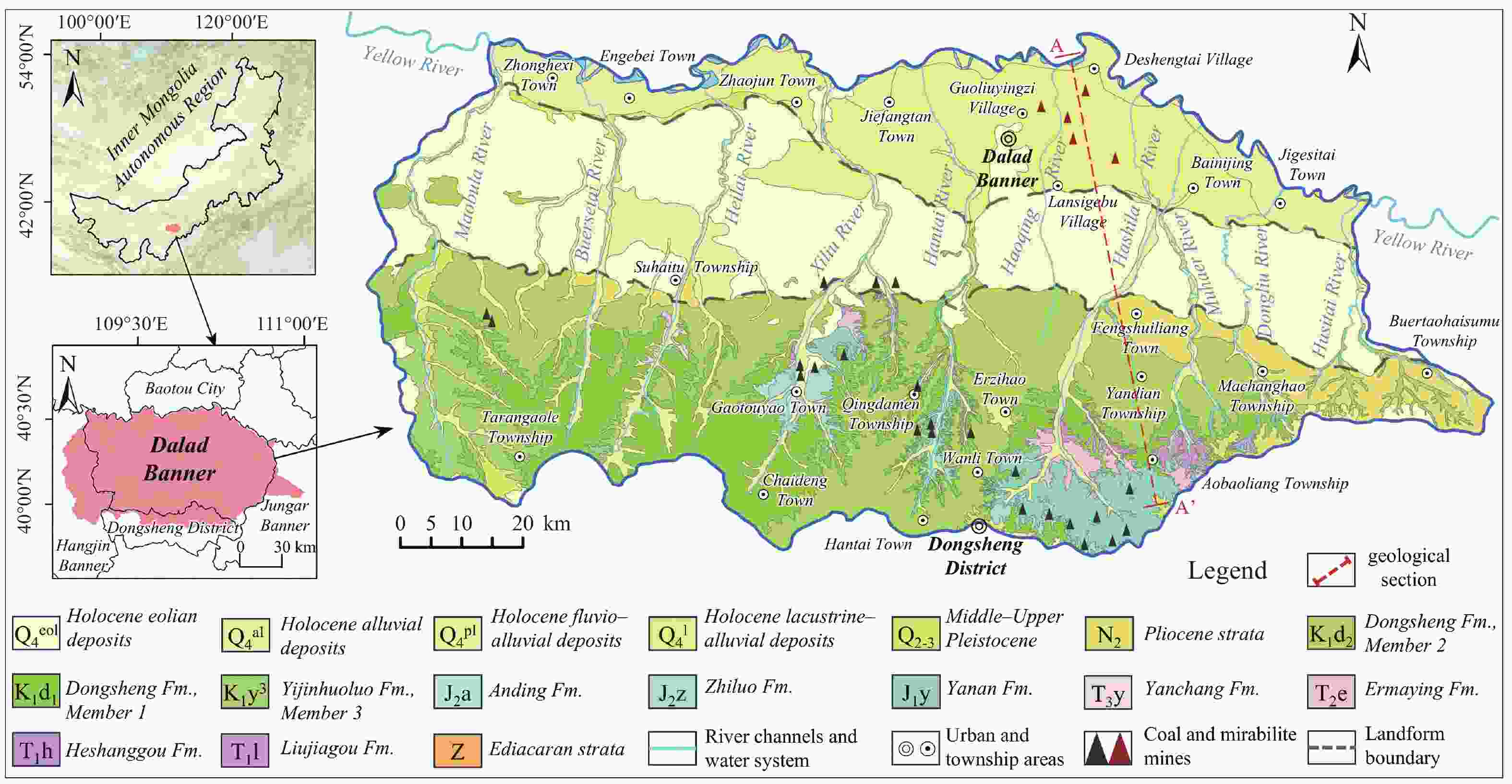
Figure 1. Location of the study area and the geological and geomorphological zoning map.
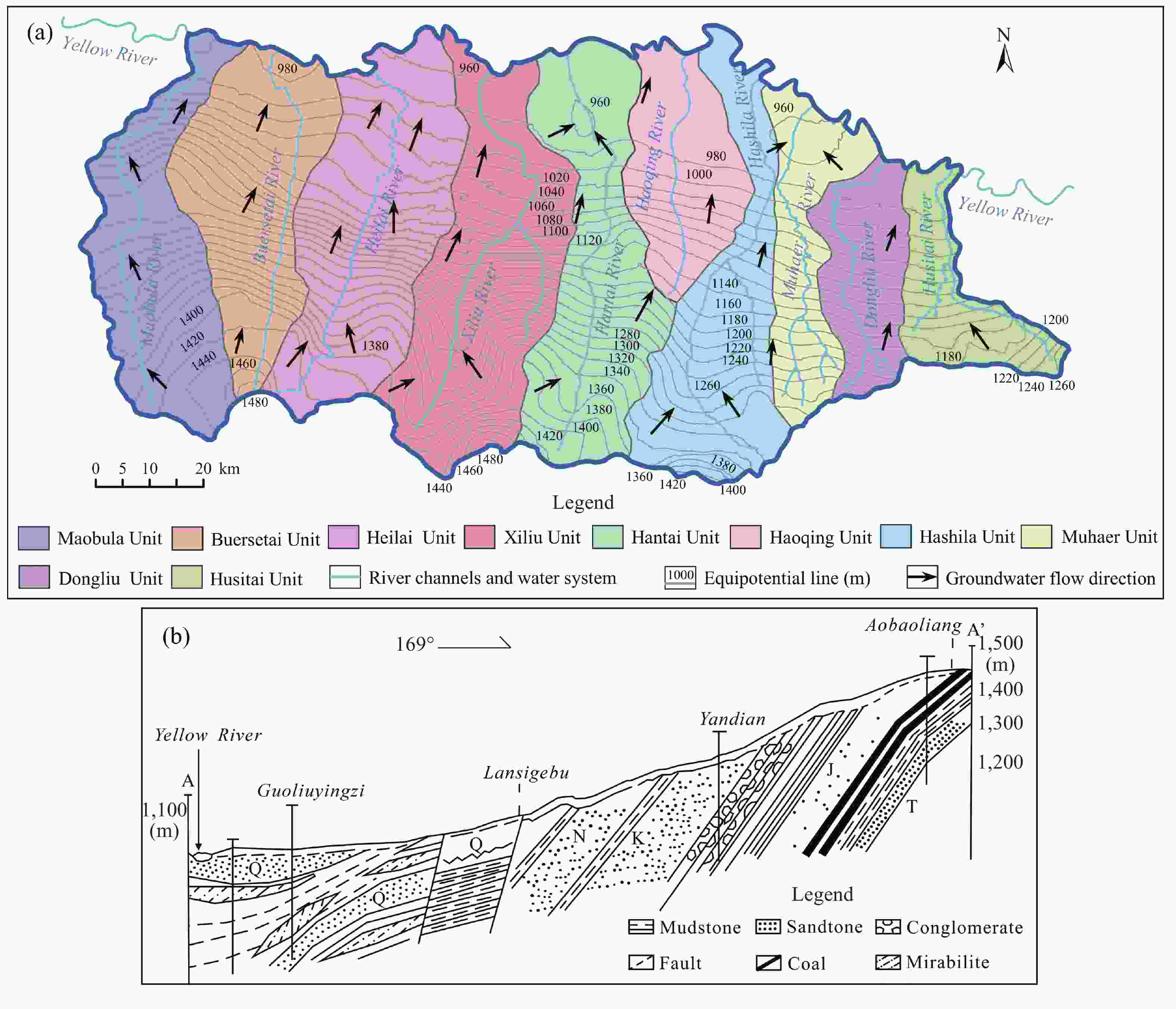
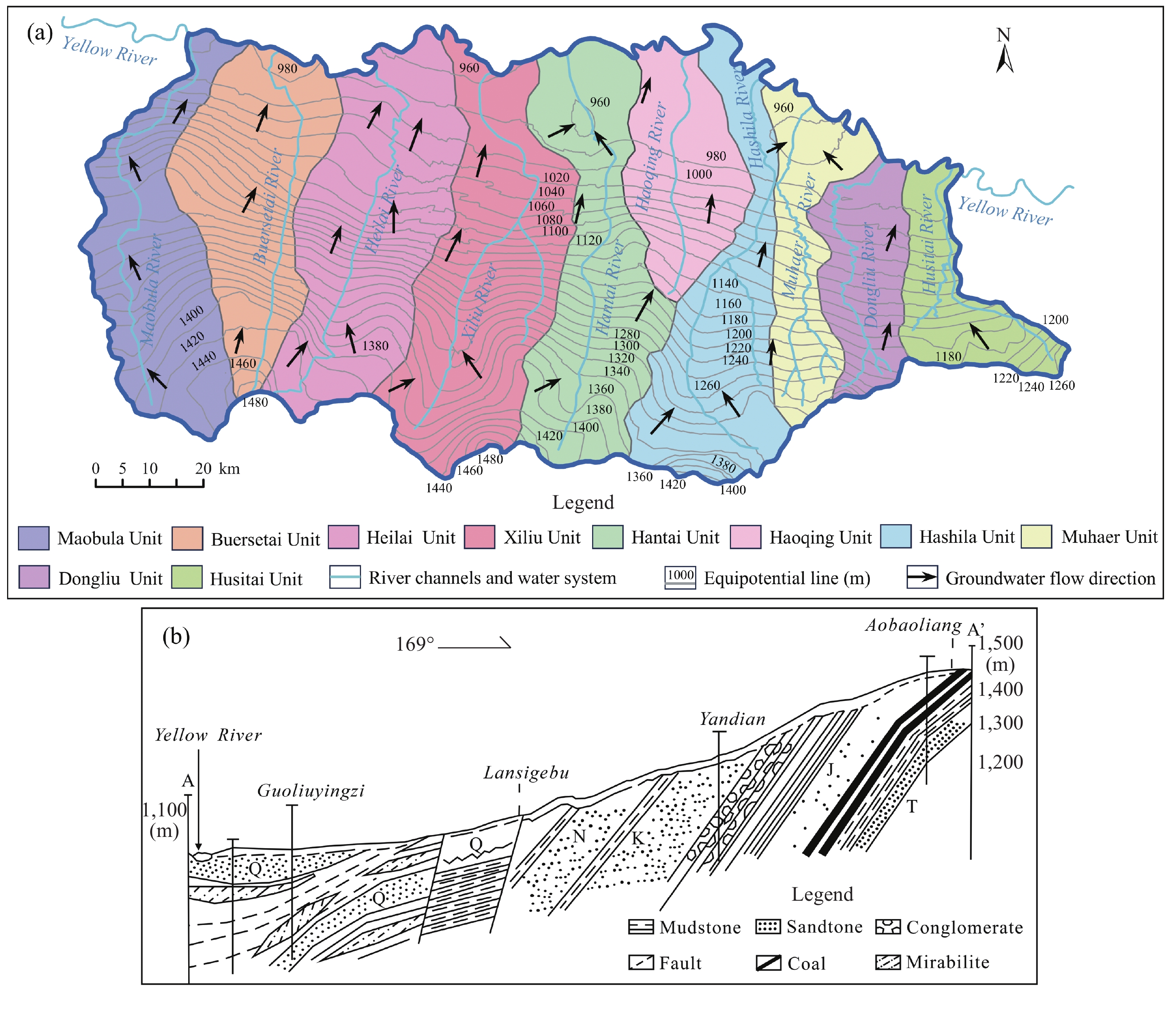
Figure 2. Hydrogeological setting of the study area
(a) Division of the Ten Tributaries units and phreatic water flow field; (b) Stratigraphic profile of the Hashila River, modified from Wu (2016).
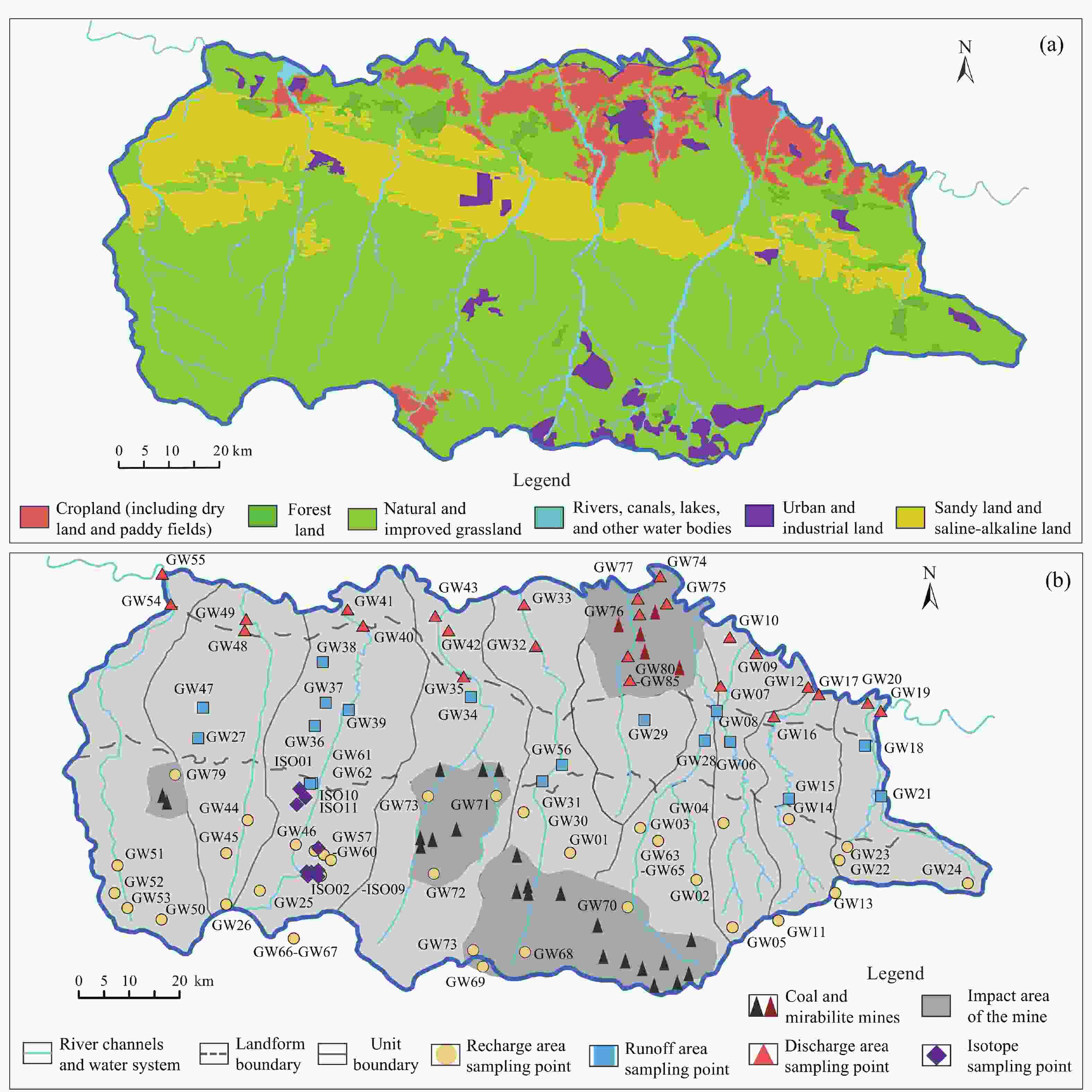
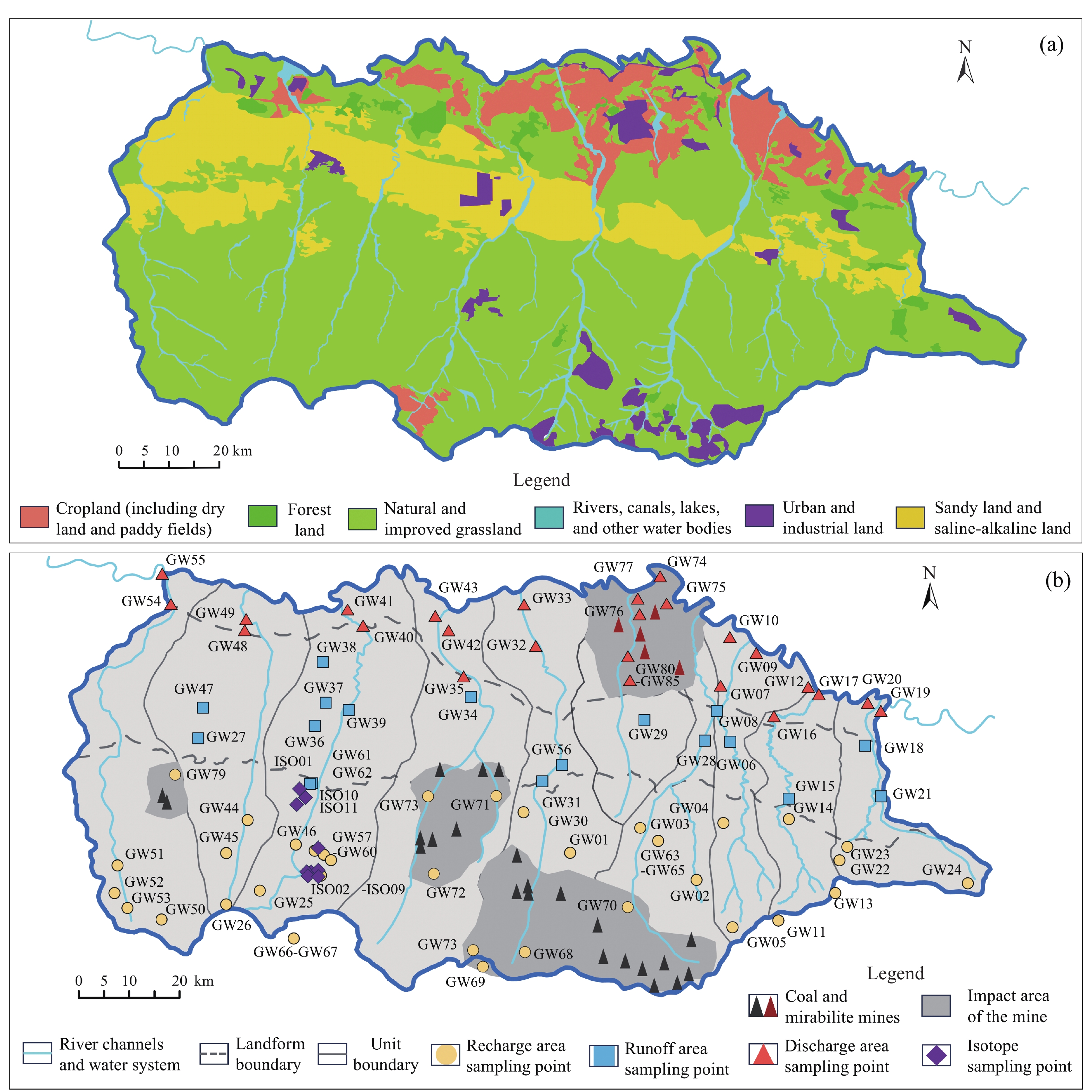
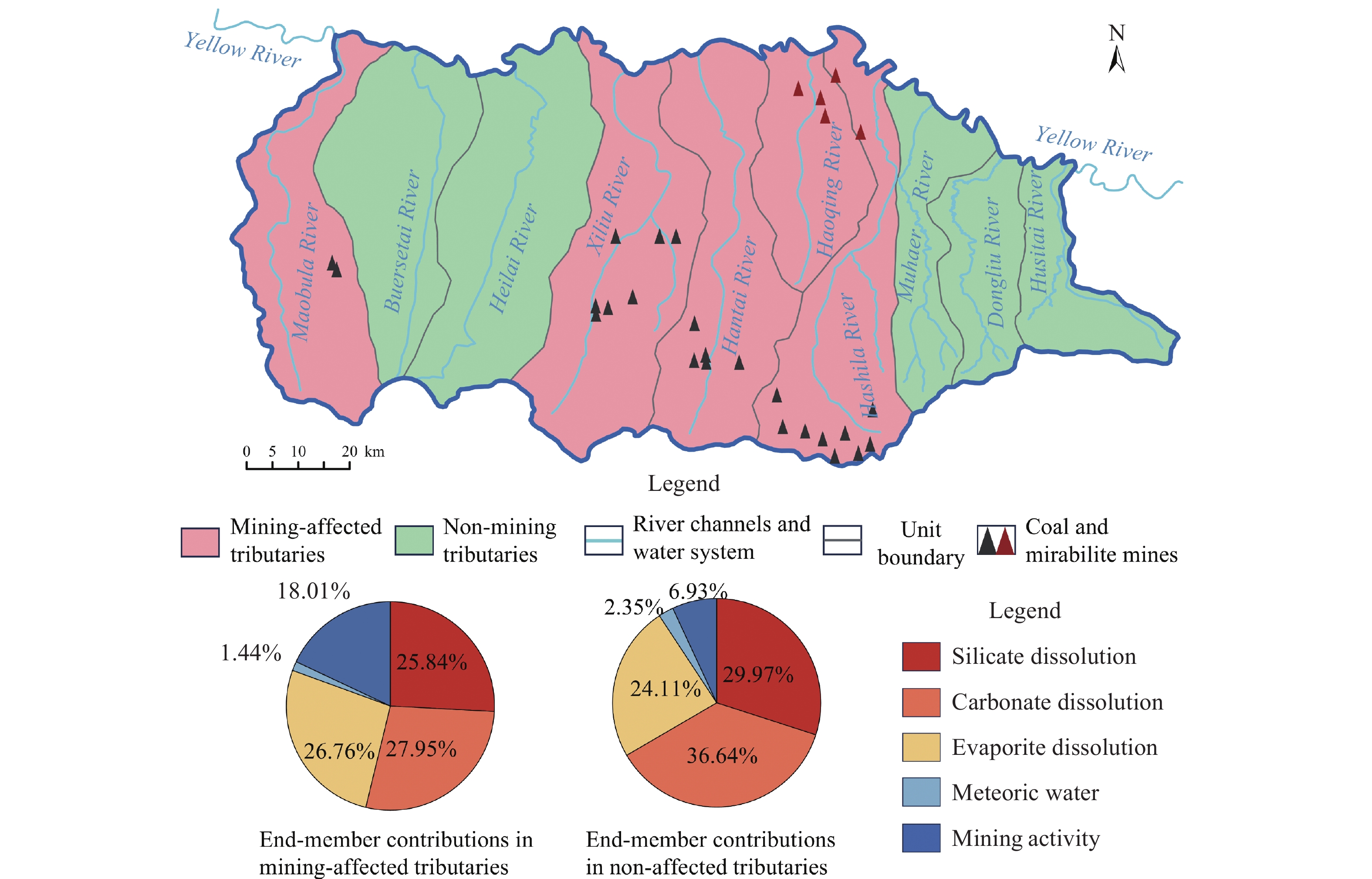
Figure 3. Land use types and groundwater sampling distribution under mining influence in the study area
(a) Land use classification; (b) Distribution of sampling points and extent of mining impact.
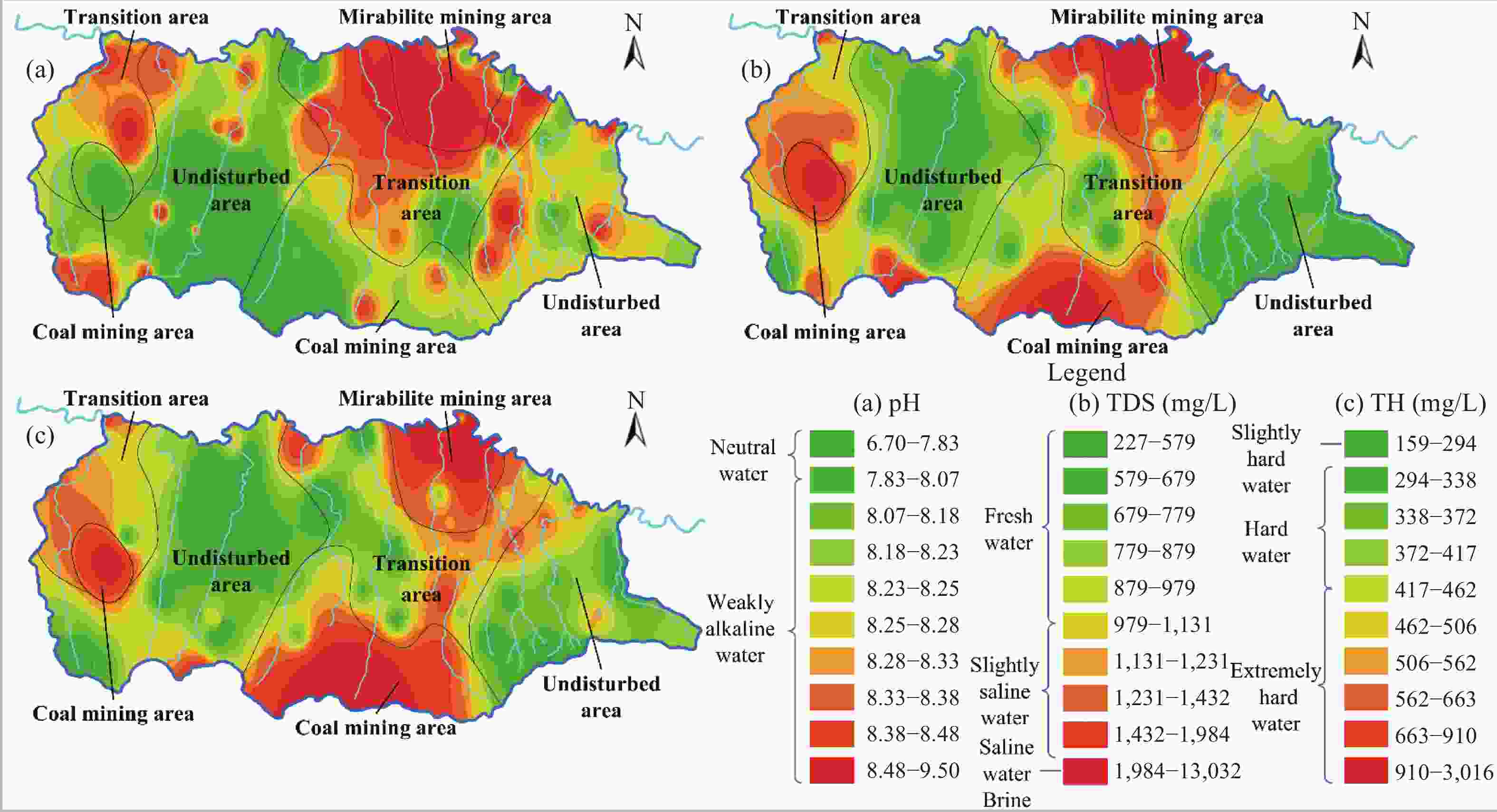
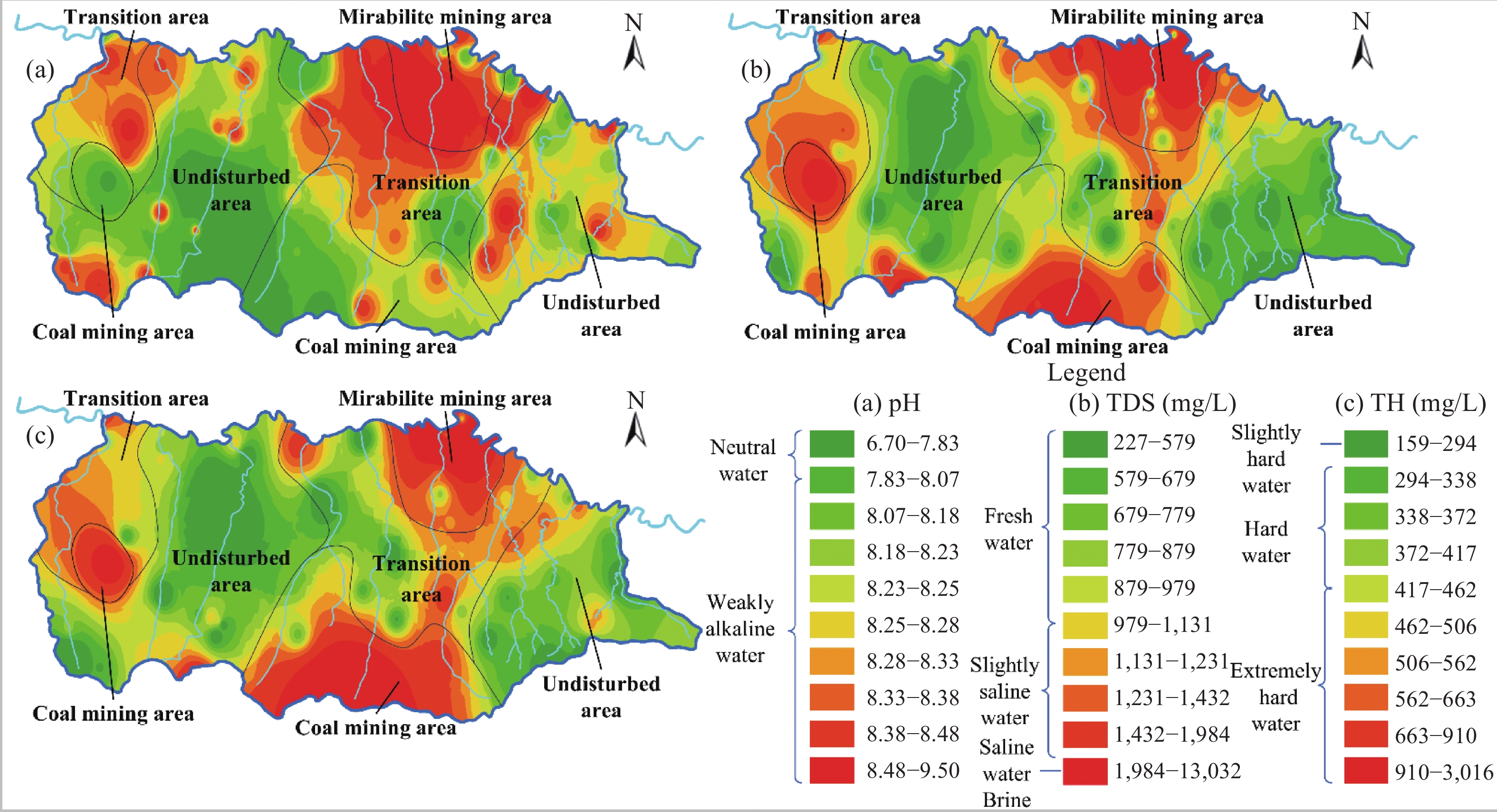
Figure 4. Spatial distribution of phreatic water physicochemical parameters in the Ten Tributaries Basin
(a) pH; (b) TDS; (c) Total hardness (TH).
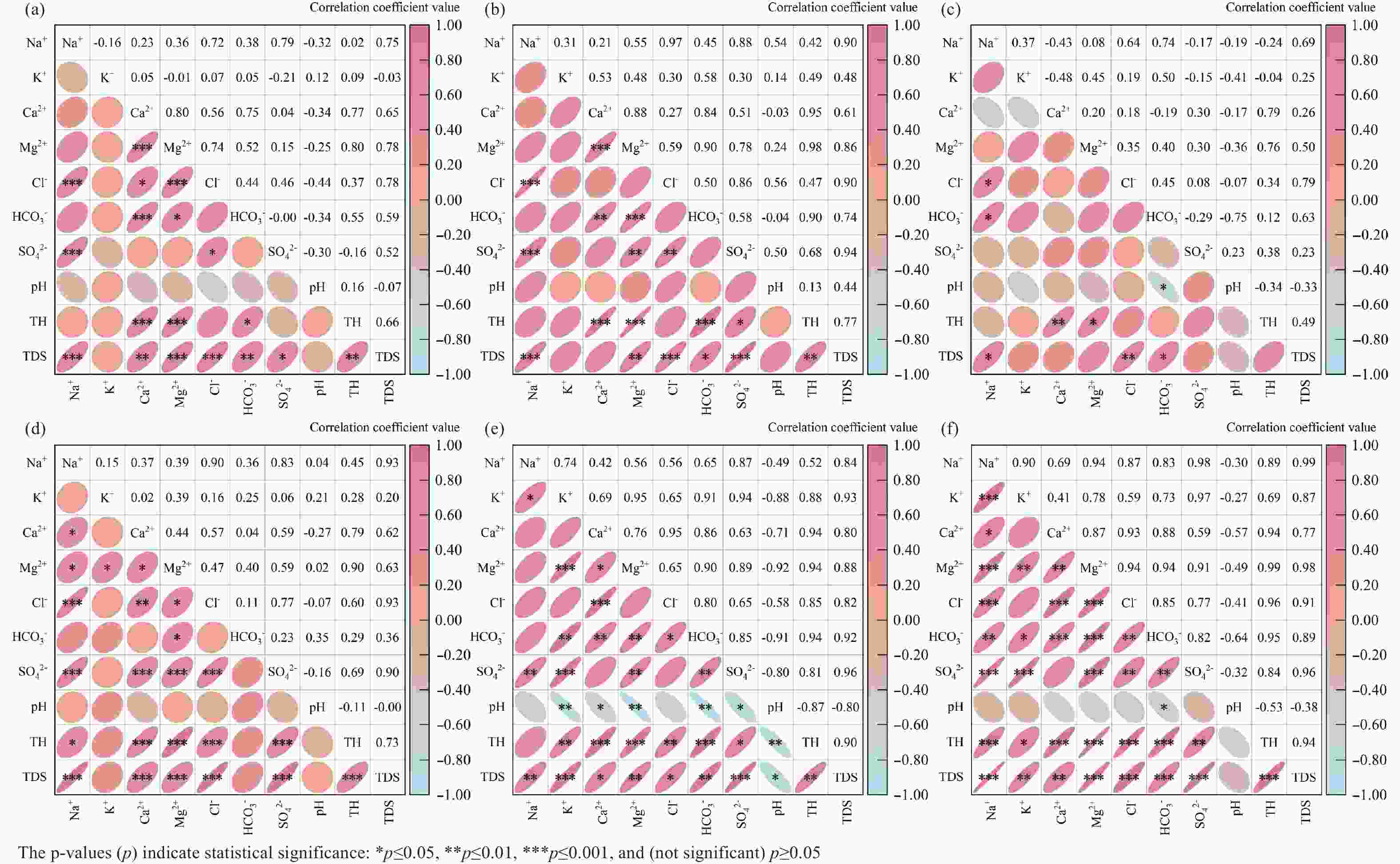
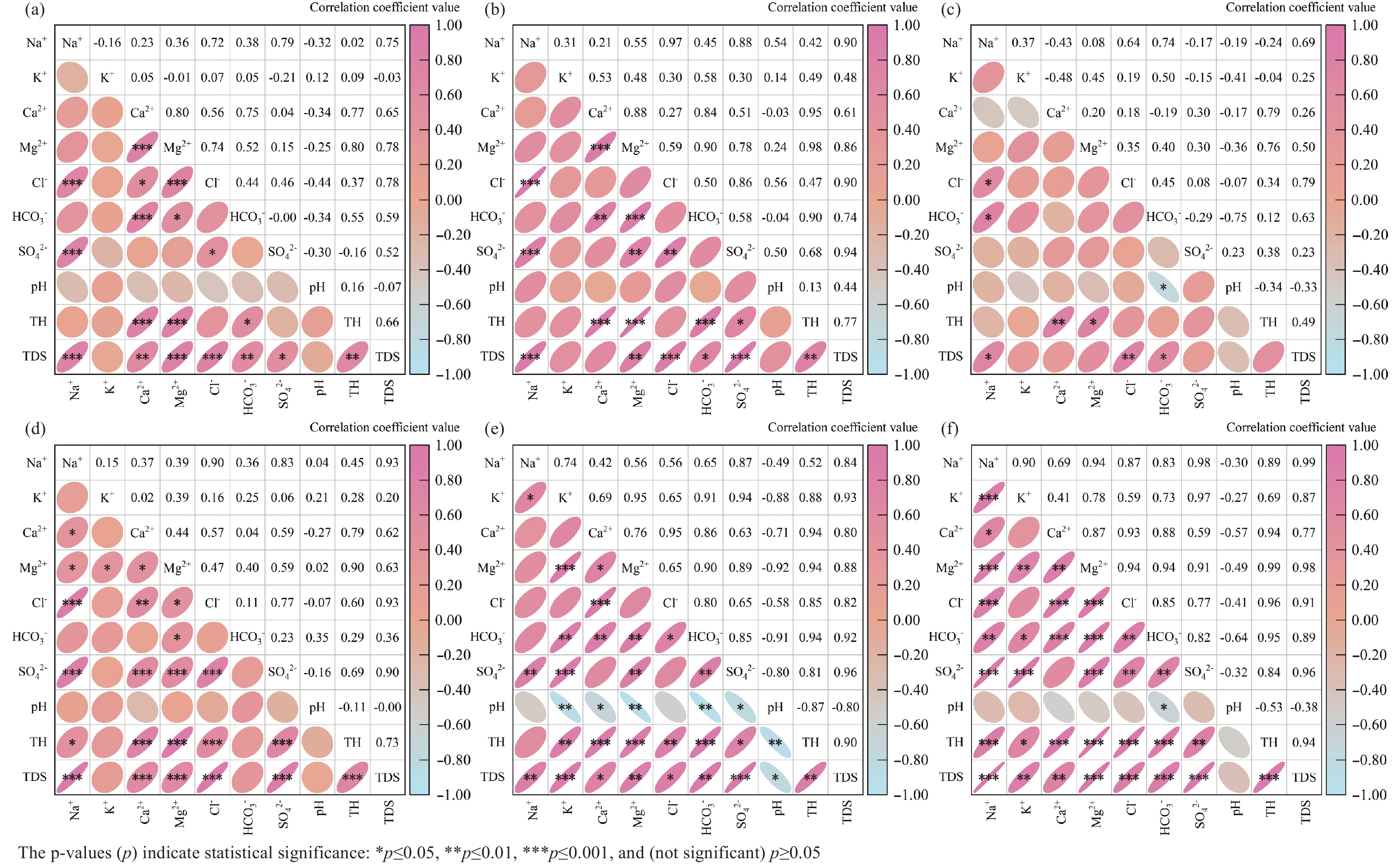
Figure 6. Correlation diagrams of phreatic water chemical components in the Ten Tributaries Basin
(a) Recharge area; (b) Runoff area; (c) Discharge area; (d) Transition area; (e) Coal mining area; (f) Mirabilite mining area
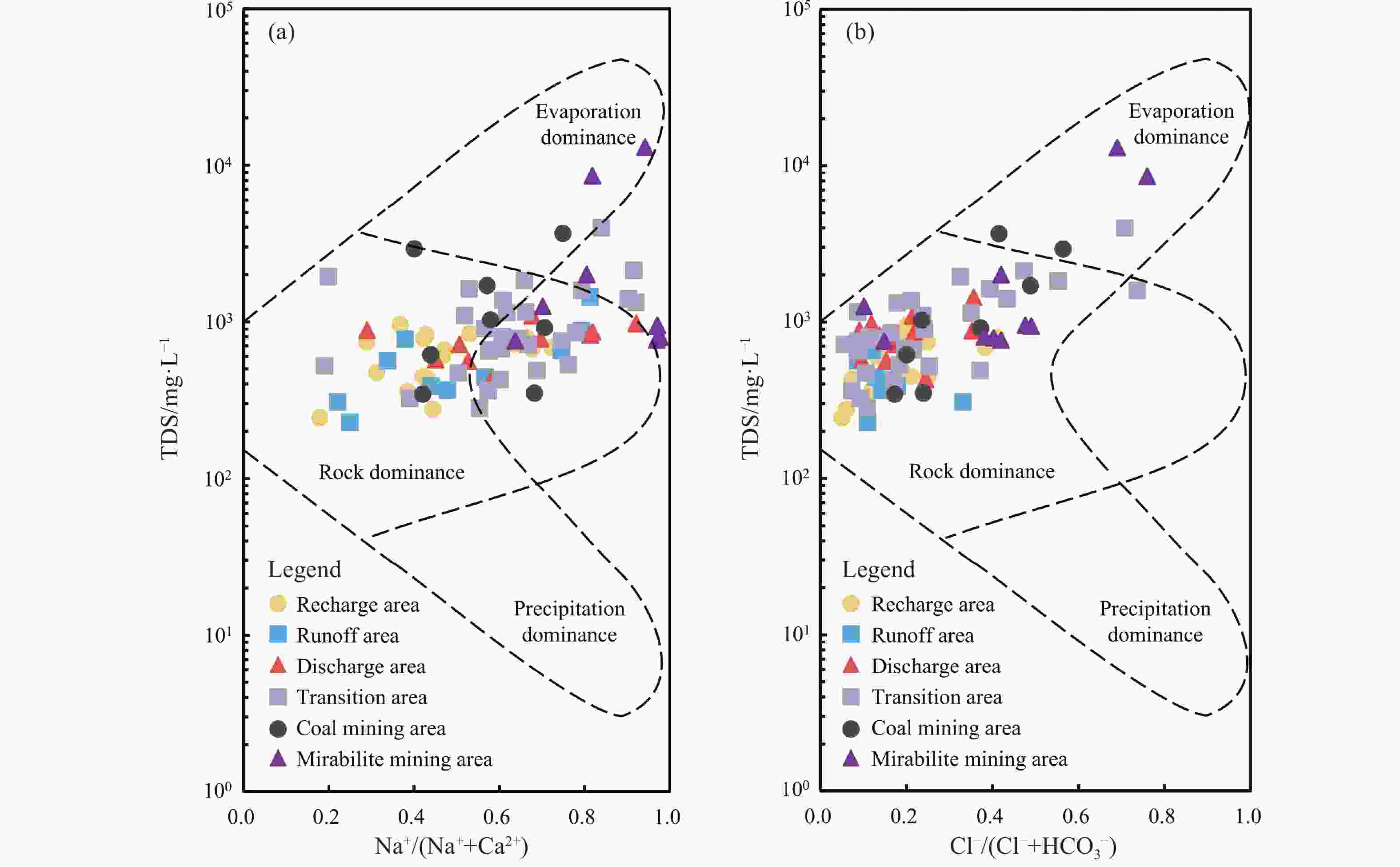
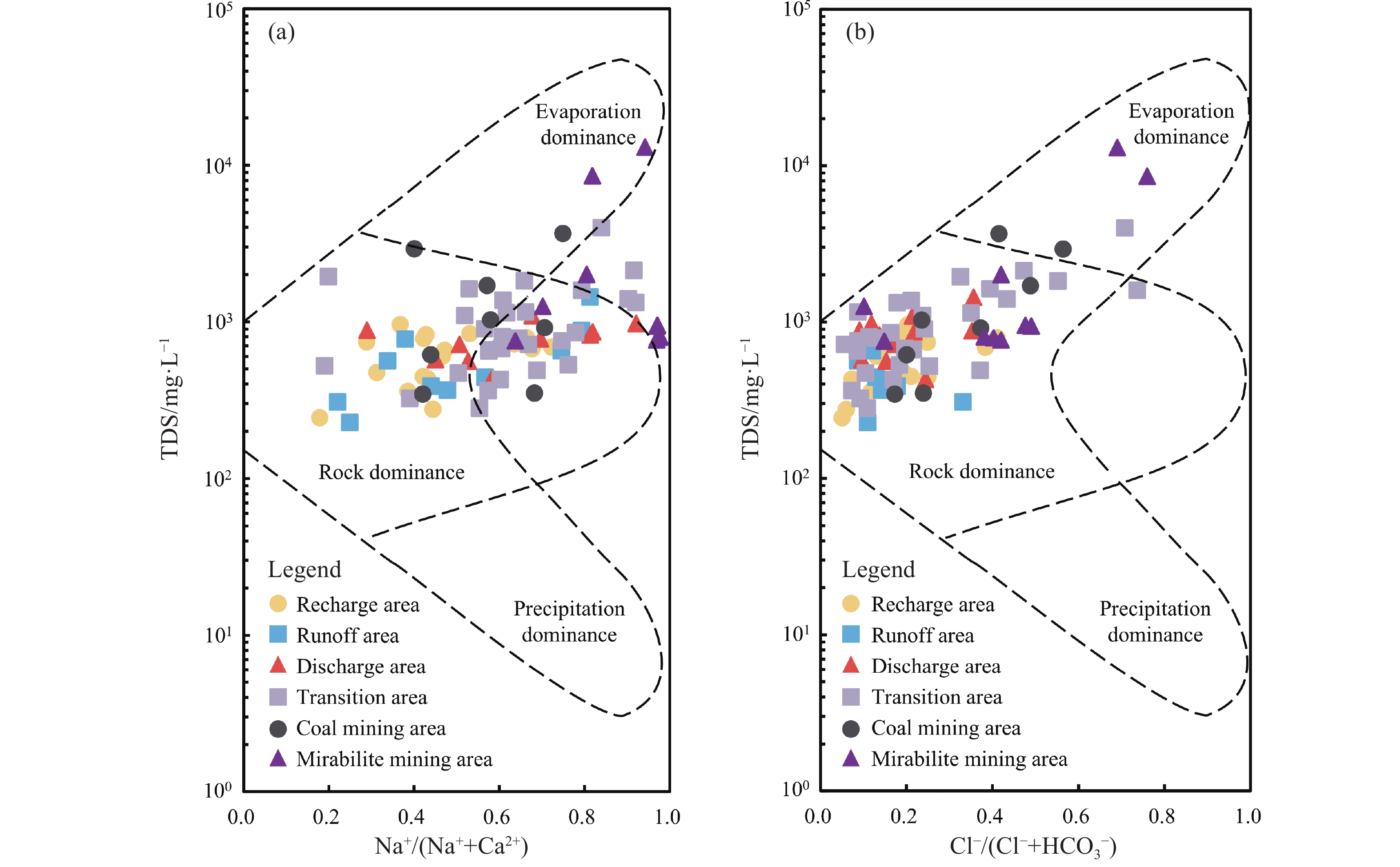
Figure 7. Gibbs diagrams of phreatic water in the Ten Tributaries Basin
(a) TDS vs Na+/(Na+ + Ca2+); (b) TDS vs Cl−/(Cl− + HCO3−)
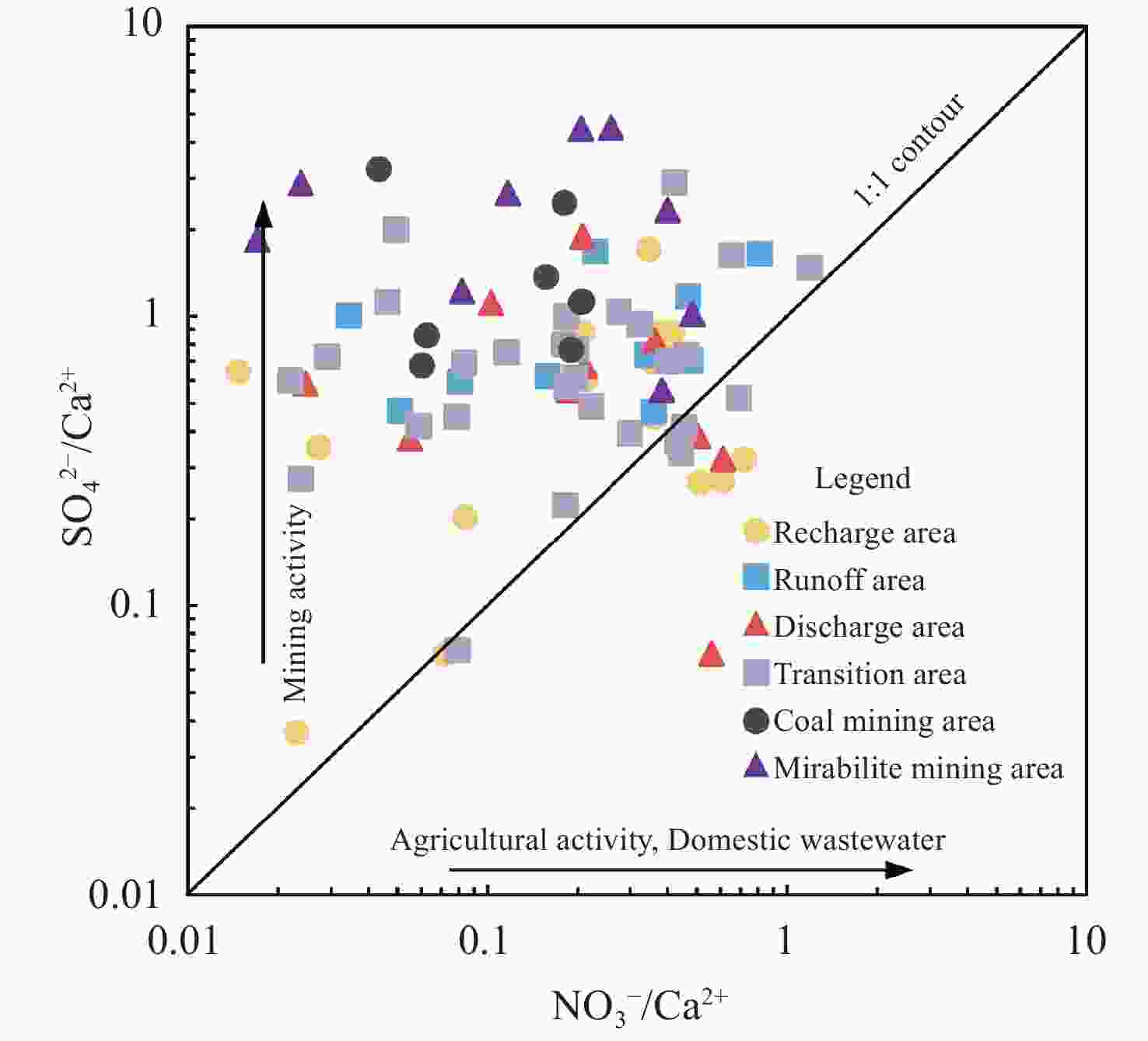
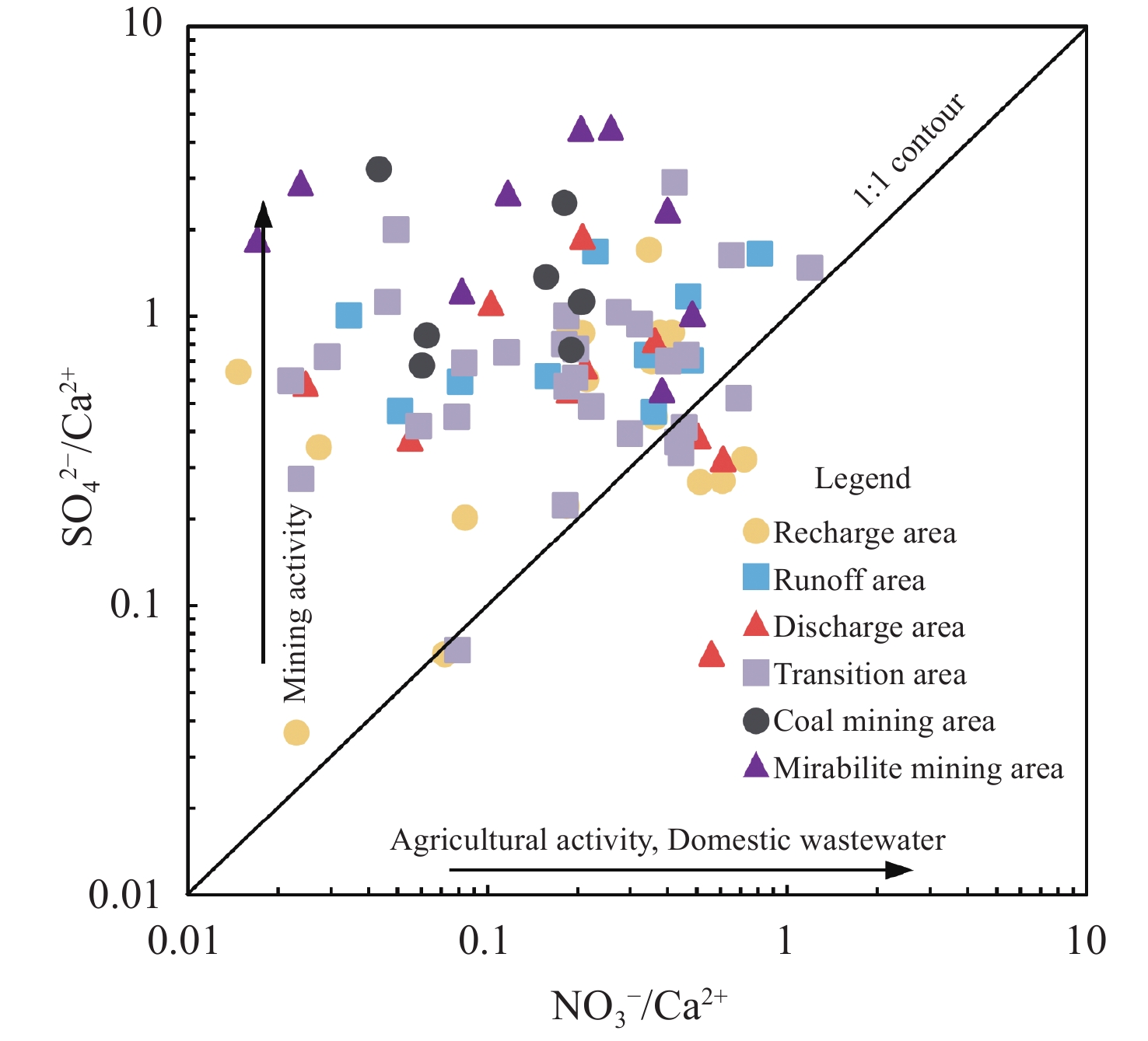
Figure 8. Relationships between SO42−/Ca2+ and NO3−/Ca2+ in phreatic water of the Ten Tributaries Basin
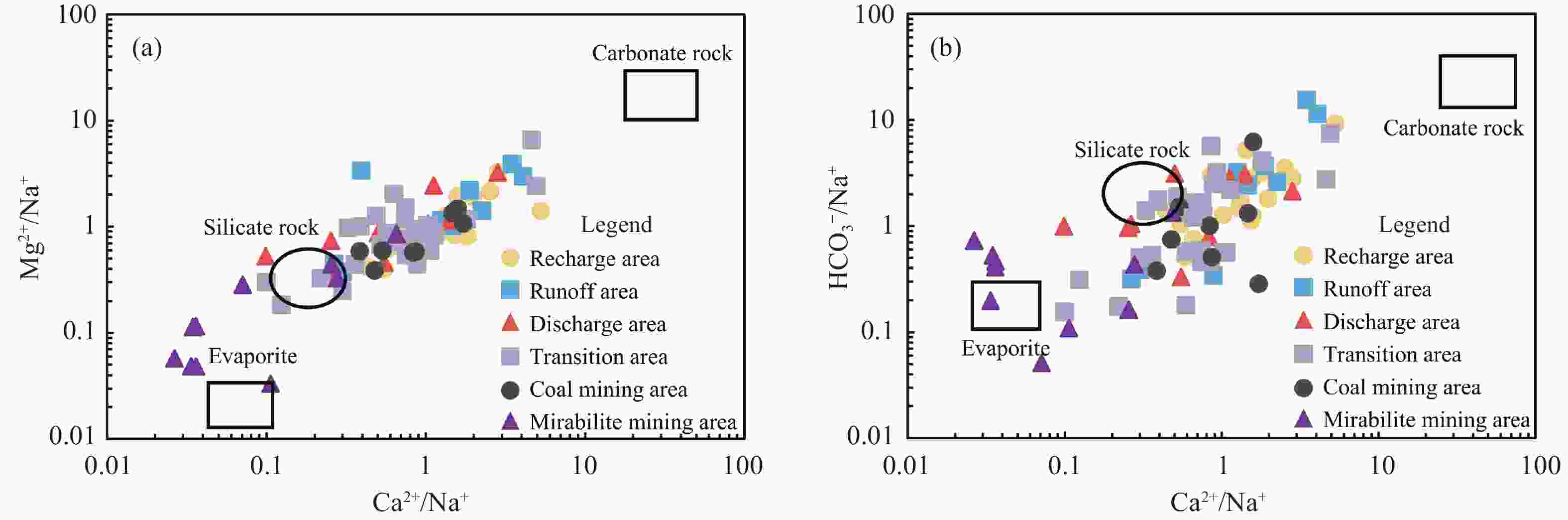
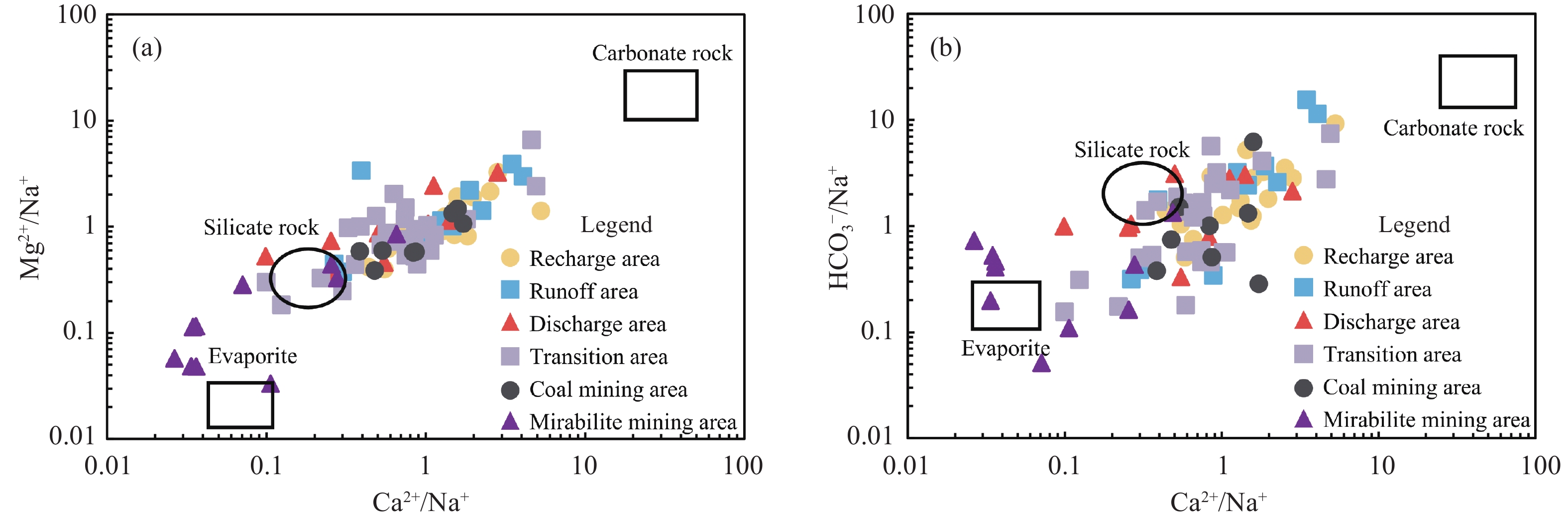
Figure 9. End-member diagrams of ion ratios in phreatic water of the Ten Tributaries Basin
(a) Mg2+/Na+ vs Ca2+/Na+; (b) HCO3−/Na+ vs Ca2+/Na+
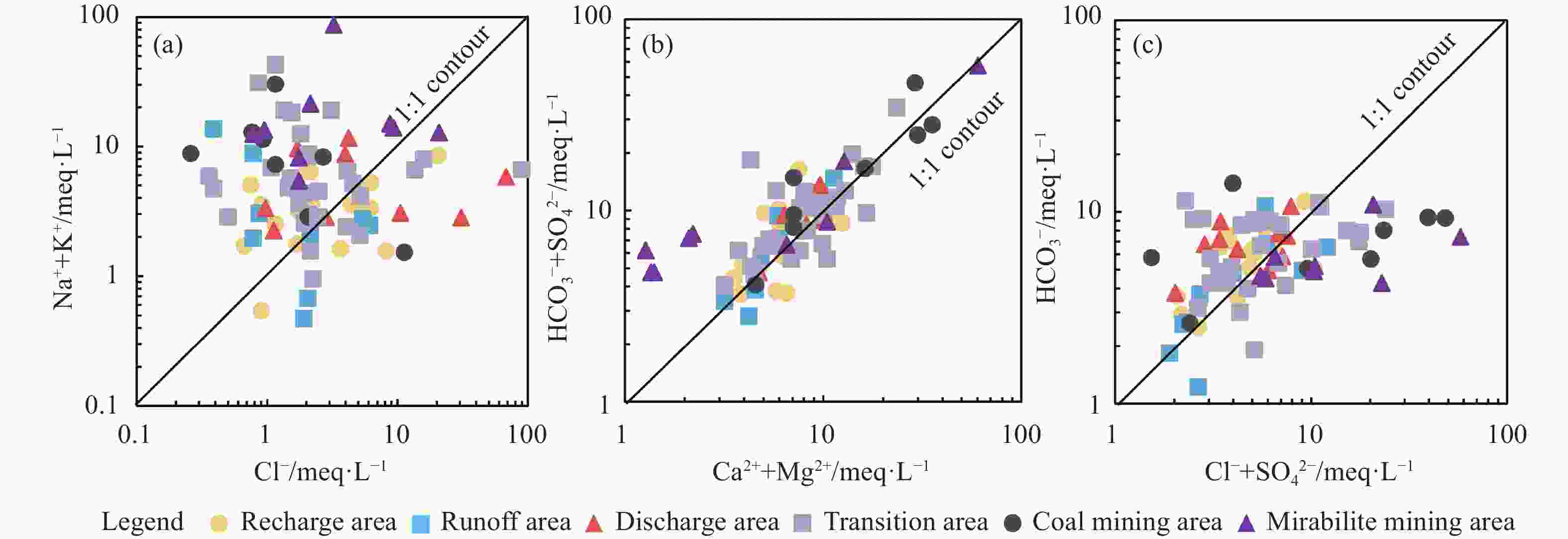
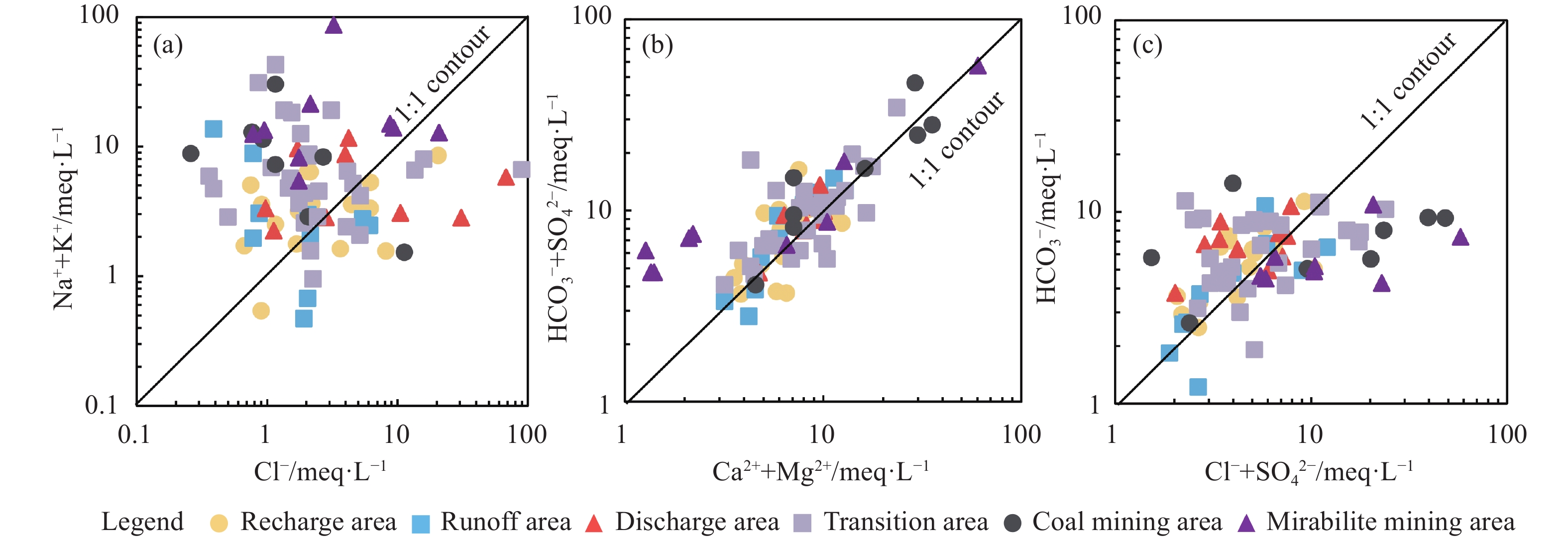
Figure 10. Ion combination diagrams of phreatic water in the Ten Tributaries Basin
(a) Na+ + K+ vs Cl−; (b) HCO3− + SO42− vs Ca2+ + Mg2+; (c) HCO3− vs Cl− + SO42−
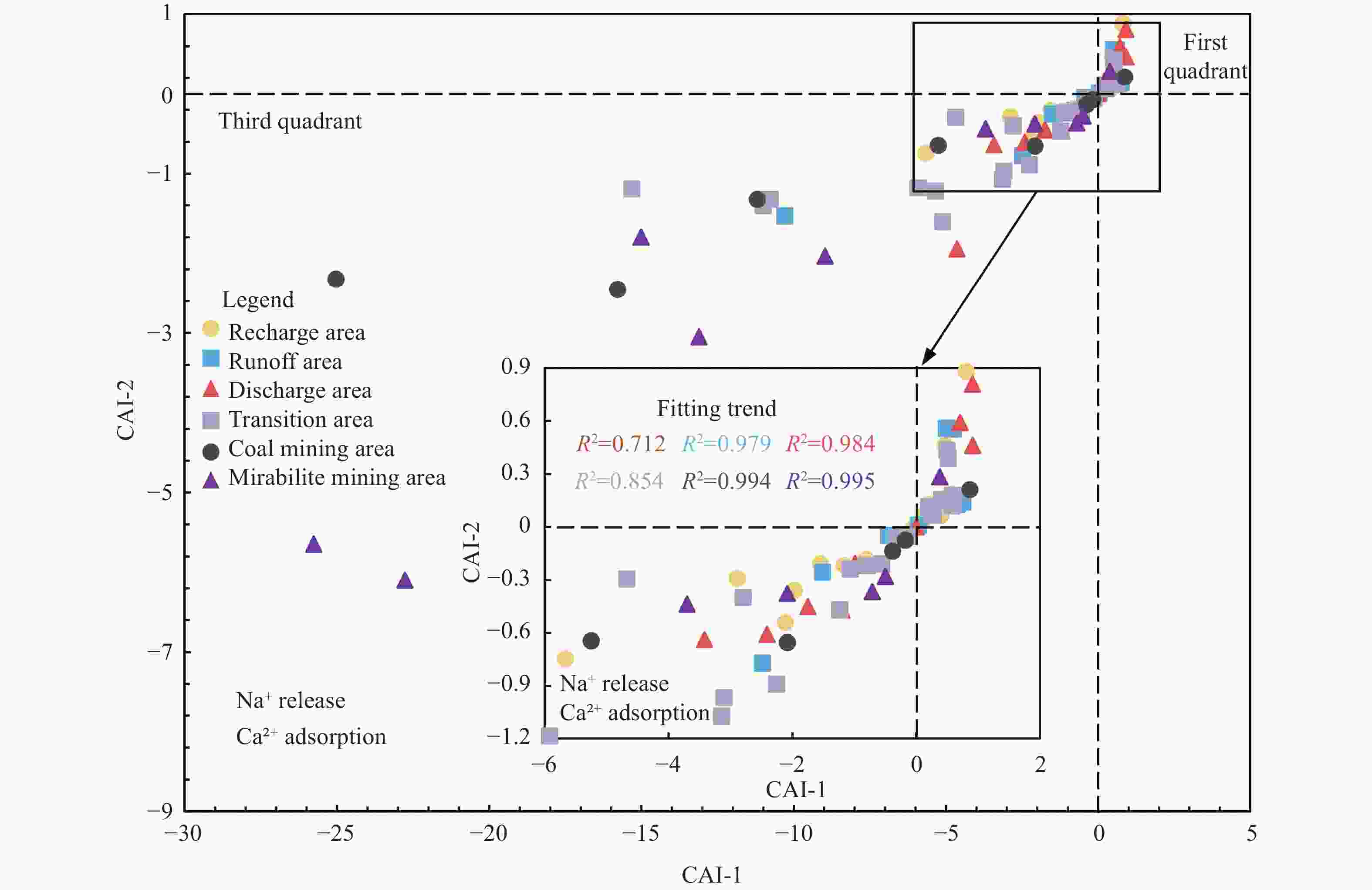
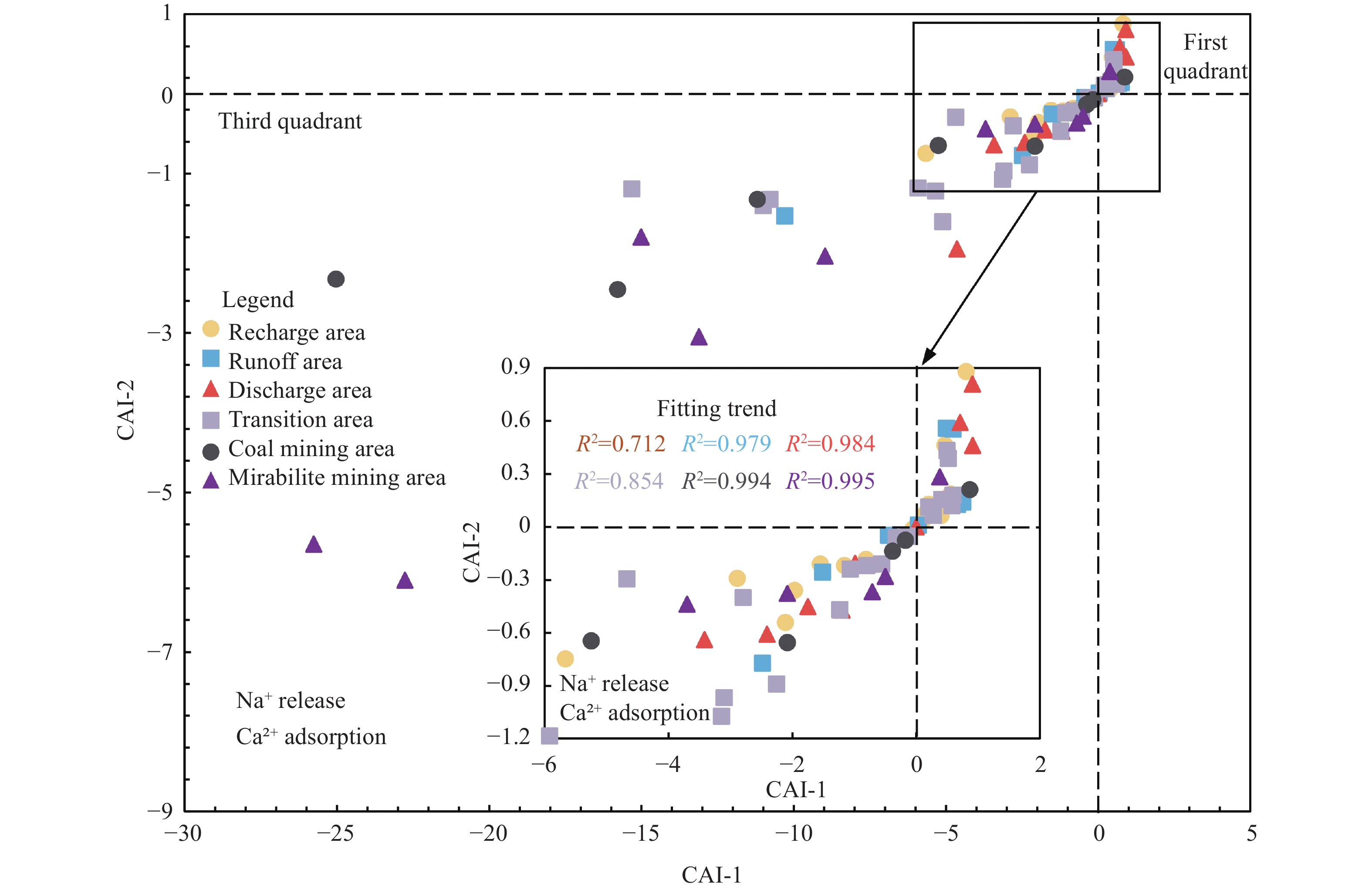
Figure 11. Identification of cation exchange processes in phreatic water of the Ten Tributaries Basin
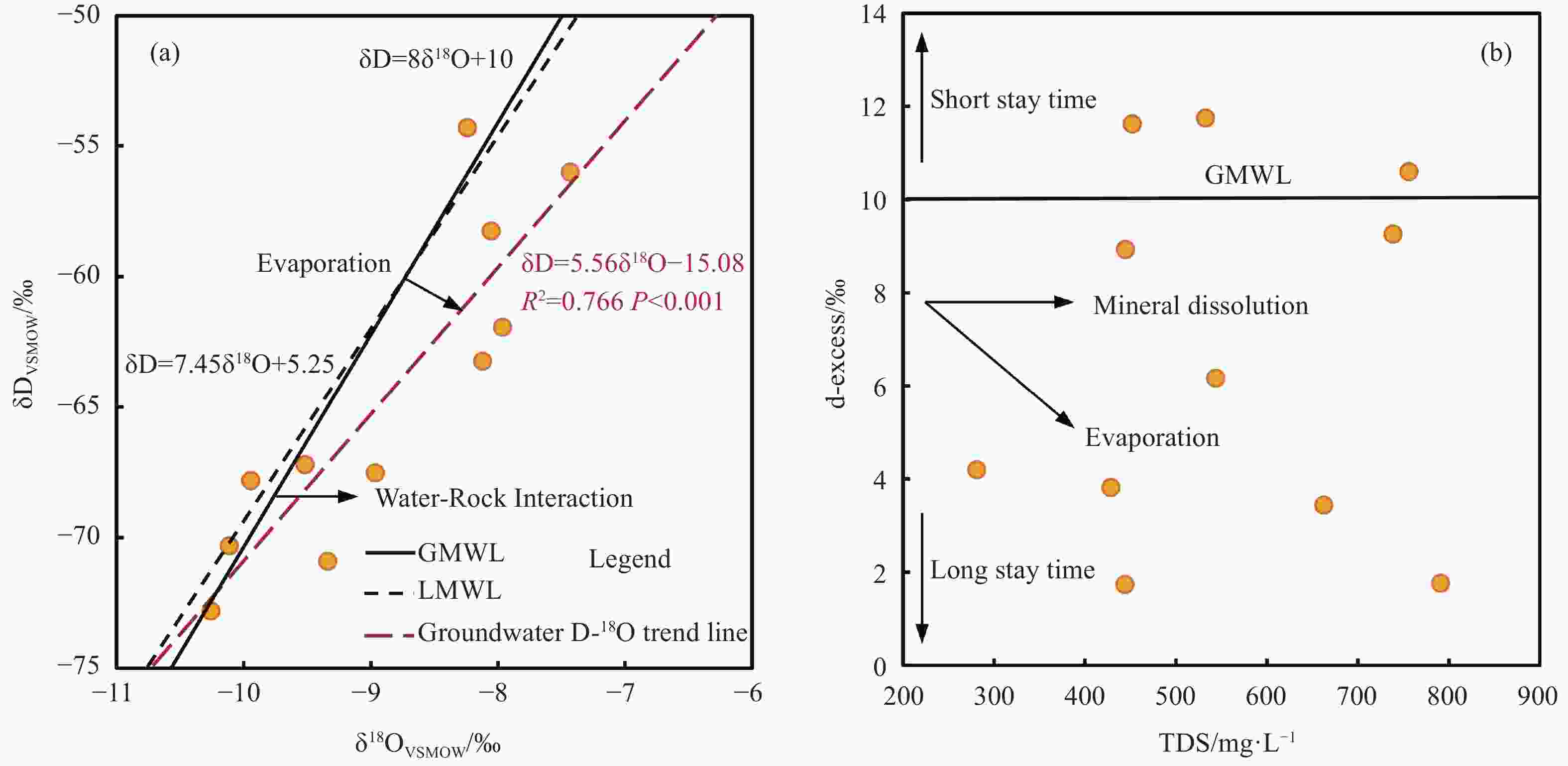
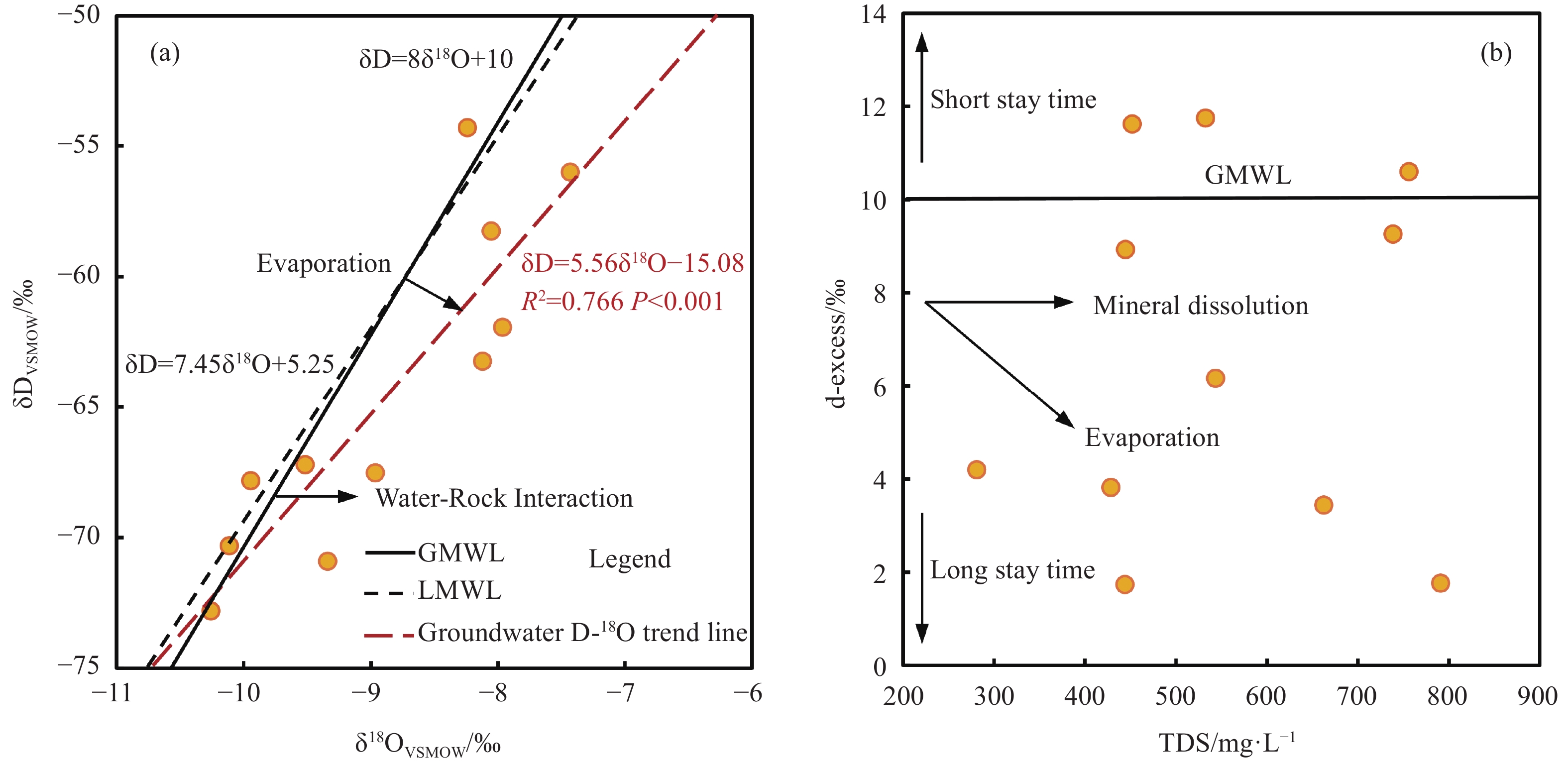
Figure 12. δ18O–δD and TDS–d diagrams of phreatic water in the Ten Tributaries Basin
(a) δD vs δ18O; (b) d-excess vs TDS
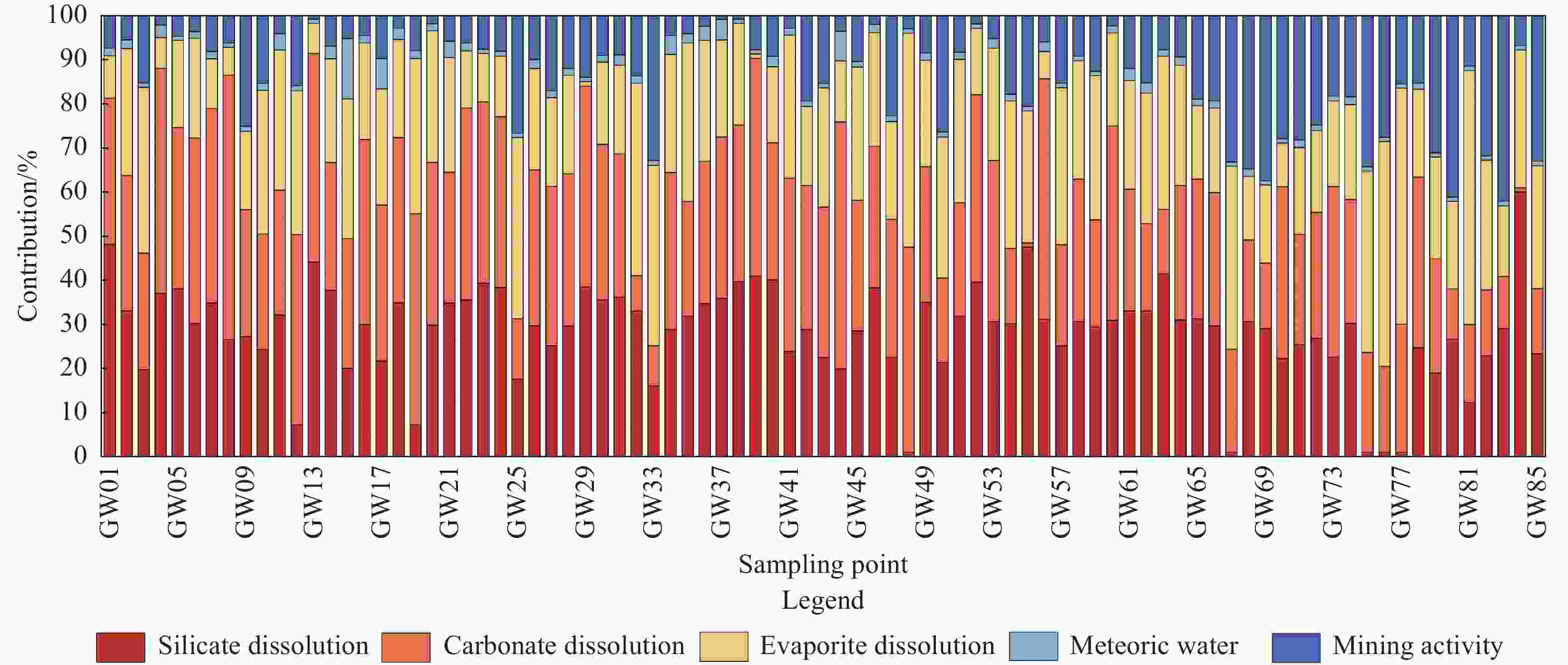
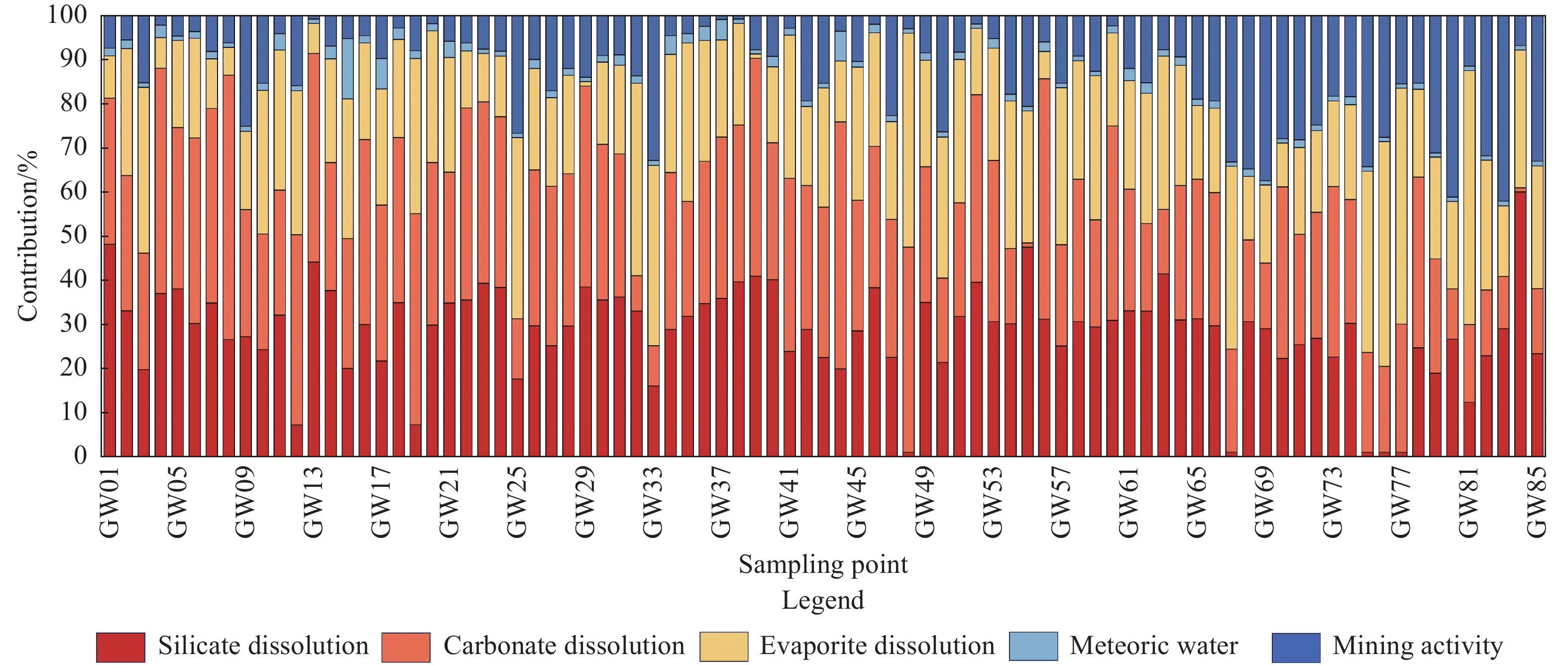
Figure 13. Contribution rates of groundwater ion components from different end-members
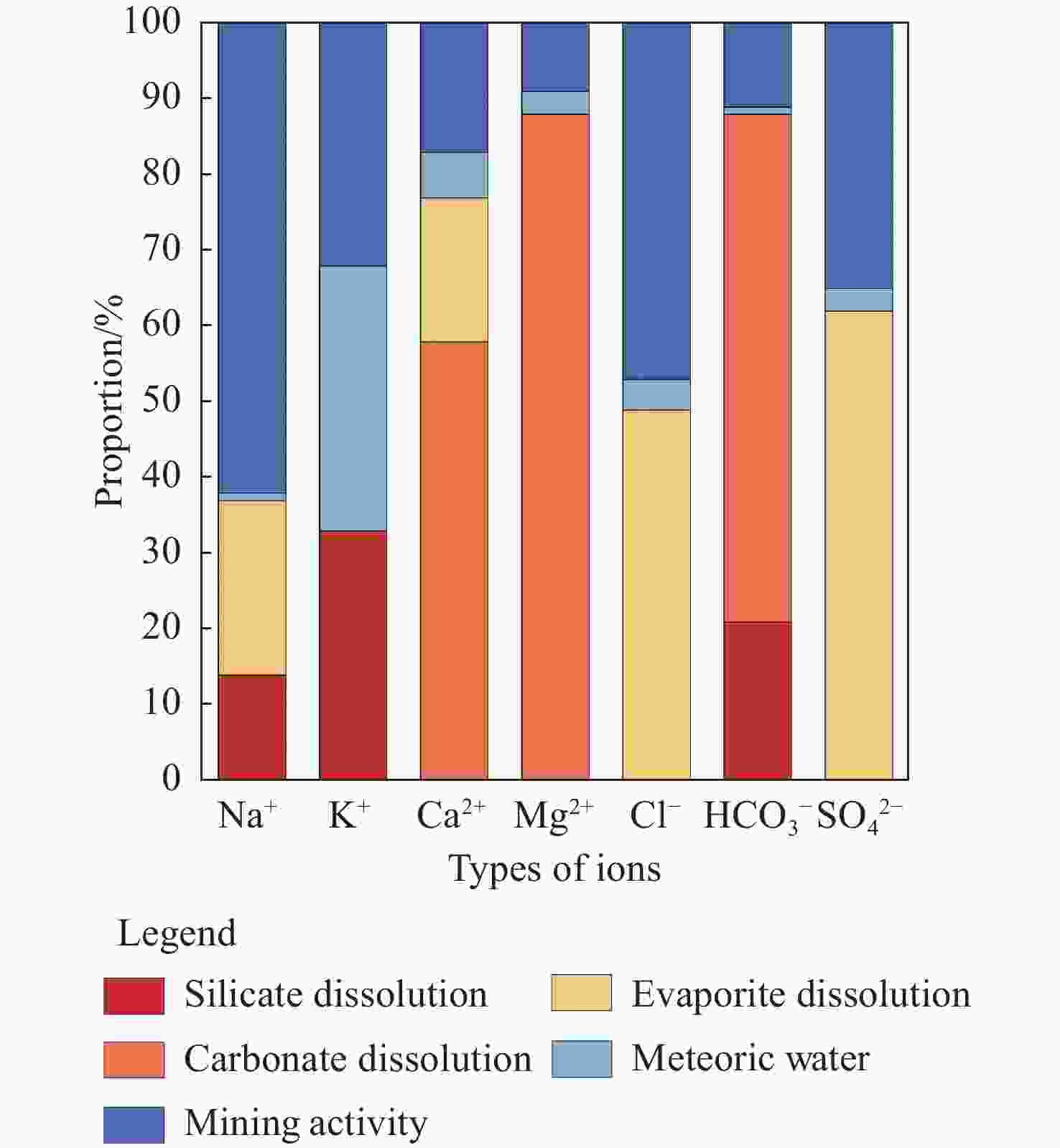
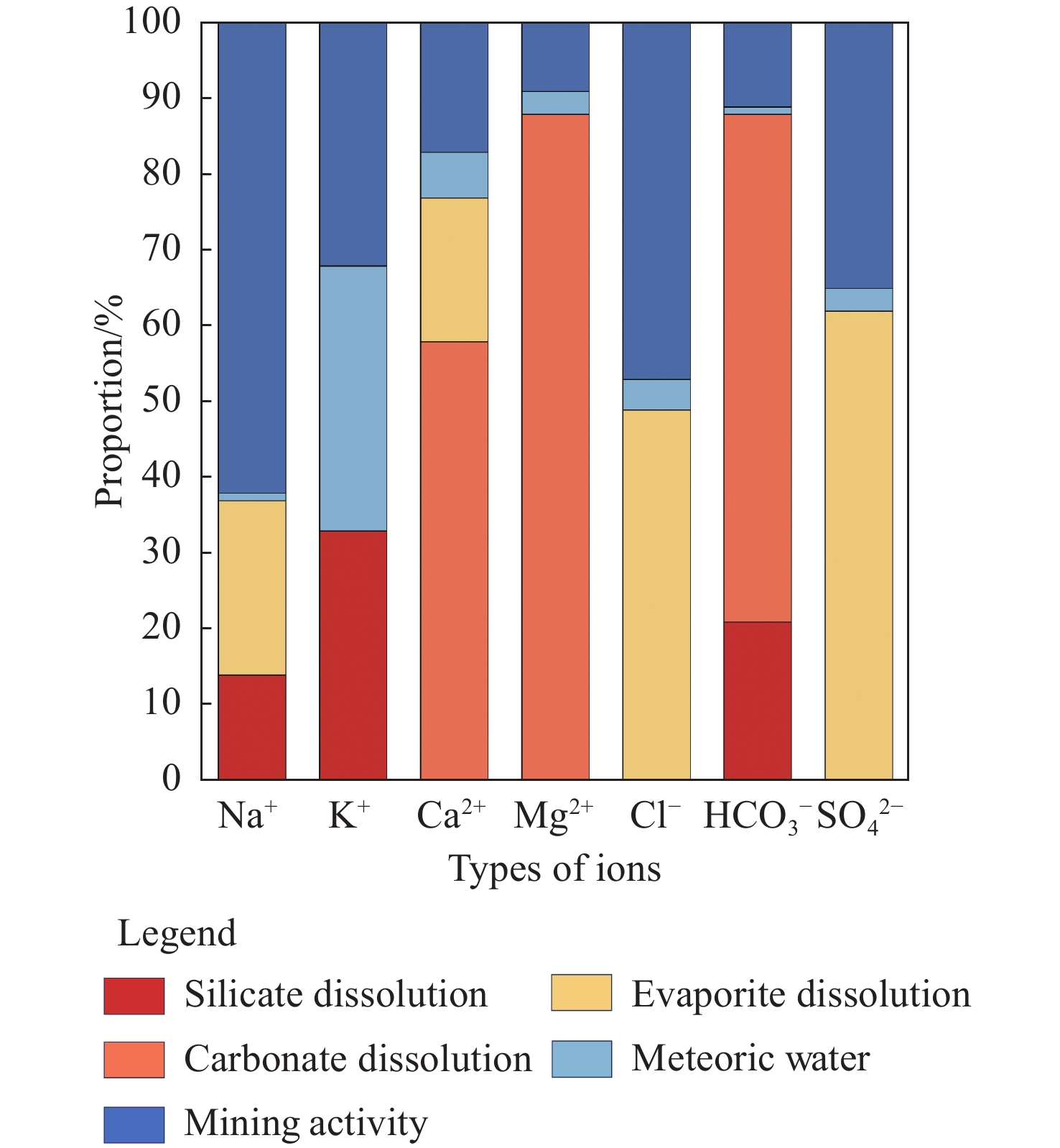
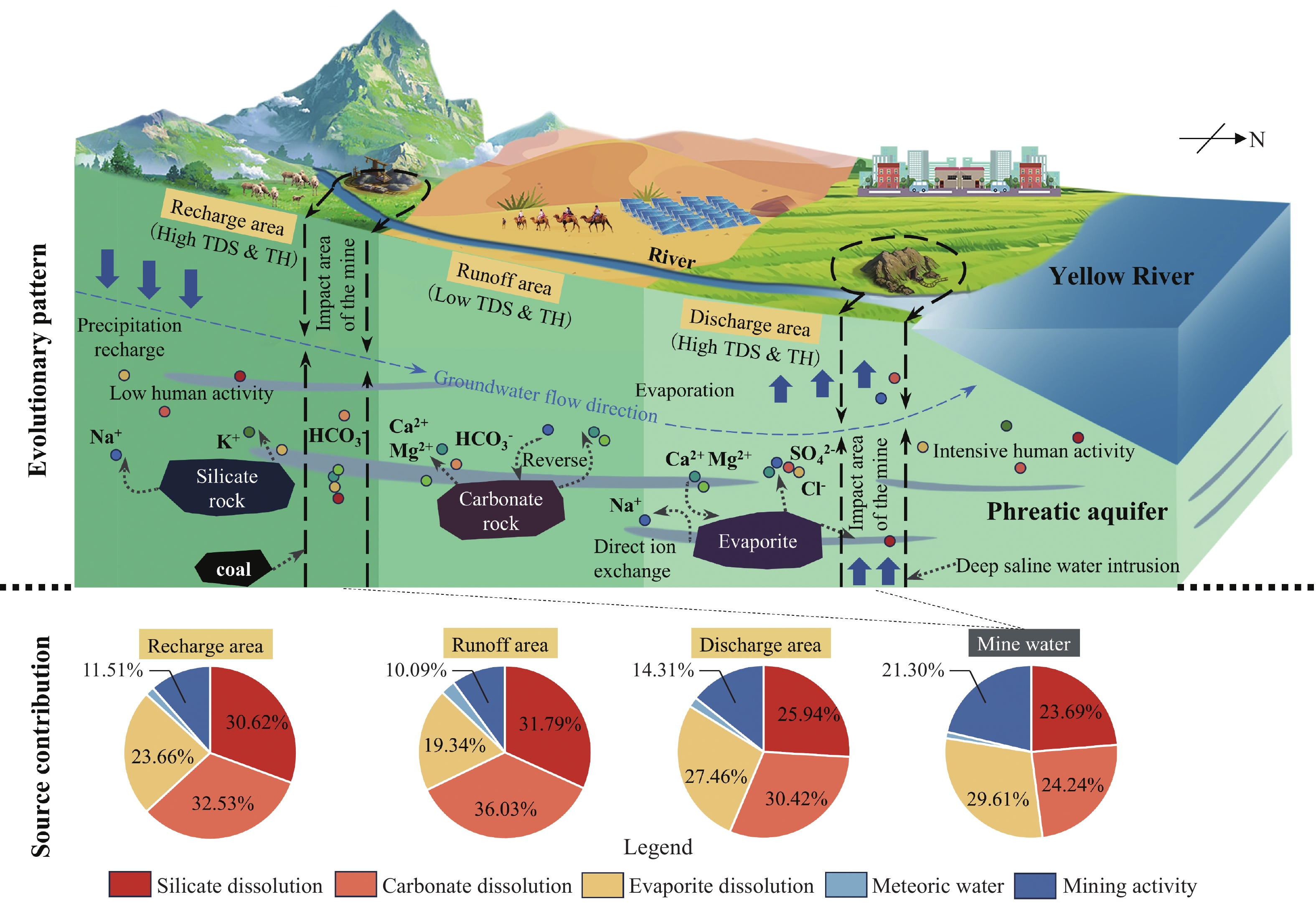
Figure 14. Analysis of contribution rates of major controlling factors on groundwater chemistry
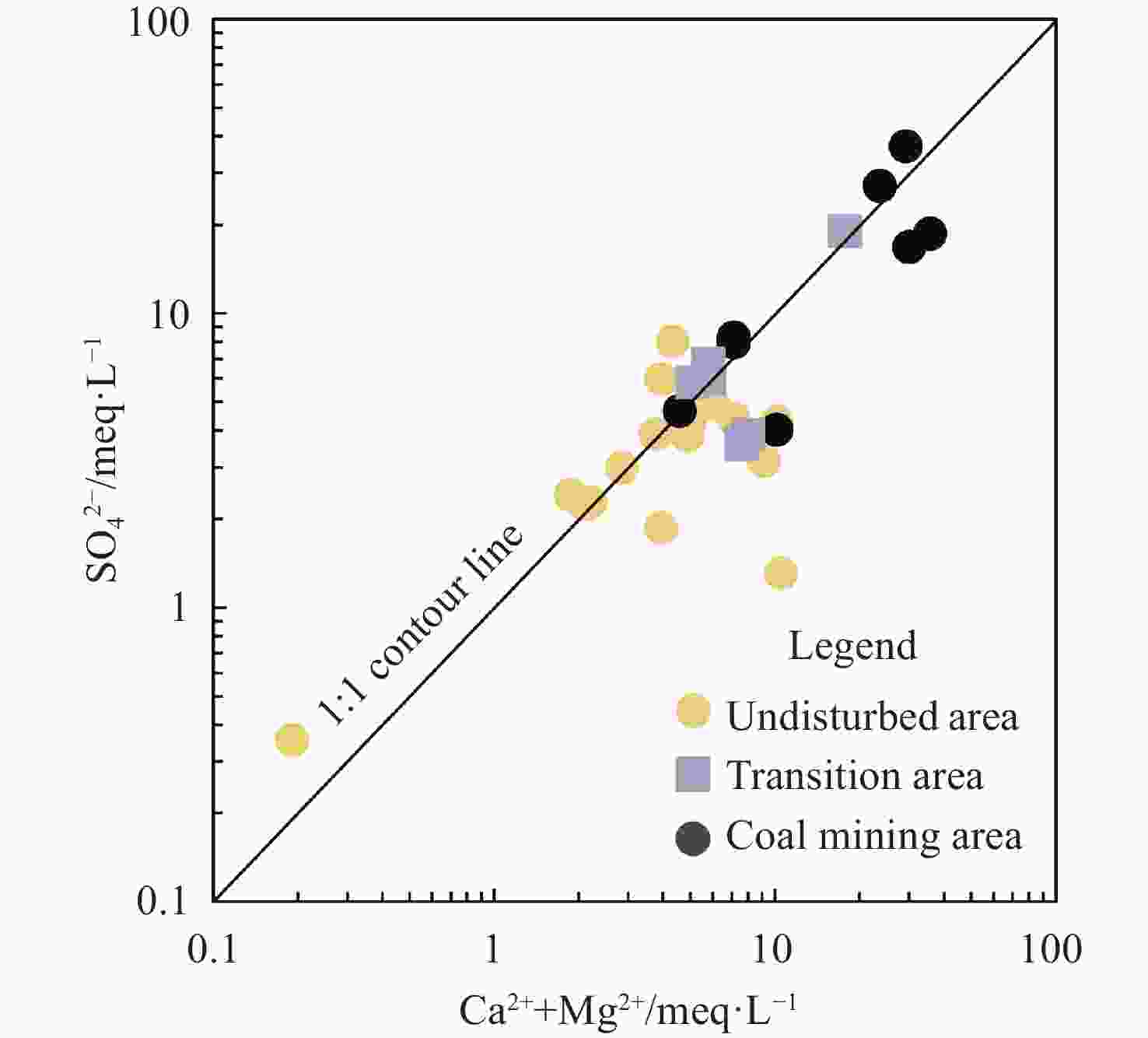
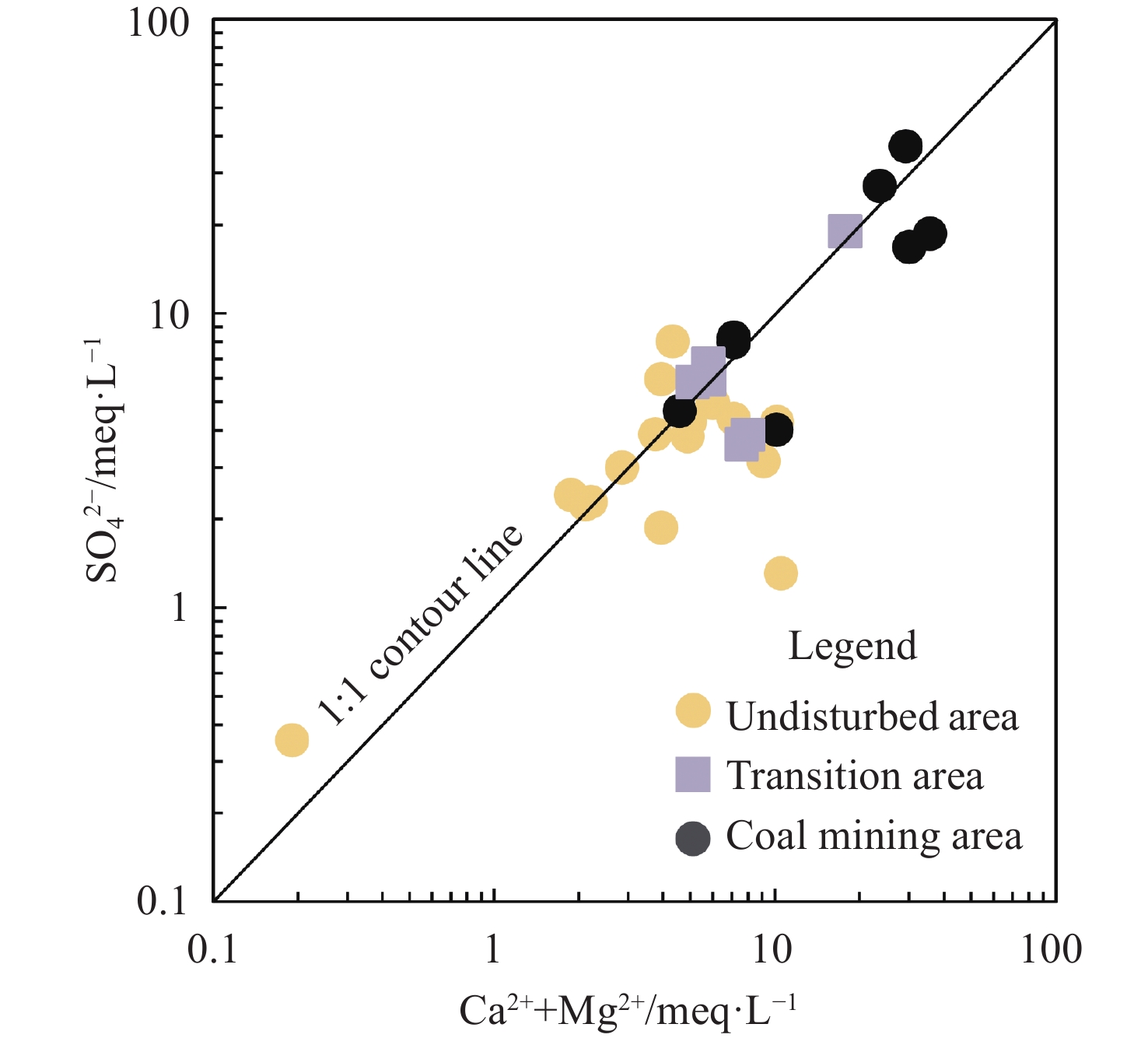
Figure 16. Relationship between SO42− and Ca2+ + Mg2+ in phreatic water of the recharge areas of the Ten Tributaries
Table 1. Statistical summary of phreatic water chemical component analyses in the Ten Tributaries Basin
Water sample type Statistic pH TDS TH Na+ K+ Ca2+ Mg2+ Cl− HCO3− SO42− Recharge area Max 8.57 791.00 523.97 193.82 10.87 104.81 68.22 214.82 519.89 205.50 Min 6.70 243.54 177.66 12.20 0.41 33.70 9.12 12.40 116.50 9.13 Mean 8.03 529.83 292.19 77.77 2.93 67.68 36.31 66.56 283.84 93.33 SD 0.58 174.88 108.29 46.95 2.67 23.29 16.72 52.15 112.47 59.71 CV 0.07 0.33 0.37 0.60 0.91 0.34 0.46 0.78 0.40 0.64 Runoff area Max 8.58 1,440.00 645.08 310.00 6.21 119.84 84.03 220.50 552.84 281.50 Min 7.94 227.13 172.16 9.96 1.43 30.06 20.43 12.76 62.24 44.67 Mean 8.30 586.41 293.47 85.93 3.72 55.61 36.72 69.20 257.13 118.05 SD 0.17 375.28 154.12 94.86 1.54 26.34 23.26 69.24 153.88 77.28 CV 0.02 0.64 0.53 1.10 0.41 0.47 0.63 1.00 0.60 0.65 Discharge area Max 8.53 1,093.02 624.90 261.64 8.81 127.00 79.53 176.90 856.11 233.43 Min 8.04 366.00 238.20 45.60 3.19 22.44 27.50 38.30 231.50 36.02 Mean 8.30 789.33 422.96 131.29 4.72 70.48 59.88 88.83 486.00 107.37 SD 0.17 206.20 126.74 80.16 1.74 33.63 19.29 44.09 198.92 62.49 CV 0.02 0.26 0.30 0.61 0.37 0.48 0.32 0.50 0.41 0.58 Transition area Max 8.79 3,990.36 1,176.06 983.64 14.50 188.38 171.39 1,090.18 689.60 1,301.67 Min 6.87 323.98 215.19 20.50 1.54 20.64 12.52 27.65 152.60 9.13 Mean 8.13 1,049.56 471.78 200.79 4.40 84.67 63.20 189.20 430.55 187.98 SD 0.45 725.07 217.04 214.16 2.56 42.13 36.10 247.93 137.64 236.26 CV 0.05 0.69 0.46 1.07 0.58 0.50 0.57 1.31 0.32 1.26 Coal mining area Max 8.43 3,656.05 1,776.60 690.12 7.45 438.07 213.93 736.65 568.71 1,781.99 Min 7.70 344.50 229.20 34.30 1.27 47.30 26.70 33.32 161.00 69.50 Mean 8.08 1,634.39 873.47 219.67 3.62 179.33 103.37 258.04 388.61 578.21 SD 0.29 1,165.81 613.51 212.39 2.20 128.55 81.03 234.01 141.20 577.90 CV 0.04 0.71 0.70 0.97 0.61 0.72 0.78 0.91 0.36 1.00 Mirabilite mining area Max 9.54 13,038.79 3,016.21 3,584.87 85.04 441.88 536.26 3,178.09 1,083.72 5,609.90 Min 8.11 764.02 52.55 118.71 0.87 6.76 7.29 72.68 274.58 4.80 Mean 8.69 2,995.37 798.65 790.96 12.87 100.80 132.86 747.26 547.63 869.17 SD 0.59 4,264.77 1,130.73 1,121.12 25.69 138.93 198.15 1,098.93 301.55 1,766.05 CV 0.07 1.42 1.42 1.42 2.00 1.38 1.49 1.47 0.55 2.03 Note: The CV and pH are dimensionless; water temperature is in °C; all other components are in mg/L.  下载: 导出CSV
Table 2. Results of stable hydrogen and oxygen isotope analyses of groundwater
Water sample type ISO01 ISO02 ISO03 ISO04 ISO05 ISO06 ISO07 ISO08 ISO09 ISO10 ISO11 δD (‰) −72.80 −67.21 −54.30 −61.93 −56.00 −70.91 −70.31 −67.82 −67.52 −63.24 −58.25 δ18O (‰) −10.26 −9.52 −8.24 −7.96 −7.43 −9.34 −10.11 −9.95 −8.96 −8.12 −8.05
下载: 导出CSV
Table 3. Contribution rates of different end-members to groundwater components in various regions (%)
Subarea Silicate dissolution Carbonate dissolution Evaporite dissolution Meteoric water Mining activity Recharge area 33.85 36.97 21.31 2.07 5.80 Runoff area 34.97 37.23 21.33 2.73 3.74 Discharge area 24.82 37.48 30.58 1.70 5.42 Transition area 28.35 29.78 24.84 1.96 15.07 Coal mining area 25.02 28.59 17.80 1.26 27.33 Mirabilite mining area 20.73 17.06 34.81 1.08 26.32 Whole basin 28.47 30.95 24.89 1.86 13.83
下载: 导出CSV
-
Chen L, Xu D, Yin XX, et al. 2017. Analysis on hydrochemistry and its control factors in the concealed coal mining area in North China: A case study of dominant inrush aquifers in Suxian mining area. Journal of China Coal Society, 42(4): 996−1004. (in Chinese) DOI: 10.13225/j.cnki.jccs.2016.0685. Chen ZX. 2021. Evaluation of water and soil conservation and sediment reduction benefits of the ten major apertures in the Yellow River. Beijing: Science Press, 248. (in Chinese) ISBN: 9787030700179. Cheng NN, Zhang C, Jing DJ, et al. 2020. An integrated chemical mass balance and source emission inventory model for the source apportionment of PM 2.5 in typical coastal areas. Journal of Environmental Sciences, 92(06): 118−128. DOI: 10.1016/j.jes.2020.01.018. Cui CQ, Duan LM, Pan H, et al. 2023. Multi-dimensional water resources carrying capacity of the Ten Kongdui region in the Yellow River Basin. Journal of Water Resources & Water Engineering, 34(05): 12−19. (in Chinese) DOI: 10.11705/j.issn.1672-643X.2023.05.02. Cui H, Duan LM, Pan H, et al. 2025. Geochemical pattern, quality and driving forces of multi-layer groundwater in a high-capacity mining area basin: A comprehensive analysis based on the interweaving of multiple factors. Journal of Hydrology, 660: 133376. DOI: 10.1016/J.JHYDROL.2025.133376. Cui H, Duan LM, Pan H, et al. 2025. How does large-scale underground mining affect the water cycle?—Comprehensive analysis based on isotopes, water levels and hydrogeological conditions. Journal of Environmental Management, 393: 127188. DOI: 10.1016/J.JENVMAN.2025.127188. Cui XS, Zheng ZX, Cheng ZS, et al. 2022. Evolution of unconfined groundwater in the northern Tacheng Basin based on inverse modeling. China Rural Water and Hydropower, 11: 20−25, 31. (in Chinese) DOI: 10.12396/znsd.220217. Fan LM, Ma WC, Chang BF, et al. 2023. Hydrochemical characteristics and formation mechanism of groundwater in Yushenfu Mining Area. Coal Science and Technology, 51(1): 383−394. (in Chinese) DOI: 10.13199/j.cnki.cst.2022-1050. Gautam R, Renu V. 2024. Hydrogeochemical modelling of pyrite oxidation ion mobility in unsaturated mine waste rock piles. Environmental Earth Sciences, 83(4): 127. DOI: 10.1007/s12665-023-11414-z. Gonzalez FR, Raval S, Taplin R, et al. 2019. Evaluation of impact of potential extreme rainfall events on mining in Peru. Natural Resources Research, 28(2): 393−408. DOI: 10.1007/s11053-018-9396-1. Hao AB, Li WP, Liang ZQ. 2000. A method for quantifying the contributions of leaching and evaporation to groundwater salinization in inland arid regions using TDS and δ18O. Hydrogeology & Engineering Geology, (01): 4−6. (in Chinese) DOI: 10.16030/j.cnki.issn.1000-3665.2000.01.002. Haubrich F, Tichomirowa M. 2002. Sulfur and oxygen isotope geochemistry of acid mine drainage-the polymetallic sulfide deposit "himmelfahrt fundgrube" in Freiberg (Germany). Isotopes in Environmental and Health Studies, 38(2): 121−138. DOI: 10.1080/10256010208033319. Hou ZM, Huang L, Zhang SW, et al. 2024. Identification of groundwater hydrogeochemistry and the hydraulic connections of aquifers in a complex coal mine. Journal of Hydrology, 628: 130496. DOI: 10.1016/j.Jhydrol.2023.130496. Hu YC, Xue HL. 2008. Groundwater resource assessment and exploitation conditions in the Hantai river. Inner Mongolia Water Resources, (02): 72, 84. (in Chinese) Huang GX, Liu CY, Sun JC, et al. 2018. A regional scale investigation on factors controlling the groundwater chemistry of various aquifers in a rapidly urbanized area: A case study of the Pearl River Delta. Science of the Total Environment, 625: 510−518. DOI: 10.1016/j.scitotenv.2017.12.322. Huang TM, Pang ZH. 2012. The role of deuterium excess in determining the water salinisation mechanism: A case study of the arid Tarim River Basin, NW China. Applied Geochemistry, 27(12): 2382−2388. DOI: 10.1016/j.apgeochem.2012.08.015. Kang HP, Xie HP, Wang SM, et al. 2025. Research on the integrated green development strategy of coal and co-existed and associated resources. Engineering Sciences, 27(02): 172−183. (in Chinese) DOI: 10.15302/J-SSCAE-2024.12.029. Li MY, Xie YQ, Dong YH, et al. 2023. Review: Recent progress on groundwater recharge research in arid and semiarid areas of China. Hydrogeology Journal, 32(1): 9−30. DOI: 10.1007/s10040-023-02656-z. Li QS, Kang XB, Xu M, et al. 2023. Effects of coal mining and tunnel excavation on groundwater flow system in karst areas by modeling: A case study in Zhongliang Mountain, Chongqing, Southwest China. Journal of Groundwater Science and Engineering, 11(4): 391−407. DOI: 10.26599/jgse.2023.9280031. Liu F, Zhang JK, Wang SQ, et al. 2023. Multivariate statistical analysis of chemical and stable isotopic data as indicative of groundwater evolution with reduced exploitation. Geoscience Frontiers, 14(1): 101476. DOI: 10.1016/J.GSF.2022.101476. Liu FX, Wang GC, Liang XY, et al. 2023. Temporal variation of groundwater hydrochemistry and water stable isotopes under long-term mining disturbance in a coal mine, northwest China. Applied Geochemistry, 158: 105802. DOI: 10.1016/j.Apgeochem.2023.105802. Liu JK, Han GL, Liu M, et al. 2019. Distribution, sources and water quality evaluation of the riverine solutes: A case study in the Lancangjiang River Basin, Tibetan Plateau. International Journal of Environmental Research And Public Health, 16(23): 4670. DOI: 10.3390/ijerph16234670. Liu X, Wang YQ, Wei HZ. 2020. Advances in stable chlorite isotope geochemistry. Earth Science Frontiers, 27(03): 29−41. (in Chinese) DOI: 10.13745/j.esf.sf.2020.4.10. Ma YQ, Yang JM, Xu SG. 2024. Chemical characteristics and genesis analysis of shallow groundwater in Yanhe town, Yuxi city. Journal of Kunming University of Science and Technology (Natural Science), 49(02): 129−139. (in Chinese) DOI: 10.16112/j.cnki.53-1223/n.2024.02.172. Mahan B, Mathur R, Sanislav I, et al. 2023. Cu isotopes in groundwater for hydrogeochemical mineral exploration: A case study using the world-class Mount Isa Cu–Pb–Zn deposit (Australia). Applied Geochemistry, 148: 105519. DOI: 10.1016/j.Apgeochem.2022.105519. Mei AS, Zeng YF, Wu Q, et al. 2024. Hydrogeochemical processes of groundwater system and its mining-motivated effect in mining areas of Western China. Journal of China Coal Society, 49(6): 2769−2784. (in Chinese) DOI: 10.13225/j.cnki.jccs.2023.0669. Mekonnen MM, Hoekstra AY. 2015. Global gray water footprint and water pollution levels related to anthropogenic nitrogen loads to fresh water. Environmental Science & Technology, 49(21): 12860−12868. DOI: 10.1021/acs.est.5b03191. Mu JX, Yang YN, Guo XS, et al. 2025. Evaluation of the water gushing (inrush) risk and prediction of water inflow in the 2–3 coal seam roof of Gaotouyao coal mine. Mining Research and Development, 45(02): 139−145. (in Chinese) DOI: 10.13827/j.cnki.kyyk.2025.02.016. Priyajit S, Kumar MA, Somnath K, et al. 2022. Hydrogeochemical evaluation, groundwater quality appraisal, and potential health risk assessment in a coal mining region of Eastern India. Water, Air, & Soil Pollution, 233(8): 1−23. DOI: 10.1007/s11270-022-05811-6. Qu S, Wang GC, Shi ZM, et al. 2022. Impact of mining activities on groundwater level, hydrochemistry, and aquifer parameters in a coalfield's overburden aquifer. Mine Water and the Environment, 41(3): 640−653. DOI: 10.1007/s10230-022-00875-6. Ren XZ, Yang XP. 2021. Hydrochemical compositions of natural waters in Ordos Deserts and their influencing factors. Acta Geographica Sinica, 76(09): 2224−2239. (in Chinese) DOI: 10.11821/dlxb202109013. Ren ZP, Yan JP. 1999. Analysis on the groundwater chemistry characteristics and their forming mechanism in Dalad Qi Plain, Inner Mongolia. Coal Geology of China, (03): 30−34. (in Chinese) Schoeller H. 1977. Geochemistry of groundwater. In: Brown RH, Konoplyantsev AA, Ineson J, (Eds.), Groundwater Studies: An international guide for research and practice. UNESCO, Paris: 1–18. Shi QW, Duan LM, Yang L, et al. 2025. Analysis of water resource carrying capacity and obstacle Diagnosis in Ordos city. Journal of Beijing Normal University (Natural Science), 61(02): 129−140. (in Chinese) DOI: 10.12202/j.0476-0301.2024086. Song YW, Guo J, Li FR, et al. 2024. Investigation into factors controlling groundwater evolution in mining areas with an integrated approach. Heliyon, 10(19): e38860−e38860. DOI: 10.1016/j.Heliyon.2024.E38860. Stephan S, Viviana R, Seifu K, et al. 2024. Preface: Hydrogeology of arid environments. Hydrogeology Journal, 32(1): 1−8. DOI: 10.1007/s10040-023-02763-x. Su HM, Zhang FW, Hu JY, et al. 2024. Identified the hydrochemical and the sulfur cycle process in subsidence area of Pingyu mining area using multi-isotopes combined with hydrochemistry methods. Journal of Groundwater Science and Engineering, 12(1): 62−77. DOI: 10.26599/jgse.2024.9280006. Sun HY, Mao QG, Wei XF, et al. 2018. Hydrogeochemical characteristics and formation evolutionary mechanism of the groundwater system in the Hami basin. Geology in China, 45(06): 1128−1141. (in Chinese) DOI: 10.12029/gc20180604. Sun HY, Sun XM, Wei XF, et al. 2022. Formation mechanism of metasilicate mineral water in Chengde, Hebei Province: Evidence from rock weathering and water-rock interaction. Geology in China, 49(4): 1088−1113. (in Chinese) DOI: 10.12029/gc20220405. Tan HZ, Zhang ZZ, Feng K, et al. 2025. Coordination and driving mechanism of water-energy-food-ecology coupling system in Inner-Mongolia Reaches of Yellow River based on coupling coordination degree model. Pearl River, 46(04): 101−112. (in Chinese) DOI: 10.3969/j.issn.1001-9235.2025.04.012. Wang CY, Liao F, Wang GC, et al. 2022. Hydrogeochemical evolution induced by long-term mining activities in a multi-aquifer system in the mining area. Science of the Total Environment, 854: 158806. DOI: 10.1016/j.Scitotenv.2022.158806. Wang QM, Dong SN, Wang H, et al. 2020. Hydrogeochemical processes and groundwater quality assessment for different aquifers in the Caojiatan coal mine of Ordos Basin, northwestern China. Environmental Earth Sciences, 79(9): 1−15. DOI: 10.1007/s12665-020-08942-3. Wu Q. 2016. The hydrogeological condition of seasonal river in Inner Mongolian and the feasibility of Flood Silting Engineering to additional groundwater. (in Chinese). Hohhot: Inner Mongolia Agricultural University. Xiang H, Chao Y, Xuelan D, et al. 2025. Hydrochemical evolution of karst groundwater under the mining influence in Beiya Mine, Northwest Yunnan Province. Carsologica Sinica, 44(0): 1−11. (in Chinese) DOI: 10.11932/karst2025y026. Yang HQ, Zhao GB, Chen GC, et al. 2023. Metallogenic pedigree and metallogenic evolution history in Ordos area, China. Northwestern Geology, 56(02): 175−186. (in Chinese) DOI: 10.12401/j.nwg.2023011. Yang Q, Xiao HL, Zhao LJ, et al. 2011. Hydrological and isotopic characterization of river water, groundwater, and groundwater recharge in the Heihe River basin, northwestern China. Hydrological Processes, 25(8): 1271−1283. DOI: 10.1002/hyp.7896. Zhang HT, Jiang BB, Zhang HQ, et al. 2024. Hydrochemical characteristics and component sources of water in underground reservoirs in the Daliuta Coal Mine. Coal Geology & Exploration, 52(12): 118−130. (in Chinese) DOI: 10.12363/issn.1001-1986.24.08.0536. Zhang HW, Liu GQ, Zhang KD, et al. 2024. Sediment control and near-natural ecological restoration in wind-water complex erosion area of the Top Ten Tributaries. Yellow River, 46(12): 1−10. (in Chinese) DOI: 10.3969/j.issn.1000-1379.2024.12.001. Zhang J, Chen LW, Hou XW, et al. 2021. Multi-isotopes and hydrochemistry combined to reveal the major factors affecting Carboniferous groundwater evolution in the Huaibei coalfield, North China. Science of the Total Environment, 791: 148420. DOI: 10.1016/J.SCITOTENV.2021.148420. Zhang T, Ao N, Shao HM, et al. 2025. Metallogenic regularity, centennial exploration results of Inner Mongolia, and suggestions for a new round of prospecting: Research and compilation of "Geology of mineral resources of China · Inner Mongolia Volume". Acta Geoscientica Sinica, 46(01): 216–234. (in Chinese) DOI: 10.3975/cagsb.2024.122411. Zhang YY, Xin CL, Guo XY, et al. 2024. Characteristics of stable isotopes in precipitation and its moisture sources in the inland regions of northwest China. Environmental Science, 45(04): 2080−2095. (in Chinese) DOI: 10.13227/j.hjkx.202304089. Zhao WJ, Qian H, Xu PP, et al. 2024. Tracing groundwater-surface water sources and transformation processes in the Ba River Basin through dual isotopes and water chemistry. Applied Geochemistry, 176: 106199. DOI: 10.1016/j.Apgeochem.2024.106199. Zhou CS. 2012. Ecological and environmental sustainability of coal-dependent cities: A case study of Ordos, China. Economic Forum, (11): 136−138. (in Chinese) DOI: 10.3969/j.issn.1003-3580.2012.11.039. Zhou SH, Liu TX, Duan LM, et al. 2021. Hydrogeological characteristics of underwater aquifer in the Hailiutu River Basin. Journal of Desert Research, 41(05): 103−110. (in Chinese) DOI: 10.7522/j.issn.1000-694X.2021.00043. Zou JW, Liu F, Zhang JK. 2022. Hydrochemical characteristics and formation mechanism of shallow groundwater in typical water-receiving areas of the South-to-North Water Diversion Project. China Environmental Science, 42(05): 2260−2268. (in Chinese) DOI: 10.19674/j.cnki.issn1000-6923.2022.0115. -

 点击查看大图

计量
- 文章访问数: 2179
- HTML全文浏览量: 735
- PDF下载量: 29
- 被引次数: 0


