| Citation: | Li JF, Zhang YJ, Liu YC, et al. 2026. Application of the DITAPH model coupling human activities and groundwater dynamics for nitrate vulnerability assessment: A case study in Quanzhou, China. Journal of Groundwater Science and Engineering, 14(1): 32-48 doi: 10.26599/JGSE.2026.9280069

|

|
Abascal E, Gómez-Coma L, Ortiz I, et al. 2022. Global diagnosis of nitrate pollution in groundwater and review of removal technologies. Science of The Total Environment, 810: 152233. DOI: 10.1016/j.scitotenv.2021.152233.
|
|
Ahada CPS, Suthar S. 2018. A GIS based DRASTIC model for assessing aquifer vulnerability in Southern Punjab, India. Modeling Earth Systems and Environment, 4: 635−645. DOI: 10.1007/s40808-018-0449-6.
|
|
Ahmad W, Iqbal J, Nasir MJ, et al. 2021. Impact of land use/land cover changes on water quality and human health in district Peshawar Pakistan. Scientific Reports, 11: 16526. DOI: 10.1038/s41598-021-96075-3.
|
|
Aller L, Bennett T, Lehr J, et al. 1987. DRASTIC: Standardized system for evaluating groundwater pollution potencial using hydrogeologic settings. Journal of the Geological Society of India: 29. DOI: 10.17491/jgsi/1987/290112
|
|
Arauzo M. 2017. Vulnerability of groundwater resources to nitrate pollution: A simple and effective procedure for delimiting Nitrate Vulnerable Zones. Science of The Total Environment, 575: 799−812. DOI: 10.1016/j.scitotenv.2016.09.139.
|
|
Arauzo M, Martínez-Bastida JJ. 2015. Environmental factors affecting diffuse nitrate pollution in the major aquifers of central Spain: Groundwater vulnerability vs. groundwater pollution. Environmental Earth Sciences, 73: 8271−8286. DOI: 10.1007/s12665-014-3989-8.
|
|
Arauzo M, Valladolid M, Andries DM. 2022. Would delineation of nitrate vulnerable zones be improved by introducing a new parameter representing the risk associated with soil permeability in the Land Use–Intrinsic Vulnerability Procedure? Science of The Total Environment, 840: 156654. DOI: 10.1016/j.scitotenv.2022.156654
|
|
Arora B, Dwivedi D, Faybishenko B, et al. 2019. Understanding and predicting vadose zone processes. Reviews in Mineralogy and Geochemistry, 85: 303−328. DOI: 10.2138/rmg.2019.85.10.
|
|
Babiker I, Mohamed M, Hiyama T, et al. 2005. A GIS-based DRASTIC model for assessing aquifer vulnerability in Kakamigahara Heights, Gifu Prefecture, central Japan. Science of The Total Environment, 345: 127−140. DOI: 10.1016/j.scitotenv.2004.11.005.
|
|
Chakraborty B, Roy S, Bera A, et al. 2022. Groundwater vulnerability assessment using GIS-based DRASTIC model in the upper catchment of Dwarakeshwar river basin, West Bengal, India. Environmental Earth Sciences, 81: 2. DOI: 10.1007/s12665-021-10002-3.
|
|
Chilaule SM, Vélez-Nicolás M, Ruiz-Ortiz V, et al. 2023. Assessment of intrinsic vulnerability using DRASTIC vs. Actual nitrate pollution: The case of a detrital aquifer impacted by intensive agriculture in Cádiz (Southern Spain). Agriculture, 13: 1082. DOI: 10.3390/agriculture13051082.
|
|
Deka D, Ravi K, Nair AM. 2025. Impact of urbanisation on groundwater vulnerability in shallow aquifer system of Assam: A DRASTIC approach. Urban Climate, 59: 102299. DOI: 10.1016/j.uclim.2025.102299.
|
|
Deng D, Lai S, Deng Y. 2002. 1: 250, 000 geological map of the coastal area of southern Fujian.
|
|
Falkenmark M. 1986. Fresh water. Time for a modified approach - Eau douce. Le moment d'un changement d'approche. Ambio, 15(4): 192−200.
|
|
Fu JJ, Le XC. 2025. Improving groundwater vulnerability assessment using machine learning. Journal of Environmental Sciences, 153: 6−9. DOI: 10.1016/j.jes.2024.12.024.
|
|
Fu SM, Wang KF. 2023. Quanzhou Statistical Yearbook 2023. China Statistics Press, Beijing. https://tjj.quanzhou.gov.cn/
|
|
George NJ, Agbasi OE, Umoh AJ, et al. 2025. Enhanced contamination risk assessment for aquifer management using the geo-resistivity and DRASTIC model in alluvial settings. Cleaner Water, 3: 100060. DOI: 10.1016/j.clwat.2024.100060.
|
|
Gutiérrez M, Biagioni RN, Alarcón-Herrera MT, et al. 2018. An overview of nitrate sources and operating processes in arid and semiarid aquifer systems. Science of the Total Environment, 624: 1513−1522. DOI: 10.1016/j.scitotenv.2017.12.252.
|
|
Hamza SM, Ahsan A, Imteaz MA, et al. 2015. Accomplishment and subjectivity of GIS-based DRASTIC groundwater vulnerability assessment method: A review. Environmental Earth Sciences, 73: 3063−3076. DOI: 10.1007/s12665-014-3601-2.
|
|
Iqbal MA, Salam MA, Nur-E-Alam M, et al. 2024. Monitoring groundwater vulnerability for sustainable water resource management: A DRASTIC-based comparative assessment in a newly township area of Bangladesh. Groundwater for Sustainable Development, 27: 01373. DOI: 10.1016/j.gsd.2024.101373.
|
|
Javadi S, Kavehkar N, Mohammadi K, et al. 2011. Calibrating DRASTIC using field measurements, sensitivity analysis and statistical methods to assess groundwater vulnerability. Water International, 36: 719−732. DOI: 10.1080/02508060.2011.610921.
|
|
Khosravi K, Sartaj M, Tsai FT-C, et al. 2018. A comparison study of DRASTIC methods with various objective methods for groundwater vulnerability assessment. Science of The Total Environment, 642: 1032−1049. DOI: 10.1016/j.scitotenv.2018.06.130.
|
|
Kong XK, Zhang ZX, Wang P, et al. 2022. Transformation of ammonium nitrogen and response characteristics of nitrifying functional genes in tannery sludge contaminated soil. Journal of Groundwater Science and Engineering, 10(3): 223−232. DOI: 10.19637/j.cnki.2305-7068.2022.03.002.
|
|
Kumar A, Pramod Krishna A. 2020. Groundwater vulnerability and contamination risk assessment using GIS-based modified DRASTIC -LU model in hard rock aquifer system in India. Geocarto International, 35: 1149−1178. DOI: 10.1080/10106049.2018.1557259.
|
|
Levin N, Kyba CCM, Zhang QL, et al. 2020. Remote sensing of night lights: A review and an outlook for the future. Remote Sensing of Environment, 237: 111443. DOI: 10.1016/j.rse.2019.111443.
|
|
Liu YC, Fei YH, Li YS, et al. 2024. Pollution source identification methods and remediation technologies of groundwater: A review. China Geology, 7(1): 125−137. DOI: 10.31035/cg2022080.
|
|
Lubianetzky TA, Dickson SE, Guo Y. 2015. Proposed method: incorporation of fractured rock in aquifer vulnerability assessments. Environmental Earth Sciences, 74: 4813−4825. DOI: 10.1007/s12665-015-4471-y.
|
|
Ma L, Lu J, Zhao H, et al. 2018. Nitrate Vulnerable Zones and strategies of non-point pollution mitigation in China. Journal of Agro-Environment Science, 37: 2387−2391. DOI: 10.11654/jaes.2018-1369.
|
|
Martínez-Bastida JJ, Arauzo M, Valladolid M. 2010. Intrinsic and specific vulnerability of groundwater in central Spain: the risk of nitrate pollution. Hydrogeology Journal, 18: 681−698. DOI: 10.1007/s10040-009-0549-5.
|
|
Mekonnen MM, Hoekstra AY. 2016. Four billion people facing severe water scarcity. Science Advances, 2: e1500323. DOI: 10.1126/sciadv.1500323.
|
|
Monteny GJ. 2001. The EU Nitrates Directive: A European approach to combat water pollution from agriculture. The Scientific World Journal, 1: 927−935. DOI: 10.1100/tsw.2001.377.
|
|
Nahin KTK, Basak R, Alam R. 2020. Groundwater vulnerability assessment with DRASTIC index method in the salinity-affected southwest coastal region of Bangladesh: A case study in Bagerhat Sadar, Fakirhat and Rampal. Earth Systems and Environment, 4: 183−195. DOI: 10.1007/s41748-019-00144-7.
|
|
Orellana-Macías JM, Merchán D, Causapé J. 2020. Evolution and assessment of a nitrate vulnerable zone over 20 years: Gallocanta groundwater body (Spain). Hydrogeology Journal, 28: 2207−2221. DOI: 10.1007/s10040-020-02184-0.
|
|
Peng SZ, Ding YX, Liu WZ, et al. 2019. 1 km monthly temperature and precipitation dataset for China from 1901 to 2017. Earth System Science Data: 1931–1946. DOI: 10.5194/essd-11-1931-2019
|
|
QMEEB (Quanzhou Municipal Ecological Environment Bureau). 2021. Water ecology of key river Basins in Quanzhou City during the 14th Five-Year Plan period Environmental protection planning. http://sthjj.quanzhou.gov.cn
|
|
Sidibe AM, Lin X. 2018. Heavy metals and nitrate to validate groundwater sensibility assessment based on DRASTIC models and GIS: Case of the upper Niger and the Bani basin in Mali. Journal of African Earth Sciences, 147: 199−210. DOI: 10.1016/j.jafrearsci.2018.06.019.
|
|
Smail RQS, Dişli E. 2023. Assessment and validation of groundwater vulnerability to nitrate and TDS using based on a modified DRASTIC model: A case study in the Erbil Central Sub-Basin, Iraq. Environmental Monitoring Assessment, 195: 567. DOI: 10.1007/s10661-023-11165-1.
|
|
Stigter TY, Ribeiro L, Dill AMMC. 2006. Evaluation of an intrinsic and a specific vulnerability assessment method in comparison with groundwater salinisation and nitrate contamination levels in two agricultural regions in the south of Portugal. Hydrogeology Journal, 14: 79−99. DOI: 10.1007/s10040-004-0396-3.
|
|
Sun XB, Guo CL, Zhang J, et al. 2023. Spatial-temporal difference between nitrate in groundwater and nitrogen in soil based on geostatistical analysis. Journal of Groundwater Science and Engineering, 11: 37−46. DOI: 10.26599/JGSE.2023.9280004.
|
|
Tao M, Lai S, Deng Y. 2002. 1: 250, 000 hydrogeologic map of the southern coastal area of Fujian.
|
|
Verma A, Sharma A, Kumar R, et al. 2023. Nitrate contamination in groundwater and associated health risk assessment for Indo-Gangetic Plain, India. Groundwater for Sustainable Development, 23: 100978. DOI: 10.1016/j.gsd.2023.100978.
|
|
Xu XL, Liu JY, Zhang SW, et al. 2018. China's Multi-Period Land Use Land Cover Remote Sensing Monitoring Dataset (CNLUCC). DOI: 10.12078/2018070201.
|
|
Yankey RK, Anornu GK, Osae SK, et al. 2021. Drastic model application to groundwater vulnerability elucidation for decision making: the case of south western coastal basin, Ghana. Modeling Earth Systems and Environment, 7: 2197−2213. DOI: 10.1007/s40808-020-01031-1.
|
|
Zenebe GB, Hussien A, Girmay A, et al. 2020. Spatial analysis of groundwater vulnerability to contamination and human activity impact using a modified DRASTIC model in Elalla-Aynalem Catchment, Northern Ethiopia. Sustainable Water Resources Management, 6: 51. DOI: 10.1007/s40899-020-00406-7.
|
|
Zhong ZX, 2005. A discussion of groundwater vulnerability assessment method. Earth Science Frontiers, 12: 3–013.
|
2305-7068/© Journal of Groundwater Science and Engineering Editorial Office. This is an open access article under the CC BY-NC-ND license (http://creativecommons.org/licenses/by-nc-nd/4.0)
| [1] | Stephen Pitchaimani V, Narayanan MSS, Abishek RS, Aswin SK, Jerin Joe RJ, 2024: Delineation of groundwater potential zones using remote sensing and Geographic Information Systems (GIS) in Kadaladi region, Southern India, Journal of Groundwater Science and Engineering, 12, 147-160. doi: 10.26599/JGSE.2024.9280012 |
| [2] | Fu-ning Lan, Yi Zhao, Jun Li, Xiu-qun Zhu, 2024: Health risk assessment of heavy metal pollution in groundwater of a karst basin, SW China, Journal of Groundwater Science and Engineering, 12, 49-61. doi: 10.26599/JGSE.2024.9280005 |
| [3] | Xiu-bo Sun, Chang-lai Guo, Jing Zhang, Jia-quan Sun, Jian Cui, Mao-hua Liu, 2023: Spatial-temporal difference between nitrate in groundwater and nitrogen in soil based on geostatistical analysis, Journal of Groundwater Science and Engineering, 11, 37-46. doi: 10.26599/JGSE.2023.9280004 |
| [4] | Khan Tanzeel, Akhtar Malik Muhammad, Malghani Gohram, Akhtar Rabia, 2022: Comparative analysis of bacterial contamination in tap and groundwater: A case study on water quality of Quetta City, an arid zone in Pakistan, Journal of Groundwater Science and Engineering, 10, 153-165. doi: 10.19637/j.cnki.2305-7068.2022.02.005 |
| [5] | Kessar Cherif, Benkesmia Yamina, Blissag Bilal, Wahib Kébir Lahsen, 2021: Delineation of groundwater potential zones in Wadi Saida Watershed of NW-Algeria using remote sensing, geographic information system-based AHP techniques and geostatistical analysis, Journal of Groundwater Science and Engineering, 9, 45-64. doi: 10.19637/j.cnki.2305-7068.2021.01.005 |
| [6] | Chun-lei GUI, Zhen-xing WANG, Rong MA, Xue-feng ZUO, 2021: Aquifer hydraulic conductivity prediction via coupling model of MCMC-ANN, Journal of Groundwater Science and Engineering, 9, 1-11. doi: 10.19637/j.cnki.2305-7068.2021.01.001 |
| [7] | Ya-ci Liu, Zhao-ji Zhang, Xin-yi Zhao, Meng-tuo Wen, Sheng-wei Cao, Ya-song Li, 2021: Arsenic contamination caused by roxarsone transformation with spatiotemporal variation of microbial community structure in a column experiment, Journal of Groundwater Science and Engineering, 9, 304-316. doi: 10.19637/j.cnki.2305-7068.2021.04.004 |
| [8] | ZHONG Hua-ping, WU Yong-xiang, 2020: State of seawater intrusion and its adaptive management countermeasures in Longkou City of China, Journal of Groundwater Science and Engineering, 8, 30-42. doi: 10.19637/j.cnki.2305-7068.2020.01.004 |
| [9] | Mehmood Qaisar, Arshad Muhammad, Rizwan Muhammad, Hamid Shanawar, Mehmood Waqas, Ansir Muneer Muhammad, Irfan Muhammad, Anjum Lubna, 2020: Integration of geoelectric and hydrochemical approaches for delineation of groundwater potential zones in alluvial aquifer, Journal of Groundwater Science and Engineering, 8, 366-380. doi: 10.19637/j.cnki.2305-7068.2020.04.007 |
| [10] | Dinagarapandi Pandi, Saravanan Kothandaraman, Mohan Kuppusamy, 2020: Delineation of potential groundwater zones based on multicriteria decision making technique, Journal of Groundwater Science and Engineering, 8, 180-194. doi: 10.19637/j.cnki.2305-7068.2020.02.009 |
| [11] | Abdelhakim LAHJOUJ, Abdellah EL HMAIDI, Karima BOUHAFA, 2020: Spatial and statistical assessment of nitrate contamination in groundwater: Case of Sais Basin, Morocco, Journal of Groundwater Science and Engineering, 8, 143-157. doi: 10.19637/j.cnki.2305-7068.2020.02.006 |
| [12] | LI Yang, KANG Feng-Xin, ZOU An-de, 2019: Isotope analysis of nitrate pollution sources in groundwater of Dong’e geohydrological unit, Journal of Groundwater Science and Engineering, 7, 145-154. doi: 10.19637/j.cnki.2305-7068.2019.02.005 |
| [13] | LIU Shu-yuan, WANG Hong-qi, 2016: Dynamic assessment of pollution risk of groundwater source area in Northern China, Journal of Groundwater Science and Engineering, 4, 333-343. |
| [14] | DAI Wen-Bin, ZHANG Wei-Jun, COWEN Taha, 2015: An analysis of River Derwent pollution and its impacts, Journal of Groundwater Science and Engineering, 3, 39-44. |
| [15] | ZHANG Chuan-mian, GUO Xiao-niu, Richard Henry, James Dendy, 2015: Groundwater modelling to help diagnose contamination problems, Journal of Groundwater Science and Engineering, 3, 285-294. |
| [16] | SHI Jian-sheng, LIU Chang-li, DONG Hua, YAN Zhen-peng, WANG Yan-jun, LIU Xin-hao, GUO Xiu-yan, JIAO Hong-jun, YIN Mi-ying, HOU Huai-ren, 2014: Stability assessment and risk analysis of aboveground river in lower Yellow River, Journal of Groundwater Science and Engineering, 2, 1-18. |
| [17] | Chang-li LIU, Chao SONG, Hong-bing HOU, Xiu-yan WANG, Yun ZHANG, Jun-kun WANG, Jian-mei JIANG, Li-xin PEI, Bo SONG, 2014: The Impact of Human Activities on CO2 Intake by Carbonate Weathering: A Case Study of Conglin Karst Ridge-trough at Fuling Town, Chongqing, China, Journal of Groundwater Science and Engineering, 2, 29-38. |
| [18] | Zhao Wang, Jiansheng Shi, Zhaoji Zhang, Yuhong Fei, 2013: Organic Contamination of Soil and Goundwater in the Piedimont Plain of the Taihang Mountains, Journal of Groundwater Science and Engineering, 1, 74-81. |
| [19] | Aizhong Ding, Lirong Cheng, Steve Thornton, Wei Huang, David Lerner, 2013: Groundwater quality Management in China, Journal of Groundwater Science and Engineering, 1, 54-59. |
| [20] | Zhao-xian Zheng, Xiao-si Su, 2013: Risk Assessment on Organic Contamination of Shallow Groundwater of an Oilfield in Northeast China, Journal of Groundwater Science and Engineering, 1, 75-82. |
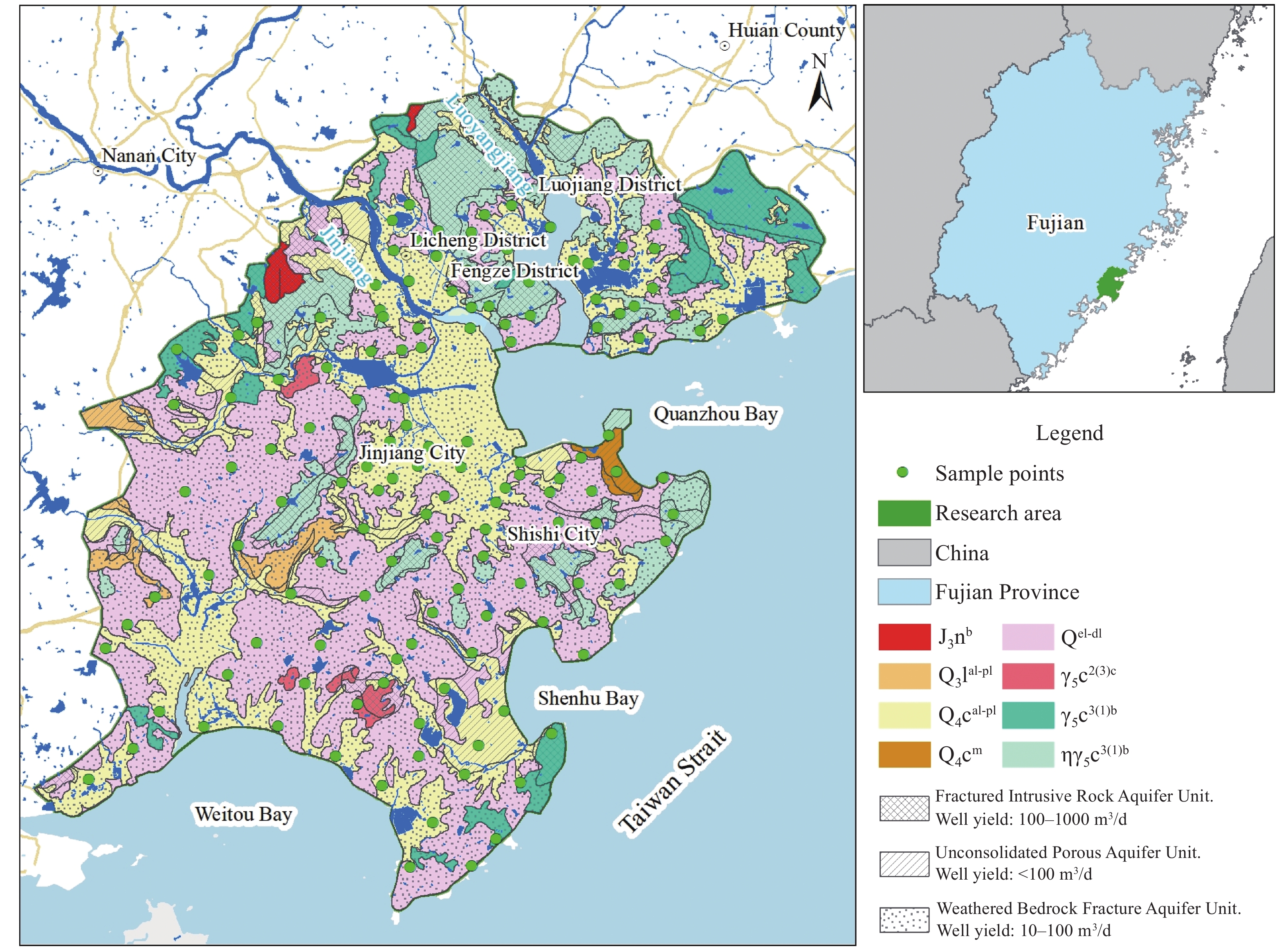
Figures(9) / Tables(5)
Supported by:
Beijing Renhe Information Technology Co. Ltd


 E-mail alert
 Rss
Rss



 DownLoad: