 E-mail alert
 Rss
Rss

Articles in press have been peer-reviewed and accepted, which are not yet assigned to volumes /issues, but are citable by Digital Object Identifier (DOI).

, Available online ,
doi: 10.26599/JGSE.2026.9280098
Abstract:
, Available online ,
doi: 10.26599/JGSE.2026.9280104
Abstract:

, Available online ,
doi: 10.26599/JGSE.2026.9280101
Abstract:
2026, 14(4): 435-457.
doi: 10.26599/JGSE.2026.9280095
Abstract:
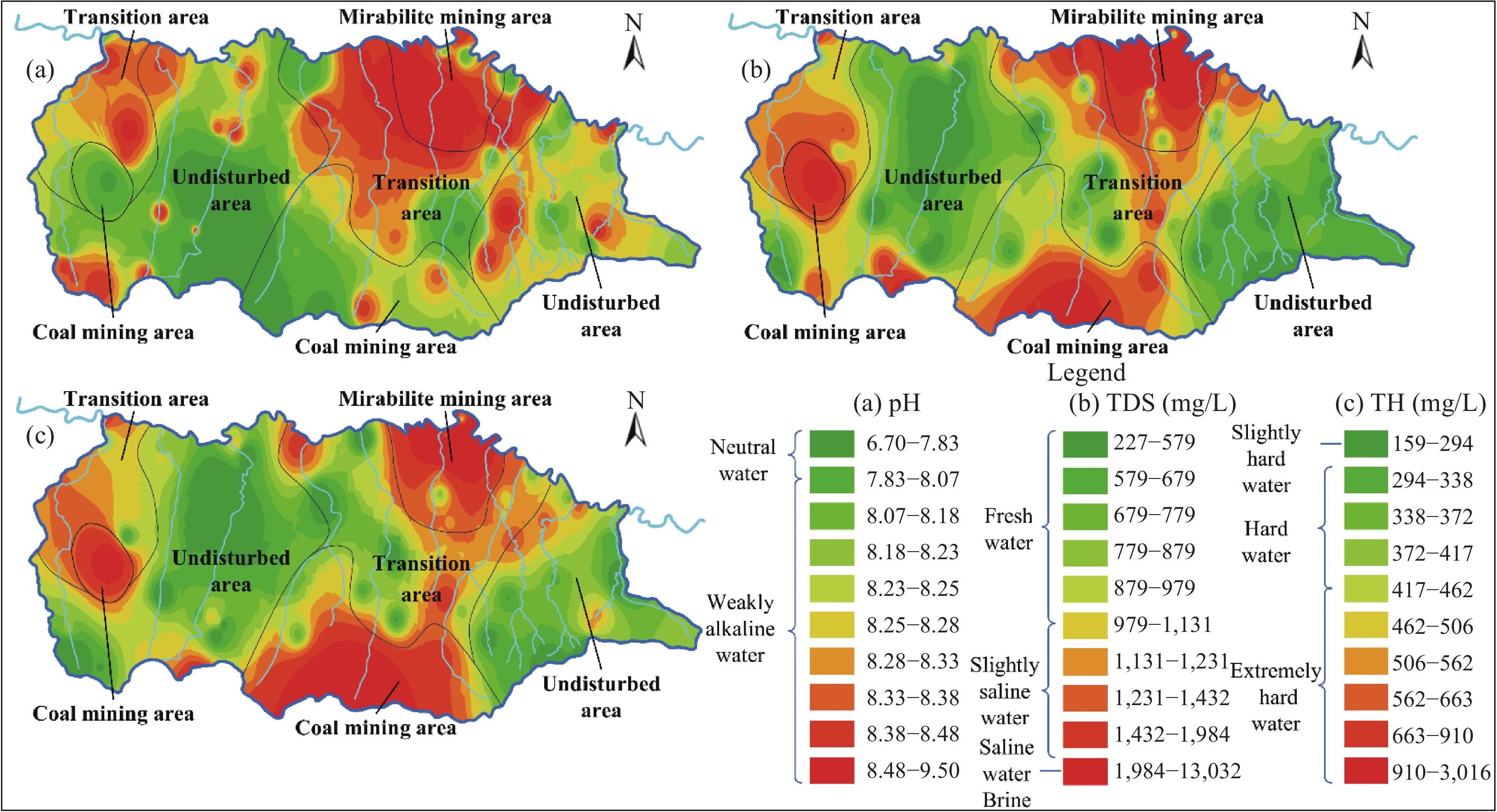
Revealing the evolution of phreatic water hydrochemistry under natural processes and mining activities in shallowly buried mining areas of arid and semi-arid regions is key to identifying the impacts of mining on groundwater. Taking the Ten Tributaries Basin in the upper Yellow River as the study area, this study combined ion ratios, stable isotope tracing, and the Chemical Mass Balance (CMB) model to reveal and quantify the effects of coal mining (recharge area) and mirabilite mining (discharge area) on phreatic water chemistry. Results show that mining activities are the key anthropogenic factor driving the spatial differentiation of phreatic water chemistry, with influence intensity exhibiting significant spatial heterogeneity. In undisturbed areas, natural dissolution processes contribute more than 80% of the hydrochemical composition, dominated by carbonate dissolution. However, in mining-affected areas, groundwater chemistry deviates from natural evolutionary pathways, characterized by enhanced dissolved-ion input and more complex ionic compositions. In recharge areas, coal mining mainly promotes carbonate dissolution and vadose-zone disturbance, increasing TDS by factors of 1.96 and 1.88, respectively, relative to natural conditions. In discharge areas, mirabilite mining is dominated by evaporite dissolution and deep saline-water mixing, leading to TDS increases by the factors of 4.41 and 3.24, respectively. These mining effects are superimposed on the pathway-controlled groundwater flow system, resulting in distinct spatial differentiation of groundwater hydrochemistry. The improved CMB model effectively quantifies the impacts of mining disturbances on groundwater chemistry. The results provide scientific support for groundwater resource management and ecological protection in shallowly buried mining areas of arid and semi-arid regions.
Revealing the evolution of phreatic water hydrochemistry under natural processes and mining activities in shallowly buried mining areas of arid and semi-arid regions is key to identifying the impacts of mining on groundwater. Taking the Ten Tributaries Basin in the upper Yellow River as the study area, this study combined ion ratios, stable isotope tracing, and the Chemical Mass Balance (CMB) model to reveal and quantify the effects of coal mining (recharge area) and mirabilite mining (discharge area) on phreatic water chemistry. Results show that mining activities are the key anthropogenic factor driving the spatial differentiation of phreatic water chemistry, with influence intensity exhibiting significant spatial heterogeneity. In undisturbed areas, natural dissolution processes contribute more than 80% of the hydrochemical composition, dominated by carbonate dissolution. However, in mining-affected areas, groundwater chemistry deviates from natural evolutionary pathways, characterized by enhanced dissolved-ion input and more complex ionic compositions. In recharge areas, coal mining mainly promotes carbonate dissolution and vadose-zone disturbance, increasing TDS by factors of 1.96 and 1.88, respectively, relative to natural conditions. In discharge areas, mirabilite mining is dominated by evaporite dissolution and deep saline-water mixing, leading to TDS increases by the factors of 4.41 and 3.24, respectively. These mining effects are superimposed on the pathway-controlled groundwater flow system, resulting in distinct spatial differentiation of groundwater hydrochemistry. The improved CMB model effectively quantifies the impacts of mining disturbances on groundwater chemistry. The results provide scientific support for groundwater resource management and ecological protection in shallowly buried mining areas of arid and semi-arid regions.
2026, 14(4): 458-477.
doi: 10.26599/JGSE.2026.9280103
Abstract:
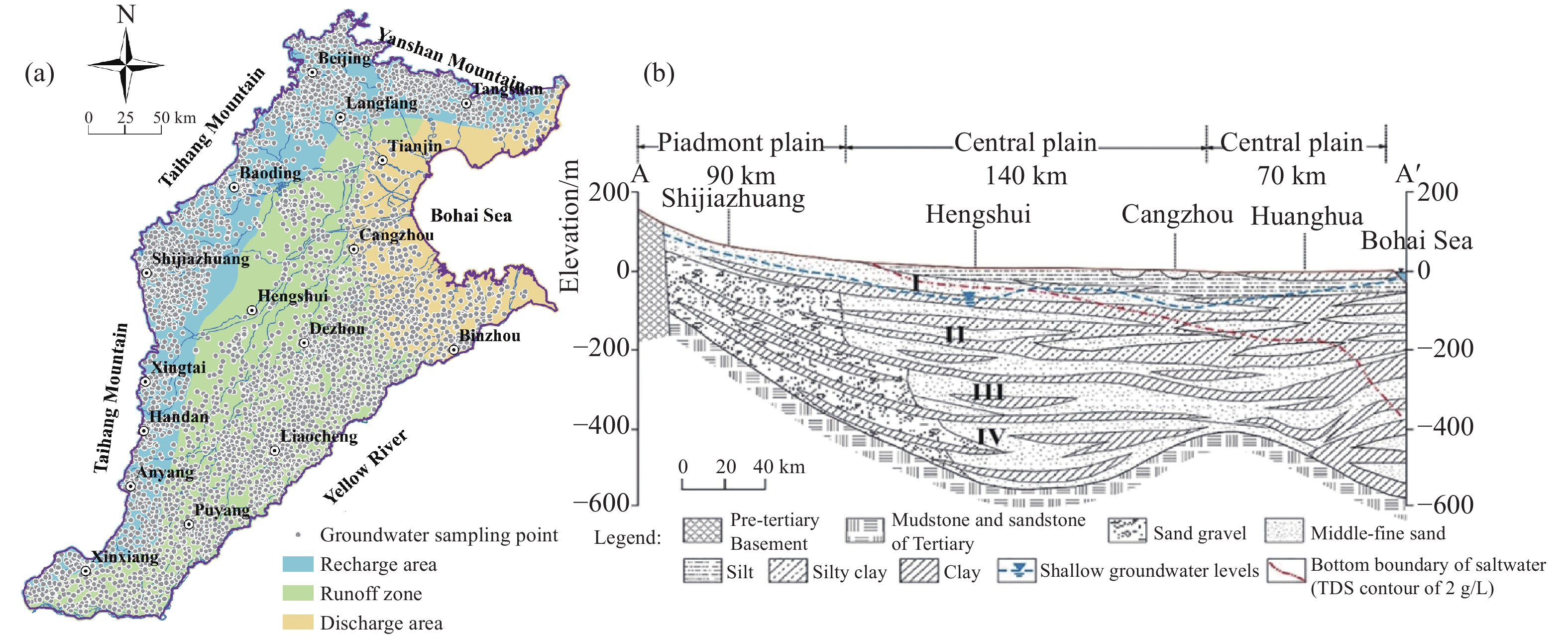
Soda water in shallow aquifers represents a unique hydrochemical type, often enriched in arsenic (As), Fluorine (F), Iodine (I), and other components, while also acting as a critical driver of soil salinization. However, existing studies have failed to effectively distinguish between salinization (characterized by soluble salt accumulation) and alkalization (characterized by soda-alkali enrichment). The "new insights" of this study do not rely on new data but derive from an in-depth excavation and interpretation of the 2006–2009 National Groundwater Pollution Survey dataset—the only authoritative background dataset covering the entire North China Plain. Focusing on shallow groundwater in the North China Plain, this study refines the identification criteria for soda water based on existing concepts, analyzes its spatial distribution characteristics, delineates typical zones, and conducts a preliminary investigation into the genetic differences across regions. Results show that when using the criterion—"HCO3− + CO32− as dominant anions with [(HCO3− + CO32−) - (Ca2+ + Mg2+)] > 0 meq%"—combined with hydrochemical cluster analysis, soda water is primarily concentrated in two zones: The mountain-front discharge zone (Area A) and the runoff-ancient Yellow River channel zone (Area B). These two zones account for 88.48% of all soda water samples and exhibit distinct hydrochemical features. In Area A, groundwater has a simple anion composition dominated by HCO3−, a median Total Dissolved Solids (TDS) content of 501.15 mg/L, and elevated concentrations of F− and NO3−. In contrast, Area B is characterized by diverse anions (HCO3−, SO42−, and Cl−), a higher median TDS (863.56 mg/L), and enrichment of reductive components including As, F−, I−, Fe, and Mn. Genetic analysis reveals that soda water in Area A forms through the combined effects of mineral weathering, dissolution, and calcite-dolomite precipitation. In contrast, groundwater in Area B evolves under calcite-dolomite precipitation controlled by evaporative concentration, with further modifications by microbial geochemical processes and agricultural activities. This study clarifies the spatial distribution patterns and genetic mechanisms of soda water in the North China Plain, laying a foundation for further research on its formation processes.
Soda water in shallow aquifers represents a unique hydrochemical type, often enriched in arsenic (As), Fluorine (F), Iodine (I), and other components, while also acting as a critical driver of soil salinization. However, existing studies have failed to effectively distinguish between salinization (characterized by soluble salt accumulation) and alkalization (characterized by soda-alkali enrichment). The "new insights" of this study do not rely on new data but derive from an in-depth excavation and interpretation of the 2006–2009 National Groundwater Pollution Survey dataset—the only authoritative background dataset covering the entire North China Plain. Focusing on shallow groundwater in the North China Plain, this study refines the identification criteria for soda water based on existing concepts, analyzes its spatial distribution characteristics, delineates typical zones, and conducts a preliminary investigation into the genetic differences across regions. Results show that when using the criterion—"HCO3− + CO32− as dominant anions with [(HCO3− + CO32−) - (Ca2+ + Mg2+)] > 0 meq%"—combined with hydrochemical cluster analysis, soda water is primarily concentrated in two zones: The mountain-front discharge zone (Area A) and the runoff-ancient Yellow River channel zone (Area B). These two zones account for 88.48% of all soda water samples and exhibit distinct hydrochemical features. In Area A, groundwater has a simple anion composition dominated by HCO3−, a median Total Dissolved Solids (TDS) content of 501.15 mg/L, and elevated concentrations of F− and NO3−. In contrast, Area B is characterized by diverse anions (HCO3−, SO42−, and Cl−), a higher median TDS (863.56 mg/L), and enrichment of reductive components including As, F−, I−, Fe, and Mn. Genetic analysis reveals that soda water in Area A forms through the combined effects of mineral weathering, dissolution, and calcite-dolomite precipitation. In contrast, groundwater in Area B evolves under calcite-dolomite precipitation controlled by evaporative concentration, with further modifications by microbial geochemical processes and agricultural activities. This study clarifies the spatial distribution patterns and genetic mechanisms of soda water in the North China Plain, laying a foundation for further research on its formation processes.
2026, 14(4): 478-492.
doi: 10.26599/JGSE.2026.9280090
Abstract:
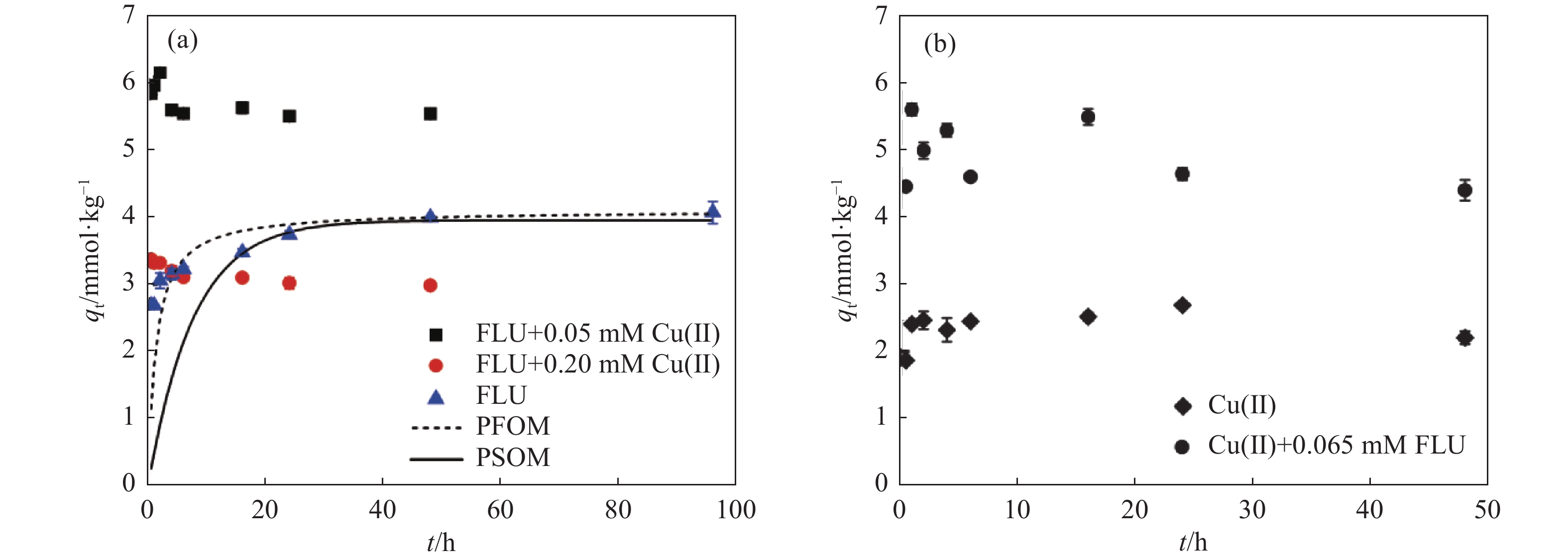
Flumequine (FLU) is widely applied in animal husbandry and can enter sediment and groundwater systems. However, the adsorption mechanisms of FLU onto clay minerals remain unclear. Density Functional Theory (DFT) calculations were employed to elucidate the adsorption mechanism of FLU onto kaolinite, and batch adsorption experiments were conducted to investigate the adsorption behavior of FLU. Results of DFT calculations demonstrated that the carboxyl group of FLU interacted with the hydroxyl groups on the kaolinite (001) surface via hydrogen bonding and electrostatic interactions, which were the main adsorption mechanisms. The adsorption of FLU onto kaolinite exhibited pH dependence, due to pH-induced variations in both the speciation of FLU and the surface charge of kaolinite. Ionic strength negatively affected FLU adsorption because NaCl could decrease the activity of FLU, and Cl− could also compete for the adsorption sites with FLU−. With the addition of Cu(II), the species Cu(FLU−)+ was formed, and it had stronger adsorption affinity for kaolinite than FLU. However, Cu2+ could compete for adsorption sites with Cu(FLU−)+. Therefore, the molar concentration difference between Cu(FLU−)+ and Cu2+ played a crucial role in FLU adsorption. When the ratio of this difference in the binary systems to the adsorbed FLU in the single system exceeded 1.0, Cu(II) addition significantly enhanced FLU adsorption onto kaolinite; otherwise, it inhibited adsorption. Our findings indicate that hydrogeochemical conditions and coexisting heavy metal ions should be considered when studying the environmental fate of quinolone antibiotics.
Flumequine (FLU) is widely applied in animal husbandry and can enter sediment and groundwater systems. However, the adsorption mechanisms of FLU onto clay minerals remain unclear. Density Functional Theory (DFT) calculations were employed to elucidate the adsorption mechanism of FLU onto kaolinite, and batch adsorption experiments were conducted to investigate the adsorption behavior of FLU. Results of DFT calculations demonstrated that the carboxyl group of FLU interacted with the hydroxyl groups on the kaolinite (001) surface via hydrogen bonding and electrostatic interactions, which were the main adsorption mechanisms. The adsorption of FLU onto kaolinite exhibited pH dependence, due to pH-induced variations in both the speciation of FLU and the surface charge of kaolinite. Ionic strength negatively affected FLU adsorption because NaCl could decrease the activity of FLU, and Cl− could also compete for the adsorption sites with FLU−. With the addition of Cu(II), the species Cu(FLU−)+ was formed, and it had stronger adsorption affinity for kaolinite than FLU. However, Cu2+ could compete for adsorption sites with Cu(FLU−)+. Therefore, the molar concentration difference between Cu(FLU−)+ and Cu2+ played a crucial role in FLU adsorption. When the ratio of this difference in the binary systems to the adsorbed FLU in the single system exceeded 1.0, Cu(II) addition significantly enhanced FLU adsorption onto kaolinite; otherwise, it inhibited adsorption. Our findings indicate that hydrogeochemical conditions and coexisting heavy metal ions should be considered when studying the environmental fate of quinolone antibiotics.
2026, 14(4): 493-517.
doi: 10.26599/JGSE.2026.9280091
Abstract:
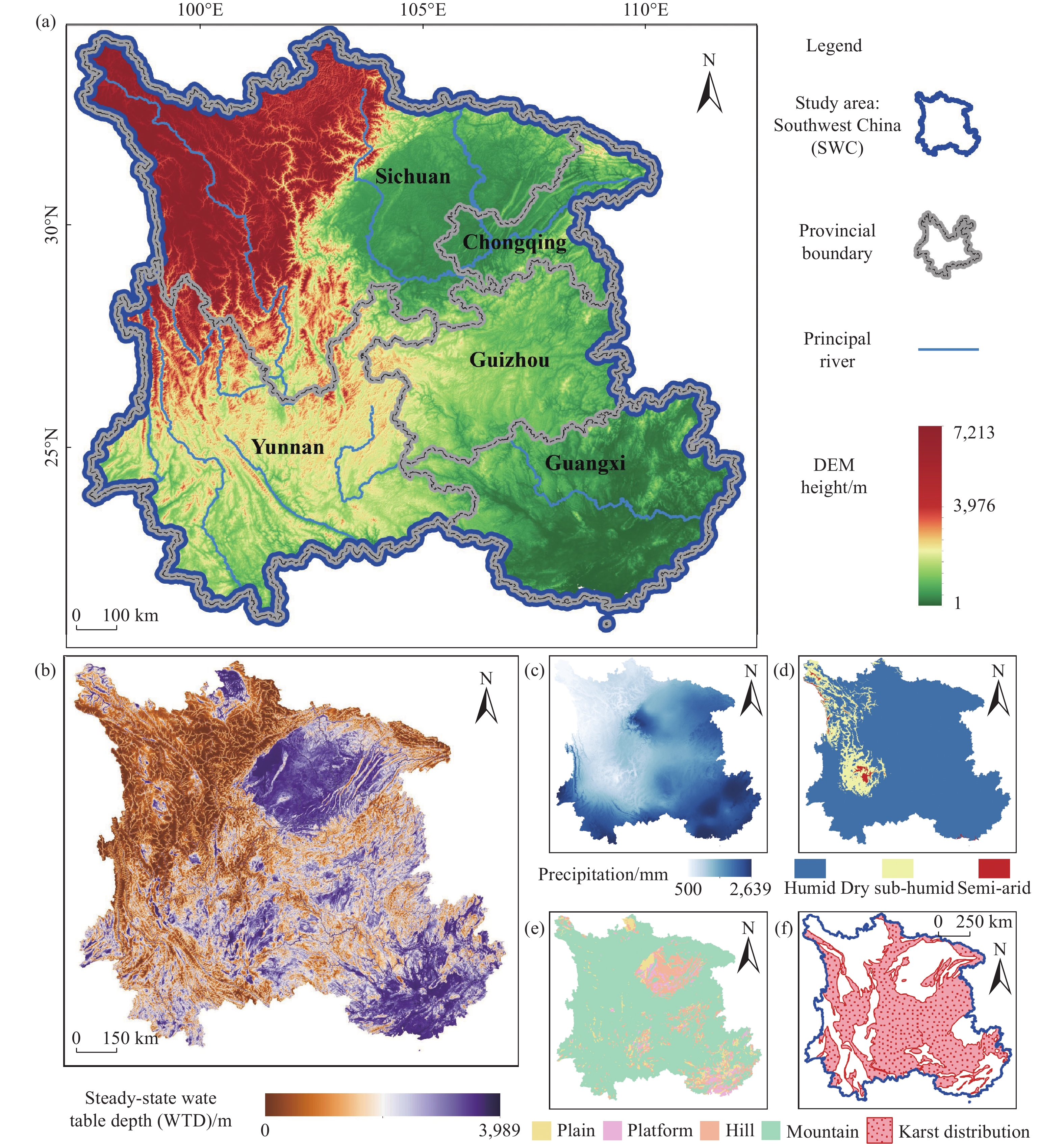
Groundwater provides an essential buffer against hydroclimatic variability in monsoon-influenced regions, yet its long-term dynamics and interactions with human activities remain poorly constrained in complex hydrogeological settings such as Southwest China (SWC). This study integrates outputs from the high-resolution PCRaster Global Water Balance model (PCR-GLOBWB) with spatial statistics to examine temporal evolution, spatial heterogeneity, and anthropogenic influences on Water Table Depth (WTD) from 1958 to 2015. Results reveal a persistent long-term rise in groundwater levels (i.e., a decline in WTD) at a Sen's slope of –0.0285 m/y, with episodic drawdowns during drought years and only partial recovery in subsequent wet periods. Seasonal oscillations remain pronounced, with the shallowest water tables occurring in late summer and the deepest in spring, although long-term depletion suggests that natural recharge is insufficient to balance cumulative extraction. Shallow aquifers (<1 m) are closely coupled with precipitation–evapotranspiration variability, while deeper systems (>5 m) are increasingly buffered and display inverse relationships, reflecting delayed recharge processes. Spatial patterns demonstrate strong heterogeneity across climate zones, geomorphic units, land cover types, and aquifer types: Shallow groundwater is concentrated in semi-arid climates, lowland plains, and urban areas, whereas mountainous regions, undeveloped land, and discontinuous carbonate aquifers sustain deeper and more variable WTDs. Anthropogenic stress further modulates these distributions, with bivariate LISA analysis identifying High–High clusters (intensive human modification and deep water tables) in the Chengdu Plain and central Yunnan, and Low–Low clusters in sparsely populated western highlands. A groundwater protection zoning framework derived from these results highlights shallow aquifers under intensive stress as priority areas for monitoring and regulation. These findings demonstrate the coupled influence of climate and human activity on groundwater variability and provide a practical basis for regionally targeted management strategies to enhance groundwater sustainability in SWC.
Groundwater provides an essential buffer against hydroclimatic variability in monsoon-influenced regions, yet its long-term dynamics and interactions with human activities remain poorly constrained in complex hydrogeological settings such as Southwest China (SWC). This study integrates outputs from the high-resolution PCRaster Global Water Balance model (PCR-GLOBWB) with spatial statistics to examine temporal evolution, spatial heterogeneity, and anthropogenic influences on Water Table Depth (WTD) from 1958 to 2015. Results reveal a persistent long-term rise in groundwater levels (i.e., a decline in WTD) at a Sen's slope of –0.0285 m/y, with episodic drawdowns during drought years and only partial recovery in subsequent wet periods. Seasonal oscillations remain pronounced, with the shallowest water tables occurring in late summer and the deepest in spring, although long-term depletion suggests that natural recharge is insufficient to balance cumulative extraction. Shallow aquifers (<1 m) are closely coupled with precipitation–evapotranspiration variability, while deeper systems (>5 m) are increasingly buffered and display inverse relationships, reflecting delayed recharge processes. Spatial patterns demonstrate strong heterogeneity across climate zones, geomorphic units, land cover types, and aquifer types: Shallow groundwater is concentrated in semi-arid climates, lowland plains, and urban areas, whereas mountainous regions, undeveloped land, and discontinuous carbonate aquifers sustain deeper and more variable WTDs. Anthropogenic stress further modulates these distributions, with bivariate LISA analysis identifying High–High clusters (intensive human modification and deep water tables) in the Chengdu Plain and central Yunnan, and Low–Low clusters in sparsely populated western highlands. A groundwater protection zoning framework derived from these results highlights shallow aquifers under intensive stress as priority areas for monitoring and regulation. These findings demonstrate the coupled influence of climate and human activity on groundwater variability and provide a practical basis for regionally targeted management strategies to enhance groundwater sustainability in SWC.
2026, 14(4): 518-534.
doi: 10.26599/JGSE.2026.9280092
Abstract:
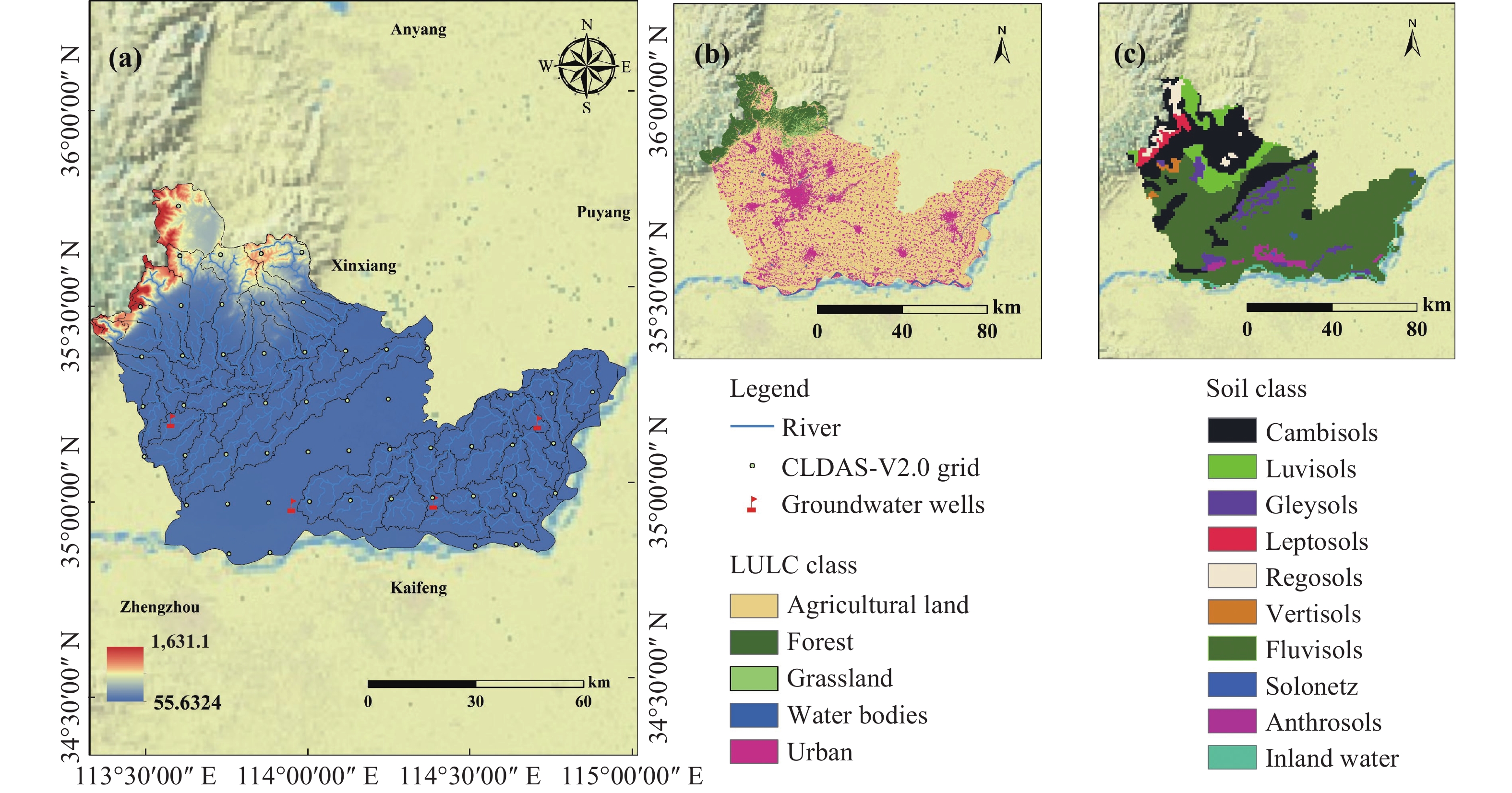
Predicting groundwater depth is crucial for sustainable water management in agricultural regions facing intensive irrigation and rapid urbanization. Traditional data-driven models lack physical interpretability, while physical models like SWAT+ often struggle with non-stationary inputs, limiting their accuracy. This study proposes a novel Physics-Dominated Signal Decomposition Optimization (PD-SDO) framework that integrates SWAT+ with Extreme-point Symmetric Mode Decomposition (ESMD) to integrate physical mechanisms with data optimization. The framework is specifically designed for intensively managed mixed land-use regions, exemplified by the study area—a national strategic zone for agricultural development. Key innovations include: 1) ESMD-optimized inputs that extract high-frequency components (the first intrinsic mode function (Intrinsic Mode Function 1, IMF1), representing the highest-frequency component of the decomposed precipitation series) from precipitation to capture extreme rainfall pulses (>50 mm/d), thereby enhancing SWAT+'s adaptability to non-stationary climatic forcings prevalent in monsoon-influenced areas; 2) sensitivity-guided analysis identifying ALPHA_BF as the dominant parameter controlling groundwater recharge, which, combined with spatial heterogeneity analysis, reveals dual-mode drainage dynamics in loess-dominated unsaturated zones; 3) A closed-loop optimization where residual analysis dynamically adjusts ESMD thresholds, enabling model self-optimization; 4) Quantified land-use impacts showing contrasting hydrological effects under afforestation and urbanization scenarios, providing direct insights for spatial planning. The framework significantly improves simulation accuracy for groundwater depth, achieving a Nash-Sutcliffe Efficiency (NSE) of 0.94 and a Mean Absolute Error (MAE) of 8.02 m, which represents a 23% gain over the standalone SWAT+. It also enhances computational efficiency by 40% with minimal accuracy loss and provides 2.3× greater physical interpretability than pure black-box models. PD-SDO offers a replicable solution for high-fidelity groundwater modeling in rapidly changing mixed land-use zones, effectively balancing mechanistic fidelity with predictive performance. The framework and its findings provide a scientific basis for optimizing water allocation and land use management within strategic agricultural regions.
Predicting groundwater depth is crucial for sustainable water management in agricultural regions facing intensive irrigation and rapid urbanization. Traditional data-driven models lack physical interpretability, while physical models like SWAT+ often struggle with non-stationary inputs, limiting their accuracy. This study proposes a novel Physics-Dominated Signal Decomposition Optimization (PD-SDO) framework that integrates SWAT+ with Extreme-point Symmetric Mode Decomposition (ESMD) to integrate physical mechanisms with data optimization. The framework is specifically designed for intensively managed mixed land-use regions, exemplified by the study area—a national strategic zone for agricultural development. Key innovations include: 1) ESMD-optimized inputs that extract high-frequency components (the first intrinsic mode function (Intrinsic Mode Function 1, IMF1), representing the highest-frequency component of the decomposed precipitation series) from precipitation to capture extreme rainfall pulses (>50 mm/d), thereby enhancing SWAT+'s adaptability to non-stationary climatic forcings prevalent in monsoon-influenced areas; 2) sensitivity-guided analysis identifying ALPHA_BF as the dominant parameter controlling groundwater recharge, which, combined with spatial heterogeneity analysis, reveals dual-mode drainage dynamics in loess-dominated unsaturated zones; 3) A closed-loop optimization where residual analysis dynamically adjusts ESMD thresholds, enabling model self-optimization; 4) Quantified land-use impacts showing contrasting hydrological effects under afforestation and urbanization scenarios, providing direct insights for spatial planning. The framework significantly improves simulation accuracy for groundwater depth, achieving a Nash-Sutcliffe Efficiency (NSE) of 0.94 and a Mean Absolute Error (MAE) of 8.02 m, which represents a 23% gain over the standalone SWAT+. It also enhances computational efficiency by 40% with minimal accuracy loss and provides 2.3× greater physical interpretability than pure black-box models. PD-SDO offers a replicable solution for high-fidelity groundwater modeling in rapidly changing mixed land-use zones, effectively balancing mechanistic fidelity with predictive performance. The framework and its findings provide a scientific basis for optimizing water allocation and land use management within strategic agricultural regions.
2026, 14(4): 535-554.
doi: 10.26599/JGSE.2026.9280093
Abstract:
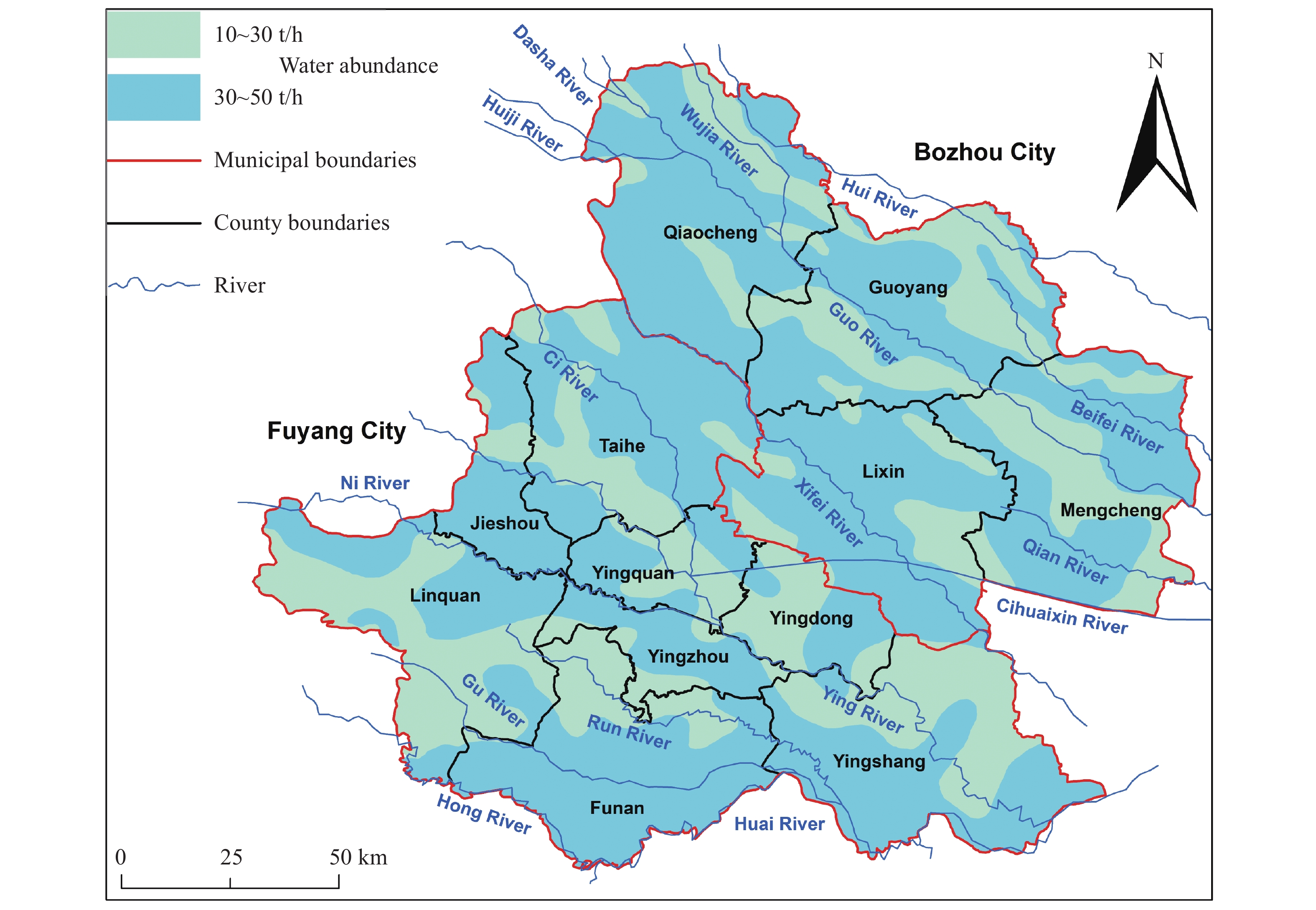
To mitigate groundwater overexploitation and support the scientifically informed siting of artificial recharge infrastructure in the western Huaibei Plain, this study develops a multi-criteria evaluation framework for recharge suitability, focusing on the western portion of the Huaibei Plain. The framework integrates five hydrogeologically significant indicators: Groundwater table depth, saturated thickness of the primary aquifer, hydraulic conductivity, precipitation infiltration coefficient, and proximity to perennial rivers. Indicator weights were determined through a hybrid weighting strategy—combining the analytic hierarchy process, criteria importance through intercriteria correlation, and coefficient of variation methods—to balance subjective judgment with objective data-driven variance. These weights were spatially implemented using ArcGIS-based multi-criteria decision analysis to generate a continuous recharge suitability index map. The integrated weights derived from the hybrid approach are 0.222, 0.254, 0.173, 0.185, and 0.166 for the respective indicators. Recharge suitability was classified into four ordinal categories—high, moderate, low, and unsuitable—using the natural breaks optimization method. High and moderate potential zones collectively occupy 32.93% of the study area and are predominantly located in Funan, Qiaocheng, Guoyang, and Mengcheng counties—regions identified as priority candidates for artificial recharge project implementation. A sensitivity analysis confirms the stability and reliability of the zoning outcomes under parameter perturbation. By quantitatively identifying dominant controlling factors, delineating spatially explicit potential classes, and pinpointing priority implementation zones, this study establishes a transferable methodological framework. It directly supports sustainable groundwater management in the western Huaibei Plain and offers actionable guidance for optimizing recharge infrastructure placement. Moreover, the approach demonstrates broad applicability for recharge potential assessment and integrated water resources planning in hydrologically similar alluvial plain settings.
To mitigate groundwater overexploitation and support the scientifically informed siting of artificial recharge infrastructure in the western Huaibei Plain, this study develops a multi-criteria evaluation framework for recharge suitability, focusing on the western portion of the Huaibei Plain. The framework integrates five hydrogeologically significant indicators: Groundwater table depth, saturated thickness of the primary aquifer, hydraulic conductivity, precipitation infiltration coefficient, and proximity to perennial rivers. Indicator weights were determined through a hybrid weighting strategy—combining the analytic hierarchy process, criteria importance through intercriteria correlation, and coefficient of variation methods—to balance subjective judgment with objective data-driven variance. These weights were spatially implemented using ArcGIS-based multi-criteria decision analysis to generate a continuous recharge suitability index map. The integrated weights derived from the hybrid approach are 0.222, 0.254, 0.173, 0.185, and 0.166 for the respective indicators. Recharge suitability was classified into four ordinal categories—high, moderate, low, and unsuitable—using the natural breaks optimization method. High and moderate potential zones collectively occupy 32.93% of the study area and are predominantly located in Funan, Qiaocheng, Guoyang, and Mengcheng counties—regions identified as priority candidates for artificial recharge project implementation. A sensitivity analysis confirms the stability and reliability of the zoning outcomes under parameter perturbation. By quantitatively identifying dominant controlling factors, delineating spatially explicit potential classes, and pinpointing priority implementation zones, this study establishes a transferable methodological framework. It directly supports sustainable groundwater management in the western Huaibei Plain and offers actionable guidance for optimizing recharge infrastructure placement. Moreover, the approach demonstrates broad applicability for recharge potential assessment and integrated water resources planning in hydrologically similar alluvial plain settings.
2026, 14(4): 555-581.
doi: 10.26599/JGSE.2026.9280094
Abstract:
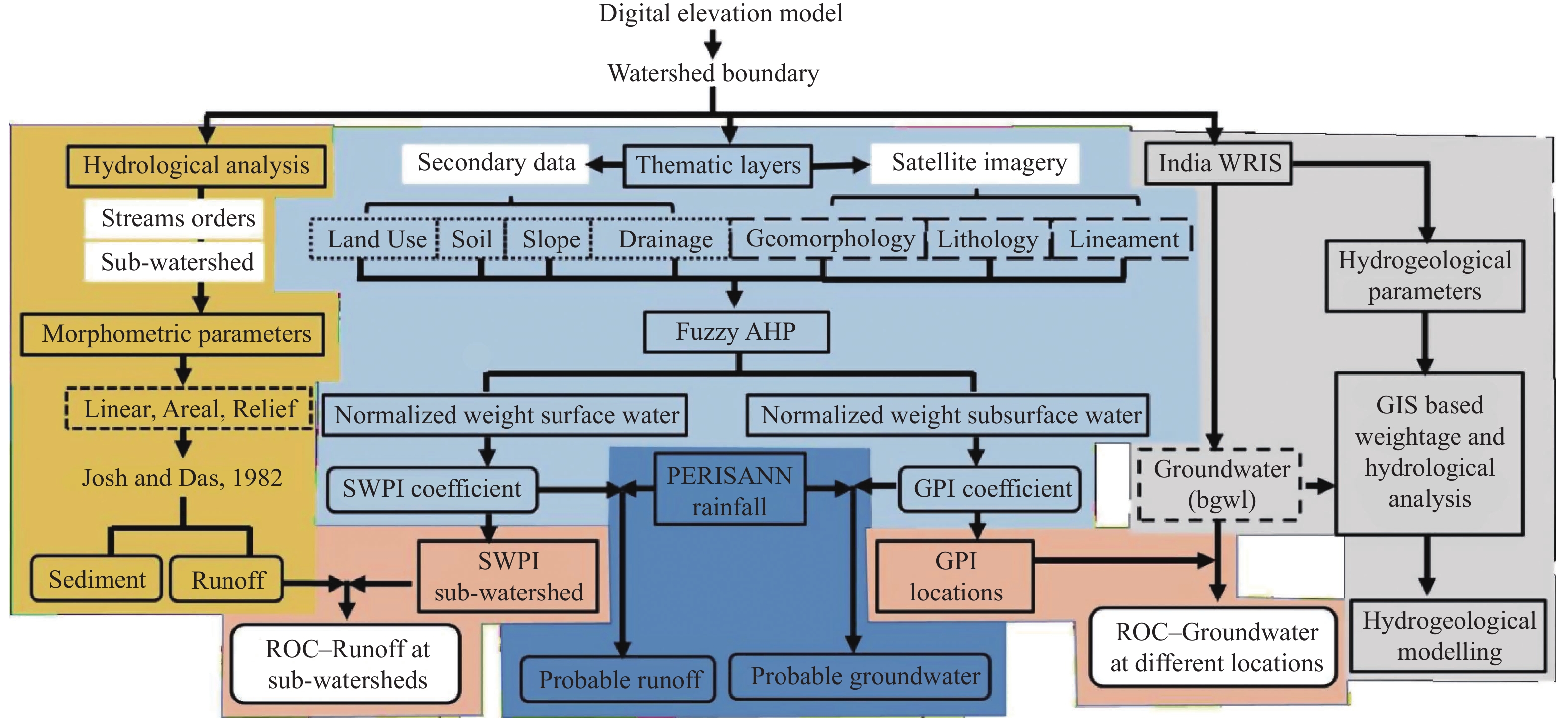
Land morphology and water resources are typically linked through hydromorphological processes, particularly in ephemeral river systems. This study used the Vaigai, Gundar, and Vaippar watersheds in Tamil Nadu, India, as a case study to investigate this link. Land terrain morphology was analysed using the morphometric analysis. Empirical models were developed using morphological parameters to estimate runoff and sediment rates. The water resources, specifically runoff and groundwater, were quantified using an overall water potential index derived from the Multi-Criteria Decision-Making (MCDM) technique. The MCDM technique employed the Analytical Hierarchy Process (AHP) in combination with fuzzy set theory. Seven hydromorphological thematic layers—lithology, lineament density, geomorphology, soil, land use, drainage density, and slope were addressed using the fuzzy-AHP method. Hydrogeological models incoporated available aquifer properties of the subsurface structure, derived from GIS-based weighted overlay and hydrological analysis. A significant finding of morphometric analysis was the identification of high runoff and sediment rates at the smallest sub-watersheds. Furthermore, the water potential index indicated a high surface water (runoff) potential associated with vertisol in the soil and hornblende-biotite gneiss in the lithology, particularly in the Vaippar and Gundar downstream sub-watersheds. The Vaigai and Gundar downstream sub-watersheds had a significant groundwater potential due to their mild slopes and dynamic floodplains. The surface water and groundwater potential indices showed 71% and 87% efficiency, respectively, when compared to runoff from the empirical model and field groundwater recharge. Similar patterns of high potential were observed in downstream watersheds from the hydrogeological models. These findings may help alleviate the depletion of surface and subsurface water resources in sub-watersheds by identifying sites for rainwater harvesting for future climatic scenarios.
Land morphology and water resources are typically linked through hydromorphological processes, particularly in ephemeral river systems. This study used the Vaigai, Gundar, and Vaippar watersheds in Tamil Nadu, India, as a case study to investigate this link. Land terrain morphology was analysed using the morphometric analysis. Empirical models were developed using morphological parameters to estimate runoff and sediment rates. The water resources, specifically runoff and groundwater, were quantified using an overall water potential index derived from the Multi-Criteria Decision-Making (MCDM) technique. The MCDM technique employed the Analytical Hierarchy Process (AHP) in combination with fuzzy set theory. Seven hydromorphological thematic layers—lithology, lineament density, geomorphology, soil, land use, drainage density, and slope were addressed using the fuzzy-AHP method. Hydrogeological models incoporated available aquifer properties of the subsurface structure, derived from GIS-based weighted overlay and hydrological analysis. A significant finding of morphometric analysis was the identification of high runoff and sediment rates at the smallest sub-watersheds. Furthermore, the water potential index indicated a high surface water (runoff) potential associated with vertisol in the soil and hornblende-biotite gneiss in the lithology, particularly in the Vaippar and Gundar downstream sub-watersheds. The Vaigai and Gundar downstream sub-watersheds had a significant groundwater potential due to their mild slopes and dynamic floodplains. The surface water and groundwater potential indices showed 71% and 87% efficiency, respectively, when compared to runoff from the empirical model and field groundwater recharge. Similar patterns of high potential were observed in downstream watersheds from the hydrogeological models. These findings may help alleviate the depletion of surface and subsurface water resources in sub-watersheds by identifying sites for rainwater harvesting for future climatic scenarios.
2026, 14(4): 582-600.
doi: 10.26599/JGSE.2026.9280096
Abstract:
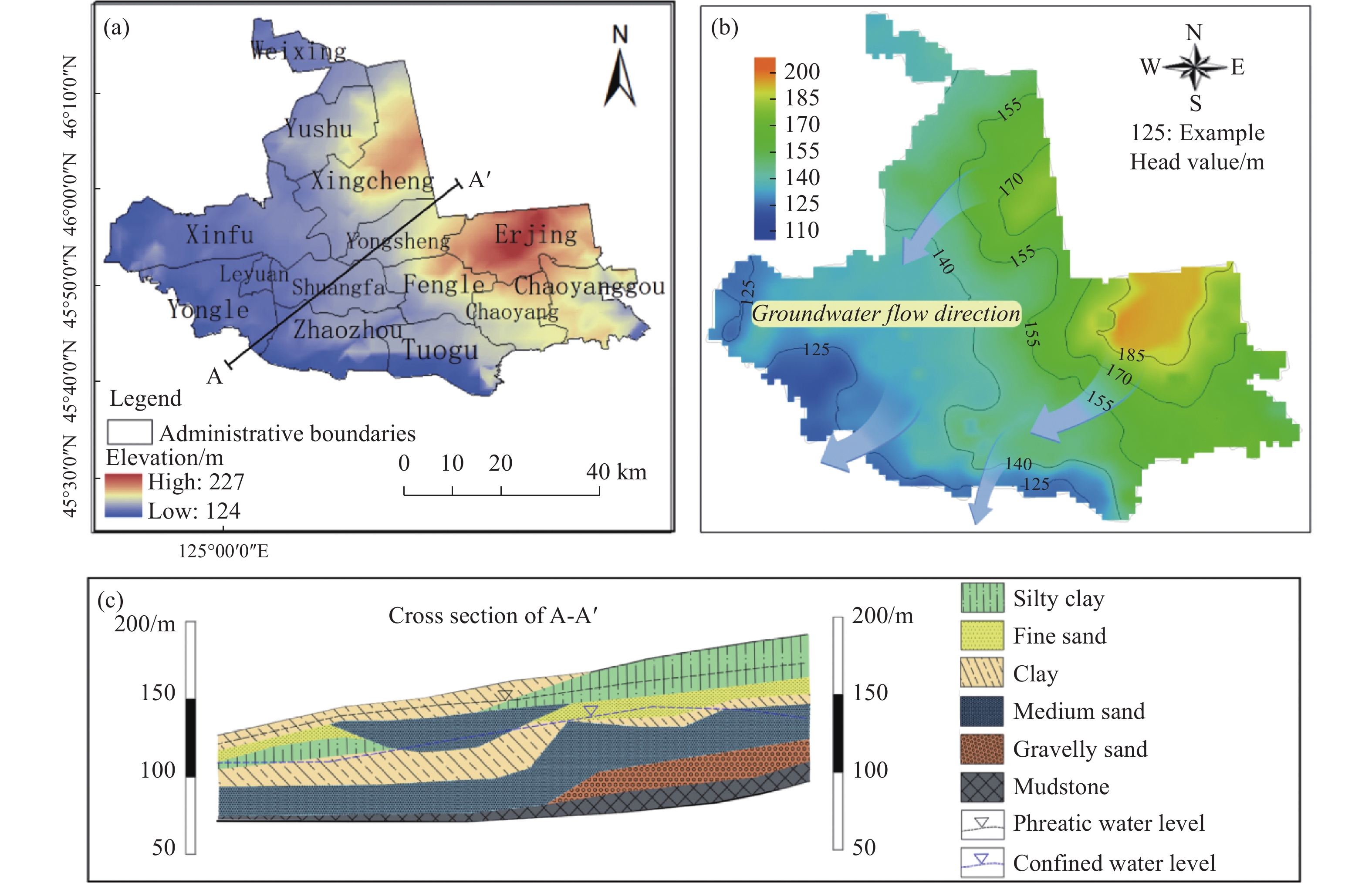
This study takes Zhaozhou County in the Songnen Plain (a plain area with sparse borehole data) as the study area, and aims to address the issue of elevation data sources' impact on groundwater numerical simulation by comparatively analyzing the application effects of the Shuttle Radar Topography Mission Digital Elevation Model 90M (SRTM DEM 90M) and interpolated elevation derived from 25 actual boreholes and 14 virtual boreholes (synthetic borehole points derived from DEM data and corrected using nearby measured boreholes). The results show that: The elevation of SRTM DEM 90M can reflect regional microtopographic features; borehole interpolation has single-point errors (−5 m to 10 m) and interpolation uncertainty, and the over-smoothed terrain leads to a relative deviation of 40%–50% in unsaturated zone thickness in specific areas, which further results in a maximum reduction of 93% in evaporation (from 93.92 m3/d to 6.34 m3/d). Regarding simulation accuracy, the traditional water level dynamic fitting of both models meets the required standards, but the Nash-Sutcliffe Efficiency (NSE) value of water level fitting for the borehole model is negative, while the statistical indicators of the SRTM model meet the standards. This study confirms that: (1) the "parameter combination effect" plays a dominant role in simulation: Simulation results are essentially the integrated product of multi-parameter interaction; (2) in borehole-sparse areas similar to the Songnen Plain, SRTM DEM 90M can replace borehole interpolation.
This study takes Zhaozhou County in the Songnen Plain (a plain area with sparse borehole data) as the study area, and aims to address the issue of elevation data sources' impact on groundwater numerical simulation by comparatively analyzing the application effects of the Shuttle Radar Topography Mission Digital Elevation Model 90M (SRTM DEM 90M) and interpolated elevation derived from 25 actual boreholes and 14 virtual boreholes (synthetic borehole points derived from DEM data and corrected using nearby measured boreholes). The results show that: The elevation of SRTM DEM 90M can reflect regional microtopographic features; borehole interpolation has single-point errors (−5 m to 10 m) and interpolation uncertainty, and the over-smoothed terrain leads to a relative deviation of 40%–50% in unsaturated zone thickness in specific areas, which further results in a maximum reduction of 93% in evaporation (from 93.92 m3/d to 6.34 m3/d). Regarding simulation accuracy, the traditional water level dynamic fitting of both models meets the required standards, but the Nash-Sutcliffe Efficiency (NSE) value of water level fitting for the borehole model is negative, while the statistical indicators of the SRTM model meet the standards. This study confirms that: (1) the "parameter combination effect" plays a dominant role in simulation: Simulation results are essentially the integrated product of multi-parameter interaction; (2) in borehole-sparse areas similar to the Songnen Plain, SRTM DEM 90M can replace borehole interpolation.
 Online Submission
 Peer Review
 Office Work
 Editor-in-chief
1.9
Impact Factor(2025)
3.7
CiteScore 2025
Editor-in-ChiefLI Qing-hua
Sponsors
Institute of Hydrogeology and Environmental Geology (IHEG), CAGS
China Chapter, International Association of Hydrogeologists (IAH-CC)
Commission on Hydrogeology, Geological Society of China(GSC-CH)
 NewsMORE+
- Pooling Academic Wisdom to Drive the Journal's International Development, High-Quality Growth Editorial Board of Journal of Groundwater Science and Engineering Holds a Series of Strategic Seminars for High-Quality Growth2026/07/08
- Fraud prevention statement2026/05/06
- 防诈骗严正声明2026/05/06
- 以镜观水,以图载学-----诚邀投稿封面图片2026/04/22
- Special Issue on “Monitoring, Migration, and Prevention-Control of Emerging Contaminants in Groundwater”2026/04/01
- “地下水新污染物监测、迁移与防控”专辑征稿通知2026/04/01
- ”地下水水质与污染研究“专辑征稿通知2026/03/11
 DownloadMORE+
Top ViewedMORE+
- Using geospatial technologies to delineate Ground Water Potential Zones (GWPZ) in Mberengwa and Zvishavane District, Zimbabwe
- Assessment of porous aquifer hydrogeological parameters using automated groundwater level measurements in Greece
- Application of HYDRUS-1D in understanding soil water movement at two typical sites in the North China Plain
- Ecosystem-driven karst carbon cycle and carbon sink effects
- Artesian Flowing Wells Field of Phu Tok Aquifer
Top DownloadedMORE+
- Construction of ecological environment of oasis in Qingtongxia Irrigation District
- Analysis of bromate and bromide in drinking water by ion chromatography-inductively coupled plasma mass spectrometry
- Application of HYDRUS-1D in understanding soil water movement at two typical sites in the North China Plain
- Artesian Flowing Wells Field of Phu Tok Aquifer
- Study on the residence time of deep groundwater for high-level radioactive waste geological disposal
 Links
Links


