 E-mail alert
 Rss
Rss



-
Abstract: Heavy metals, including arsenic, lead, cadmium, chromium, mercury, copper, nickel, and zinc, are common contaminants in global water resources. Their occurrence stems from both natural geogenic and anthropogenic sources, such as industrial, mining, or urban activities. Heavy metals can be found in groundwater due to geogenic mobilization and leaching from ore deposits. They can also be found in streams and lakes impacted by mine drainage, industrial effluents, agricultural runoff, and urban stormwater. Elevated concentrations pose risks to human health and ecosystems, necessitating monitoring, remediation, and the safe management of generated residuals. A variety of technologies exist for heavy-metal removal. The selection and use of these technologies depend on contaminant concentration, speciation, and available resources. In this review article, the latest technologies for heavy-metal removal are presented and discussed. The availability and maturity of each technique, energy demand, management of generated residual, environmental impact, and recommended applications are discussed. Algal bioremediation and constructed wetlands are the most sustainable techniques due to their ecosystem benefits, carbon capture, and lowest energy consumption, while the most efficient industrial techniques are membrane technologies and ion-exchange systems due to their high metal selectivity and purity; however, the main restrictions are high cost and an energy-intensive nature. The most distinctive approach involves hybrid systems, which offer a more resilient and sustainable alternative by integrating complementary mechanisms that enhance flux stability, improve selectivity, and reduce energy consumption, such as the combination of Reverse Osmosis with Membrane Distillation (RO-MD) and Reverse Osmosis with Pressure Retarded Osmosis (RO-PRO). The hybrid approach, in various sequences, enhances efficiency, scalability, and ecological restoration.
-
Key words:
- Adsorption /
- Electrocoagulation /
- Membrane technology /
- Algal bioremediation /
- Hybrid treatment systems.
-
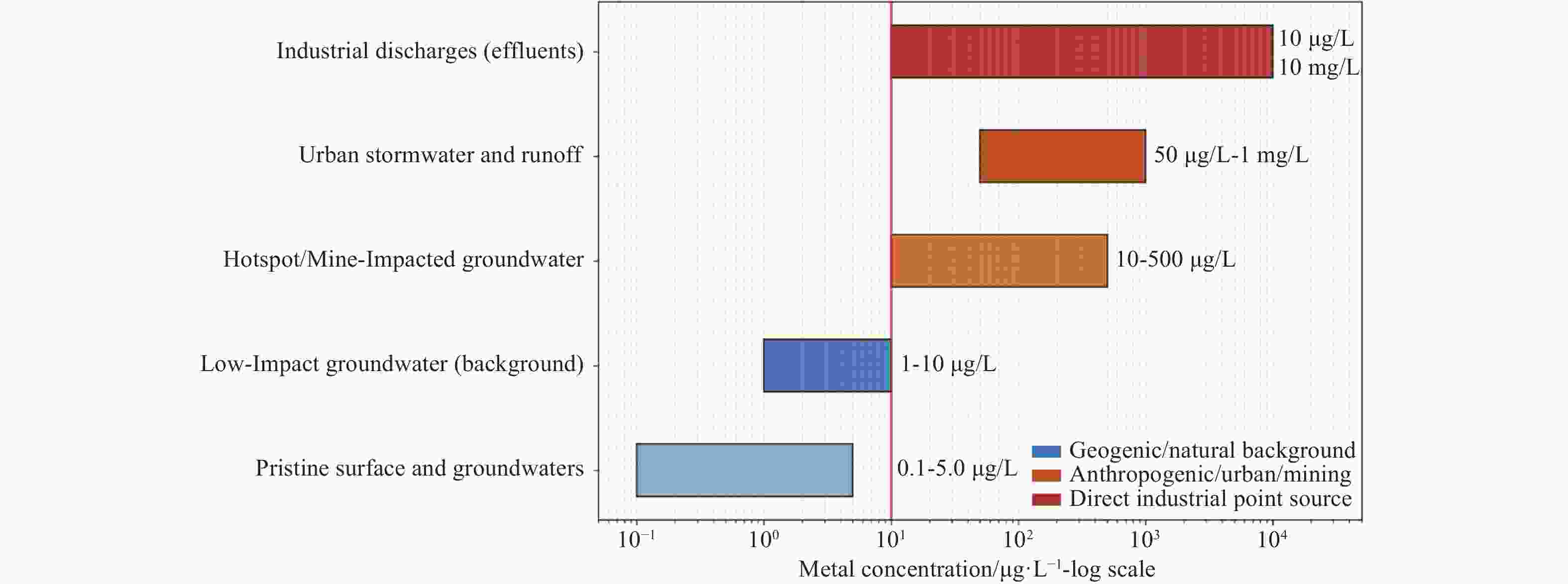
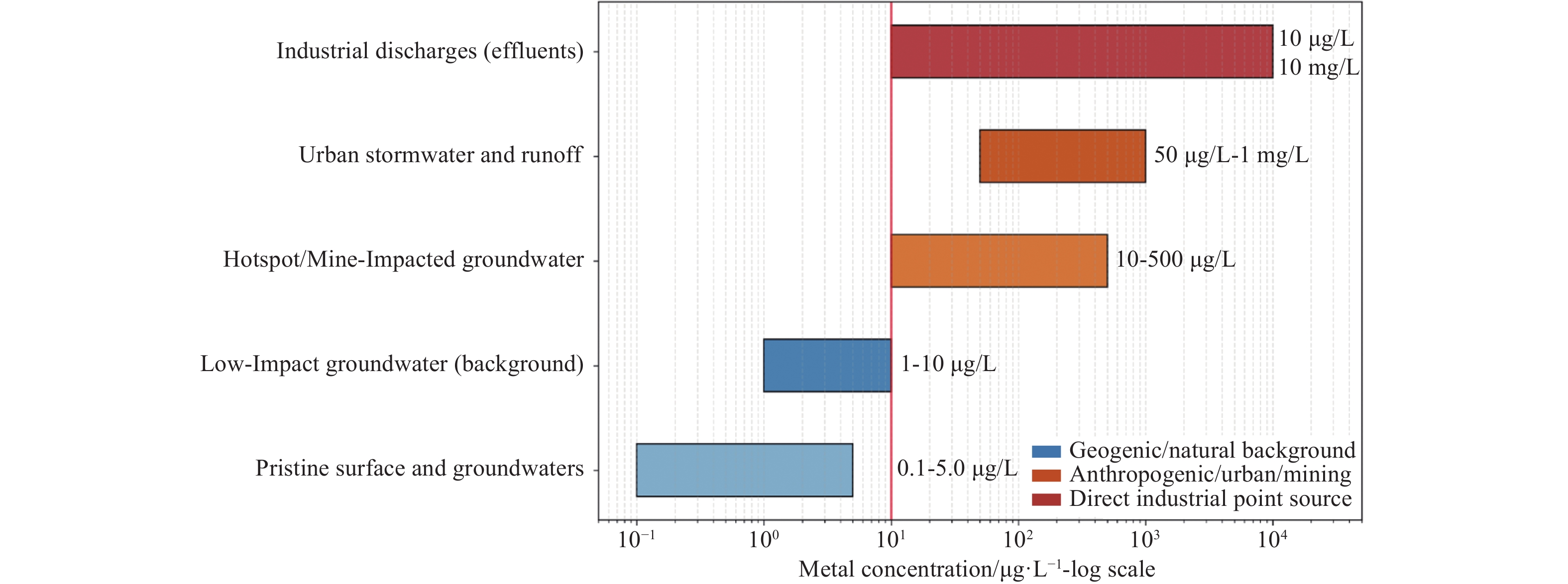
Figure 2. The concentration ranges by sources of arsenic accumulation in water bodies.
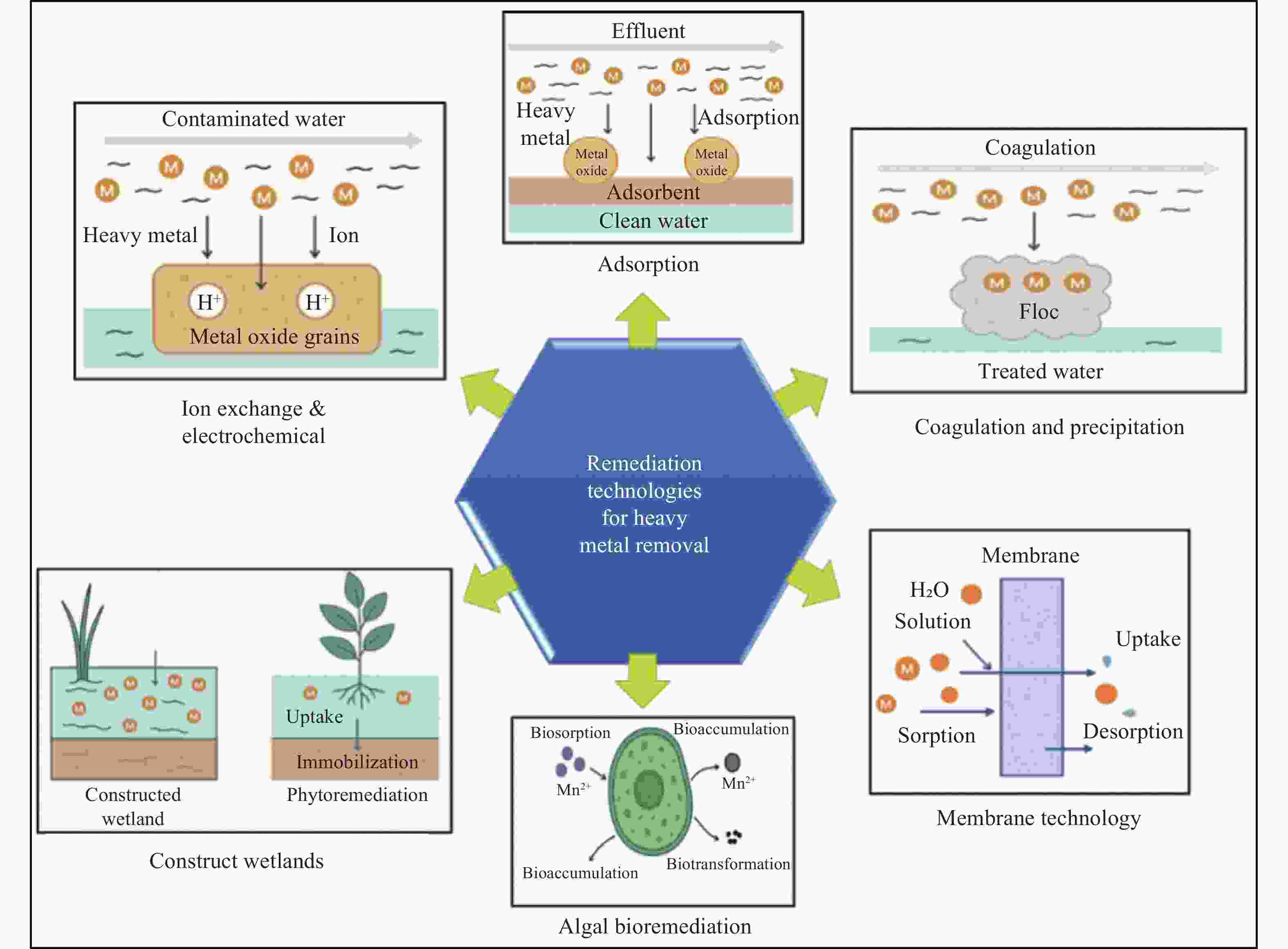
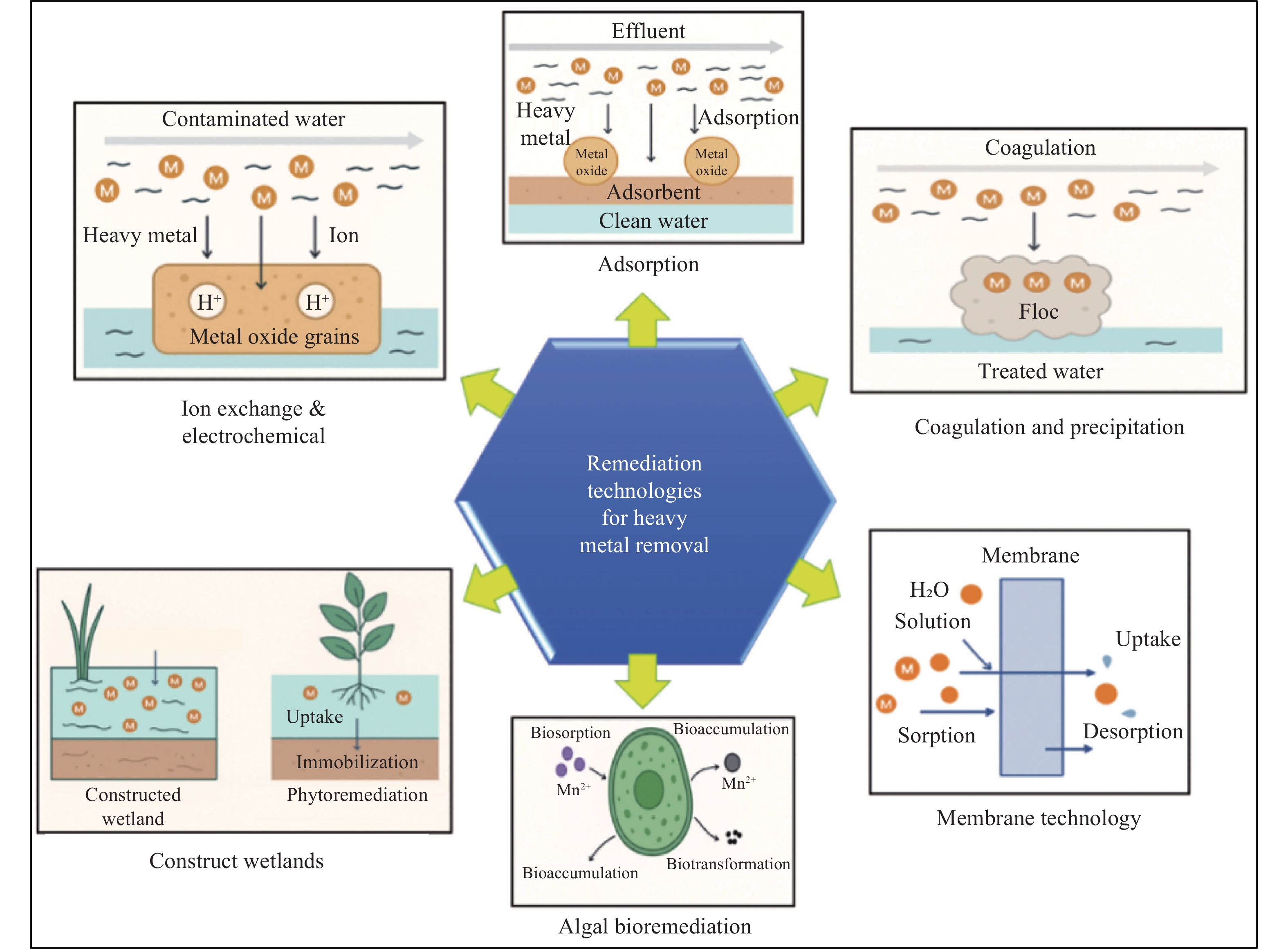
Figure 3. The recent techniques for heavy-metal removal from contaminated water resources
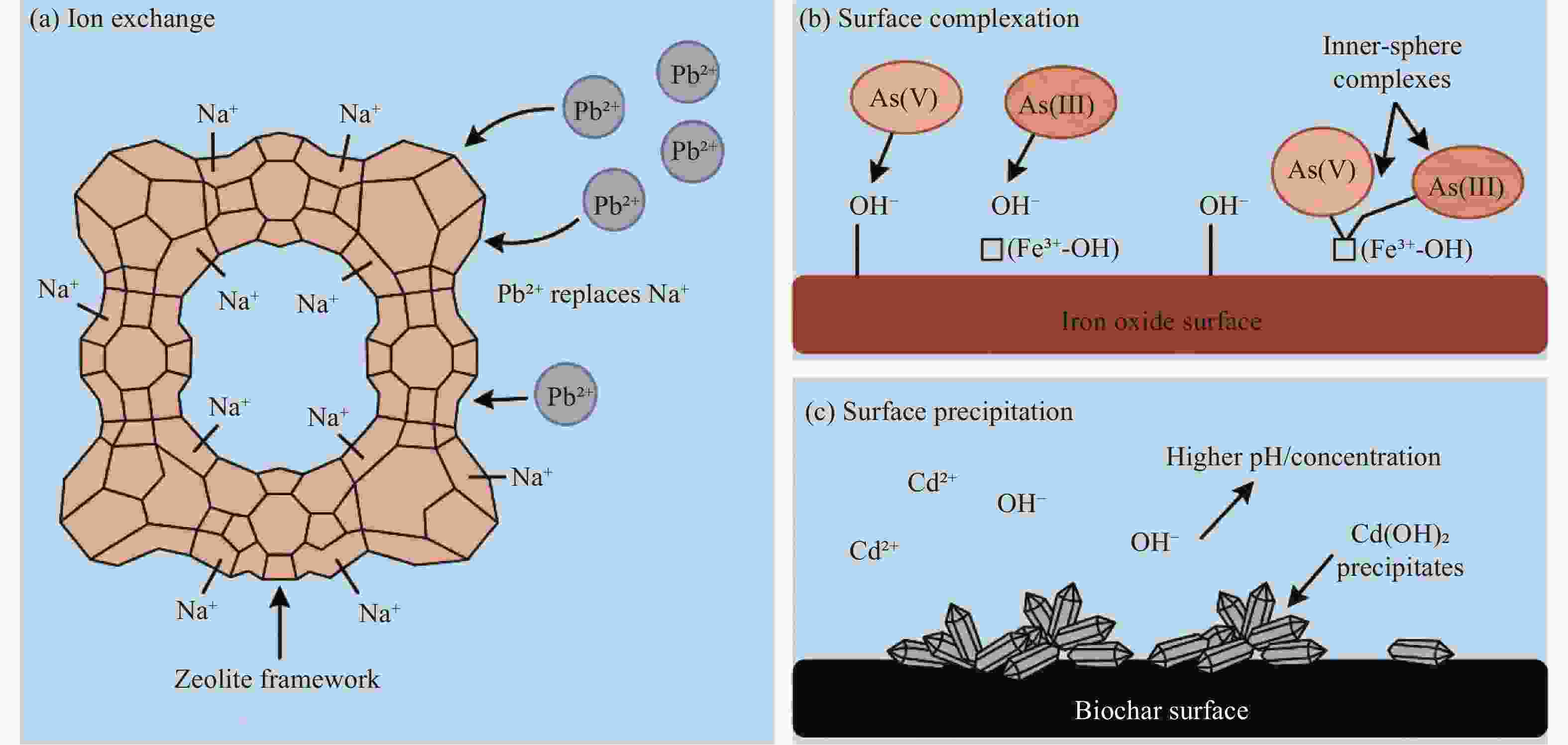
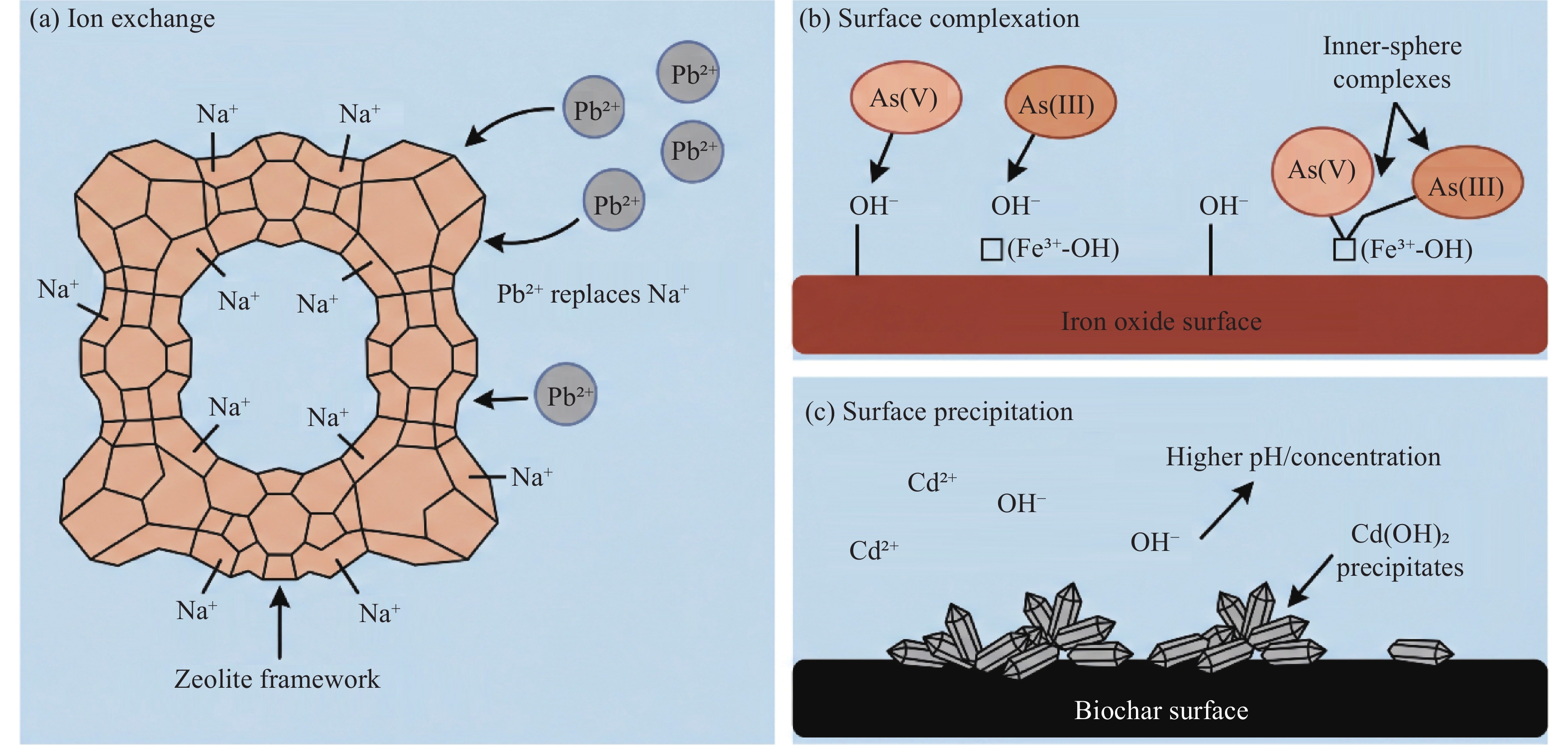
Figure 4. Adsorption mechanism by (a) ion exchange, (b) surface complexation, (c) surface precipitation
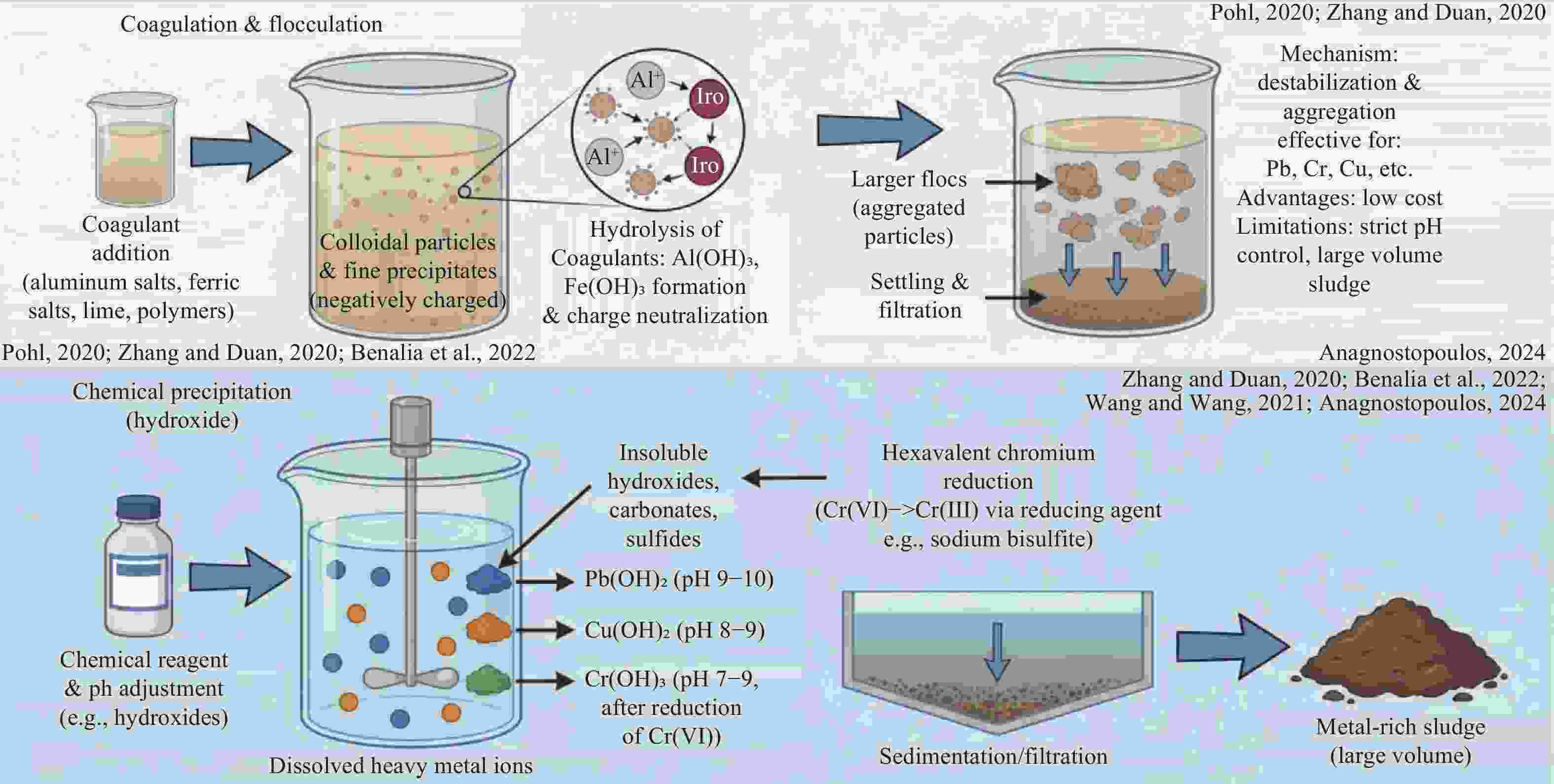
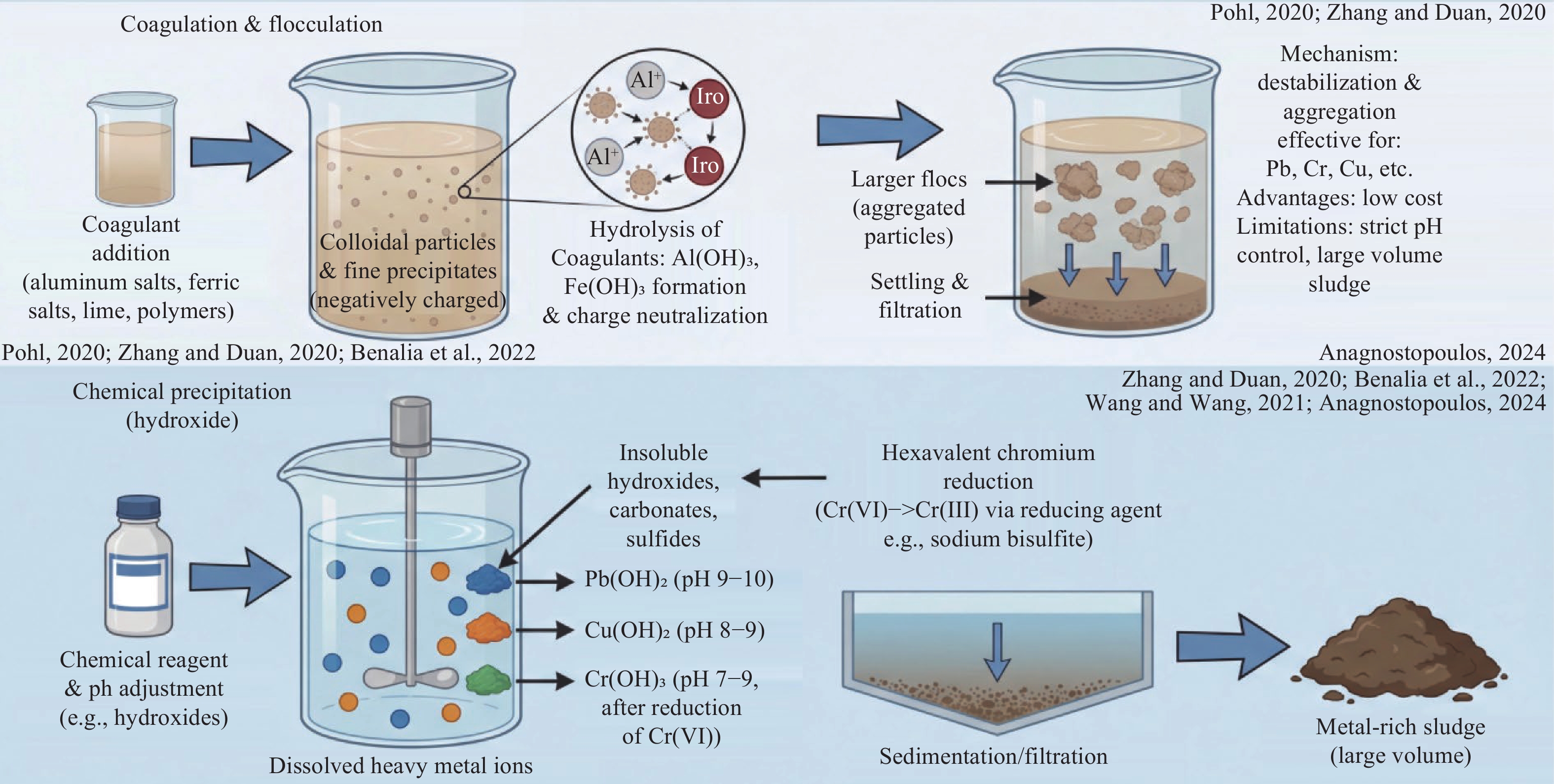
Figure 5. Coagulation and precipitation mechanism for the treatment of water contaminated with heavy metals
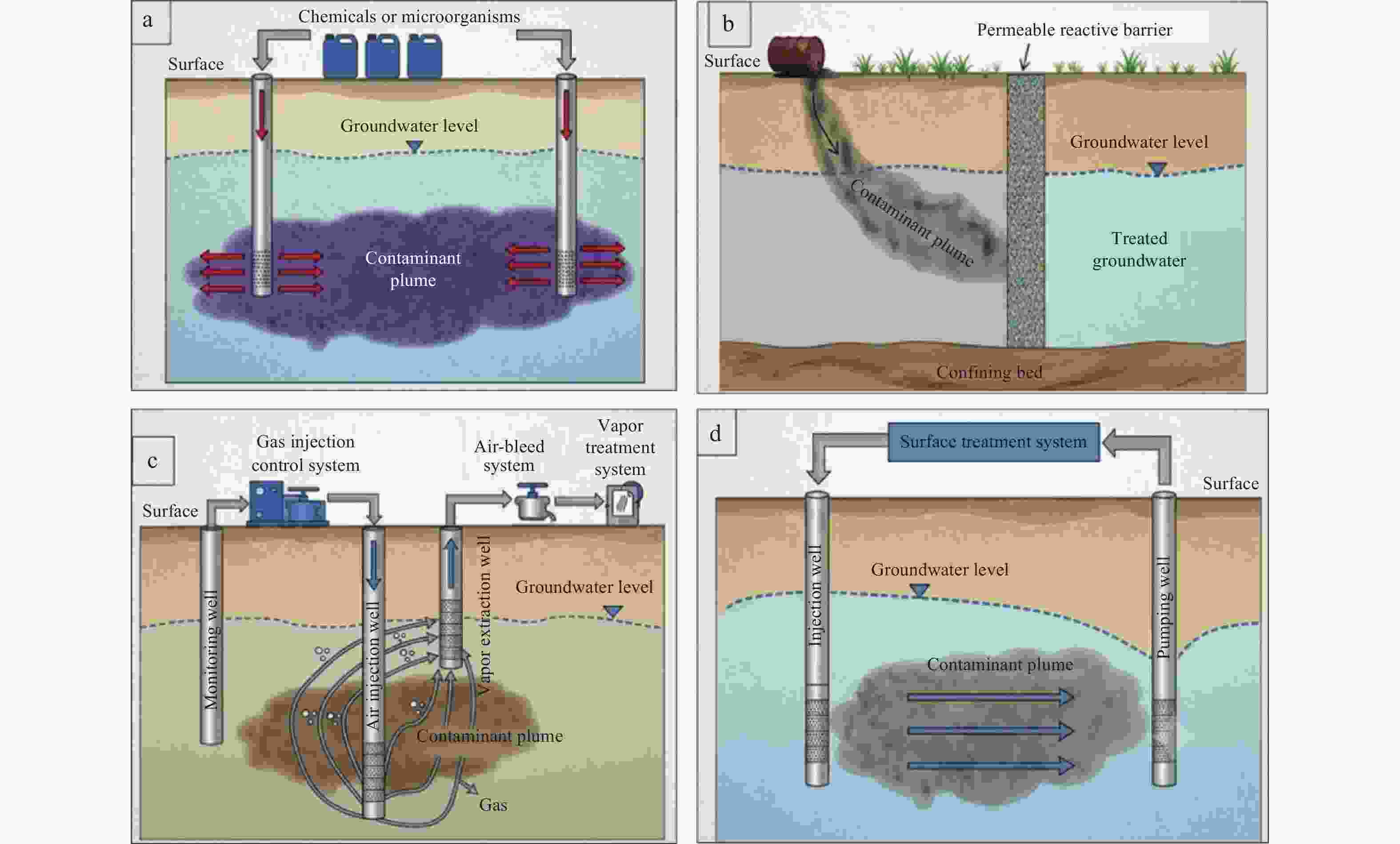
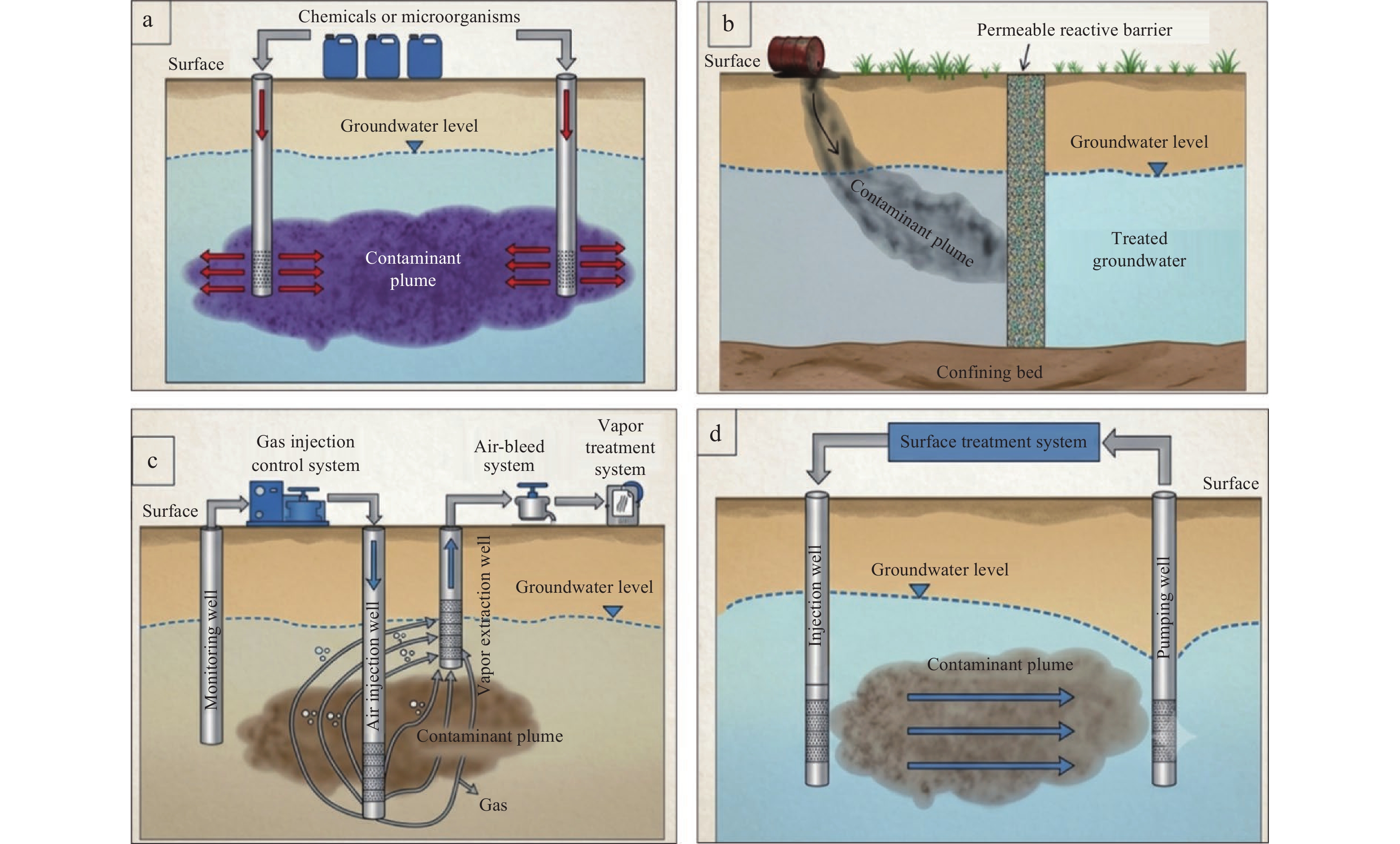
Figure 9. Schematic diagrams of in-situ and ex-situ approaches for the treatment of contaminated groundwater Notes: (a) in-situ injection, (b) in-situ permeable reactive barrier, (c) in-situ air sparging, (d) ex-situ pump and treat technique (Liu et al., 2024)
Table 1. Major heavy metals, their main sources, human health effects, and environmental impacts
Heavy metals Main sources Effects on human health Environmental impact References Arsenic (As) Natural rocks, mining, pesticides, and contaminated groundwater Skin diseases, cancer, cardiovascular diseases, and diabetes Groundwater pollution and its toxicity to aquatic organisms Azar and Vajargah, (2023); Daripa et al., (2023); Garcia-Vargas and Cebrian, (2023); Guo et al., (2024) Lead (Pb) Batteries, paints, vehicle emissions, and industrial wastewater Neurotoxicity, impaired cognitive development, reduced IQ in children, and kidney, heart, and blood vessel damage Bioaccumulation and toxicity of aquatic organisms Prakash and Verma, (2021); Popick (2022); Azar and Vajargah, (2023); Garcia-Vargas and Cebrian, (2023) Cadmium (Cd) Mining, fertilizers, electroplating, and industrial wastewater Kidney damage, bone disorders, and cancer risk Soil toxicity and reduced microbial activity Prakash and Verma, (2021); Naz et al., (2022); Daripa et al., (2023) Mercury (Hg) Coal combustion, mining activities, and industrial effluents Acute neurotoxicity, cognitive decline, sensory impairment, and developmental disorders caused by methylmercury Biomagnification through aquatic food chains and accumulation in fish tissues Chamoli and Karn, (2024); Zafar et al., (2024); Oros, (2025) Chromium (Cr VI) Tanneries, textile industries, electroplating, and industrial waste Cancer, liver, and kidney damage Toxic to aquatic organisms and plants Hossini et al., (2022);Azar and Vajargah, (2023) Nickel (Ni) Metallurgical industries, mining operations, and battery manufacturing Skin allergies, respiratory problems, and carcinogenic effects Toxic effects on aquatic ecosystems Genchi et al., (2020); Naz et al., (2022) Copper (Cu) Industrial waste, pipe corrosion, and agricultural runoff Gastrointestinal distress and liver and kidney damage at elevated exposure levels Reduced oxygen uptake in fish Naz et al., (2023); Kwong, (2024) Zinc (Zn) Galvanizing processes, municipal and industrial wastewater, and traffic-related sources Gastrointestinal effects at excessive concentrations and metabolic disturbances Toxic to fish and aquatic organisms Popick, (2022); Naz et al., (2023); Kwong, (2024)  下载: 导出CSV
Table 2. Removal efficiencies utilizing different types of adsorbents on a lab scale
Adsorbent Metal Feed conc. (mg/L) Contact time (h) Adsorbent capacity (mg/g) Adsorbent dose (g/L) pH Removal efficiency Reference Activated carbon derived from green algae Spirogyra Cu2+ 200 0.3 98.82 0.1 5.28 95.09% Djezzar et al., (2024) Activated Carbon Produced from Sargassum ssp. Cr6+ 60 24 46 1 5 65% Alvarez-Galvan et al., (2022) Activated Carbon Produced from Sargassum ssp. Cr6+ 60 24 46 1 2 98% Alvarez-Galvan et al., (2022) Silica-coated Cu0.5Mg0.5Fe2O4 nanoparticles Zn2+ 0.2 36 32.57 2.5 7 97% Irfan et al., (2023) Silica-coated Cu0.5Mg0.5Fe2O4 nanoparticles Pb2+ 0.2 36 25.66 2.5 7 92% Irfan et al., (2023) Electrolytic manganese residue + distillers' grain biochar composite (EDB) Sb3+ 50 24 11.5 2.5 7 60% Wei et al., (2024) Sb5+ 50 24 8.4 2.5 7 40% As3+ 50 24 16.5 2.5 7 84% As5+ 50 24 18.5 2.5 7 90%
下载: 导出CSV
Table 3. Systematic evaluation of membrane technologies for heavy metal removal
Parameter UF (0.01–0.1 µm Polymeric membrane) NF (0.5–2 nm Polymeric membrane) RO (0.1–0.5 nm Polymeric membrane) Ceramic membrane (UF/NF) Treatment efficiency (metal rejection) Less than 10% rejection, and 90%–99% by surface modification 90%–99% rejection of divalent heavy metals, and lower efficiency (30%–70%) for monovalent 99% rejection for all dissolved metals Its performance is similar to UF; surface modification is necessary to achieve 85%–99% Operating pressure (bar) 1–5 5–20 10–80 Similar to UF, while a hollow fiber membrane behaves as NF Energy consumption (kWh/m3) 0.1–0.4 0.3–1.0 0.5–2.0 for brackish water, 0.2–1.0 OPEX (USD/m3) 0.5–1.5 2–6 3–10 1.5–4 Applicable contaminant concentrations (mg/L) 1–500 10–500 >1,000High concentration requires high pressure 1–1,000depending on pore size and surface modification Selectivity None without surface modification Charge-based selectivity as divalent and monovalent Reject all solutes Tunable via surface modification Fouling resistance Requires frequent cleaning due to its susceptibility to biofouling Similar to UF High fouling tendency, extensive pretreatment is required Fouling is reversible and easier to clean Lifetime (years) 3–7 5–7 5–7 10–20 Scale-up potential A capacity of >10,000 m3/d is widely used in water treatment A capacity of >100,000 m3/d is widely used in municipal wastewater treatment A capacity of >500,000 m3/d is widely used in desalination A capacity of >100,000 m3/d is widely used in industrial wastewater treatment Recommended application As a pretreatment before NFor RO Polishing after chemical precipitation or divalent heavy metals removal Final polishing, and capable of removing monovalent, arsenic, and Cr(IV) Aggressive waste streams, such as low pH, high temperature, and oily contaminated water
下载: 导出CSV
Table 4. Some factors affecting electrodeposition of Cu2+ from contaminated water
Feed conc.
(g/L)Stirring speed (rpm) Electrode material Current density pH Temp
(°C)Removal
(%)Cost and energy consumption Reference 0.5 3 m/s Anode: RuO2-coated Ti tubeCathode: Pure Ti sheet 12 A/dm2 1 -(1) 97.4% Energy consumption 5.6 kWh/kg Ning et al., (2019) 9.07 1,000 Anode: Ruthenium, Iridium, titanium netCathode: Graphite 75 mA/cm2 2 15 88% -(1) Gu et al., (2020) 10 700 Platinum electrodes 2 A 1.8 24 98% Constant voltage operation has anestimated cost of 1.43 EUR/kg Cu. Santaolalla et al., (2020) 0.0318–19.0638 700 for catholyte Anode: Zinc meshCathode: Copper 1 mA/s·cm2 4–6 18–23 90% Energy density of 4.9 kWh/m3, Power density of 546 W/m2 Wang et al., (2020) 0.43 70 Anode: Hollow cylindrical platinum meshCathode: Copper 190 mA 1.74 37 33.59% -(1) Morais Nepel et al., (2020) 0.001 -(1) Anode: Saturated calomel electrode (SCE), Cathode: Reticulated glassy carbon (RVC) 0.5 V 3 40 91.3% -(1) Xie et al., (2026) 1 1,000 Anode and cathode plates: Iridium-, tantalum-, and titanium plates 75 mA/cm2 4 21 94.53% -(1) Xu et al., (2025) Note: (1) Not mentioned
下载: 导出CSV
Table 5. Comparison of electrochemical techniques
Aspect Electrocoagulation Electrodialysis Electrodeposition Definition The sacrificial electrodes generate coagulant species in situ, removing contaminants A membrane-based electrochemical separation process using an electric field, which selectively transports ions through ion-exchange membranes An electrochemical process where dissolved metal ions are reduced and deposited as solid metal on an electrode surface Principle DC dissolves the metal of the electrodes to form metal hydroxide, which adsorb the pollutants The electric potential drives cations and anions through selective membranes toward opposite electrodes, separating ions from water. Metal cations gain electrons at the cathode and are reduced to elemental metal Materials Iron or aluminum electrodes Ion-exchange membranes; electrodes (Ti, graphite, stainless steel) Cathode (stainless steel, copper, graphite); anode (inert or sacrificial). Target metals Pb, Cr, Cd, Cu, Zn, Ni, As Pb, Cd, Cu, Cr, Ni, Zn, As (ionic species) Cu, Ag, Ni, Zn, Cd, Pb (mainly recoverable metals) Removal efficiency 80%–99% depending on current density and pH 70%–99% for dissolved ionic metals 90%–99% for metals suitable for electrodeposition Energy consumption Increases with current density 0.3–5 kWh/m3 highly dependent on metal concentration Cost, USD/m3 0.02–3.2 0.25–1.2 Rarely reported; evaluated based on metal recovery value Environmental impact Sludge disposal is required Membrane production and electricity footprint impact the environment Favorable if metal recovery offsets impact Applications Industrial wastewater, mine drainage, mixed heavy-metal streams Brackish water, selective metal removal, polishing step Metal plating wastewater, mining effluents, and metal recovery systems
下载: 导出CSV
Table 6. Some of the algal strains used to remove heavy metals
Metal Algal species Operation conditions Removal efficiency Reference Pb2+ Chlorella vulgaris Initial inoculum 1mg/L, pH 6 at 30°CCa-alginate immobilized algal cells, algal dosage of 3 g/L, pH 5, 30 min at room temperature. 93.2%
90%Manzoor et al., (2020)Kwarciak-Kozłowska, and Sławik-Dembiczak (2021); Yadav et al., (2022) Cd2+ Scenedesmus obliquus Initial Cd2+ conc 3.0 mg/L, algae conc of 0.8 g/L, 2 h, pH = 6.0 92.7% Ma et al., (2021) Al3+ Spirulina platensis Treated microalgae with sulphuric acid enhances the metal removal at pH 6 for 40 min, initial adsorbent conc of 2.5 g/L, at room temperature, initial metal conc of 50 mg/L 55% for untreated microalgae95% for treated microalgae Almomani and Bhosale, (2021) Cr(VI) Anabaena variabilis Initial inoculum 2 mg/L, after 48 h at pH 7.5 at 25°C for 48 h. 75%–91% Hossain and Okino, (2024)
下载: 导出CSV
Table 7. Comparative evaluation of heavy metal removal technologies
Dimensions Adsorption Coagulation and precipitation Membrane filtration (NF/RO) Electrocoagulation Treatment efficiency (%) 95–99(Effective even at low concentrations) 90–99.9(Ideal pH, high concentrations) > 99(Can reach less than 0.1 mg/L) 90–99(Improves at low concentrations) Effective concentration range Effective for low to very low concentrations(Less than 1 to 10 mg/L) Best for medium to high concentrations (more than 10 to 50 mg/L) Effective for all concentrations (especially low concentrations) Medium to high(Better than chemical coagulation at low concentrations) Operating cost (USD/m3) 1–5(Depending on the adsorbent types/regeneration) 0.9–1.3 2–10 1–4 Energy consumption (kWh/m3) Low to moderate(0.1–0.5) Very low(0.05–0.2) High(0.5–2) Moderate to high(1–5) Chemical/reagent consumption Moderate(Adsorbent replacement/regeneration) High(Lime, Fe/Al salts) Low(Mainly cleaning chemicals) Low to moderate(Electrode consumed) Sludge/by-product generation Low(spent adsorbent) High(Metal hydroxide sludge) Low solids waste produces concentrated brine Medium(Dense, mineral-rich sludge) Sludge treatment cost Low to moderate High Moderate(brine disposal) Moderate Process complexity Moderate(adsorbent material management) Low(simple operation) High(pressure systems, fouling control) Moderate(requires electrical control) Sensitivity to pH Moderate High(critical parameter) Low to moderate Moderate Scalability/Industrial maturity Good(widespread) Excellent(well-established) Excellent(industrial but capital-intensive) Growing(from pilot to industrial scale) Key advantages High efficiency at low concentrations Low cost, simple, and effective for bulk removal Highest separation efficiency No need to add chemicals; generates a coagulant on-site Key limitations Cost of adsorbent/regeneration High sludge, poor performance at low concentrations High cost, fouling, energy consumption Energy consumption, electrode consumption
下载: 导出CSV
Table 8. Comparative evaluation of conventional and hybrid membrane systems
Criterion Conventional Membrane Systems
(UF/NF/RO)Hybrid Membrane Systems
(UF–RO, NF–RO, Adsorption–UF)Key Limitation Removal efficiency High(RO: 95%–99%; NF: 70%–99%; UF: Indirect removal) Very high(often ≥ 99% due to combined mechanisms) Hybrid systems may show diminishing returns at very low contaminant concentrations Selectivity Limited (UF), Moderate (NF), Broad (RO) Enhanced selectivity via combined size exclusion, adsorption, and electrostatic interactions Process optimization is required to avoid over-treatment and inefficiency Fouling tendency High in NF/RO due to NOM, colloids, and scaling Significantly reduced(UF pretreatment removes foulants) Fouling not fully eliminated; secondary fouling may occur in pretreatment units Flux stability Declines over time due to fouling Improved stability with slower flux decline Performance depends strongly on upstream process control Energy consumption RO: 1–10 kWh/m3 Reduced by (10%–30)% (UF–RO); up to (40%–70)% in advanced hybrids (RO–MD/PRO) Energy savings depend on system design and may not be realized in poorly optimized systems Operating pressure High(RO: 10–80 bar; NF: 4–30 bar) Lower effective pressure due to improved feed quality Additional pumping may be required for multi-stage systems Chemical consumption High(Frequent cleaning required) Reduced(Lower cleaning frequency) Chemical use may shift to the pretreatment stage rather than being eliminated Membrane lifespan Limited due to fouling and scaling Extended due to reduced fouling load Lifespan improvement depends on proper maintenance and operation Operational cost (OPEX) 4.5–6.4 USD·m−3 Reduced by (15%–35)% depending on configuration Savings may be offset by increased system complexity and control requirements Capital cost (CAPEX) Moderate(Single unit) Higher(multi-unit integration required) High initial investment may limit adoption in small-scale applications Process complexity Relatively simple operation More complex(Requires optimization and integration) Requires skilled operation, monitoring, and control systems Scalability High(Modular systems) High, but requires system integration expertise Scale-up may introduce operational instability if not properly designed Environmental impact Lower sludge than conventional treatment, but produces brine Reduced chemical usage but still produces brine; better overall sustainability Brine management remains a critical challenge Suitability for complex wastewater Limited performance due to fouling Highly suitable(Handles high turbidity and mixed contaminants) Performance sensitive to fluctuations in feed composition Typical applications Desalination, polishing, low turbidity water Industrial wastewater, mine drainage, high fouling streams Application-specific design required
下载: 导出CSV
-
Abbas A, Ahmad M, Yousaf L, et al. 2025. Synergistic role of microbes and wetland plants in an advanced-acclimatized constructed wetland for enhanced removal of heavy metals. Gondwana Research, 150: 274−286. DOI: 10.1016/j.gr.2025.09.020. Abin-Bazaine AA, Olmos-Marquez MA, Campos-Trujillo A. 2024. A fixed-bed column sorption: Breakthrough curves modeling. Sorption-New Perspectives and Applications, 1: 53. DOI: 10.5772/intechopen.1004446. Acquaye A. 2026. Operational research for sustainability: A synthesis of methods, applications and challenges. Journal of the Operational Research Society, 77(1): 8−42. DOI: 10.1080/01605682.2025.2523362. Agarwal P, Vibhandik R, Agrahari R, et al. 2024. Role of root exudates on the soil microbial diversity and biogeochemistry of heavy metals. Applied Biochemistry and Biotechnology, 196(5): 2673−2693. DOI: 10.1007/s12010-023-04465-2. Agrawal PR, Singhal S, Sharma R. 2021. Heavy metal contamination in groundwater sources. Groundwater Geochemistry: Pollution and Remediation Methods, 57−78. DOI: 10.1002/9781119709732.ch4. Ahmed A, Alghamdi A, Ahmed S. 2024. Techno-economic analysis of a pressure retarded osmosis (PRO) – seawater reverse osmosis (SWRO) hybrid: A case study. Frontier Energy Research, 12: 1448402. DOI: 10.3389/fenrg.2024.1448402. Alardhi SM, Alrubaye JM, Albayati TM. 2020. Removal of methyl green dye from simulated waste water using hollow fiber ultrafiltration membrane. IOP Conference Series: Materials science and engineering. IOP publishing, 928(5): 052020. DOI: 10.1088/1757-899X/928/5/052020. Ali A, Ahmed A, Gad A. 2017. Chemical and microstructural analyses for heavy metals removal from water media by ceramic membrane filtration. Water Sience and Technology, 75(2): 439−450. DOI: 10.2166/wst.2016.537. Ali W, Rasool A, Junaid M, et al. 2019. A comprehensive review on current status, mechanism, and possible sources of arsenic contamination in groundwater: A global perspective with prominence of Pakistan scenario. Environmental Geochemistry and Health, 41(2): 737−760. DOI: 10.1007/s10653-018-0169-x. Aljamali NM, Khdur R, Alfatlawi IO. 2021. Physical and chemical adsorption and its applications. International Journal of Thermodynamics and Chemical Kinetics, 7(2): 1−8. DOI: 10.37628/IJTCK. Alkherraz AM, Ali AK, Elsherif KM. 2020. Removal of Pb (II), Zn (II), Cu (II) and Cd (II) from aqueous solutions by adsorption onto olive branches activated carbon: Equilibrium and thermodynamic studies. Chemistry international, 6(1): 11−20. DOI: 10.5281/zenodo.2579465. Almomani F, Bhosale RR. 2021. Bio-sorption of toxic metals from industrial wastewater by algae strains Spirulina platensis and Chlorella vulgaris: Application of isotherm, kinetic models and process optimization. Science of the Total Environment, 755: 142654. DOI: 10.1016/j.scitotenv.2020.142654. Alprol AE. 2024. The use of adsorption technology in the removal of dyes and heavy metals from aqueous solution by agricultural wastes. Blue Economy, 2(1): 1−10. DOI: 10.57241/2805-2994.1015. Alvarez-Galvan Y, Minofar B, Futera Z, et al. 2022. Adsorption of hexavalent chromium using activated carbon produced from Sargassum. Comparison between lab experiments and molecular dynamics simulations. Molecules, 27(18): 6040. DOI: 10.3390/molecules27186040. Amiri S, Vatanpour, V, He T. 2022. Optimization of effective parameters in arsenite oxidation process with Cl2, H2O2, and O3 using response surface methodology. Chemical Engineering and Processing-Process Intensification, 181: 109167. DOI: 10.1016/j.cep.2022.109167. Ammar M, Yousef E, Mahmoud MA, et al. 2023. A comprehensive review of the developments in electrocoagulation for the removal of contaminants from wastewater. Separations, 10(6): 337. DOI: 10.3390/separations10060337. An K, Wang Z, Yang X, et al. 2022. Reasons of low formaldehyde adsorption capacity on activated carbon: Multi-scale simulation of dynamic interaction between pore size and functional groups. Journal of Environmental Chemical Engineering, 10(6): 108723. DOI: 10.1016/j.jece.2022.108723. Anagnostopoulos IF. 2024. Upscaling and testing of a procedure for precipitation of metal oxides and metals from wastewater. Ph. D. thesis. LMU München: Faculty of Geosciences. DOI: 10.5282/edoc.34629. Anis S, Hashaikeh R, Hilal N. 2019. Reverse osmosis pretreatment technologies and future trends: A comprehensive review. Desalination, 452: 159−195. DOI: 10.1016/j.desal.2018.11.006. Arenas LF, De León CP, Walsh FC. 2020. Critical review—the versatile plane parallel electrode geometry: An illustrated review. Journal of the Electrochemical Society, 167(2): 023504. DOI: 10.1149/1945-7111/ab64ba. Ayach J, El Malti W, Duma L, et al. 2024. Comparing conventional and advanced approaches for heavy metal removal in wastewater treatment: An in-depth review emphasizing filter-based strategies. Polymers, 16(14): 1959. DOI: 10.3390/polym16141959. Azar H, Vajargah MF. 2023. Investigating the effects of accumulation of lead and cadmium metals in fish and its impact on human health. Journal of Aquaculture and Marine Biology, 12(2): 209−213. DOI: 10.15406/jamb.2023.12.00376. Azmi LS, Jabit NA, Ismail S, et al. 2025. Membrane filtration technologies for sustainable industrial wastewater treatment: A review of heavy metal removal. Desalination and Water Treatment, 323: 101321. DOI: 10.1016/j.dwt.2025.101321. Azzam NM, Ali SS, Mohamed GG, et al. 2025. Fabrication of composite ceramic polymeric membranes for agricultural wastewater treatment. Scientific Reports, 15(1): 2330. DOI: 10.1038/s41598-025-85542-w. Bakry SA, Matta ME, Noureldin AM, et al. 2024. Performance evaluation of electrocoagulation process for removal of heavy metals from wastewater using aluminum electrodes under variable operating conditions. Desalination and Water Treatment, 318: 100396. DOI: 10.1016/j.dwt.2024.100396. Balogun HA, Ojelade OA, Kareem AA, et al. 2024. Cost and energy requirement of electrochemical membrane systems: A critical review and data analysis. Journal of Environmental Chemical Engineering, 12(5): 113733. DOI: 10.1016/j.jece.2024.113733. Bao JA, He J, Hu N, et al. 2025. Removal characteristics of heavy metals from polluted river water purified by hybrid constructed wetlands. Science of the Total Environment, 959: 178162. DOI: 10.1016/j.scitotenv.2024.178162. Barman MK, Bhattarai A, Saha B. 2023. Applications of ion exchange resins in environmental remediation. Vietnam Journal of Chemistry, 61(5): 533−550. DOI: 10.1002/vjch.202300027. Bayar J, Ali N, Dong Y, et al. 2024. Biochar-based adsorption for heavy metal removal in water: a sustainable and cost-effective approach. Environmental Geochemistry and Health, 46(11): 428. DOI: 10.1007/s10653-024-02214-w. Benalia MC, Youcef L, Bouaziz MG, et al. 2022. Removal of heavy metals from industrial wastewater by chemical precipitation: Mechanisms and sludge characterization. Arabian Journal for Science and Engineering, 47(5): 5587−5599. DOI: 10.1007/s13369-021-05525-7. Benalla S, Addar FZ, Tahaikt M, et al. 2022. Heavy metals removal by ion-exchange resin: Experimentation and optimization by custom designs. Desalination and Water Treatment, 262: 347−358. DOI: 10.5004/dwt.2022.28607. Bhowmick K, Roy S, Bhowmick S, et al. 2022. Fabrication of robust ceramic supported polymeric composite nanofiltration membrane for heavy metal contaminated wastewater treatment. Journal of Water Process Engineering, 50: 103287. DOI: 10.1016/j.jwpe.2022.103287. Boyer TH, Ellis A, Fang Y, et al. 2021. Life cycle environmental impacts of regeneration options for anion exchange resin remediation of PFAS-impacted water. Water Research, 207: 117798. DOI: 10.1016/j.watres.2021.117798. Breil P, Pons MN, Armani G, et al. 2022. Natural‐based solutions for bioremediation in water environment. El-Gendy NS (ed). Sustainable solutions for environmental pollution:Air, water and soil reclamation. Wiley online library: Scrivener Publishing LLC: 1−93. DOI: 10.1002/9781119827665.ch1. Carolin CF, Kamalesh T, Kumar PS, et al. 2023. A critical review on the sustainable approaches for the removal of toxic heavy metals from water systems. Industrial and Engineering Chemistry Research, 62(22): 8575−8601. DOI: 10.1021/acs.iecr.3c00709. Castro K, Abejón R. 2024. Removal of heavy metals from wastewaters and other aqueous streams by pressure-driven membrane technologies: An outlook on reverse osmosis, nanofiltration, ultrafiltration and microfiltration potential from a bibliometric analysis. Membranes, 14(8): 180. DOI: 10.3390/membranes14080180. Çelebi H, Gök G, Gök O. 2020. Adsorption capability of brewed tea waste in waters containing toxic lead (II), cadmium (II), nickel (II), and zinc (II) heavy metal ions. Scientific Reports, 10(1): 17570. DOI: 10.1038/s41598-020-74553-4. Chamoli A, Karn SK. 2024. The effects of mercury exposure on neurological and cognitive dysfunction in human: A review. Mercury toxicity mitigation: Sustainable nexus approach, 117−135. DOI: 10.1007/978-3-031-48817-7_5. Chen F, Zhu L, Tang J, et al. 2023. A pilot-scale nanofiltration–ultrafiltration integrated system for advanced drinking water treatment: Process performance and economic analysis. Processes, 11(5): 1300. DOI: 10.3390/pr11051300. Cheng J, Zhang C, Sun H, et al. 2024. Impact of temperature gradients on multiphase flow in air sparging remediation technology. International Journal of Heat and Technology, 42(1): 19−28. DOI: 10.18280/ijht.420103. Cheng S, Meng W, Xing B, et al. 2023. Efficient removal of heavy metals from aqueous solutions by Mg/Fe bimetallic oxide-modified biochar: Experiments and DFT investigations. Journal of Cleaner Production, 403: 136821. DOI: 10.1016/j.jclepro.2023.136821. Chu S, Feng X, Liu C, et al. 2022b. Advances in chelating resins for adsorption of heavy metal ions. Industrial and Engineering Chemistry Research, 61(31): 11309−11328. DOI: 10.1021/acs.iecr.2c01353. Chu Y, Zhang C, Wang R, et al. 2022a. Biotransformation of sulfamethoxazole by microalgae: Removal efficiency, pathways, and mechanisms. Water Research, 221: 118834. DOI: 10.1016/j.watres.2022.118834. Danouche M, El Ghachtouli N, El Arroussi H. 2021. Phycoremediation mechanisms of heavy metals using living green microalgae: Physicochemical and molecular approaches for enhancing selectivity and removal capacity. Heliyon, 7(7): e07609. DOI: 10.1016/j.heliyon.2021.e07609. Daripa A, Malav LC, Yadav DK, et al. 2023. Metal contamination in water resources due to various anthropogenic activities. Elsevier: 111−127. DOI: 10.1016/B978-0-323-95919-3.00022-7. Dawam M, Gobara M, Oraby H, et al. 2025. Advances in membrane technologies for heavy metal removal from polluted water: A comprehensive review. Water Air Soil Pollution, 236: 461. DOI: 10.1007/s11270-025-08035-6. Morais Nepel TC, Landers R, Vieira MGA, et al. 2020. Metallic copper removal optimization from real wastewater using pulsed electrodeposition. Journal of Hazardous Materials, 384: 121416. DOI: 10.1016/j.jhazmat.2019.121416. Delgado Y, Fernández-Morales FJ, Llanos J. 2021. An old technique with a promising future: Recent advances in the use of electrodeposition for metal recovery. Molecules, 26(18): 5525. DOI: 10.3390/molecules26185525. Devaisy S, Kandasamy J, Nguyen T V, et al. 2023. Membranes in water reclamation: Treatment, reuse and concentrate management. Membranes, 13(6): 605. DOI: 10.3390/membranes13060605. Djezzar Z, Aidi A, Rehali H, et al. 2024. Characterization of activated carbon produced from the green algae Spirogyra used as a cost-effective adsorbent for enhanced removal of copper (ii): Application in industrial wastewater treatment. RSC Advances, 14(8): 5276−5289. DOI: 10.1039/D3RA08678J. El Messaoudi N, El Khomri M, El Mouden A, et al. 2024. Regeneration and reusability of non-conventional low-cost adsorbents to remove dyes from wastewaters in multiple consecutive adsorption–desorption cycles: A review. Biomass Conversion and Biorefinery, 14(11): 11739−11756. DOI: 10.1007/s13399-022-03604-9. Elazhar F, Elazhar M, El-Ghzizel S, et al. 2021. Nanofiltration-reverse osmosis hybrid process for hardness removal in brackish water with higher recovery rate and minimization of brine discharges. Process Safety and Environmental Protection, 153: 376−383. DOI: 10.1016/j.psep.2021.06.025. Ellis AC. 2023. Anion exchange remediation of per-and polyfluoroalkyl substances from groundwater impacted by aqueous film-forming foams. Ph. D. thesis. Colorado school of mines. Available on https://hdl.handle.net/11124/178613. El-Mekkawi SA, Doma HS, Ali GH, et al. 2021. Case study: Effective use of Microphytes in wastewater treatment, profit evaluation, and scale-up life cycle assessment. Journal of Water Process Engineering, 41: 102069. DOI: 10.1016/j.jwpe.2021.102069. El-Sadaawy MM, El-Said GF, Khedawy M, et al. 2025. Development of a cost-effective bipolar electrocoagulation system for enhanced hexavalent chromium removal: Empirical modeling and statistical optimization. Discover Applied Science, 7: 1448. DOI: 10.1007/s42452-025-07987-. El-Shahat AM, Bakhoum ES, Marzouk M. 2025. Rating sustainability aspects of reverse osmosis desalination plants using multi-criteria decision-making approach. Cleaner Environmental Systems, 19: 100380. DOI: 10.1016/j.cesys.2025.100380. El-Sheekh MM, El-Kassas HY, Ali SS. 2025. Microalgae-based bioremediation of refractory pollutants: An approach towards environmental sustainability. Microbial Cell Factories, 24(1): 19. DOI: 10.1186/s12934-024-02638-0. Eti M, Hidayati Othman N, Güler E, et al. 2021. Ion exchange membranes for reverse electrodialysis (RED) applications-recent developments. Journal of Membrane Science and Research, 7(4): 260−267. DOI: 10.22079/jmsr.2021.534937.1482. Farfán Chilicaus GC, Cruz Salinas LE, Silva León PM, et al. 2025. Circular economy and water sustainability: Systematic review of water management technologies and strategies (2018–2024). Sustainability, 17(14): 6544. DOI: 10.3390/su17146544. Fei Y, Hu YH. 2023. Recent progress in removal of heavy metals from wastewater: A comprehensive review. Chemosphere, 335: 139077. DOI: 10.1016/j.chemosphere.2023.139077. Fotovat F, Hosseini M. 2023. Treatment of oily wastewater by electrocoagulation: Simultaneous optimization of oil removal efficiency and specific energy consumption. Journal of Water Process Engineering, 55: 104221. DOI: 10.1016/j.jwpe.2023.104221. Fuks L, Miśkiewicz A, Herdzik-Koniecko I, et al. 2023. Fly ash as a potential adsorbent for removing radionuclides from aqueous solutions in an adsorption-membrane assisted process compared to batch adsorption. Membranes, 13(6): 572. DOI: 10.3390/membranes13060572. Fuks L, Miśkiewicz A, Zakrzewska-Kołtuniewicz G. 2022. Sorption-assisted ultrafiltration hybrid method for treatment of the radioactive aqueous solutions. Chemistry, 4(3): 1076−1091. DOI: 10.3390/chemistry4030073. Gallo-Cordova A, Lemus J, Palomares FJ, et al. 2020. Superparamagnetic nanosorbent for water purification: Assessment of the adsorptive removal of lead and methyl orange from aqueous solutions. Science of the Total Environment, 711: 134644. DOI: 10.1016/j.scitotenv.2019.134644. Gao T, Jin Y, Xiao K. 2025. Techno–economic and environmental impact assessment of membrane bioreactors for wastewater treatment: A review. Engineering, Available online. DOI: 10.1016/j.eng.2025.05.001. Garcia-Vargas GG, Cebrian ME. 2023. Health effects of arsenic. Toxicology of metals, CRC Press: 423−438. DOI: 10.1201/9781003418917 Genchi G, Carocci A, Lauria G, et al. 2020. Nickel: Human health and environmental toxicology. International Journal of Environmental Research and Public Health, 17(3): 679. DOI: 10.3390/ijerph17030679. Geng H, Li M, Peng S, et al. 2025. Enhanced bioremediation of acidic, heavy metal–contaminated groundwater using Fe-based metal–organic framework for immobilizing sulfate-reducing bacteria. Journal of Environmental Chemical Engineering, 14(1): 120645. DOI: 10.1016/j.jece.2025.120645. Giannakoudakis DA, Das P, Pal P, et al. 2024. Metal value recovery from industrial waste using advanced physicochemical treatment technologies. Elsevier. ISBN: 978-0-443-21884-2. Gomaa MR, Al-Bawwat AK, Alhumade H, Rezk H. 2025. Seawater reverse osmosis desalination-based renewable energy: Classifications, challenges, methods of driving, and future prospects. International Journal of Energy Research, 2025: 5544777. DOI: 10.1155/er/5544777. Gopal V, Kalaivanan R, Muthusamy S. 2026. Integrative sustainability assessment of advanced wastewater treatment technologies: Environmental impact, geochemical insights, and techno-economic evaluation for circular water management. Earth Systems, Resources, and Sustainability, 1(2): 114−128. DOI: 10.53941/esrs.2026.100008. Goswami RK, Agrawal K, Shah MP, et al. 2022. Bioremediation of heavy metals from wastewater: A current perspective on microalgae‐based future. Letters in Applied Microbiology, 75(4): 701−717. DOI: 10.1111/lam.13564. Gruskevica K, Mezule L. 2021. Cleaning methods for ceramic ultrafiltration membranes affected by organic fouling. Membranes, 11(2): 131. DOI: 10.3390/membranes11020131. Gu JN, Liang J, Chen C, et al. 2020. Treatment of real deplating wastewater through an environmental friendly precipitation-electrodeposition-oxidation process: Recovery of silver and copper and reuse of wastewater. Separation and Purification Technology, 248: 117082. DOI: 10.1016/j.seppur.2020.117082. Gu S, Lan CQ. 2024. Mechanism of heavy metal ion biosorption by microalgal cells: A mathematic approach. Journal of Hazardous Materials, 463: 132875. DOI: 10.1016/j.jhazmat.2023.132875. Guo J, Cao W, Lang G, et al. 2024. Worldwide distribution, health risk, treatment technology, and development tendency of geogenic high-arsenic groundwater. Water, 16(3): 478. DOI: 10.3390/w16030478. Hassan J, Hasan MR, Chowdhury AN, et al. 2025. Pollution metrics and health implications of heavy metals in coastal groundwater systems in Bangladesh. China Geology. DOI: 10.31035/cg2025126. He S, Zhang X, Xia X, et al. 2020. Low energy consumption electrically regenerated ion-exchange for water desalination. Water Science and Technology, 82(8): 1710−1719. DOI: 10.2166/wst.2020.442. Heidarinejad Z, Dehghani MH, Heidari M, et al. 2020. Methods for preparation and activation of activated carbon: A review. Environmental Chemistry Letters, 18(2): 393−415. DOI: 10.1007/s10311-019-00955-0. Heiranian M, Fan H, Wang L, et al. 2023. Mechanisms and models for water transport in reverse osmosis membranes: History, critical assessment, and recent developments. Chemical Society Reviews, 52(24): 8455−8480. DOI: 10.1039/D3CS00395G. Hoa VT. 2026. Mechanistically validated selective adsorption of pb (II), cd (II), and hg (II) on thiol-functionalized hierarchical magnetic biochar under competitive conditions. Separation and Purification Technology, 388: 136860. DOI: 10.1016/j.seppur.2026.136860. Horne AJ. 2020. Phytoremediation by constructed wetlands. In: Phytoremediation of contaminated soil and water. CRC Press: 13−39. DOI: 10.1201/9780367803148-2. Hossain MS, Okino T. 2024. Cyanoremediation of heavy metals (As (v), Cd (ii), Cr (vi), Pb (ii)) by live cyanobacteria (Anabaena variabilis, and Synechocystis): An eco-sustainable technology. RSC Advances, 14(15): 10452−10463. DOI: 10.1039/D4RA00409D. Hossini H, Shafie B, Niri AD, et al. 2022. A comprehensive review on human health effects of chromium: insights on induced toxicity. Environmental Science and Pollution Research, 29(47): 70686−70705. DOI: 10.1007/s11356-022-22705-6. Hunt CF, Voulvoulis N. 2020. Chemical pollution of the aquatic environment and health. Environmental Pollutant Exposures and Public Health, 39−69. DOI: 10.1039/9781839160431-00039. Ighalo JO, Omoarukhe FO, Ojukwu VE, et al. 2022. Cost of adsorbent preparation and usage in wastewater treatment:A review. Cleaner Chemical Engineering, 3: 100042, DOI: 10.1016/j.clce.2022.100042. Irfan M, Arif A, Munir MA, et al. 2023. Statistically analyzed heavy metal removal efficiency of silica-coated Cu0.50Mg0.50Fe2O4 magnetic adsorbent for wastewater treatment. ACS Omega, 8(50): 47623−47634. DOI: 10.1021/acsomega.3c05764. Irunde R, Ijumulana J, Ligate F, et al. 2022. Arsenic in Africa: potential sources, spatial variability, and the state of the art for arsenic removal using locally available materials. Groundwater for Sustainable Development, 18: 100746. DOI: 10.1016/j.gsd.2022.100746. Jagaba AH, Lawal IM, Birniwa AH, et al. 2024. Sources of water contamination by heavy metals. CRC Press: 3−27. DOI: 10.1201/9781003326281-2. Jakhar M, Laura JS, Nandal M. 2023. Nanofiltration membrane techniques for heavy metal separation. Springer International Publishing: 301−327. DOI: 10.1007/978-3-031-31111-6_13. Jasim AQ, Ajjam SK. 2024a. Removal of heavy metal ions from wastewater using ion exchange resin in a batch process with kinetic isotherm. South African Journal of Chemical Engineering, 49(1): 43−54. DOI: 10.1016/j.sajce.2024.04.002. Jasim AQ, Ajjam SKA. 2024b. Heavy metal removal technologies with details of ion exchange: Review study. Journal of University of Babylon for Engineering Sciences, 32(4): 116−132. DOI: 10.29196/qnf7aa96. Jiang D, Gao C, Liu L, et al. 2022. Application of nanoporous ceramic membrane derived from Fe/S/Si/Al/O-rich mining solid waste in oil–water separation and heavy metal removal of industrial high-concentration emulsifying wastewater. Separation and Purification Technology, 295: 121317. DOI: 10.1016/j.seppur.2022.121317. Joseph S, Cowie AL, Van Zwieten L, et al. 2021. How biochar works, and when it doesn't: A review of mechanisms controlling soil and plant responses to biochar. Gcb Bioenergy, 13(11): 1731−1764. DOI: 10.1111/gcbb.12885. Kanel SR, Das TK, Varma RS, et al. 2023. Arsenic contamination in groundwater: Geochemical basis of treatment technologies. ACS Environmental Au, 3(3): 135−152. DOI: 10.1021/acsenvironau.2c00053. Kapepula VL, Luis P. 2024. Removal of heavy metals from wastewater using reverse osmosis. Frontiers in Chemical Engineering, 6: 1334816. DOI: 10.3389/fceng.2024.1334816. Khalef RN, Hassan AI, Saleh HM. 2022. Heavy metal's environmental impact. Intechopen. DOI: 10.5772/intechopen.103907. Khalil AK, El-kordy A, Elgamouz A, et al. 2025. Preparation of iron doped zeolite-coated porous clay ceramic membrane (Fe/ZSM−5) for heavy metal filtration: Electrochemical study of the rejection mechanism. Journal of Hazardous Materials Advances, 18: 100720. DOI: 10.1016/j.hazadv.2025.100720. Khare P, Deshmukh Y, Yadav V, et al. 2021. Biochar production: A sustainable solution for crop residue burning and related environmental issues. Environmental Progress and Sustainable Energy, 40(2): e13529. DOI: 10.1002/ep.13529. Kim T, Kim TK, Zoh KD. 2020. Removal mechanism of heavy metal (Cu, Ni, Zn, and Cr) in the presence of cyanide during electrocoagulation using Fe and Al electrodes. Journal of Water Process Engineering, 33: 101109. DOI: 10.1016/j.jwpe.2019.101109. Kohlheb N, van Afferden M, Lara E, et al. 2020. Assessing the life-cycle sustainability of algae and bacteria-based wastewater treatment systems: High-rate algae pond and sequencing batch reactor. Journal of Environmental Management, 264: 110459. DOI: 10.1016/j.jenvman.2020.110459. Kończak B, Gzyl G, Wacławek S, et al. 2022. Application of zero-valent iron/peat permeable reactive barrier for in-situ remediation of lindane and chlorobenzenes. Desalination and Water Treatment, 252: 287−299. Kordala N, Wyszkowski M. 2024. Zeolite properties, methods of synthesis, and selected applications. Molecules, 29(5): 1069. DOI: 10.3390/molecules29051069. Krylova LN. 2022. Efficiency of ozone application for extraction of metals from mineral raw materials. Russian Journal of Non-Ferrous Metals, 63(3): 247−255. DOI: 10.3103/S1067821222030087. Kuleyin A, Uysal HE. 2020. Recovery of copper ions from industrial wastewater by electrodeposition. International Journal of Electrochemical Science, 15(2): 1474−1485. DOI: 10.20964/2020.02.39. Kushawaha J, Aithani D. 2021. Geogenic pollutants in groundwater and their removal techniques. Groundwater geochemistry: Pollution and remediation methods: 1−21. DOI: 10.1002/9781119709732.ch1. Kwarciak-Kozłowska A, Sławik-Dembiczak L. 2021. Biosorption of lead from municipal wastewater by alginate beads, free and alginate-immobilized Chlorella vulgaris. Desalination and Water Treatment, 218: 303−308. DOI: 10.5004/dwt.2021.26969. Kwong RW. 2024. Trace metals in the teleost fish gill: biological roles, uptake regulation, and detoxification mechanisms. Journal of Comparative Physiology, 194(5): 749−763. DOI: 10.1007/s00360-024-01565-1. Li H, Zeng Q, Zan F, et al. 2023. In situ coagulation-electrochemical oxidation of leachate concentrate: A key role of cathodes. Environmental Science and Ecotechnology, 16: 100267. DOI: 10.1016/j.ese.2023.100267. Lin H, Yang D, Zhang C, et al. 2023. Selective removal behavior of lead and cadmium from calcium-rich solution by MgO loaded soybean straw biochars and mechanism analysis. Chemosphere, 319: 138010. DOI: 10.1016/j.chemosphere.2023.138010. Liu D, Liu H, Ju F, et al. 2025. Microbial mineralization for remediating heavy metal-contaminated groundwater: mechanisms, applications, advances, and perspectives. Environmental Geochemistry and Health, 47(10): 452. DOI: 10.1007/s10653-025-02753-w. Liu JW, Fu T, Sun GD, et al. 2023. A versatile organic silicate aluminum hybrid coagulant for broad-spectrum removal of heavy metal ions. Chemical Engineering Journal, 472: 145005. DOI: 10.1016/j.cej.2023.145005. Liu WJ, Ren JH, Cui XD, et al. 2026. Source analysis and risk assessment of soil heavy metals (As, Cd, Cr, Cu,Hg, Ni, Pb, Zn) in typical area of Yangtze River Delta based on GIS. China Geology. DOI: 10.31035/cg2025288. Liu YC, Fei YH, Li YS, et al. 2024. Pollution source identification methods and remediation technologies of groundwater: A review. China Geology, 7(1): 125−137. DOI: 10.31035/cg2022080. Loh ZZ, Zaidi NS, Yong EL, et al. 2022. Comparative assessments on wastewater treatment technologies for potential of wastewater recycling. Desalination and Water Treatment, 261: 151−158. DOI: 10.5004/dwt.2022.28527. Lumami KV, García AM, Sang SV, et al. 2022. Evaluation of commercial reverse osmosis and nanofiltration membranes for the removal of heavy metals from surface water in the Democratic Republic of Congo. Clean Technologies, 4(4): 1300−1316. DOI: 10.3390/cleantechnol4040080. Ma X, Yan X, Yao J, et al. 2021. Feasibility and comparative analysis of cadmium biosorption by living scenedesmus obliquus FACHB-12 biofilms. Chemosphere, 275: 130125. DOI: 10.1016/j.chemosphere.2021.130125. MacDonald AM, Lark RM, Taylor RG, et al. 2021. Mapping groundwater recharge in Africa from ground observations and implications for water security. Environmental Research Letters, 16(3): 034012. DOI: 10.1088/1748-9326/abd661. Mahmoud AS, Mostafa MK, Peters RW. 2021. A prototype of textile wastewater treatment using coagulation and adsorption by Fe/Cu nanoparticles: Technoeconomic and scaling-up studies. Nanomaterial and Nanotechnology, 11: 1−21. DOI: 10.1177/18479804211041181. Majumdar A, Shrivastava A, Sarkar SR, et al. 2020. Hydrology, sedimentation and mineralisation: A wetland ecology perspective. Climate Change and Environmental Sustainability, 8(2): 134−151. DOI: 10.5958/2320-642X.2020.00014.9. Mangarengi NAP, Abdullah NO, Fisu AF. 2022. Application of cation resin regeneration for ferrous (Fe2+) and manganese (Mn2+) removal from shallow groundwater using packed-bed column with thomas model. IOP Conference Series: Earth and Environmental Science. IOP Publishing, 1117(1): 012046. DOI: 10.1088/1755-1315/1117/1/012046. Manzoor F, Karbassi A, Golzary A. 2020. A theoretical and experimental study on removal of nickel, lead, and zinc metals from wastewater using Chlorella vulgaris microalgae. International Journal of Environmental Engineering, 10(4): 350−373. DOI: 10.1504/IJEE.2020.10030449. Massenberg JR. 2025. Economic costs of drinking water treatment. Scientific report from DCE–Danish Centre for Environment and Energy, Centre, 676: 699. Min KJ, Kim JH, Park KY. 2021. Characteristics of heavy metal separation and determination of limiting current density in a pilot-scale electrodialysis process for plating wastewater treatment. Science of the Total Environment, 757: 143762. DOI: 10.1016/j.scitotenv.2020.143762. Mokhtar M, El-Baz A, Abdo A. 2024. Effect of metal nanoparticles on phosphate removal from aqueous solutions: A Review. The Egyptian International Journal of Engineering Sciences and Technology, 45(1): 34−44. DOI: 10.21608/EIJEST.2023.211405.1232. Moradi CF, Ghorbani F. 2026. Competitive adsorption of Cu (II), Ni (II), and Cd (II) using amine‐functionalized sugar beet pulp biochar in ternary aqueous systems. Chemistry Select, 11(7): e04613. DOI: 10.1002/slct.202504613. Mourdikoudis S, Dominguez BX. 2025. Physicochemical vs electrochemical technologies for metal recovery–main insights, comparison, complementarity and challenges. Chemistry Methods, 5(3): e202400046. DOI: 10.1002/cmtd.202400046. Muzioreva H. 2023. Developing a decentralized wastewater systems framework for constructed wetlands in Bulawayo, Zimbabwe. Ph. D. thesis. University of Johannesburg. https://hdl.handle.net/10210/505414. Nath A, Sharma A, Singh SK, et al. 2024. Assessing the impact of hexavalent chromium (Cr VI) at varied concentrations on Spirulina platensis for growth, metal sorption, and photosynthetic responses. Current Microbiology, 81(8): 231. DOI: 10.1007/s00284-024-03743-4. Navarathna C, Alchouron J, Liyanage A, et al. 2020. Recent developments in aqueous Arsenic (III) remediation using biomass-based adsorbents. In: Ahuja S, Loganathan BG (eds). Contaminants in Our Water: Identification and remediation methods. ACS Symposium Series, ACS Publications: 197−251. DOI: 10.1021/bk-2020-1352.ch011. Naz M, Dai Z, Hussain S, et al. 2022. The soil pH and heavy metals revealed their impact on soil microbial community. Journal of Environmental Management, 321: 115770. DOI: 10.1016/j.jenvman.2022.115770. Naz S, Chatha AMM, Téllez-Isaías G, et al. 2023. A comprehensive review on metallic trace elements toxicity in fishes and potential remedial measures. Water, 15(16): 3017. DOI: 10.3390/w15163017. Newar R, Kashyap A, Sultana N, et al. 2026. Boron and sulfur-codoped g-C3N4 nanostructures and their l-cysteine-functionalized quantum dots for selective detection of triethylamine gas and Hg2+/Pb2+ Ions. ACS Applied Nano Materials, 9(14): 6130−6144. DOI: 10.1021/acsanm.5c05852. Ning D, Yang C, Wu H. 2019. Ultrafast Cu2+ recovery from wastewater by jet electrodeposition. Separation and Purification Technology, 220: 217−221. DOI: 10.1016/j.seppur.2019.03.059. Oros A. 2025. Bioaccumulation and trophic transfer of heavy metals in marine fish: Ecological and ecosystem-level impacts. Journal of Xenobiotics, 15(2): 59. DOI: 10.3390/jox15020059. Osman AI, Chen Z, Elgarahy AM, et al. 2024. Membrane technology for energy saving: Principles, techniques, applications, challenges, and prospects. Advanced Energy Sustainability Research, 5: 2400011. DOI: 10.1002/aesr.202400011. Pakdaman S, Nouri G, Mulligan CN, et al. 2025. Integration of membrane-based pretreatment methods with pressure-retarded osmosis for performance enhancement: A Review. Materials (Basel), 18(5): 1020. DOI: 10.3390/ma18051020. Paknia O, Moshafi MH, Ashkar F, et al. 2025. In situ electrochemical generated metal hydroxides as coagulants for optimization of sulfamethoxazole removal. Scientific Reports, 15(1): 12891. DOI: 10.1038/s41598-025-96990-9. Panagopoulos A, Michailidis P. 2025. Membrane technologies for sustainable wastewater treatment: Advances, challenges, and applications in Zero Liquid Discharge (ZLD) and Minimal Liquid Discharge (MLD) systems. Membranes, 15(2): 64. DOI: 10.3390/membranes15020064. Pérez G, Gómez P, Ortiz I, et al. 2022. Techno-economic assessment of a membrane-based wastewater reclamation process. Desalination, 522: 115409. DOI: 10.1016/j.desal.2021.115409. Podgorski J, Berg M. 2020. Global threat of arsenic in groundwater. Science, 368(6493): 845−850. DOI: 10.1126/science.aba1510. Pohl A. 2020. Removal of heavy metal ions from water and wastewaters by sulfur-containing precipitation agents. Water, Air and Soil Pollution, 231(10): 503. DOI: 10.1007/s11270-020-04863-w. Popick HJ. 2022. Assessment of stormwater and snowmelt quality and quantity discharging from a cold-climate city to a freshwater river. Ph.D. thesis. University of Saskatchewan. https://hdl.handle.net/10388/13928 Porras-Socias P, Tomasino MP, Fernandes JP, et al. 2024. Removal of metals and emergent contaminants from liquid digestates in constructed wetlands for agricultural reuse. Frontiers in Microbiology, 15: 1388895. DOI: 10.3389/fmicb.2024.1388895. Prakash S, Verma AK. 2021. Arsenic: Its toxicity and impact on human health. International Journal of Biological Innovations, 3(1): 38−47. DOI: 10.46505/IJBI.2021.3102. Qasem NA, Mohammed RH, Lawal DU. 2021. Removal of heavy metal ions from wastewater: A comprehensive and critical review. Npj Clean Water, 4(1): 36. DOI: 10.1038/s41545-021-00127-0. Rabbi FM, Hasan MK, Rahman MA, et al. 2025. Waste-derived substrates in vertical-flow constructed wetlands for an efficient removal of high-concentration heavy metals. Water Science and Technology, 91(1): 21−39. DOI: 10.2166/wst.2024.404. Rajaei H, Haverkort JW. 2020. Compact monopolar electrochemical stack designs using electrode arrays or corrugated electrodes. Electrochimica Acta, 332: 135470. DOI: 10.1016/j.electacta.2019.135470. Raji Z, Karim A, Karam A, et al. 2023. Adsorption of heavy metals: Mechanisms, kinetics, and applications of various adsorbents in wastewater remediation – A Review. Waste, 1(3): 775−805. DOI: 10.3390/waste1030046. Ramachandran SK, Sathishkumar P. 2023. Membrane-based techniques for pollutants removal: An outlook on recent advancements. Current Opinion in Environmental Science and Health, 36: 100513. DOI: 10.1016/j.coesh.2023.100513. Reda Hamed MA, Abdallah MA. 2024. Applications of ion exchange in environmental remediation: Removal of heavy metals from wastewater. Remediation Journal, 34(4): e21788. DOI: 10.1002/rem.21788. Reed RH, Gadd GM. 2024. Metal tolerance in eukaryotic and prokaryotic algae. Heavy metal tolerance in plants. CRC Press: 105−118. DOI: 10.1007/978-3-642-59491-5_12. Roy JJ, Rarotra S, Krikstolaityte V, et al. 2022. Green recycling methods to treat lithium‐ion batteries‐waste: A circular approach to sustainability. Advanced Materials, 34(25): 2103346. DOI: 10.1002/adma.202103346. Sagar SK, Sorlini S, Devrajani SK, et al. 2026. Removal of fluoride anions and chromium (VI) from water and urban wastewater by coagulation: Emphasis on public health. Urban Science, 10(5): 262. DOI: 10.3390/urbansci10050262. Santaolalla A, García J, Rojo N, et al. 2020. Viability of two alternatives for treating waste solutions from the biomachining process. Journal of Cleaner Production, 270: 122549. DOI: 10.1016/j.jclepro.2020.122549. Senanayake PS, Ranasinghe T, Thiloka Edirisooriya EMN, et al. 2026. Scaling dynamics in low-salt-rejection reverse osmosis for high-salinity produced water desalination: Mechanistic modeling and membrane autopsy. Desalination, Available online: 120123. DOI: 10.1016/j.desal.2026.120123. Senila M, Neag E, Cadar O, et al. 2022. Simultaneous removal of heavy metals (Cu, Cd, Cr, Ni, Zn and Pb) from aqueous solutions using thermally treated Romanian zeolitic volcanic tuff. Molecules, 27(12): 3938. DOI: 10.3390/molecules27123938. Sgreccia E, Rogalska C, Gallardo Gonzalez FS, et al. 2024. Heavy metal decontamination by ion exchange polymers for water purification: Counterintuitive cation removal by an anion exchange polymer. Journal of Materials Science, 59(7): 2776−2787. DOI: 10.1007/s10853-024-09356-3. Shammas NK, Hahn HH, Wang MHS, et al. 2021. Fundamentals of chemical coagulation and precipitation. Environmental Flotation Engineering. Cham: Springer International Publishing: 95−142. DOI: 10.1007/978-3-030-54642-7. Shang S, Che W, Li Y. 2025. Removal of Cr (VI) from water using microalgae-based modified biochar: Adsorption performance, mechanisms, and life cycle assessment. Algal Research, 85: 103819. DOI: 10.1016/j.algal.2024.103819. Shi D, Zeng F, Gong T, et al. 2022. Iron amended gravity-driven membrane (IGDM) system for heavy-metal-containing groundwater treatment. Journal of Membrane Science, 643: 120067. DOI: 10.1016/j.memsci.2021.120067. Shoshaa R, Ashfaq MY, Al-Ghouti MA. 2023. Recent developments in ultrafiltration membrane technology for the removal of potentially toxic elements, and enhanced antifouling performance: A review. Environmental Technology and Innovation, 31: 103162. DOI: 10.1016/j.eti.2023.103162. Siagian UW, Khoiruddin K, Wardani AK, et al. 2021. High-performance ultrafiltration membrane: recent progress and its application for wastewater treatment. Current Pollution Reports, 7(4): 448−462. DOI: 10.1007/s40726-021-00204-5. Siddique A, Yaqoob AA, Mirza MA, et al. 2023. Potential use of ultrafiltration (UF) membrane for remediation of metal contaminants. Emerging Techniques for Treatment of Toxic Metals from Wastewater. Elsevier: 341−364. DOI: 10.1016/B978-0-12-822880-7.00018-2. Sindhj E, Cordeiro C. 2025. Circular economy for nutrients in the Baltic Sea region. Baltic Rim Economies, 2: 6−7. Singh A, Singh BP, Raghav Y, et al. 2024. Regulatory frameworks and guidelines aimed at controlling and minimizing heavy metals exposure. CRC Press: 171−179. DOI: 10.1201/9781032685793-11. Song L, Dai C, Chai Z, et al. 2025. Hybrid adsorption–microfiltration process for the pretreatment of sulfide-containing seawater: A promising strategy to mitigate membrane fouling. Membranes, 15(4): 100. DOI: 10.3390/membranes15040100. Soto MG. 2025. Technoeconomic assessment of membrane-based distributed wellhead water treatment and desalination systems. Ph. D. thesis. University of California, Los Angeles: 1−24. Spain O, Plöhn M, Funk C. 2021. The cell wall of green microalgae and its role in heavy metal removal. Physiologia Plantarum, 173(2): 526−535. DOI: 10.1111/ppl.13405. Sridhar C, Coker AO, Shittu OO, et al. 2020. Phytotechnologies in wastewater treatment: A low-cost option for developing countries. The Netherlands: Elsevier: 137−164. DOI: 10.1016/B978-0-12-816120-3.00005-1. Staszak K, Wieszczycka K. 2023. Recovery of metals from wastewater – state of the art solutions with the support of membrane technology. Membranes, 13(1): 114. DOI: 10.3390/membranes13010114. Sun ML, Wang Z, Ye YF, et al. 2024. Complexation mechanism of organic matter and arsenic on iron containing minerals. Environmental Geotechnics, 11(8): 548−561. DOI: 10.1680/jenge.21.00075. Taka M, Sillanpää N, Niemi T, et al. 2022. Heavy metals from heavy land use? Spatio-temporal patterns of urban runoff metal loads. Science of the Total Environment, 817: 152855. DOI: 10.1016/j.scitotenv.2021.152855. Tan XF, Zhu SS, Wang RP, et al. 2021. Role of biochar surface characteristics in the adsorption of aromatic compounds: Pore structure and functional groups. Chinese Chemical Letters, 32(10): 2939−2946. DOI: 10.1016/j.cclet.2021.04.059. Tang C, Bruening ML. 2020. Ion separations with membranes. Journal of Polymer Science, 58(20): 2831−2856. DOI: 10.1002/pol.20200500. Tariqi AQ, Cruzado L, Straub AP, et al . 2025. Synergistic solutions: Reverse osmosis and nanofiltration configurations for efficient brackish water desalination. Clean Water, 8: 83. DOI: 10.1038/s41545-025-00515-w. Teng X, Zhang P, Yuan S. 2025. Sequential Air Sparging and Groundwater Circulation for Effective In Situ Chemical Oxidation of Trichloroethylene in Simulated Fe (II)-Bearing Aquifers. Environmental Science and Technology, 5(11): 2949−2957. DOI: 10.1021/acsestengg.5c00368. Thabo B, Okoli BJ, Modise SJ, et al. 2021. Rejection capacity of nanofiltration membranes for nickel, copper, silver and palladium at various oxidation states. Membranes, 11(9): 653. DOI: 10.3390/membranes11090653. Thakur A, Kumar A. 2024. Electrochemistry basics and theory of scaling in various electrolytes: Effect of pH and other parameters. Industrial Scale Inhibition: Principles, Design, and Applications, 36−71. DOI: 10.1002/9781394191208.ch3. Travnikov O, Batrakova N, Gusev A, et al. 2020. Assessment of transboundary pollution by toxic substances: Heavy metals and pops. EMEP Status Report, 2: 2020. DOI: 10.5281/zenodo.17312414. Tsai SC, Huang WZ, Lin GS, et al. 2022. Evaluation of the specific energy consumption of sea water reverse osmosis integrated with membrane distillation and pressure–retarded osmosis processes with theoretical models. Membranes, 12: 432. DOI: 10.3390/membranes12040432. Tunioli F. 2025. Chemical tailoring of graphene oxide and related composites for enhanced adsorption of water emerging contaminants. Ph. D. thesis. Alma Mater Studiorum – University of Bologna: 1−37. DOI: 10.48676/unibo/amsdottorato/11846. Twizerimana P, Wu Y. 2024. Overview of integrated electrocoagulation-adsorption strategies for the removal of heavy metal pollutants from wastewater. Discover Chemical Engineering, 4(1): 14. DOI: 10.1007/s43938-024-00053-w. Vishnu D, Rajendran A, Dhandapani B. 2024. A potent insight into the microalgal and surface-modified magnetic microalgal biomass synthesis and treatment strategies in the removal of selenium and chromium metal ions. Energy, Ecology and Environment, 9(2): 113−129. DOI: 10.1007/s40974-023-00308-2. Volkov IV, Polyakov EV. 2023. Complexation of humic acids with trace elements: methods and approaches. Journal of Analytical Chemistry, 78(12): 1575−1602. DOI: 10.1134/S1061934823120213. Vukojević Medvidović N, Svilović S. 2023. Cyclic zinc capture and zeolite regeneration using a column method, mass transfer analysis of multi regenerated bed. Journal of Environmental Health Science and Engineering, 21(2): 333−353. DOI: 10.1007/s40201-023-00861-2. Wang L, Du L, Yang Y, et al. 2026. Boosting antibiotics separation performance of thin-film composite nanofiltration membranes via nanotube-intercalated nanosheet interlayer on a macro-porous substrate. Journal of Water Process Engineering, 83: 109680. DOI: 10.1016/j.jwpe.2026.109680. Wang LK, Wang MHS, Shammas NK, et al. 2021. Physicochemical treatment consisting of chemical coagulation, precipitation, sedimentation, and flotation. Springer International Publishing: 265−397. DOI: 10.1007/978-3-030-61002-9_6. Wang W, Shu G, Tian H, et al. 2020. Removals of Cu (II), Ni (II), Co (II) and Ag (I) from wastewater and electricity generation by bimetallic thermally regenerative electro-deposition batteries. Separation and Purification Technology, 235: 116230. DOI: 10.1016/j.seppur.2019.116230. Wei M, Wang B, Wu P, et al. 2024. Electrolytic manganese residue-biochar composite for simultaneous removal of antimony and arsenic from water: Adsorption performance and mechanisms. Journal of Cleaner Production, 437: 140623. DOI: 10.1016/j.jclepro.2024.140623. Wen Q, Chen Y, Rao X, et al. 2022. Preparation of magnesium ferrite-doped magnetic biochar using potassium ferrate and seawater mineral at low temperature for removal of cationic pollutants. Bioresource Technology, 350: 126860. DOI: 10.1016/j.biortech.2022.126860. Wibowo YG, Wijaya C, Halomoan P, et al. 2022. Constructed wetlands for treatment of acid mine drainage: A review. Jurnal Presipitasi: Media Komunikasi dan Pengembangan Teknik Lingkungan, 19(2): 436−450. DOI: 10.14710/presipitasi.v19i2.436-450. Wong MH. 2025. Managing legacy pops and emerging chemicals: Insights from UNEP/GEF Projects. CRC Press: 3−14. DOI: 10.1201/9781003492115-1. Wu H, Wang R, Yan P, et al. 2023. Constructed wetlands for pollution control. Nature Reviews Earth and Environment, 4(4): 218−234. DOI: 10.1038/s43017-023-00395-z. Xie S, Wan J, Bi W, et al. 2026. Electrodeposition of Cu2+ from wastewater using reticulated vitreous carbon: Combined with First Principles Calculation. Electrochimica Acta: 148665. DOI: 10.1016/j.electacta.2026.148665. Xu B, Wang B, Du Z, et al. 2025. An electrodeposition-capacitive deionization combined process for efficient copper removal from wastewater. Separation and Purification Technology: 135968. DOI: 10.1016/j.seppur.2025.135968. Xu L, Wu L, Guo TT, et al. 2026. Source-oriented health risk assessment and priority control factor analysis of soil heavy metals in central Yunnan based on the UNMIX model. China Geology. DOI: 10.31035/cg2026039. Yadav M, Kumar V, Sandal N, et al. 2022. Quantitative evaluation of Chlorella vulgaris for removal of toxic metals from body. Journal of Applied Phycology, 34(6): 2743−2754. DOI: 10.1007/s10811-021-02640-8. Yasri N, Hu J, Kibria MG, et al. 2020. Electrocoagulation separation processes. In: Multidisciplinary advances in efficient separation processes. American Chemical Society: 167−203. DOI: 10.1021/bk-2020-1348.ch006. Zafar A, Javed S, Akram N, et al. 2024. Health risks of mercury. In: Mercury toxicity mitigation: Sustainable nexus approach. Cham: Springer Nature Switzerland, 67−92. DOI: 10.1007/978-3-031-48817-7_3. Zhang Q, Ye X, Li H, et al. 2020. Cumulative effects of pyrolysis temperature and process on properties, chemical speciation, and environmental risks of heavy metals in magnetic biochar derived from coagulation-flocculation sludge of swine wastewater. Journal of Environmental Chemical Engineering, 8(6): 104472. DOI: 10.1016/j.jece.2020.104472. Zhang W, Zhu Y, Gu R, et al. 2022. Health risk assessment during in situ remediation of Cr (VI)-contaminated groundwater by permeable reactive barriers: A field-scale study. International Journal of Environmental Research and Public Health, 19(20): 13079. DOI: 10.3390/ijerph192013079. Zhang Y, Duan X. 2020. Chemical precipitation of heavy metals from wastewater by using the synthetical magnesium hydroxy carbonate. Water Science and Technology, 81(6): 1130−1136. DOI: 10.2166/wst.2020.208. Zhang Z, Huang G, Zhang P, et al. 2023. Development of iron-based biochar for enhancing nitrate adsorption: Effects of specific surface area, electrostatic force, and functional groups. Science of the Total Environment, 856: 159037. DOI: 10.1016/j.scitotenv.2022.159037. Zhao X, Sun Y, Huang J, et al. 2020. Effects of soil heavy metal pollution on microbial activities and community diversity in different land use types in mining areas. Environmental Science and Pollution Research, 27(16): 20215−20226. DOI: 10.1007/s11356-020-08538-1. Zhou Y, Liu G, Liu J, et al. 2021. Magnetic biochar prepared by electromagnetic induction pyrolysis of cellulose: Biochar characterization, mechanism of magnetization and adsorption removal of chromium (VI) from aqueous solution. Bioresource Technology, 337(2021): 125429, DOI: 10.1016/j.biortech.2021.125429. Zulu E., Ramasamy S., Sikhwivhilu K. K., et al. 2025. A comprehensive review of recent advances in membrane innovations for efficient heavy metal removal from mine effluents. Scientific African, 27: e02510. DOI: 10.1016/j.sciaf.2024.e02510. -

 点击查看大图
计量
- 文章访问数: 400
- HTML全文浏览量: 166
- PDF下载量: 13
- 被引次数: 0


