 E-mail alert
 Rss
Rss



Adsorption mechanism of flumequine onto kaolinite: Evidence from density functional theory calculations and the effects of Cu(II)
-
Abstract: Flumequine (FLU) is widely applied in animal husbandry and can enter sediment and groundwater systems. However, the adsorption mechanisms of FLU onto clay minerals remain unclear. Density Functional Theory (DFT) calculations were employed to elucidate the adsorption mechanism of FLU onto kaolinite, and batch adsorption experiments were conducted to investigate the adsorption behavior of FLU. Results of DFT calculations demonstrated that the carboxyl group of FLU interacted with the hydroxyl groups on the kaolinite (001) surface via hydrogen bonding and electrostatic interactions, which were the main adsorption mechanisms. The adsorption of FLU onto kaolinite exhibited pH dependence, due to pH-induced variations in both the speciation of FLU and the surface charge of kaolinite. Ionic strength negatively affected FLU adsorption because NaCl could decrease the activity of FLU, and Cl− could also compete for the adsorption sites with FLU−. With the addition of Cu(II), the species Cu(FLU−)+ was formed, and it had stronger adsorption affinity for kaolinite than FLU. However, Cu2+ could compete for adsorption sites with Cu(FLU−)+. Therefore, the molar concentration difference between Cu(FLU−)+ and Cu2+ played a crucial role in FLU adsorption. When the ratio of this difference in the binary systems to the adsorbed FLU in the single system exceeded 1.0, Cu(II) addition significantly enhanced FLU adsorption onto kaolinite; otherwise, it inhibited adsorption. Our findings indicate that hydrogeochemical conditions and coexisting heavy metal ions should be considered when studying the environmental fate of quinolone antibiotics.
-
Key words:
- Flumequine /
- Kaolinite /
- Adsorption mechanism /
- Density functional theory /
- pH and ionic strength /
- Coexisting Cu(II)
注释: -
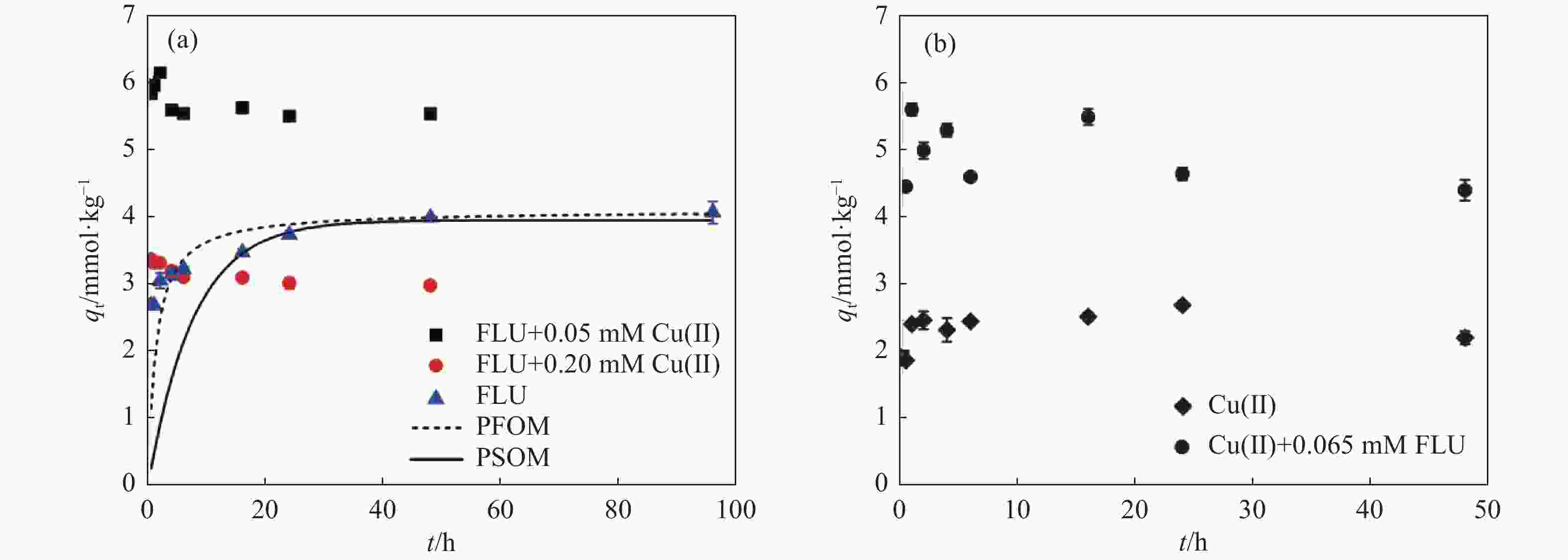
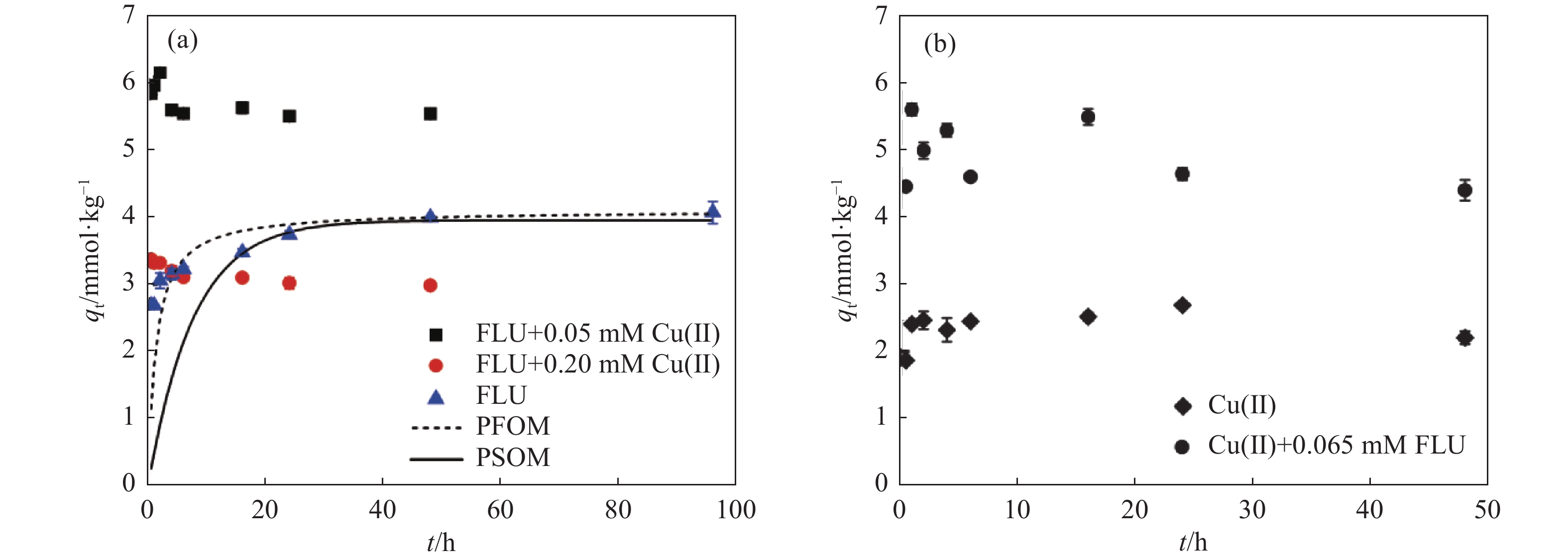
Figure 1. The adsorption kinetics of FLU and Cu(II) onto kaolinite (final solution pH 5.4 ± 0.1) (a) FLU (0.065 mM) with/without 0.05 and 0.20 mM Cu(II); (b) Cu(II) (initial concentration 0.20 mM) with/without 0.065 mM FLU
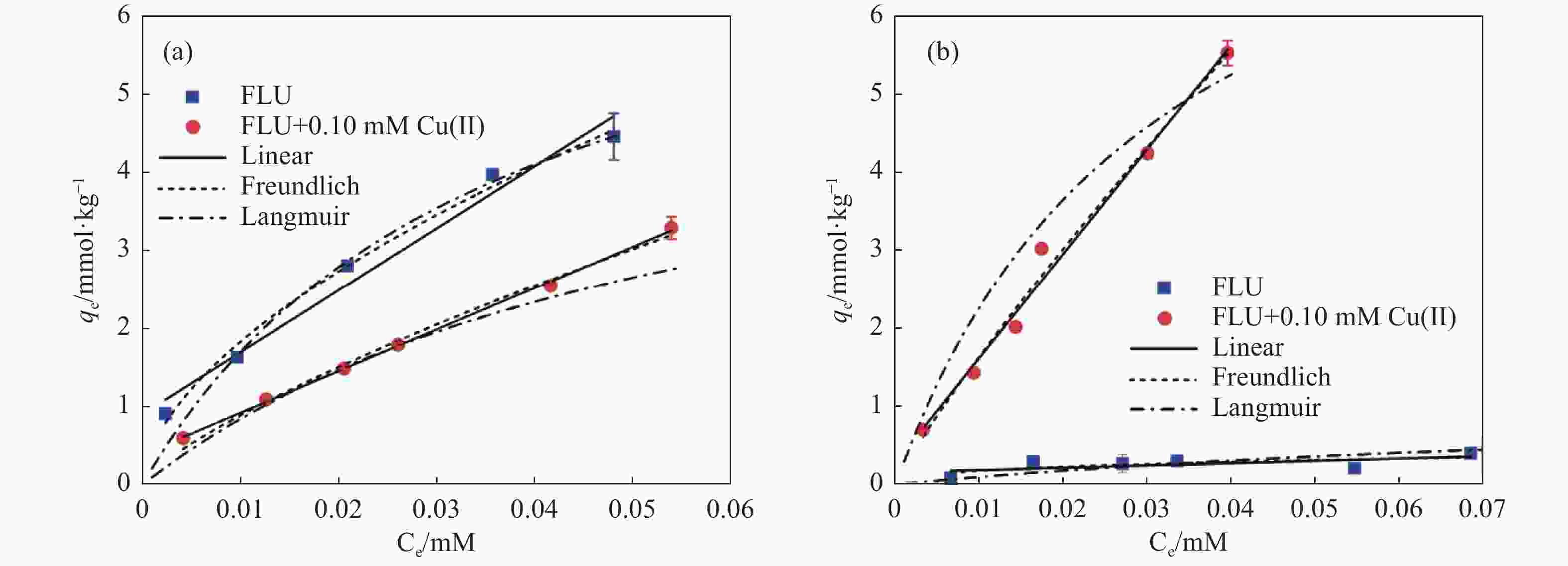
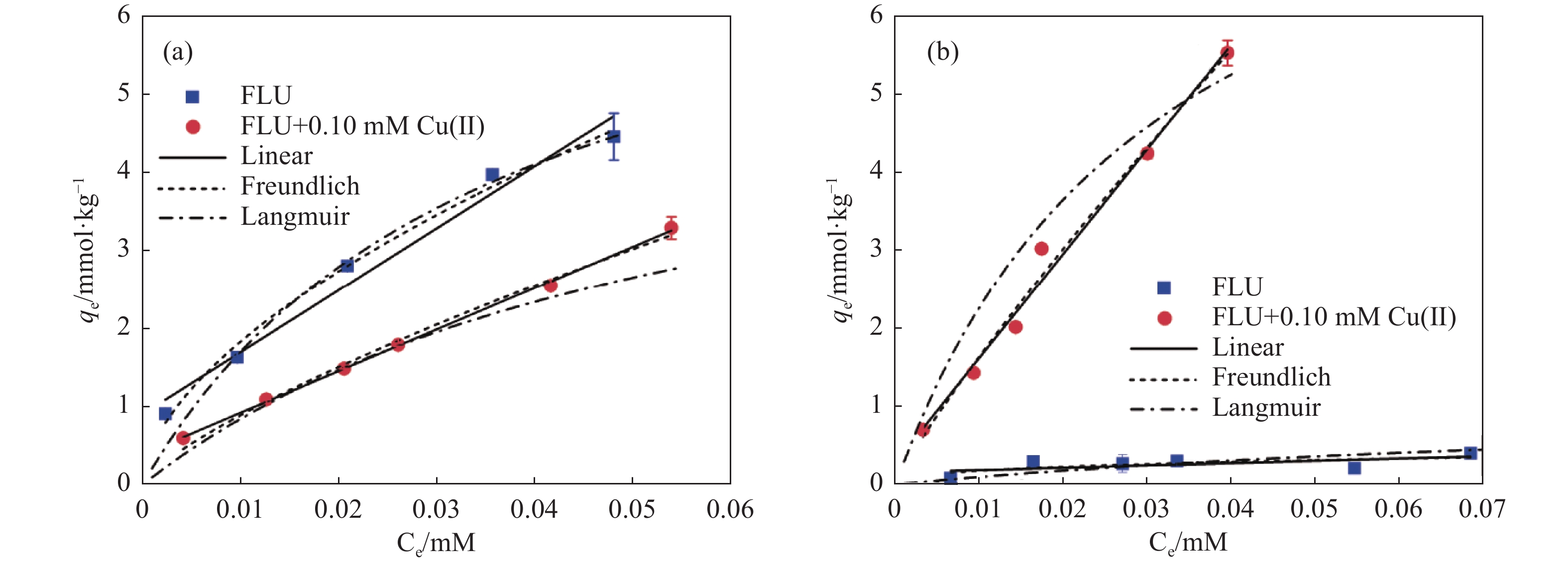
Figure 2. Adsorption isotherm fitting curves of FLU with/without 0.10 mM Cu(II) under different final pH conditions ((a) pH 5.4 ± 0.1; (b) pH 7.8 ± 0.1)
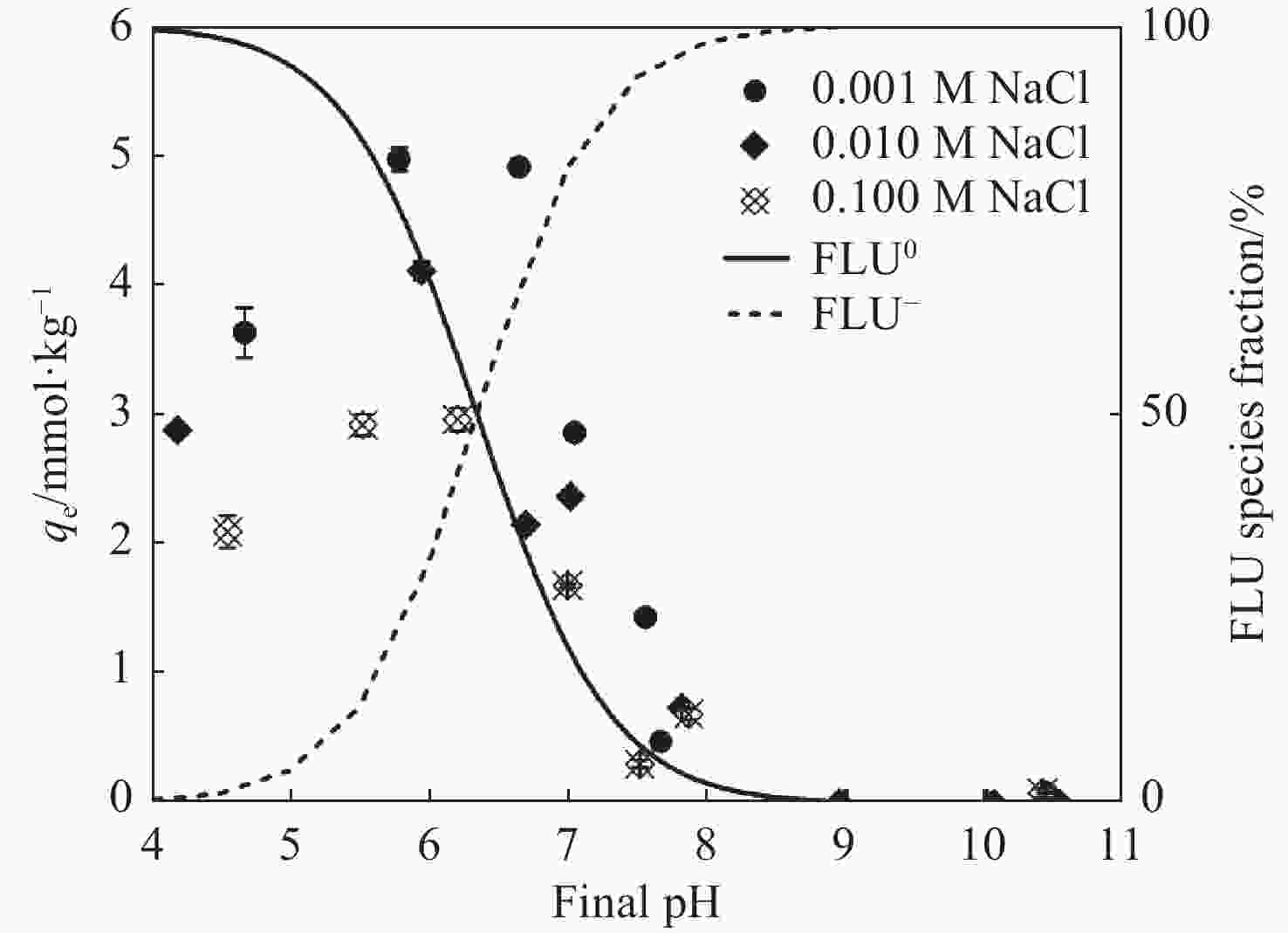
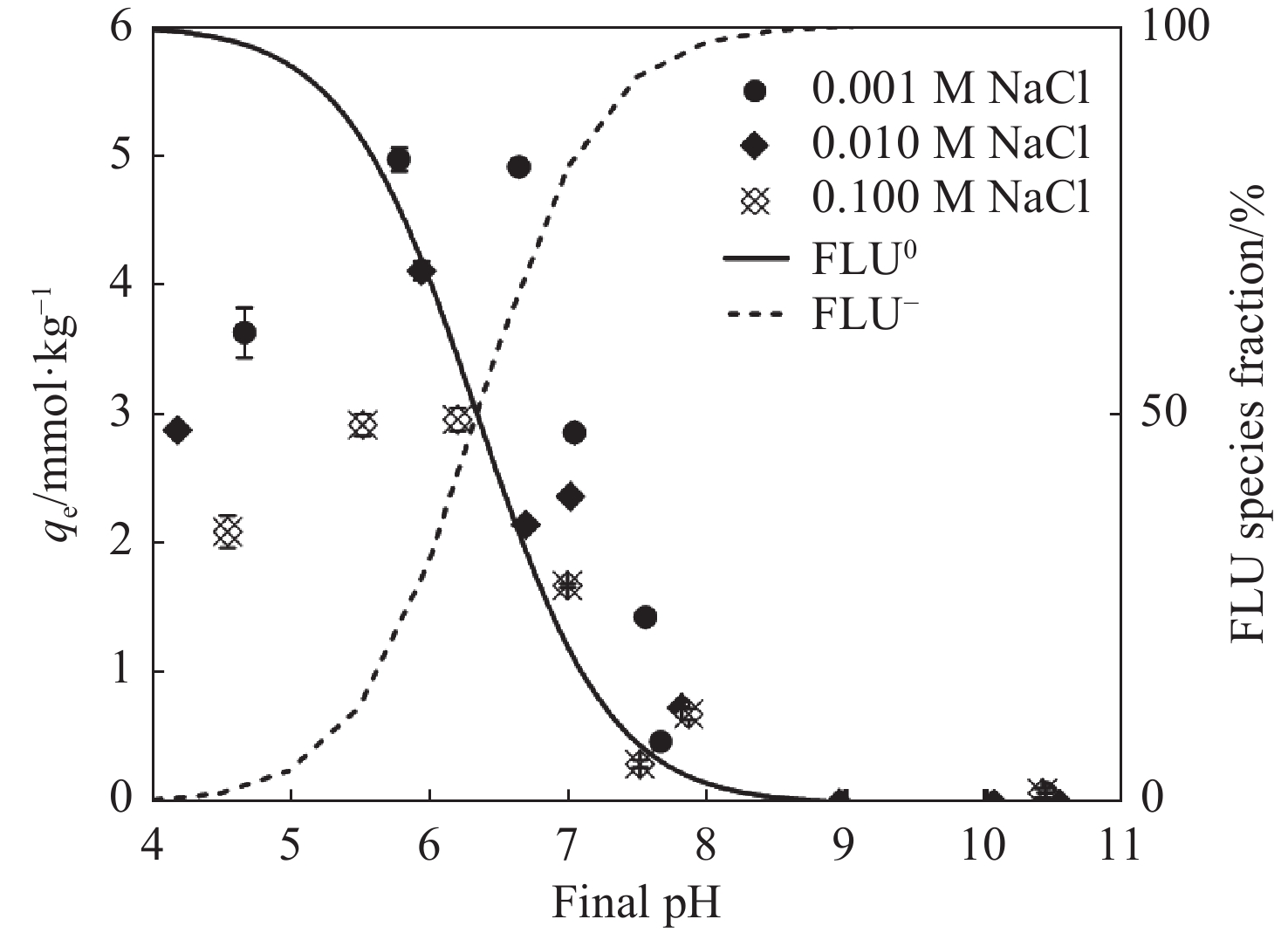
Figure 3. The adsorption amount of FLU onto kaolinite with different NaCl concentrations
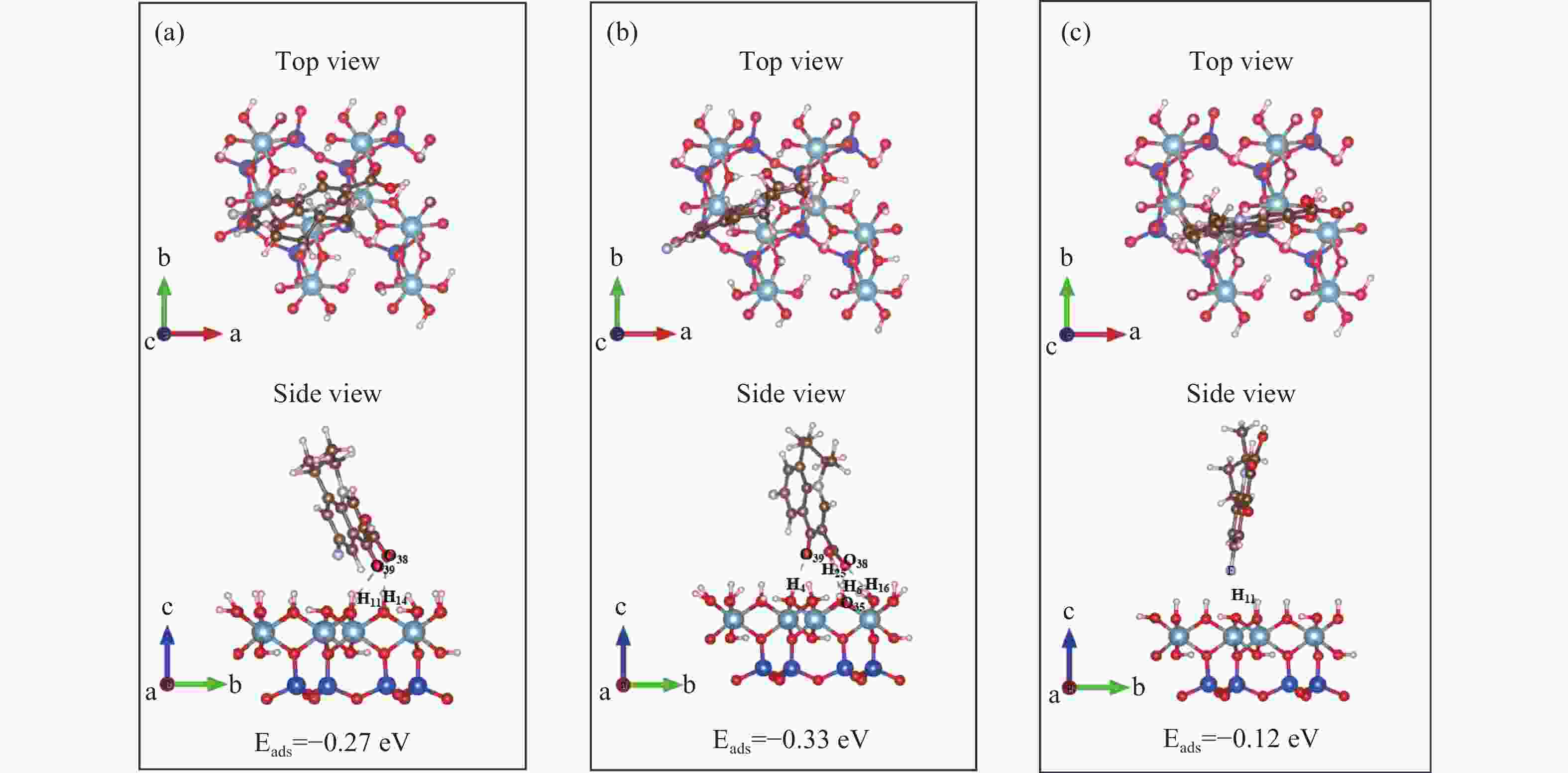
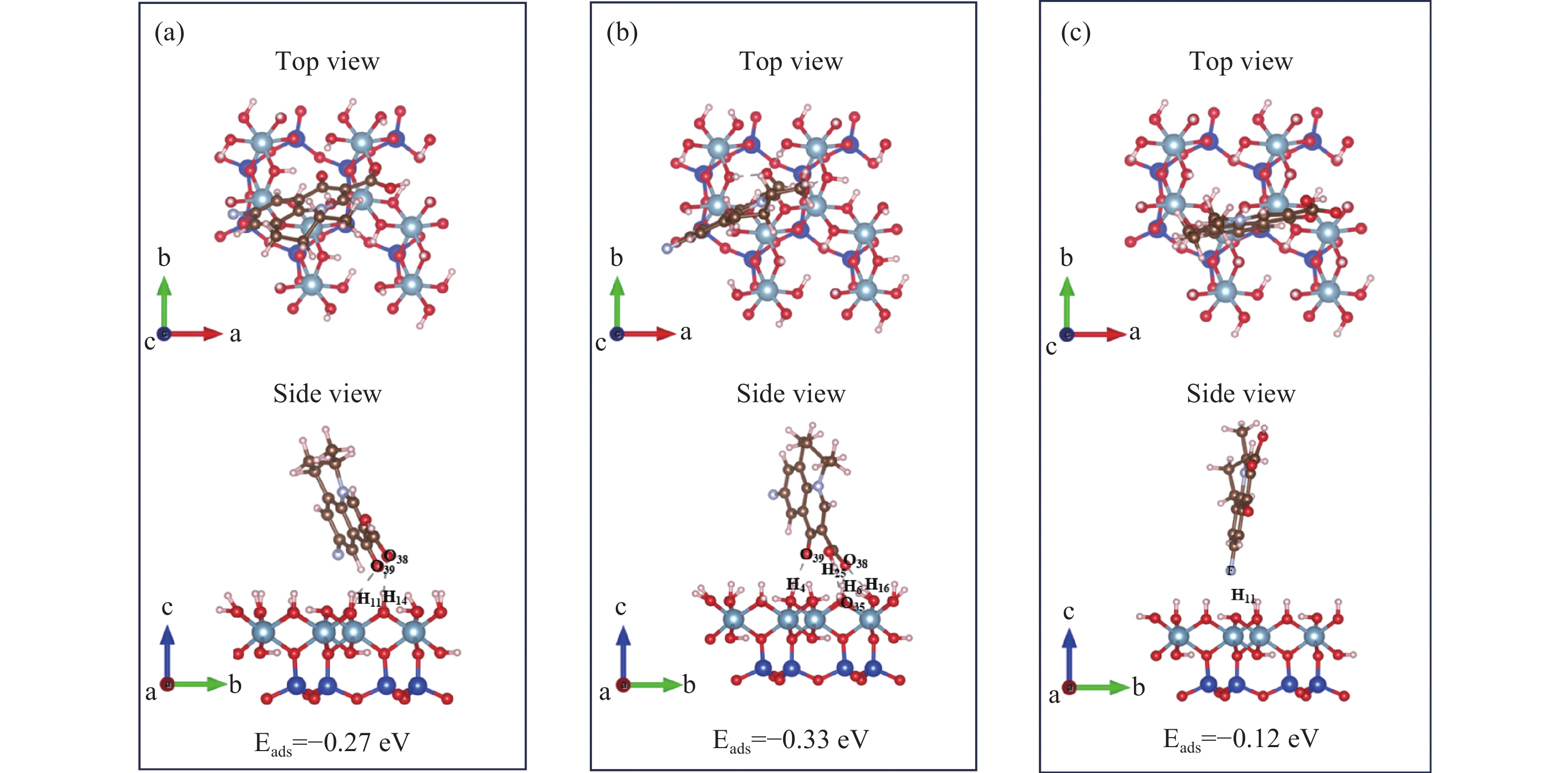
Figure 4. Three optimized configurations of FLU adsorption onto kaolinite (001) surface
Notes: (a): KAO-CO; (b): KAO-COOH; (c): KAO-F
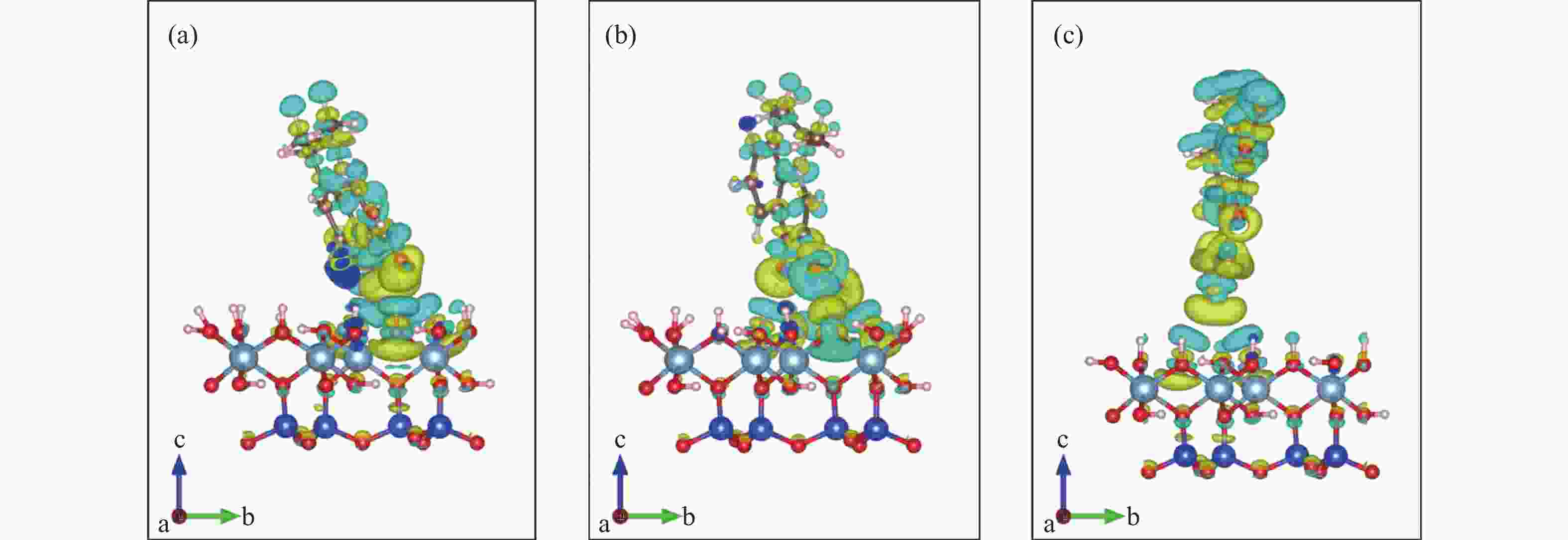
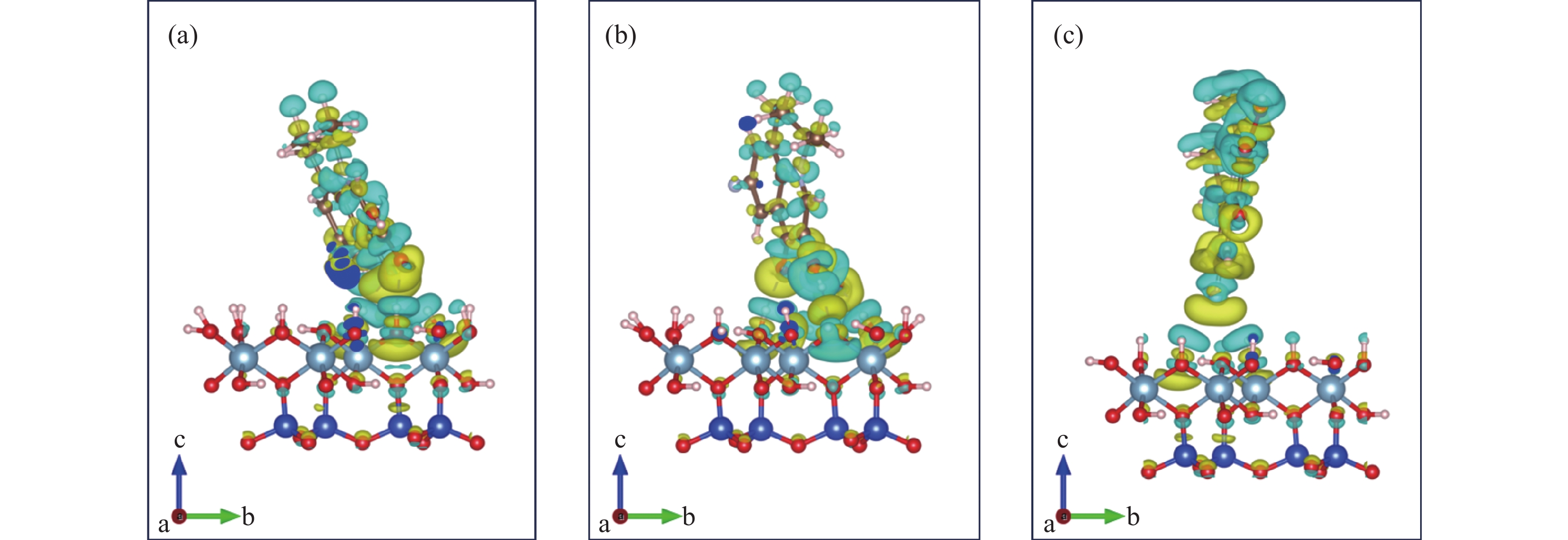
Figure 5. The charge density difference diagrams of three adsorption configurations
Notes: (a): KAO-CO; (b): KAO-COOH; (c): KAO-F
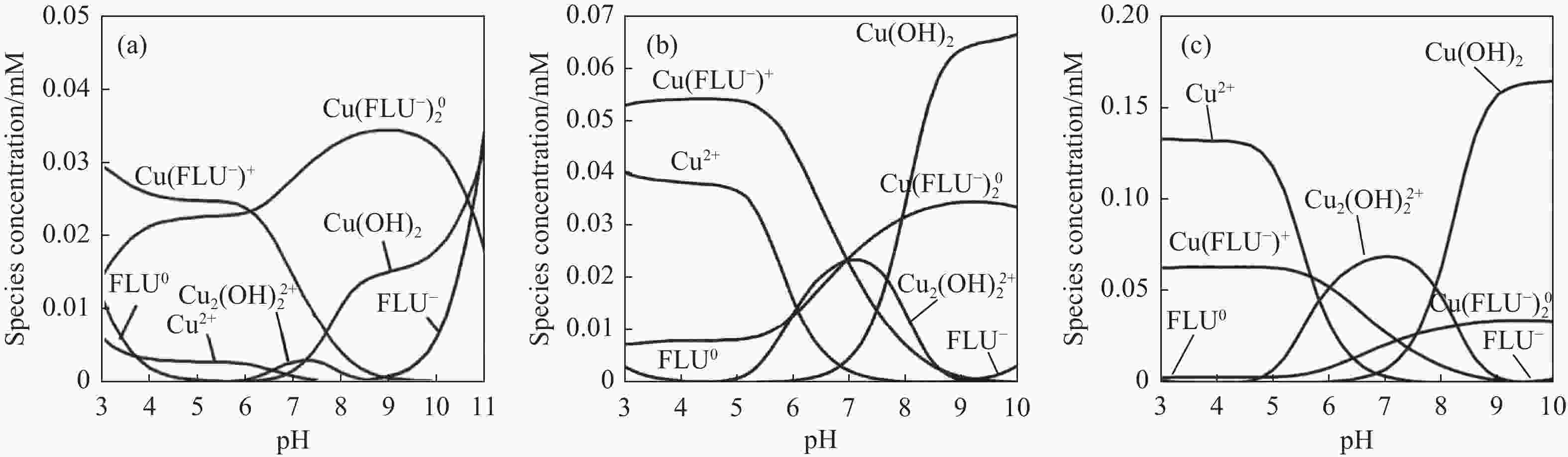
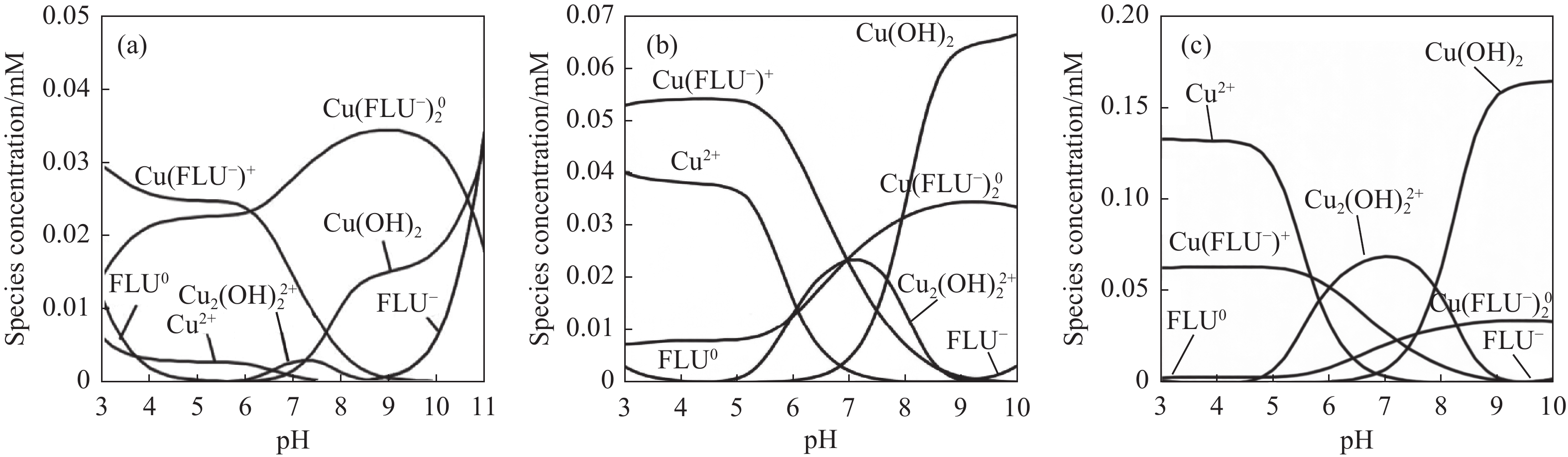
Figure 6. Solution species of 0.07 mM FLU with (a) 0.05 mM Cu(II); (b) 0.10 mM Cu(II) and (c) 0.20 mM Cu(II) at different pH values calculated by the software ChemEQL.
Notes: The stability constants were obtained from reference (Urbaniak and Kokot, 2009): Cu2++ FLU−$\Leftrightarrow $Cu(FLU−)+, logβ = 6.00; Cu2++2 FLU−$\Leftrightarrow $Cu(FLU−)20, logβ = 11.00; FLU−+H+$\Leftrightarrow $FLU0, pKa = 6.35
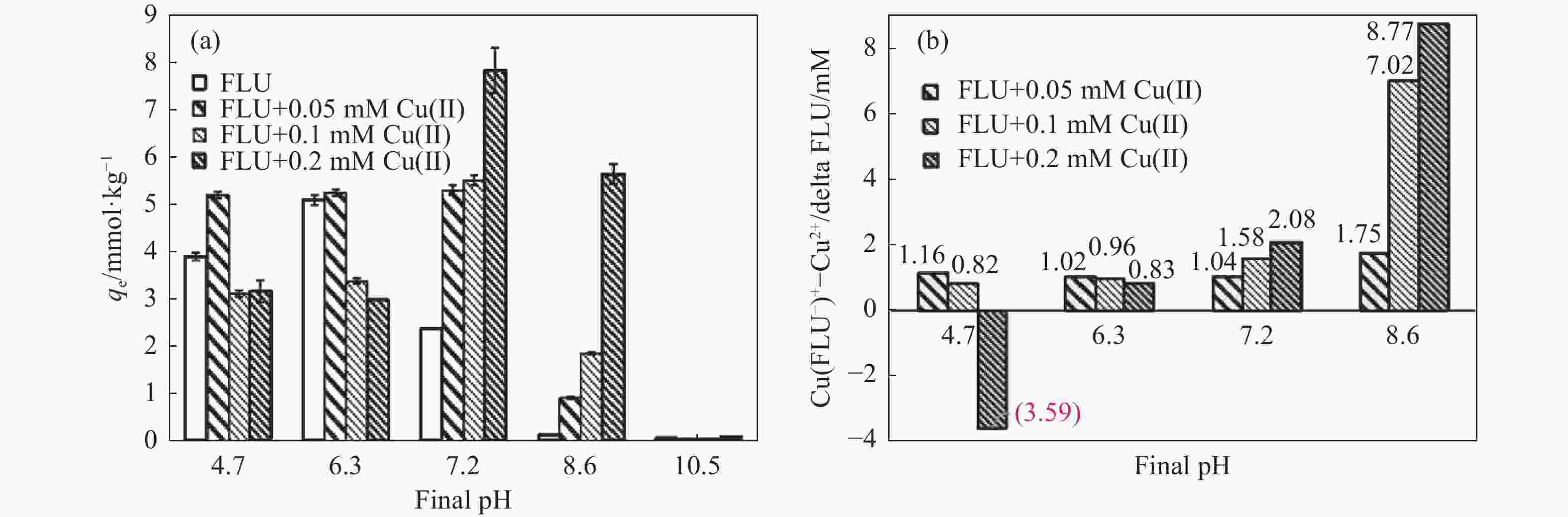
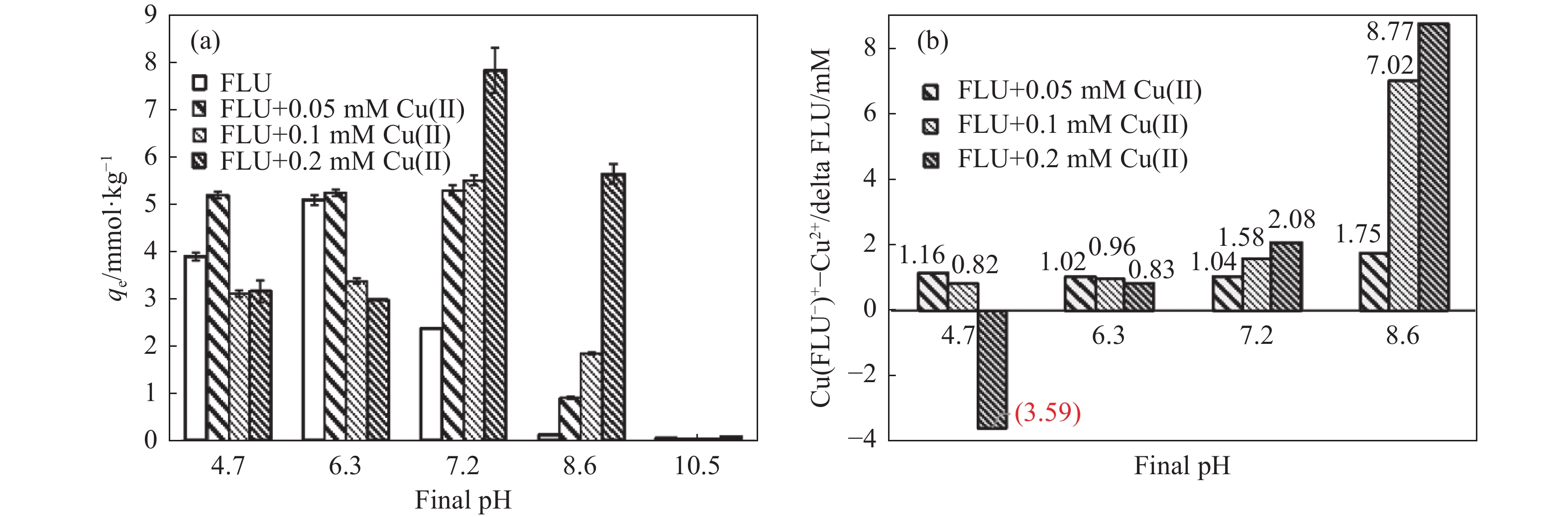
Figure 7. (a) Adsorption of FLU (0.07 mM) with/without 0.05, 0.10, and 0.20 mM Cu(II) as a function of pH (25 °C, equilibration time 48 h, background electrolyte 0.01 M NaCl); (b) the molar concentration ratios of the difference between Cu(FLU−)+ and Cu2+ in the binary systems (i.e., FLU and Cu(II)) to the adsorbed FLU in the single system (i.e., FLU only) as a function of pH
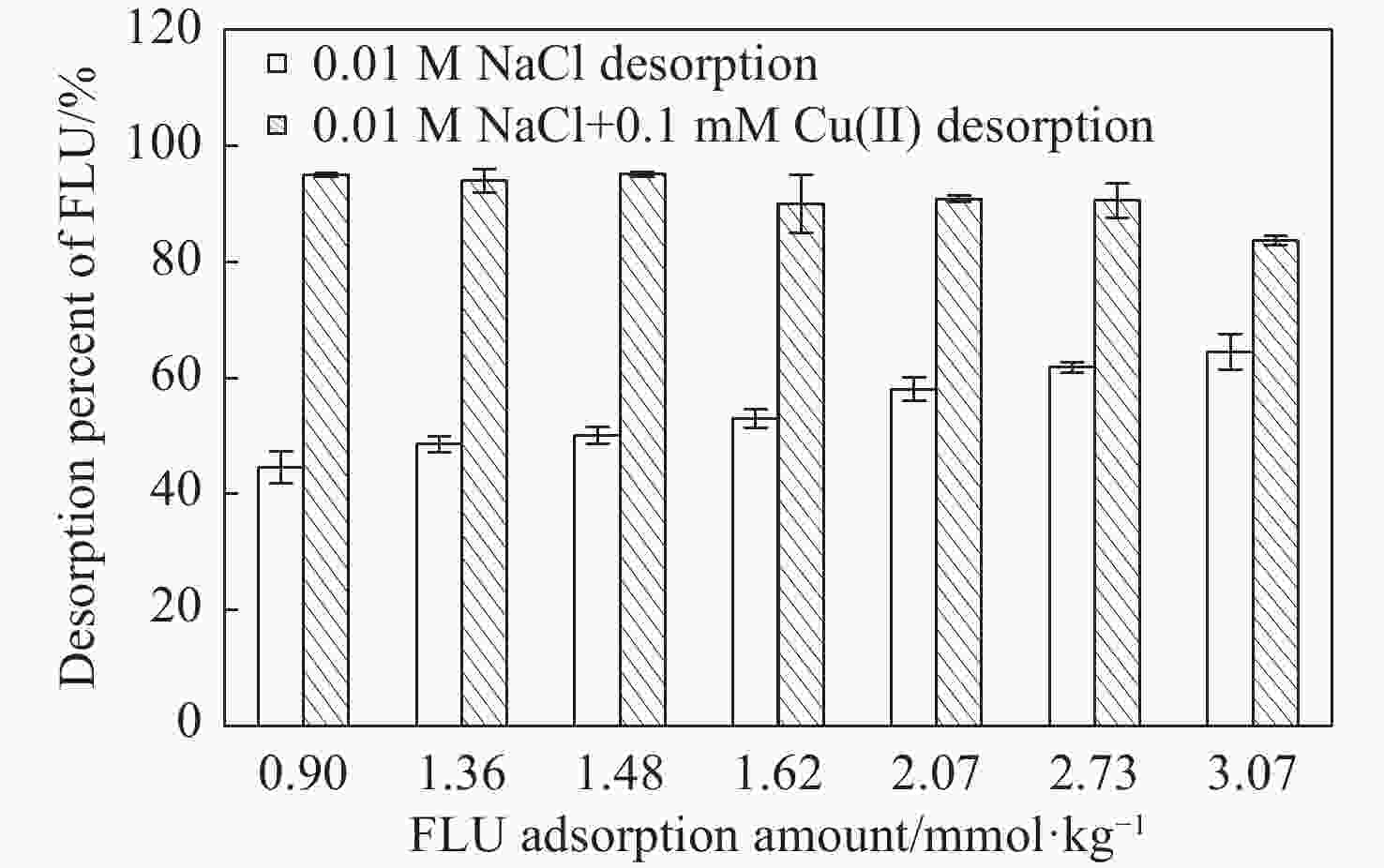
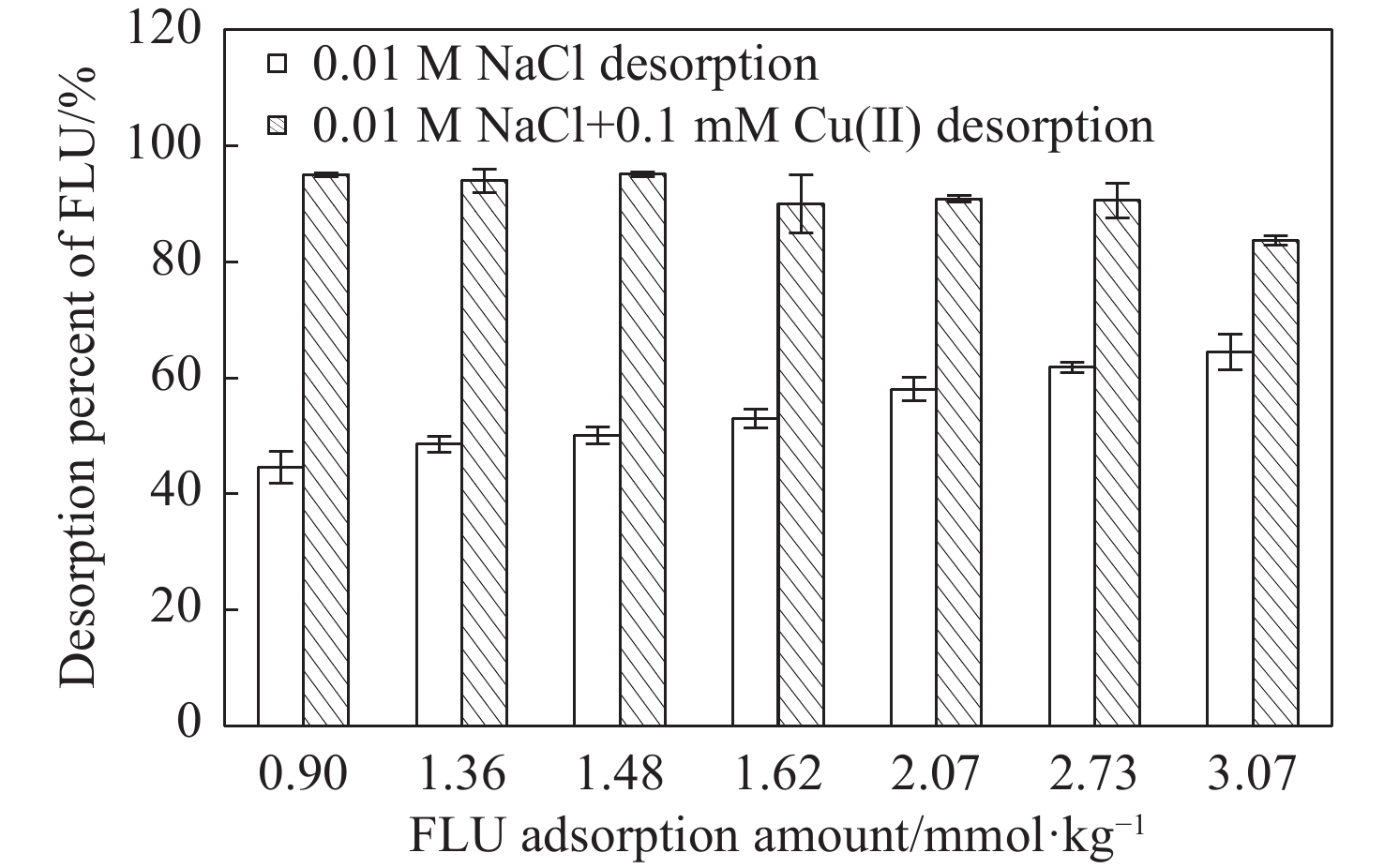
Figure 8. Desorption of FLU in the absence/presence of Cu(II) (0.10 mM) in solution with a final pH 6.4 ± 0.1
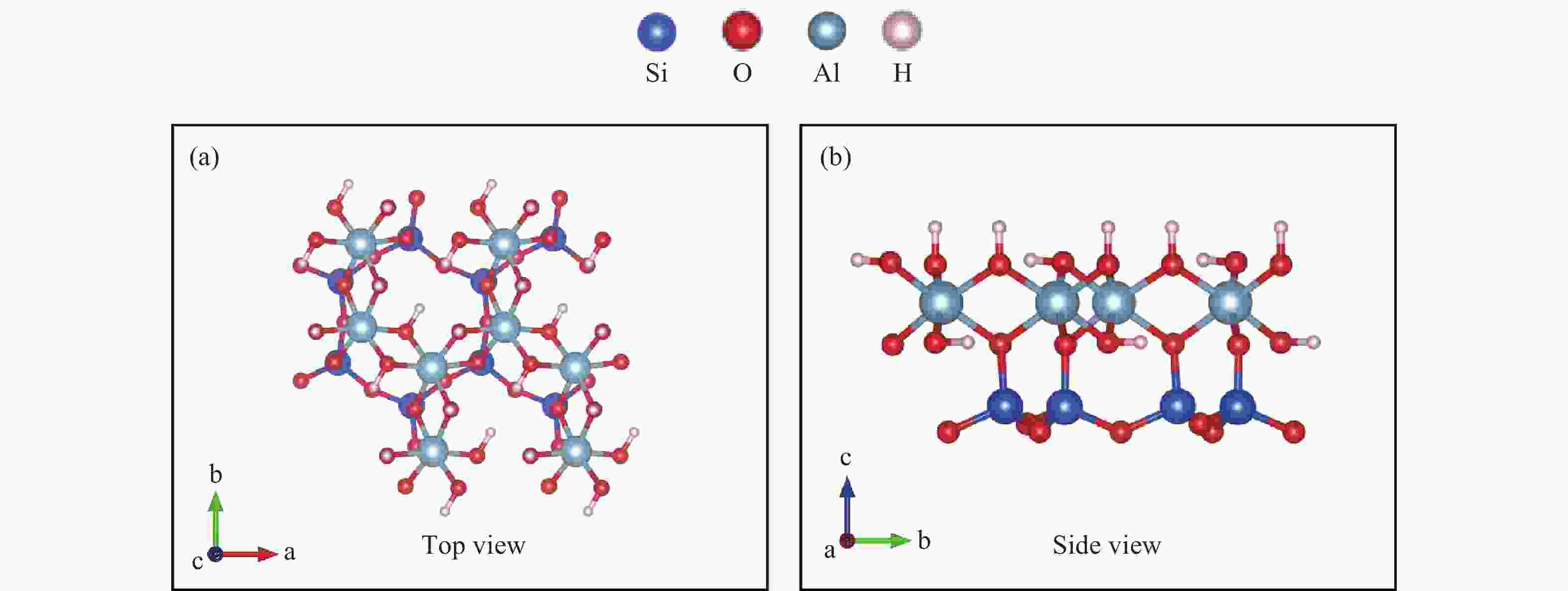
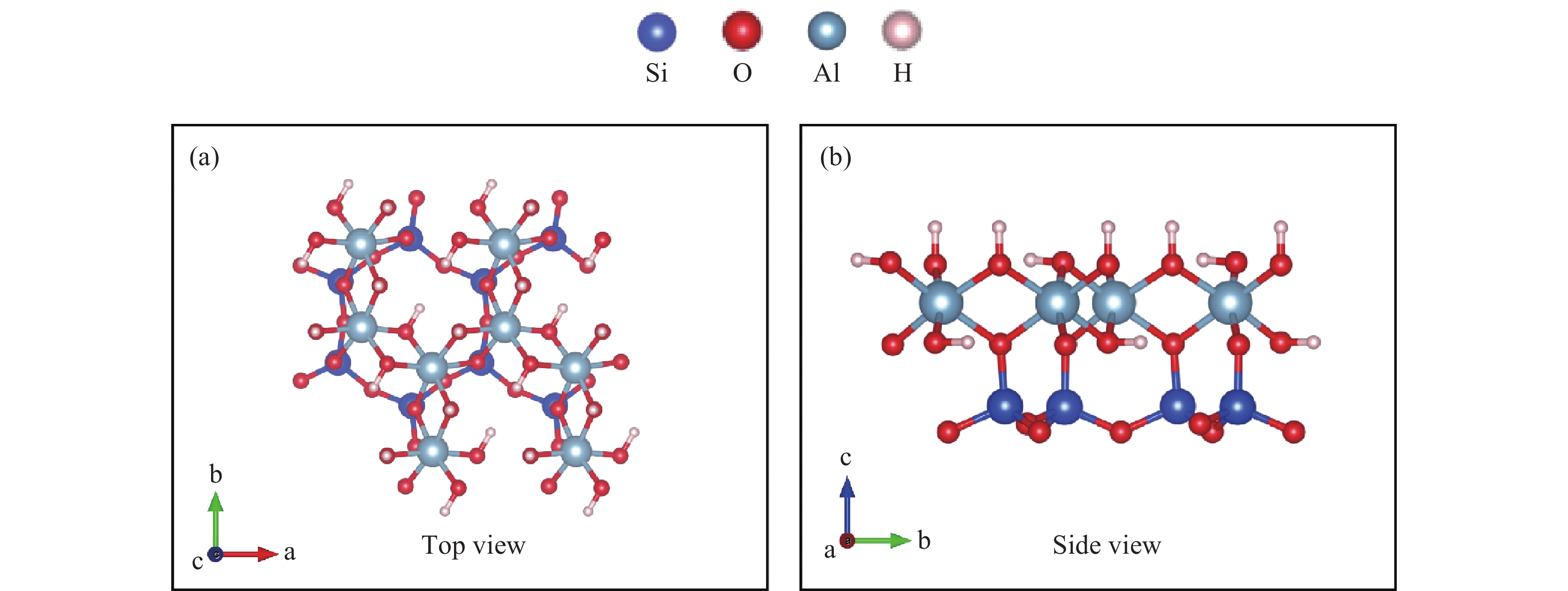
S1. The optimized structure of kaolinite (001) surface (a) Top view; and (b) Side view
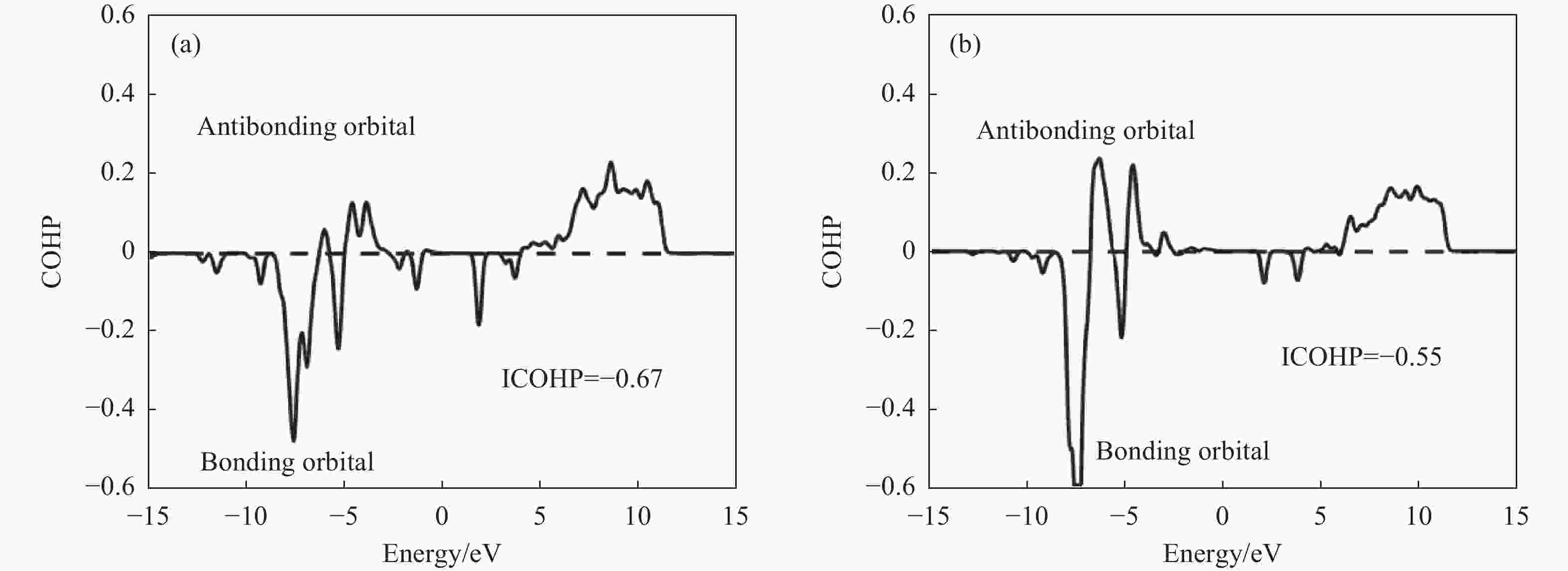
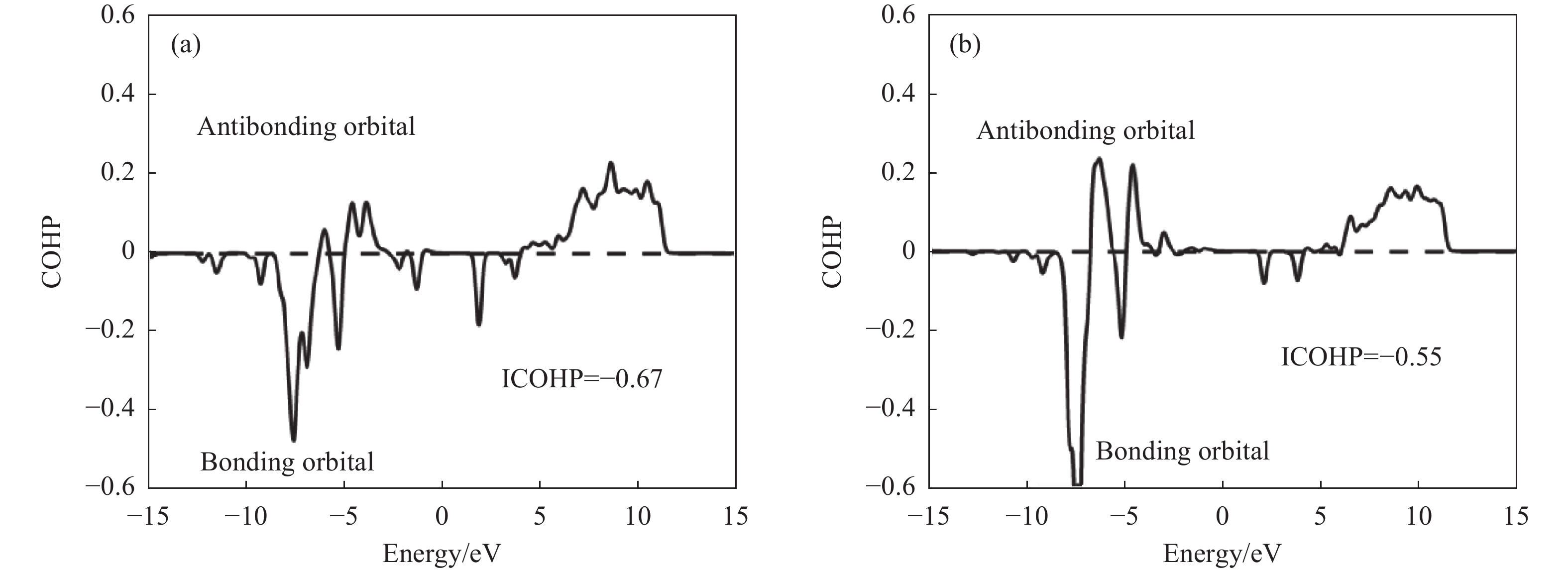
S2. The variation of COHP with energy for the bonds in the KAO-CO adsorption configuration (a) the H11…O39 bond; and (b) the H14…O38 bond
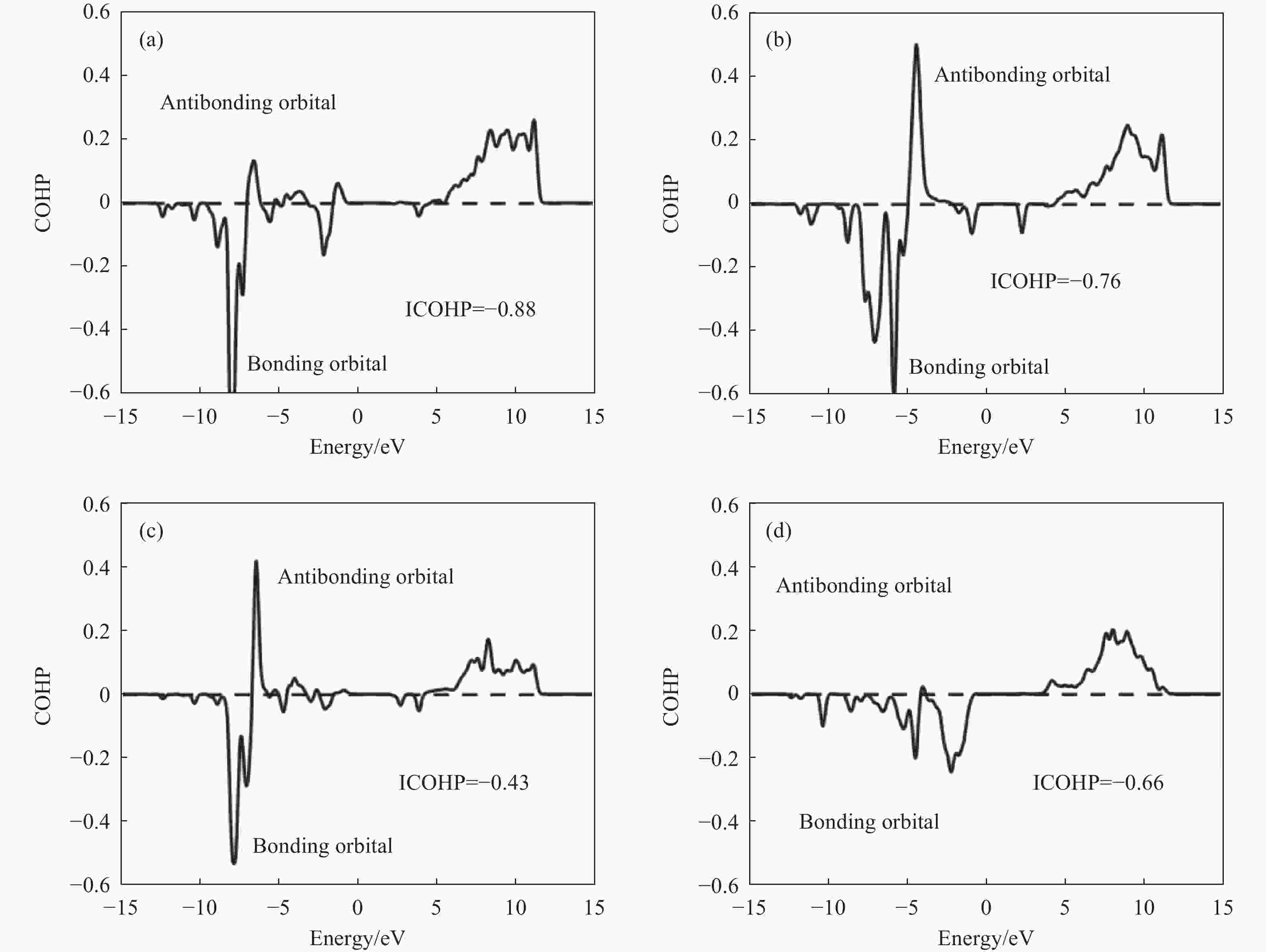
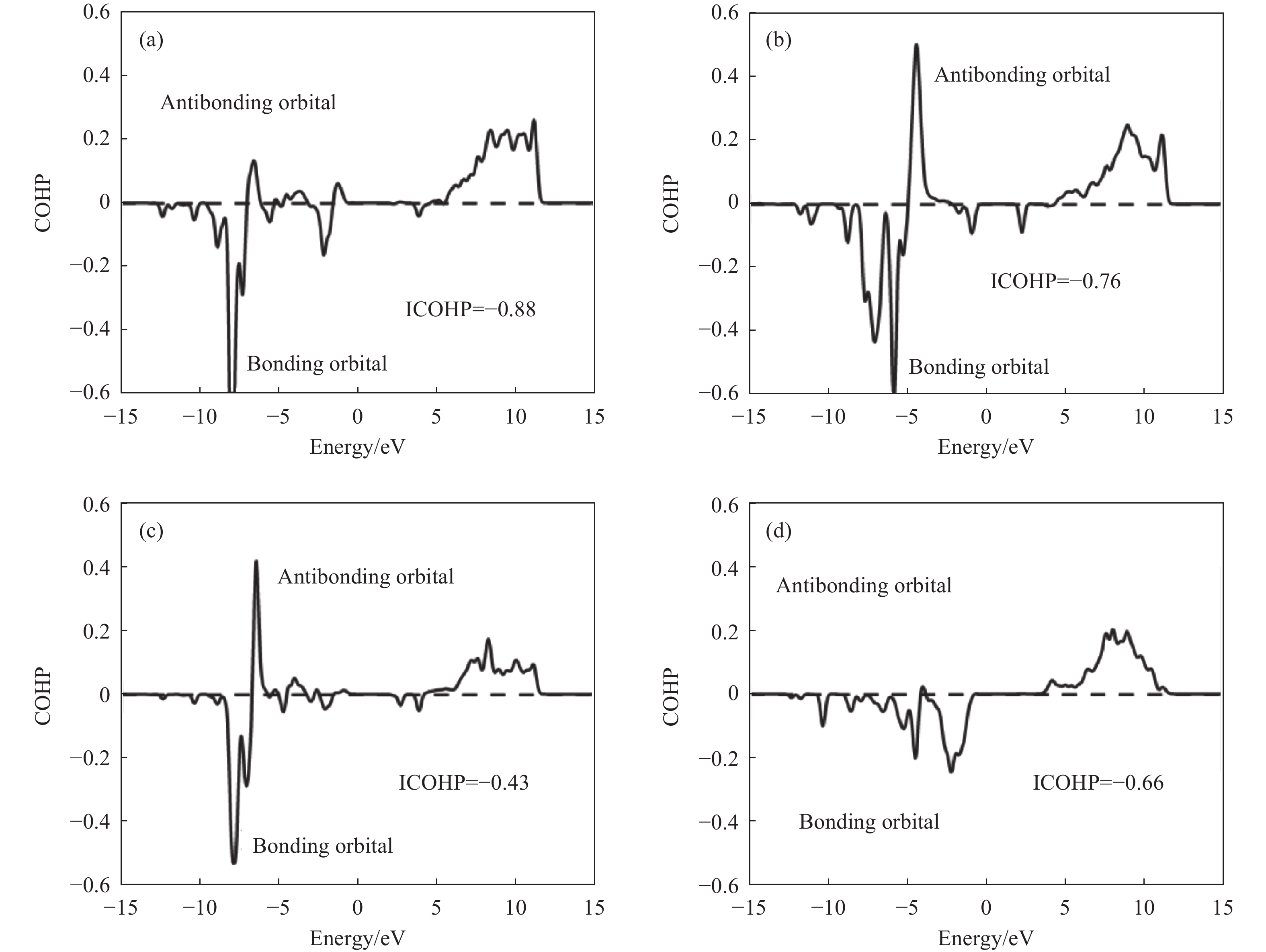
S3. The variation of COHP with energy for the bonds in the KAO-COOH adsorption configuration (a) the H16…O38 bond; (b) the H4…O39 bond; (c) the H6…O38 bond; and (d) the O34…H25 bond
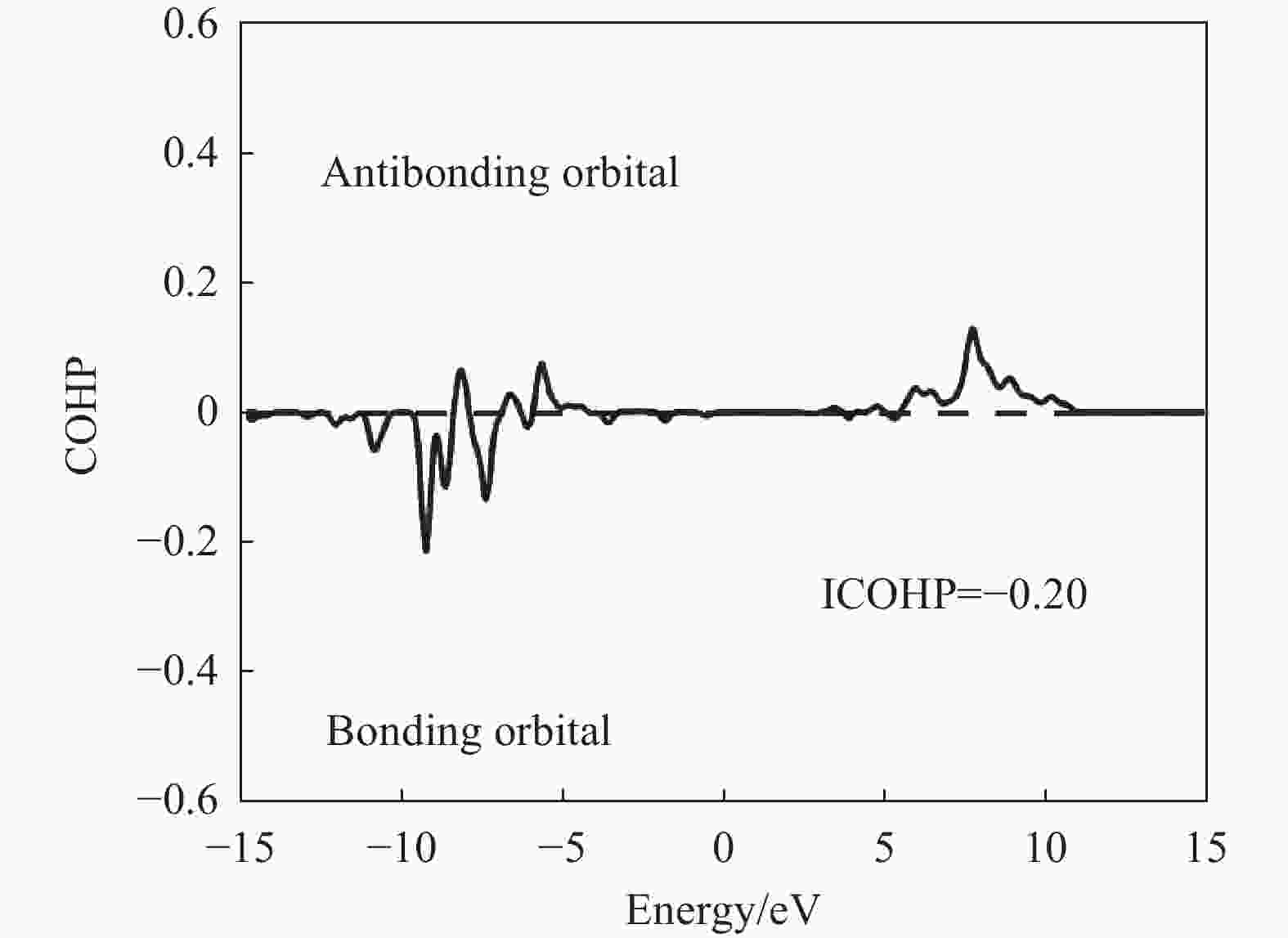
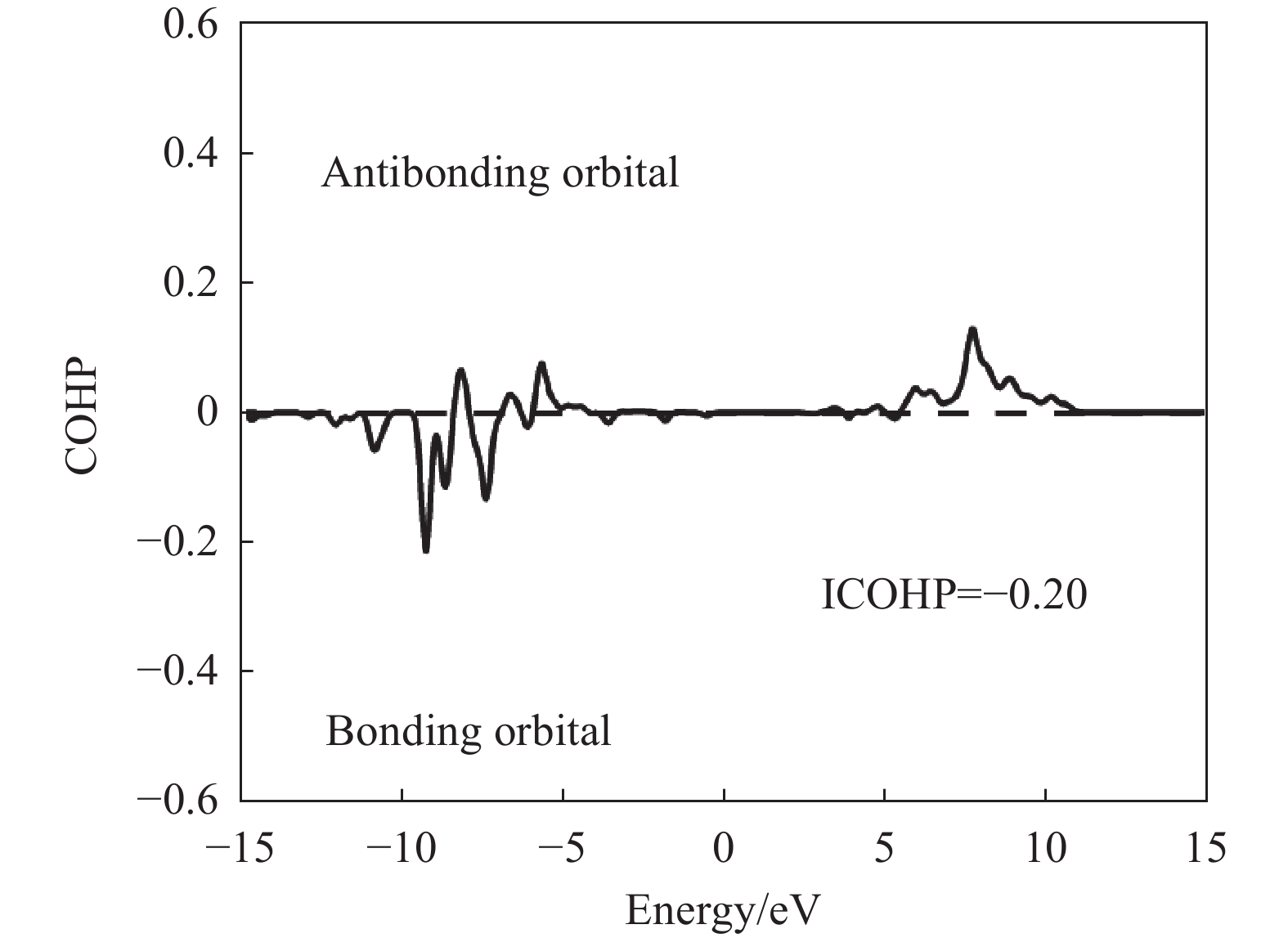
S4. The variation of COHP with energy for the H11…F bond in the KAO-F adsorption configuration
Table 1. Fitting parameters of isotherm models of FLU with/without 0.10 mM Cu(II)
pH Adsorbates Linear Freundlich Langmuir Kd(1) R2 KF(2) n R2 qm KL(3) R2 5.4 FLU 105.19 0.97 23.16 0.54 0.99 7.79 27.98 0.99 FLU+Cu(II) 63.79 0.99 20.71 0.66 0.99 5.76 17.16 0.98 7.8 FLU 6.23 0.84 1.48 0.51 0.60 1.15 9.11 0.18 FLU+Cu(II) 144.66 0.99 81.69 0.84 0.98 9.35 32.17 0.95 Notes: (1) the unit is L/kg; (2) the unit is (mmol/kg)/(mM)n; and (3) the unit is L/mmol  下载: 导出CSV
Table 2. The average Bader charge and the amount of charge change of each atom in the three adsorption configurations
Items Charge △Charge KAO-CO KAO-COOH KAO-F KAO-CO KAO-COOH KAO-F Al(1) 0.511 0.512 0.511 −2.489 −2.488 −2.489 Si(1) 0.816 0.816 0.816 −3.184 −3.184 −3.184 O(1) 7.531 7.534 7.527 1.531 1.534 1.527 H(1) 0.392 0.385 0.400 −0.608 −0.615 −0.600 C(2) 3.726 3.721 3.730 −0.277 −0.278 −0.270 N(2) 6.200 6.190 6.190 1.200 1.190 1.190 F(2) 7.640 7.630 7.670 0.640 0.630 0.670 O(2) 7.138 7.149 7.119 1.138 1.149 1.119 H(2) 0.879 0.883 0.880 −0.121 −0.117 −0.120 Q(3) − − − 0.031 0.033 0.002 Notes: (1) the atoms of the kaolinite (001) surface; (2) the atoms of FLU; and (3) the amounts of charge transfer of the three configurations (positive Q indicated that charge was transferred from FLU to the kaolinite surface)
下载: 导出CSV
S1. Main physicochemical properties of FLU
Compound Molecular
Weight (g/mol)pKa Log Kow Structure FLU 261.25 6.35(1) 1.72(2) 
Note: (1) (Feng et al., 2016); and (2) (Van Doorslaer et al., 2014)
下载: 导出CSV
S2. Parameters of PFOM and PSOM
Adsorbates qe(1) PFOM PSOM k1(2) qe1(1) R2 k2(3) qe2(1) R2 FLU 4.00 0.13 3.95 0.93 0.19 4.04 0.99 Note: (1) the unit is mmol/kg; (2) the unit is h−1; and (3) the unit is kg/(mmol·h)
下载: 导出CSV
S3. Bonding analysis of the three adsorption configurations
configurations Bond Bond Length (Å) ICOHP (eV) KAO-CO KAO-H11…O39-CO 1.83 −0.67 KAO-H14…O38-COOH 1.88 −0.55 KAO-COOH KAO-H16…O38-COOH 1.75 −0.88 KAO-H4…O39-CO 1.81 −0.76 KAO-H6…O38-COOH 1.96 −0.43 KAO-O34…H25-COOH 1.98 −0.66 KAO-F KAO-H11…F 2.22 −0.20
下载: 导出CSV
-
Alvarez-Esmorís C, Conde-Cid M, Fernández-Sanjurjo MJ, et al. 2021. Environmental relevance of adsorption of doxycycline, enrofloxacin, and sulfamethoxypyridazine before and after the removal of organic matter from soils. Journal of Environmental Management, 287: 112354. DOI: 10.1016/j.jenvman.2021.112354. Borden D, Giese RF. 2001. Baseline studies of the clay minerals society source clays: Cation exchange capacity measurements by the ammonia-electrode method. Clays And Clay Minerals, 49(5): 444−445. DOI: 10.1346/CCMN.2001.0490510. Chassé AW, Ohno T, Higgins SR, et al. 2015. Chemical force spectroscopy evidence supporting the Layer-by-Layer model of organic matter binding to Iron (oxy) Hydroxide mineral surfaces. Environmental Science & Technology, 49(16): 9733−9741. DOI: 10.1021/acs.est.5b01877. Cheng W, Li JB, Sun J, et al. 2023. Nalidixic Aacid and Fe(II)/Cu(II) coadsorption at Goethite and Akaganeite surfaces. Environmental Science & Technology, 57(41): 15680−15692. DOI: 10.1021/acs.est.3c05727. Deogratias G, Al-Qurashi OS, Wazzan N. 2023. Optical and electronic properties enhancement via chalcogenides: Promising materials for DSSC applications. Journal of Molecular Modeling, 29(4): 86. DOI: 10.1007/s00894-023-05472-0. Gao JA, Pedersen JA. 2005. Adsorption of sulfonamide antimicrobial agents to clay minerals. Environmental Science & Technology, 39(24): 9509−9516. DOI: 10.1021/es050644c. George J, Petretto G, Naik A, et al. 2022. Automated bonding analysis with crystal orbital hamilton populations. Chempluschem, 87(11): e202200123. DOI: 10.1002/cplu.202200123. Guaita DP, Sayen S, Boudesocque S, et al. 2011. Copper(II) influence on flumequine retention in soils: Macroscopic and molecular investigations. Journal of Colloid and Interface Science, 357(2): 453−459. DOI: 10.1016/j.jcis.2011.01.097. Hacıosmanoğlu GG, Mejías C, Martín J, et al. 2022. Antibiotic adsorption by natural and modified clay minerals as designer adsorbents for wastewater treatment: A comprehensive review. Journal of Environmental Management, 317: 115397. DOI: 10.1016/j.jenvman.2022.115397. Han YH, Liu WL, Zhou J, et al. 2016. Interactions between kaolinite Al-OH surface and sodium hexametaphosphate. Applied Surface Science, 387: 759−765. DOI: 10.1016/j.apsusc.2016.07.002. Hu JS, Xiao HY, Tang XY, et al. 2025. Polarity and fluorescent fractions of manure dissolved organic matter could affect differently the adsorption and desorption of antibiotics in soils. Journal of Environmental Management, 378: 124767. DOI: 10.1016/j.jenvman.2025.124767. Ke Y, Zhu X, Si S, et al. 2023. A novel adsorbent of Attapulgite & Carbon composites derived from spent bleaching earth for synergistic removal of copper and tetracycline in water. International Journal of Environmental Research and Public Health, 20(2): 1573. DOI: 10.3390/ijerph20021573. Khalid S, Shahid M, Natasha Shah AH, et al. 2020. Heavy metal contamination and exposure risk assessment via drinking groundwater in Vehari, Pakistan. Environmental Science and Pollution Research, 27(32): 39852−39864. DOI: 10.1007/s11356-020-10106-6. Khandal RK, Thoisydur JC, Terce M. 1991. Adsorption characteristics of flumequine on Kaolinitic clay. Geoderma, 50(1-2): 95−107. DOI: 10.1016/0016-7061(91)90028-r. Li YD, Bi EP, Chen HH. 2017. Sorption behavior of ofloxacin to kaolinite: Effects of pH, ionic strength, and Cu(II). Water, Air, & Soil Pollution, 228(1): 46. DOI: 10.1007/s11270-016-3236-x. Luo T, Le CS, Luong NT, et al. 2024. Goethite-bound copper controls the fate of antibiotics in aquatic environments. Environmental Science & Technology Water, 4(2): 638−647. DOI: 10.1021/acsestwater.3c00666. Ma J, Xiong Y, Dai X, et al. 2020. Coadsorption behavior and mechanism of ciprofloxacin and Cu(II) on graphene hydrogel wetted surface. Chemical Engineering Journal, 380: 122387. DOI: 10.1016/j.cej.2019.122387. Maged A, Iqbal J, Kharbish S, et al. 2020. Tuning tetracycline removal from aqueous solution onto activated 2: 1 layered clay mineral: Characterization, sorption and mechanistic studies. Journal of Hazardous Materials, 384: 121320. DOI: 10.1016/j.jhazmat.2019.121320. Nguyen AQ, Nguyen ATQ, Nguyen NTM, et al. 2023. Sorption of oxytetracycline to microsized colloids under concentrated salt solution: A perspective on terrestrial-to-ocean transfer of antibiotics. Science of the Total Environment, 905: 167005. DOI: 10.1016/j.scitotenv.2023.167005. Ortiz-Ramos U, Leyva-Ramos R, Mendoza-Mendoza E, et al. 2022. Removal of tetracycline from aqueous solutions by adsorption on raw Ca-bentonite. Effect of operating conditions and adsorption mechanism. Chemical Engineering Journal, 432: 134428. DOI: 10.1016/j.cej.2021.134428. Pantaleone S, Rimola A, Sodupe M. 2020. Canonical, deprotonated, or zwitterionic? II. A computational study on amino acid interaction with the TiO2 (110) rutile surface: Comparison with the anatase (101) surface. Physical Chemistry Chemical Physics, 22(29): 16862−16876. DOI: 10.1039/d0cp01429j. Urbaniak B, Kokot ZJ. 2009. Analysis of the factors that significantly influence the stability of fluoroquinolone-metal complexes. Analytica Chimica Acta, 647(1): 54−59. DOI: 10.1016/j.aca.2009.05.039. Wang B, Lin J, Hu QC, et al. 2023. Adsorption of oxytetracycline on subalpine meadow soil from Zoige Plateau, China: Effects of the coexisting Cu2+. Environmental Research, 231: 116221. DOI: 10.1016/j.envres.2023.116221. Wang WJ, Nan ZJ, Kong WC, et al. 2025. Enhanced adsorption and leaching behavior of fluoroquinolone antibiotics in soil amended with cattle manure under varying rainfall condition. Journal of Environmental Chemical Engineering, 13(3): 116831. DOI: 10.1016/j.jece.2025.116831. Xiong HX, Zhao XJ, Song K, et al. 2024. Cow manure pellet biochar: Leaching of Cu(II) and its corresponding influences on tetracycline adsorption. Water, Air & Soil Pollution, 235(4): 255. DOI: 10.1007/s11270-024-07045-0. Xu YG, Yu WT, Ma Q, et al. 2015. Interactive effects of sulfadiazine and Cu(II) on their sorption and desorption on two soils with different characteristics. Chemosphere, 138: 701−707. DOI: 10.1016/j.chemosphere.2015.07.049. Xu ZS, Huang WY, Xie HJ, et al. 2021a. Co-adsorption and interaction mechanism of cadmium and sulfamethazine onto activated carbon surface. Colloids and Surfaces a-Physicochemical and Engineering Aspects, 619: 126540. DOI: 10.1016/j.colsurfa.2021.126540. Xu ZW, Lv SQ, Hu SX, et al. 2021b. Effect of soil solution properties and Cu2+ co-existence on the adsorption of sulfadiazine onto paddy soil. International Journal of Environmental Research and Public Health, 18(24): 13383. DOI: 10.3390/ijerph182413383. Xue M, Gu X, Qin Y, et al. 2022. Enantioselective behavior of flumequine enantiomers and metabolites' identification in sediment. Journal of Analytical Methods in Chemistry, 2022: 1−12. DOI: 10.1155/2022/2184024. Yu F, Li Y, Huang GQ, et al. 2020. Adsorption behavior of the antibiotic levofloxacin on microplastics in the presence of different heavy metals in an aqueous solution. Chemosphere, 260: 127650. DOI: 10.1016/j.chemosphere.2020.127650. Zainab SM, Junaid M, Rehman MYA, et al. 2021. First insight into the occurrence, spatial distribution, sources, and risks assessment of antibiotics in groundwater from major urban-rural settings of Pakistan. Science of the Total Environment, 791: 148298. DOI: 10.1016/j.scitotenv.2021.148298. Zhang ZJ, Yuan ZT, Zhuang L, et al. 2021. Adsorption mechanism of polyacrylamide on kaolinite surface in the presence of Ca2+: Insights from DFT calculation. Chemical Physics Letters, 776: 138672. DOI: 10.1016/j.cplett.2021.138672. Zhao N, Ju F, Song QW, et al. 2022. A simple empirical model for phenanthrene adsorption on soil clay minerals. Journal of Hazardous Materials, 429: 127849. DOI: 10.1016/j.jhazmat.2021.127849. Zhao YP, Gu XY, Li SY, et al. 2015. Insights into tetracycline adsorption onto kaolinite and montmorillonite: Experiments and modeling. Environmental Science and Pollution Research, 22(21): 17031−17040. DOI: 10.1007/s11356-015-4839-2. Zhao Z, Lin S, Yu Z, et al. 2023. Facile synthesis of triazine-based microporous organic network for high-efficient adsorption of flumequine and nadifloxacin: A comprehensive study on adsorption mechanisms and practical application potentials. Chemosphere, 315: 137731. DOI: 10.1016/j.chemosphere.2022.137731. Zhao ZC, Yang CL, Cao ZX, et al. 2025. Rational design of MoS2/MoSe2 lateral heterostructure with optimal component ratio used for high-efficient photocatalytic overall water splitting. Surfaces and Interfaces, 56: 105513. DOI: 10.1016/j.surfin.2024.105513. -

 点击查看大图
计量
- 文章访问数: 25
- HTML全文浏览量: 10
- PDF下载量: 0
- 被引次数: 0


