 E-mail alert
 Rss
Rss



Heat transfer performance and dynamic effects of middle-shallow U-tube ground heat exchangers under geological stratification
-
Abstract: Previous research has lacked sufficient attention to the heat exchange performance of middle-shallow U-tube ground heat exchangers (GHEs), particularly regarding the impact of vertical lithology heterogeneity. In this study, a heat transfer model of GHEs coupling vertical lithological variations and ground temperature distribution is established, based on field test data of middle-shallow boreholes in Langfang, Hebei Province. The heat transfer characteristics of GHEs within the depth of 200–300 m and their influencing factors are analyzed. Results show that the flow velocity and wall thickness strongly affect the heat transfer of middle-shallow GHEs. Increasing the flow rate helps to enhance heat transfer, but is not conducive to improving energy efficiency of the system due to higher power consumption of circulating pumps. There is an optimal flow rate range of 2–3 m3/h for PE-RT GHEs. Furthermore, reducing the wall thickness from 8 mm to 3 mm can significantly improve the heat transfer per unit depth by 10–12% for PE-RT GHEs. The thermal influence distance (TID) of GHEs exhibits significant lithological differences and seasonal variations along the depth. As the depth increases, the TID in winter and summer exhibits increasing and decreasing trends, respectively. Especially, the TID of sandy layers due to a high thermal conductivity is greater than that of clay layers under the same conditions. For 250–300 m deep GHEs, the maximum TID reaches 5.8 m in winter and 7.3 m in summer, respectively, after running for five years. The heat transfer performance of middle-shallow GHEs has an attenuation risk of up to 33–35% during long-term operation, which can be alleviated using an intermittent operation strategy. The present findings can offer a useful reference for the design and optimization of middle-shallow GHEs in similar geological conditions.
-
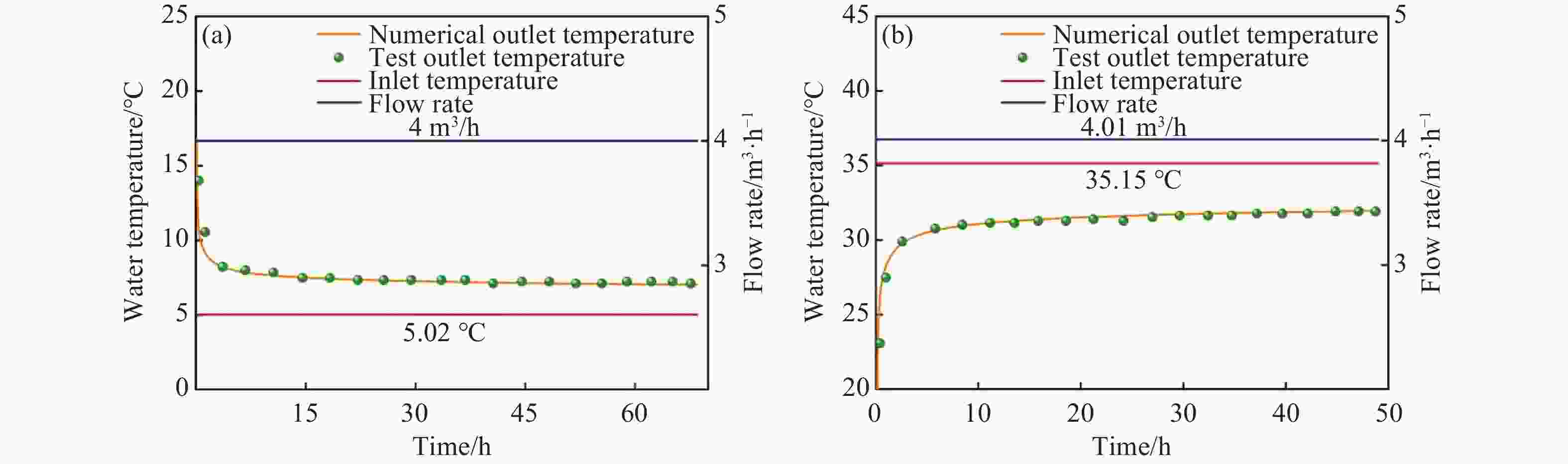
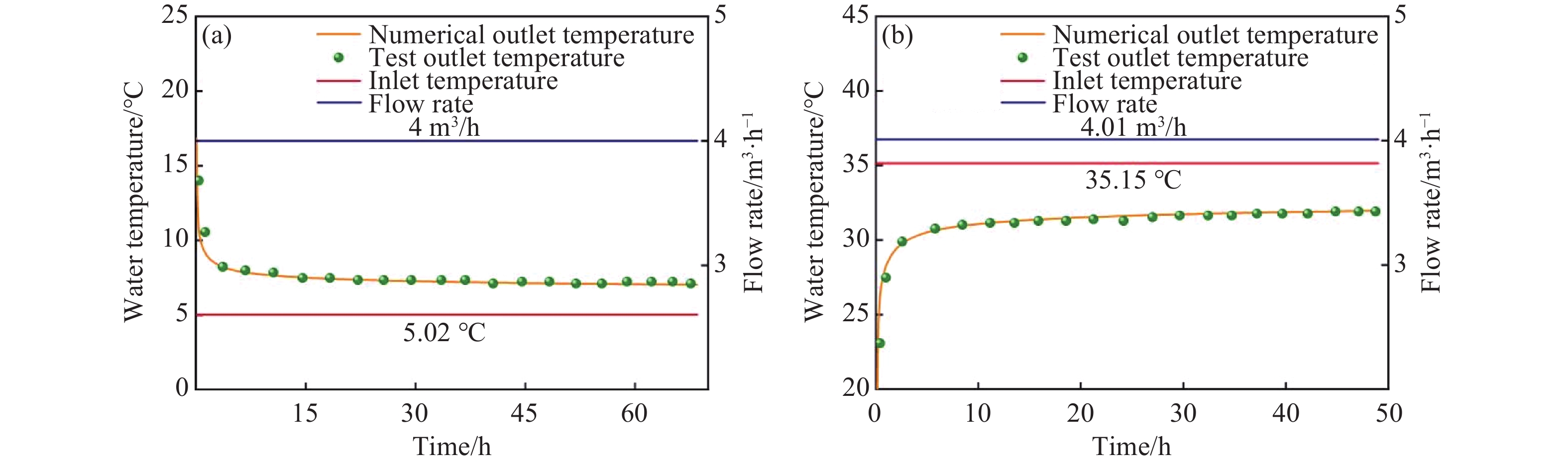
Figure 4. Comparison of measured and simulated outlet temperatures for PE-RT pipes at 300 m depth: (a) heating; (b) cooling
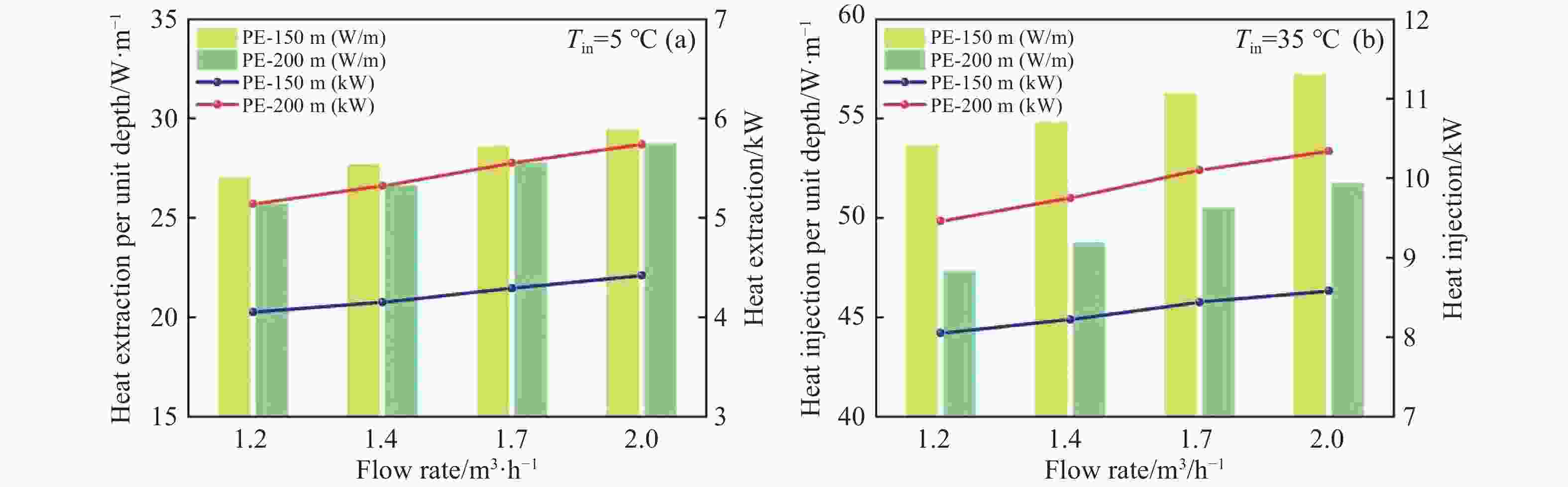
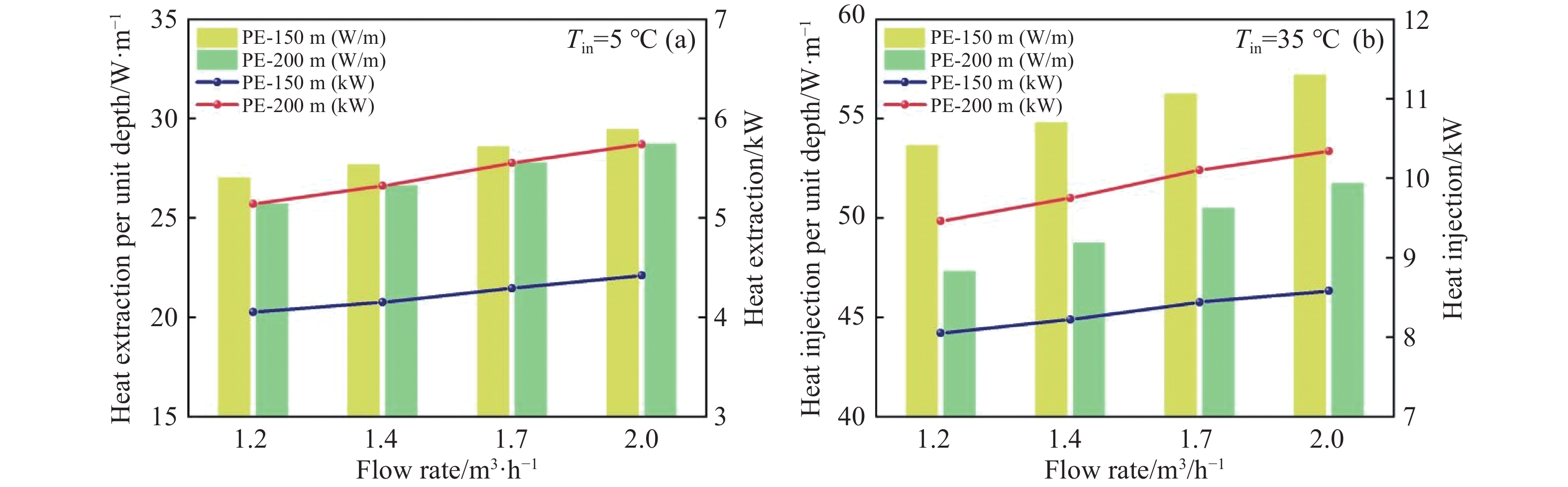
Figure 5. Heat exchange rates of PE pipes at different flow rates and depths: (a) heating; (b) cooling
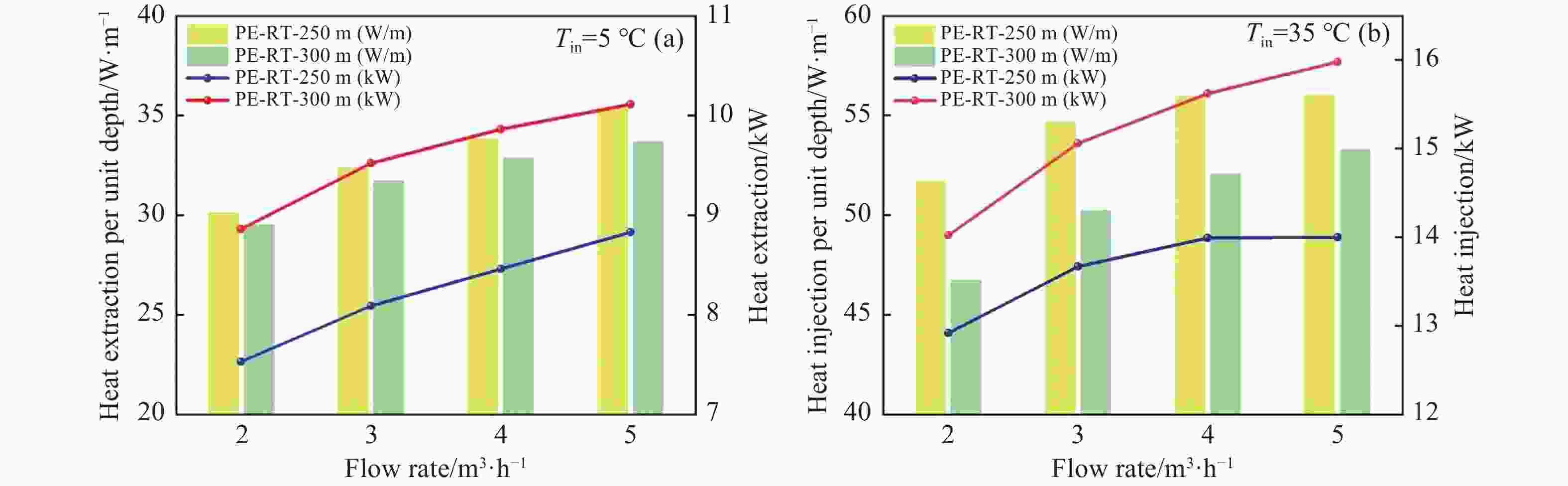
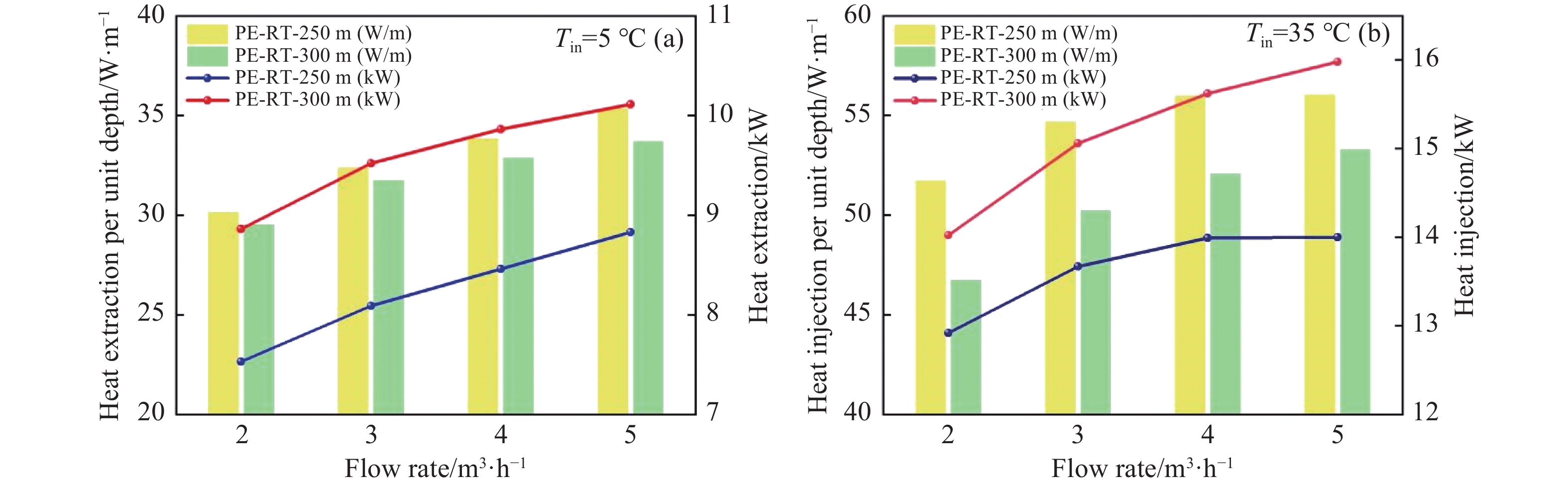
Figure 6. Heat exchange rates of PE-RT pipes at different flow rates and depths: (a) heating; (b) cooling
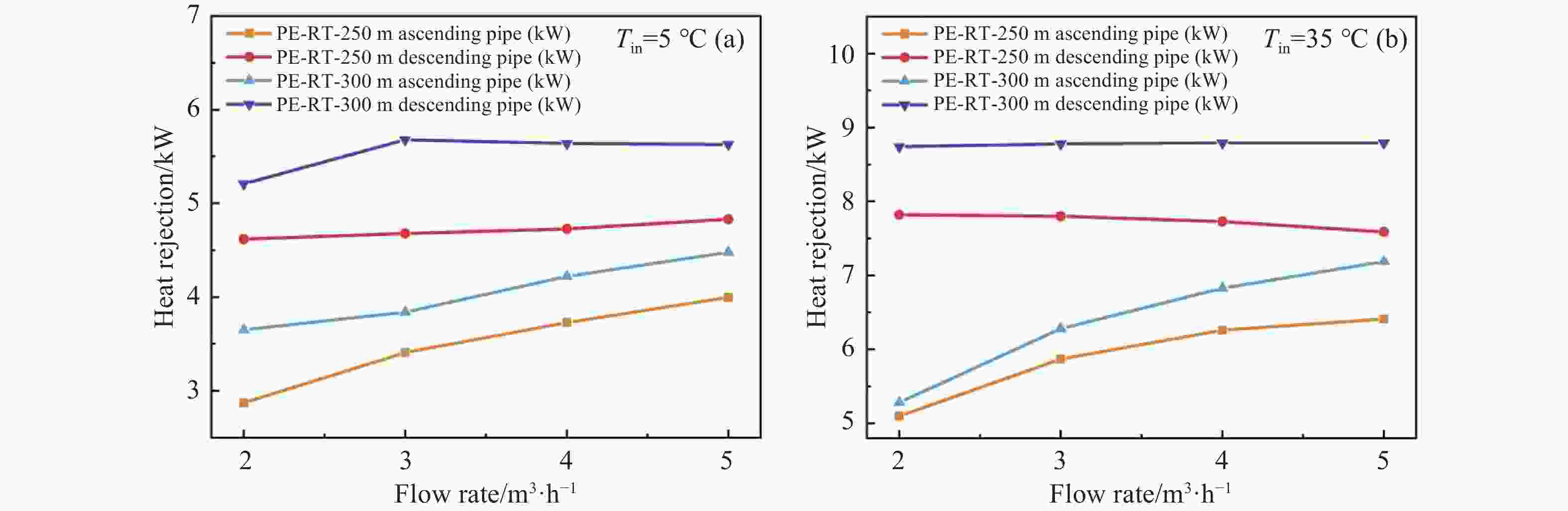
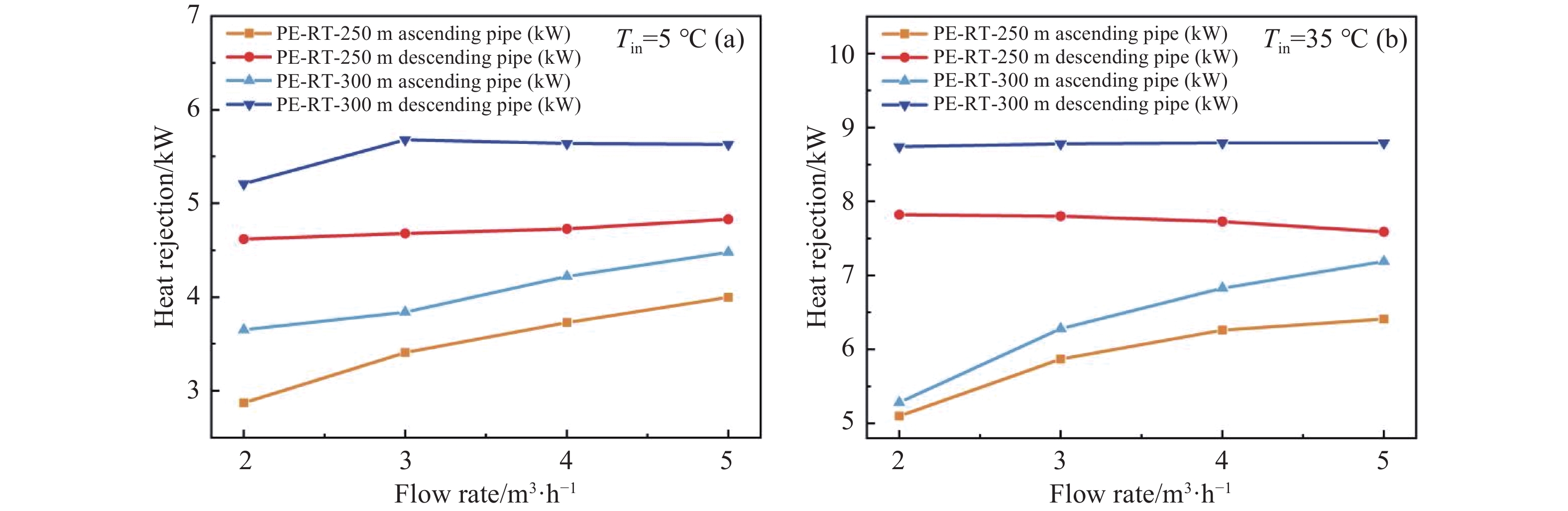
Figure 7. Heat exchange rates of descending and ascending pipes of PE-RT under different flow rates and depths: (a) heating; (b) cooling
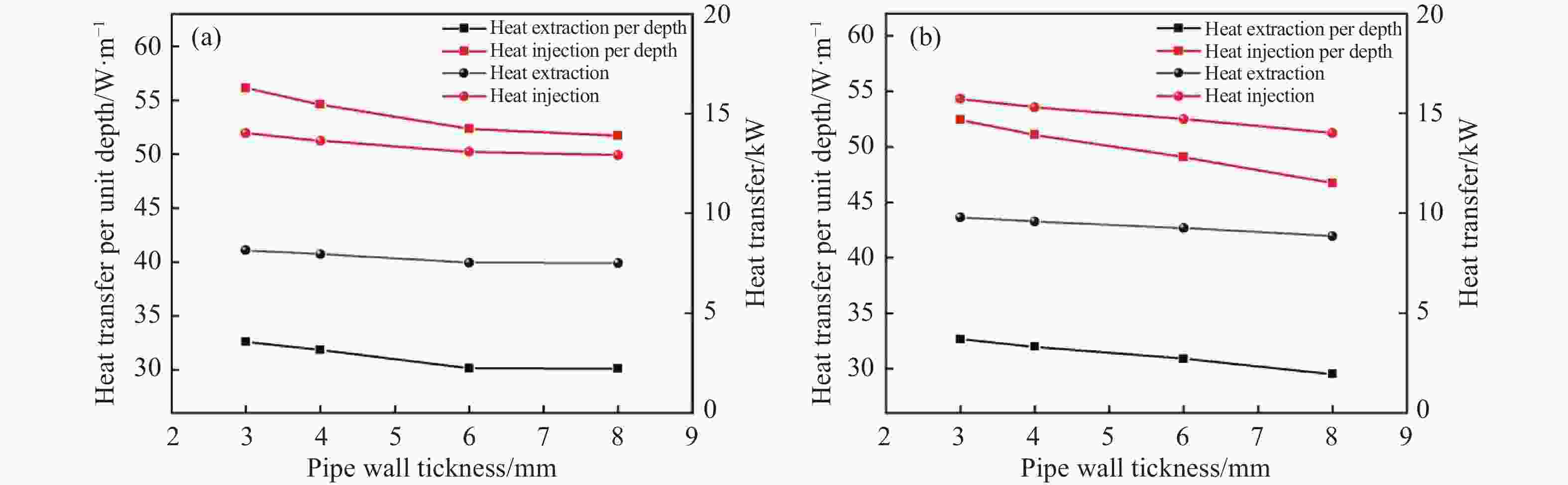
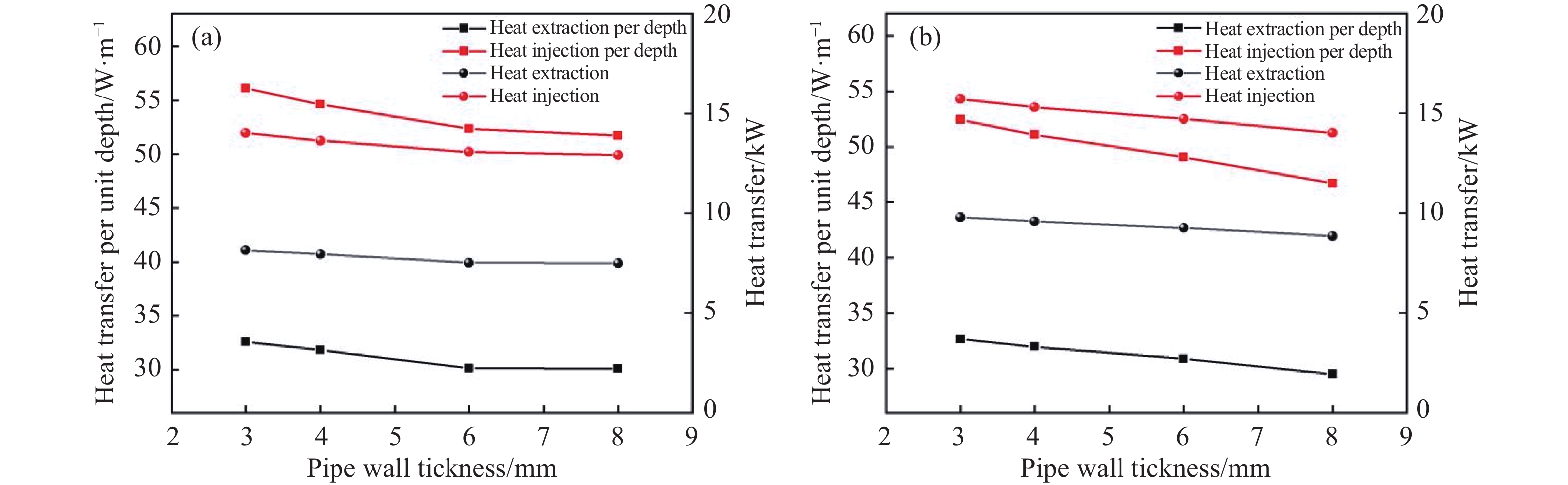
Figure 8. Heat exchange per unit depth of PE-RT GHEs with different wall thicknesses: (a) 250 m; (b) 300 m
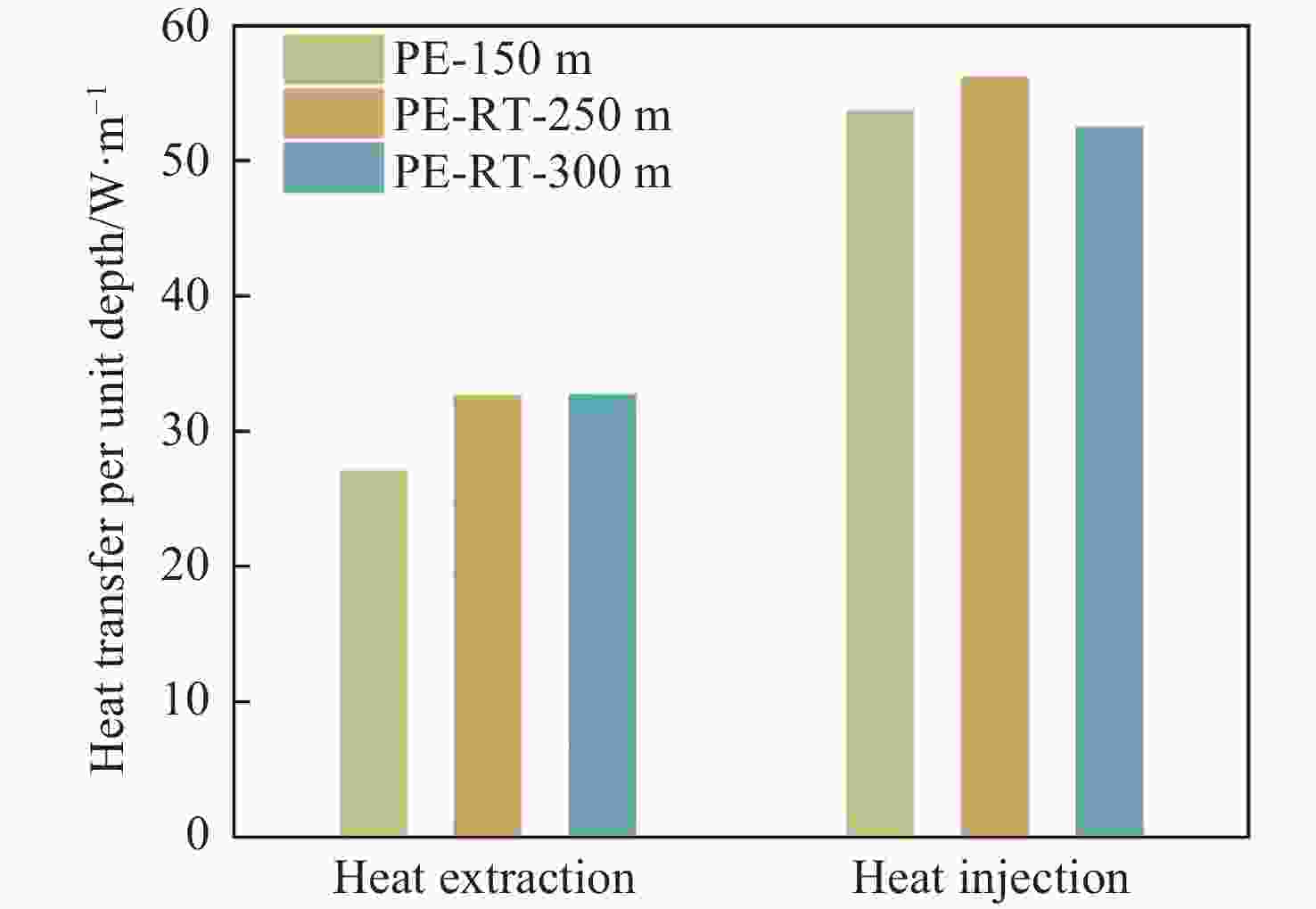
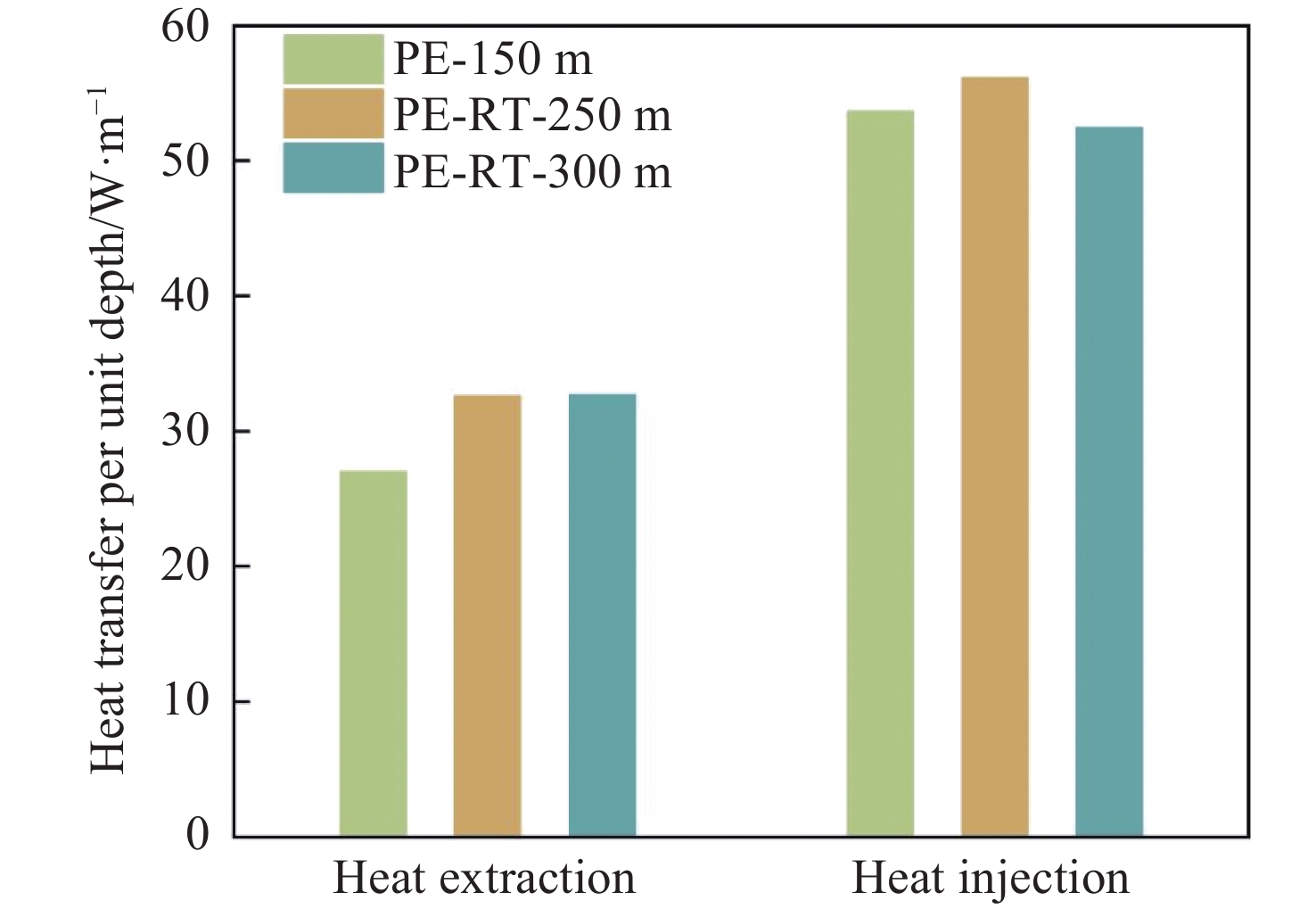
Figure 9. Comparison of heat exchange per unit depth of different types of GHEs with optimal wall thickness
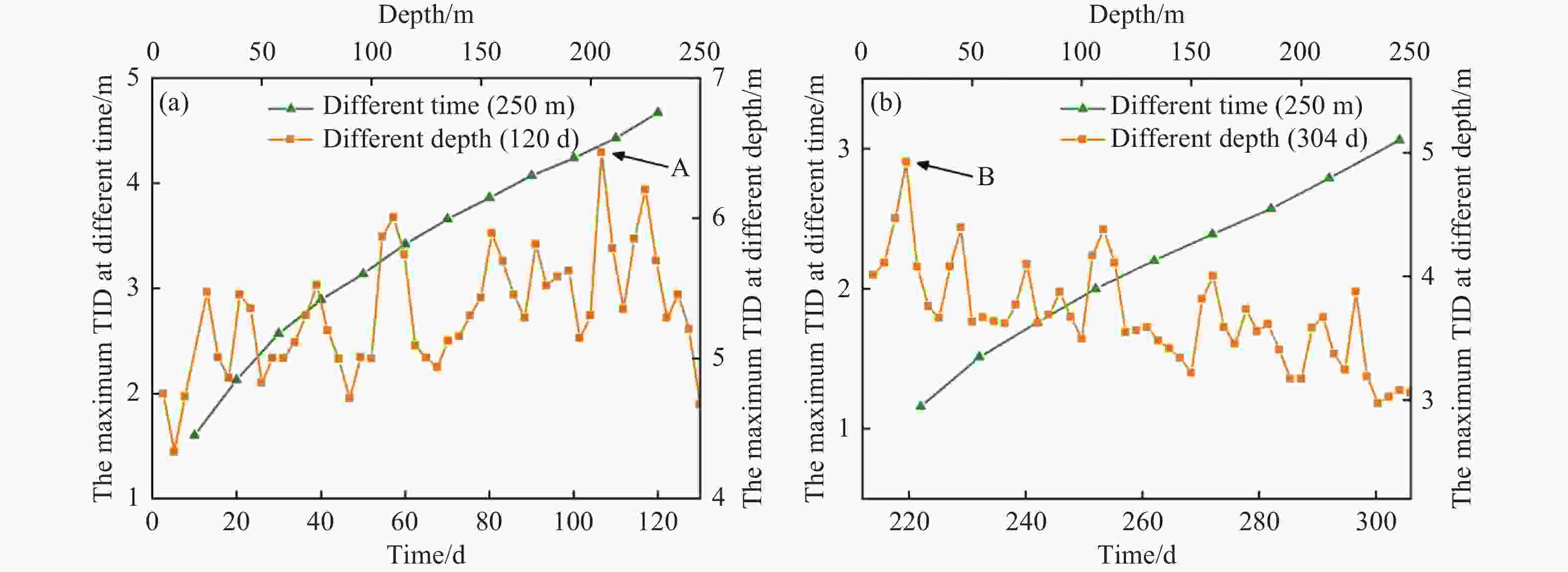
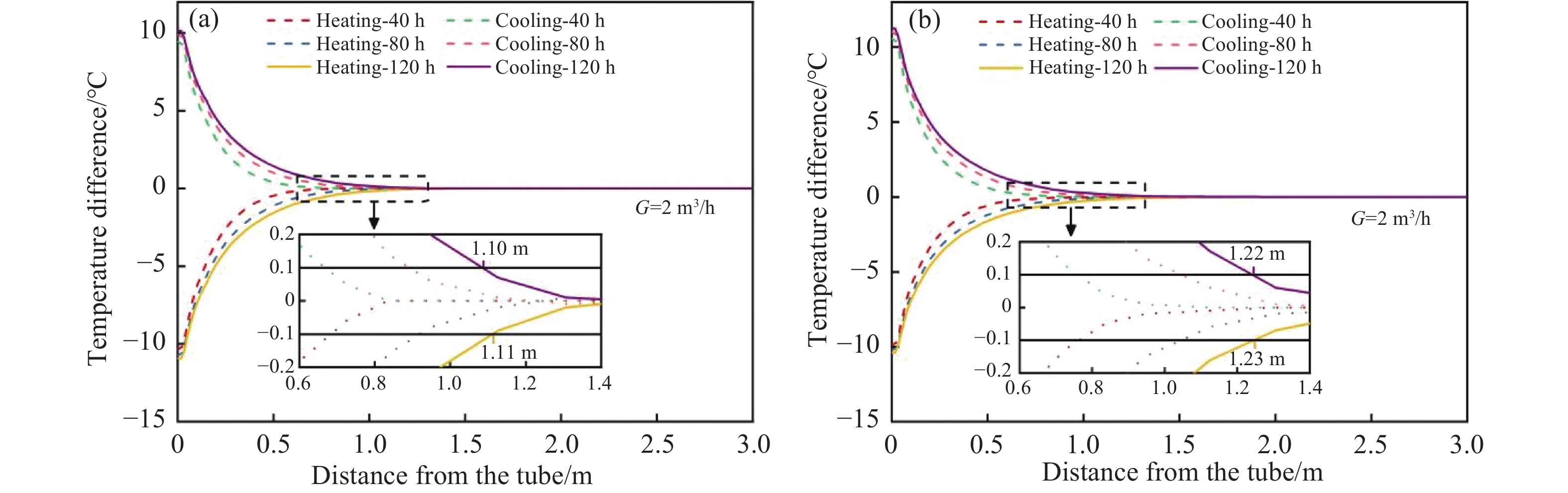
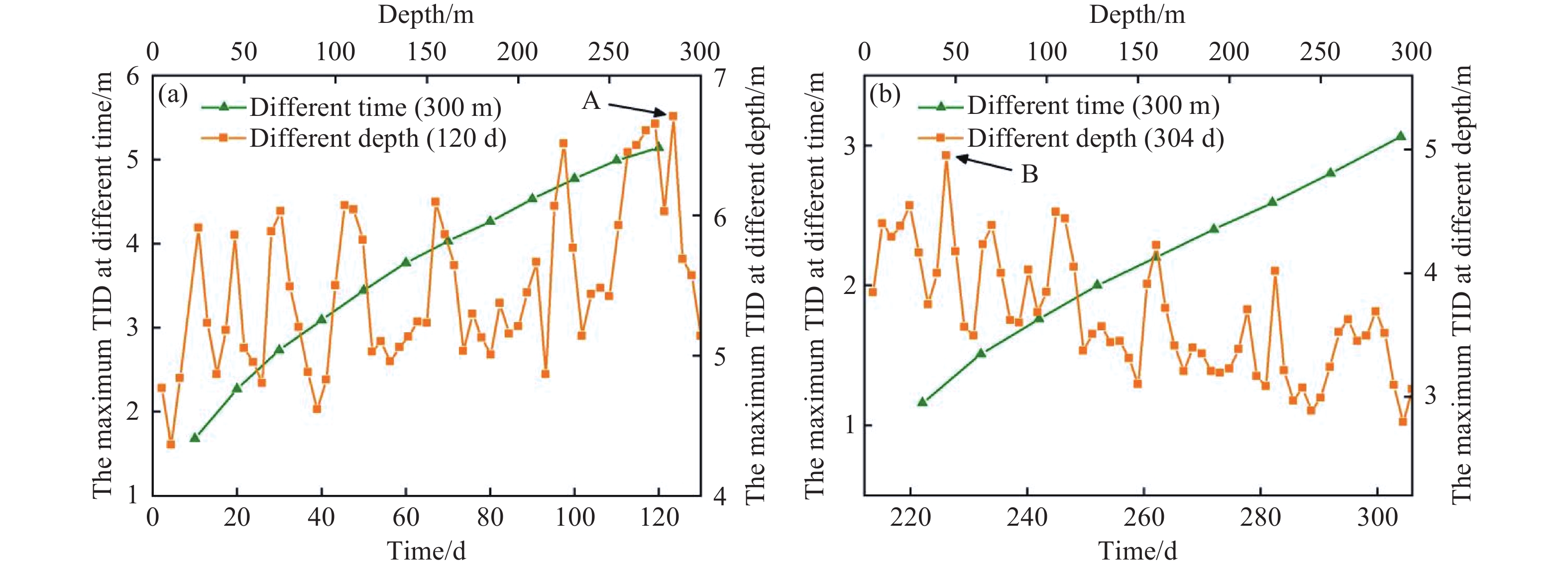
Figure 12. Variation characteristics of the TID of PE-RT pipes at a depth of 250 m: (a) heating; (b) cooling
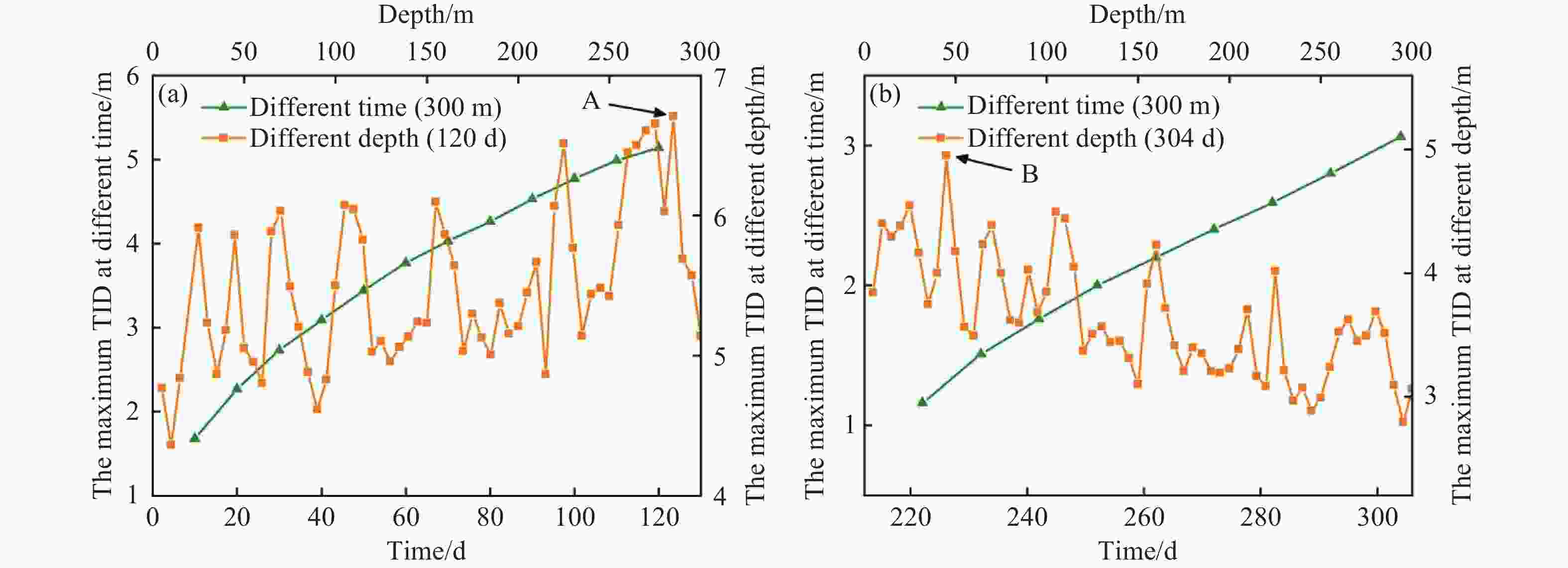
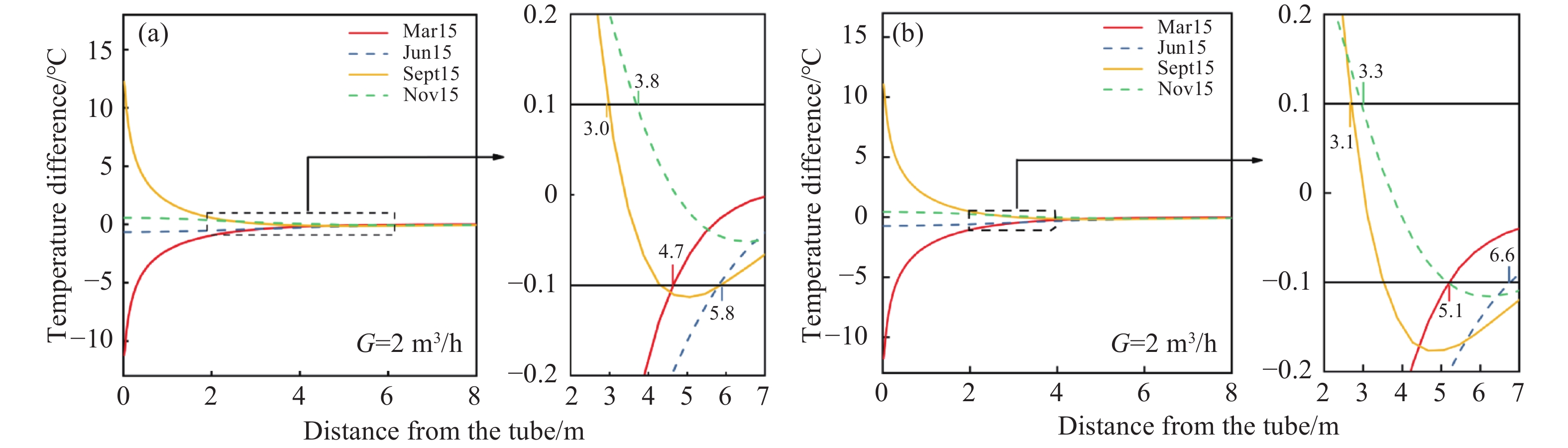
Figure 13. Variation characteristics of the TID of PE-RT pipes at a depth of 300 m: (a) heating; (b) cooling
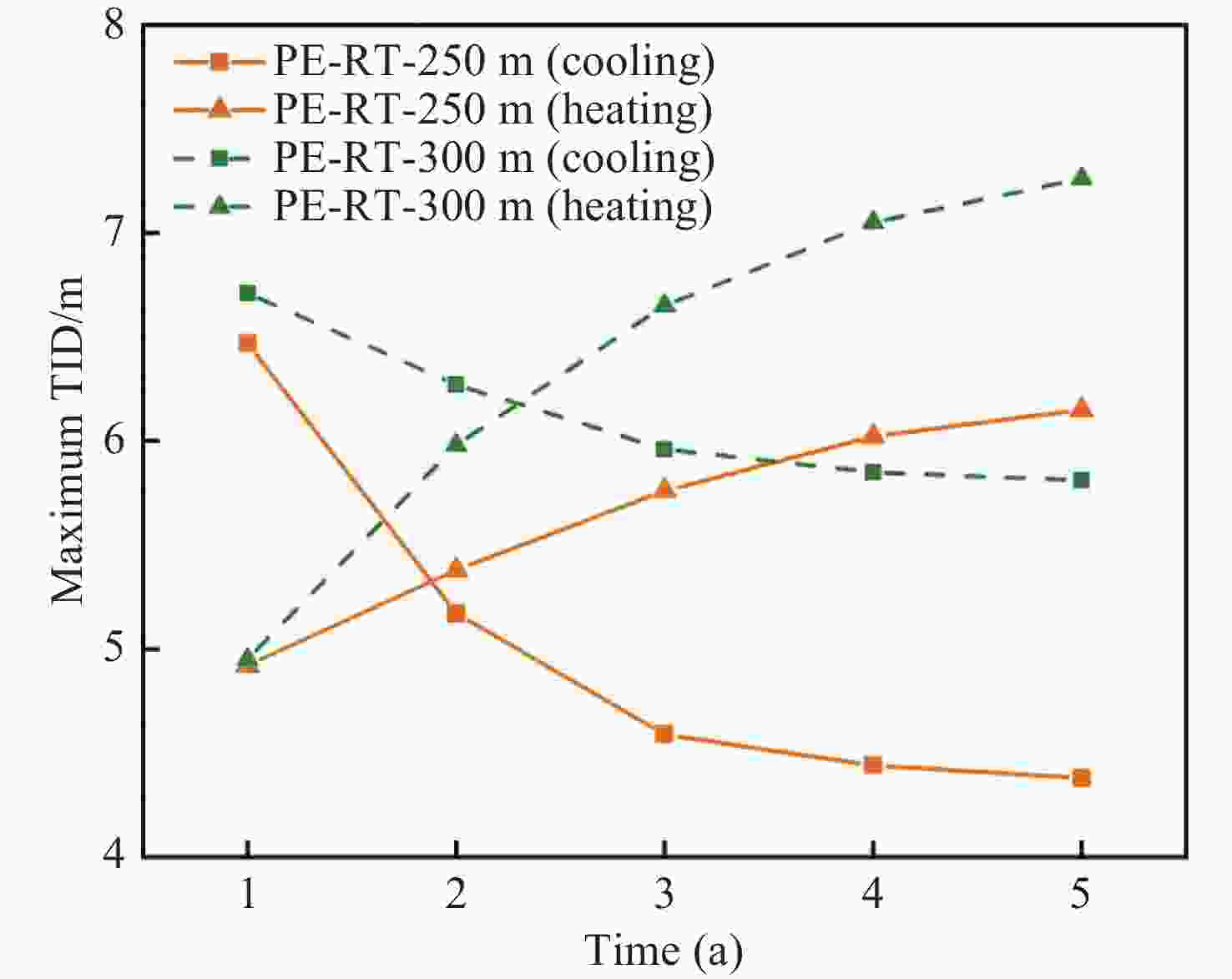
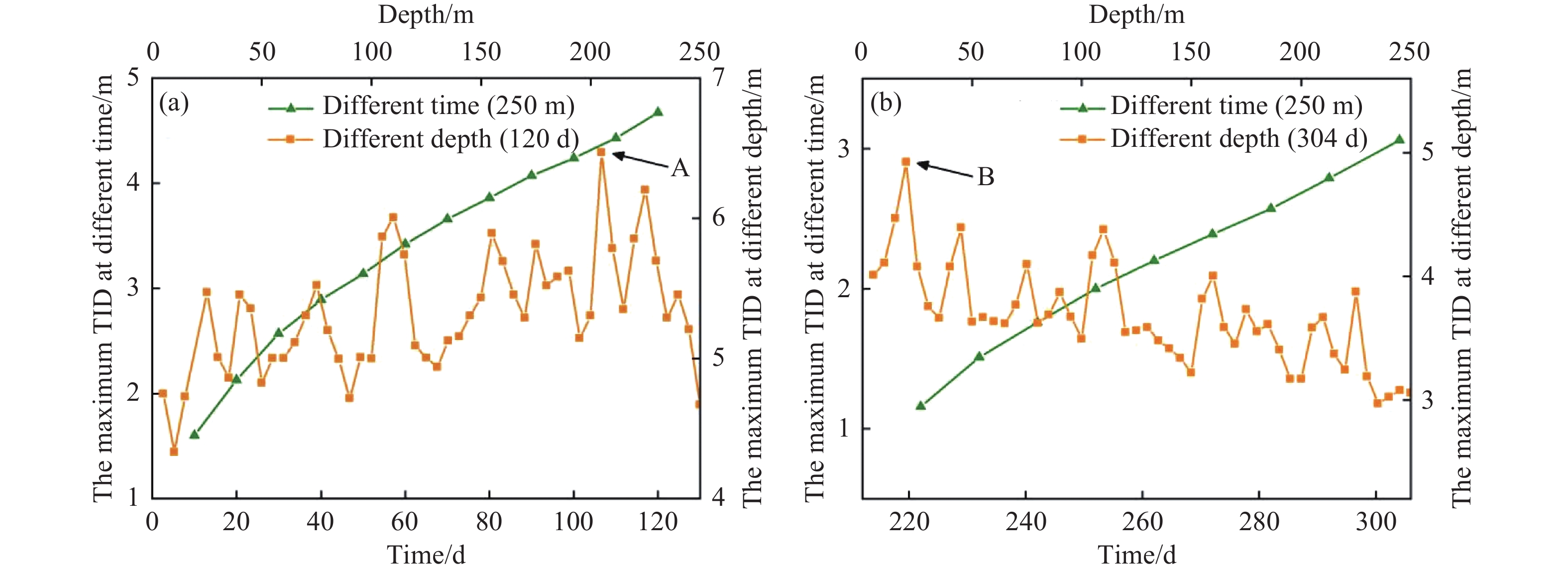
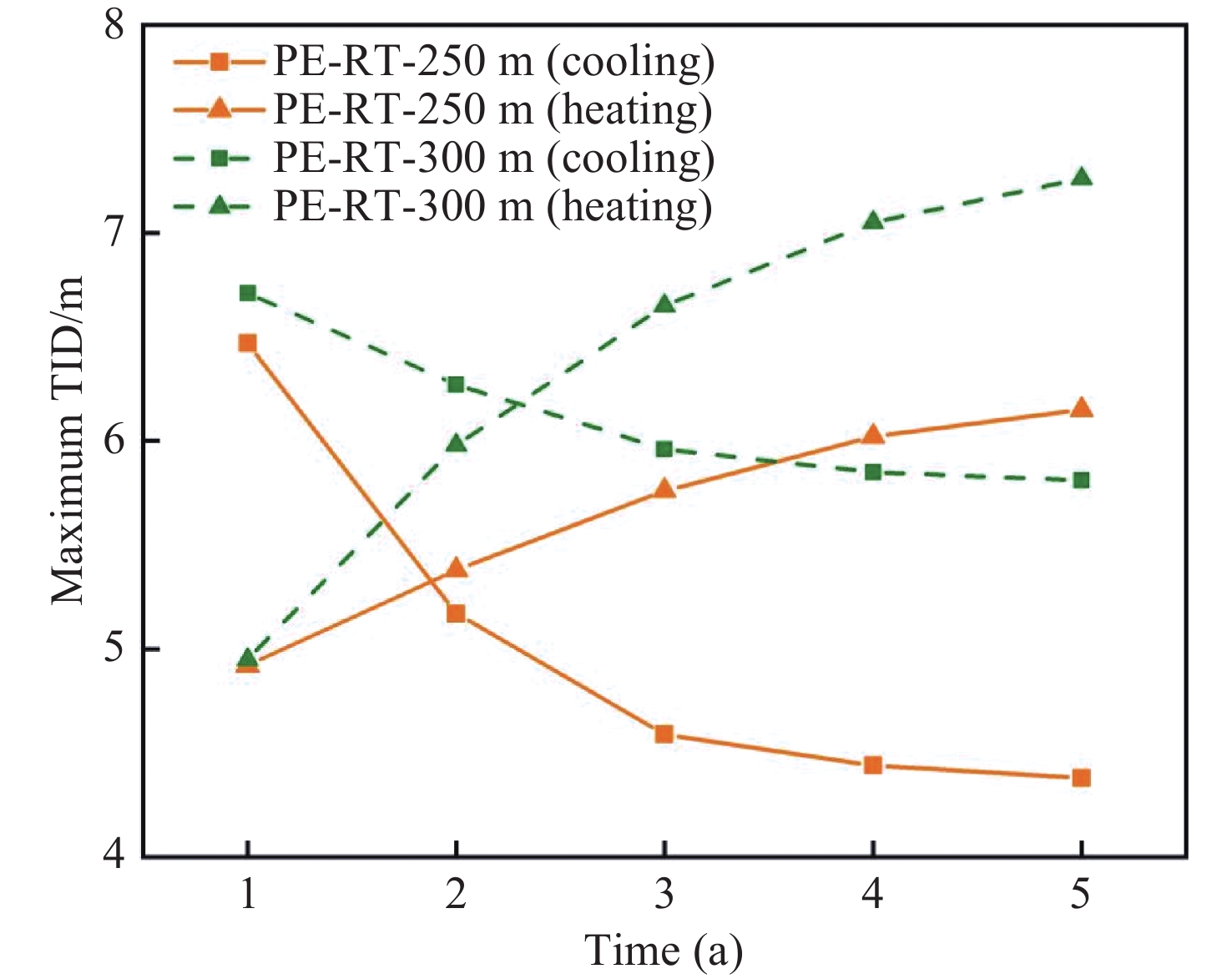
Figure 14. Variation of the maximum TID of PE-RT pipes under long-term operation at different depths.
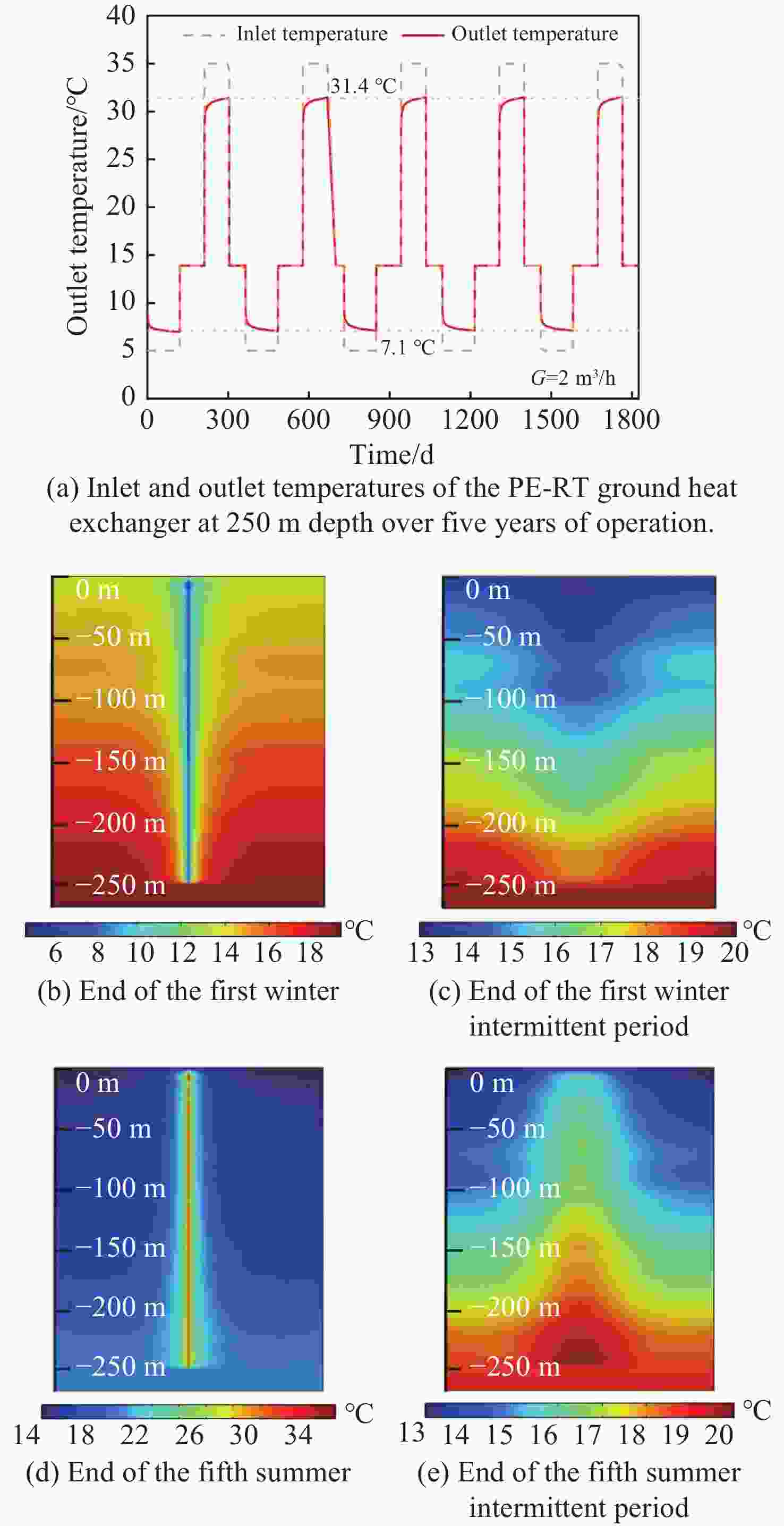
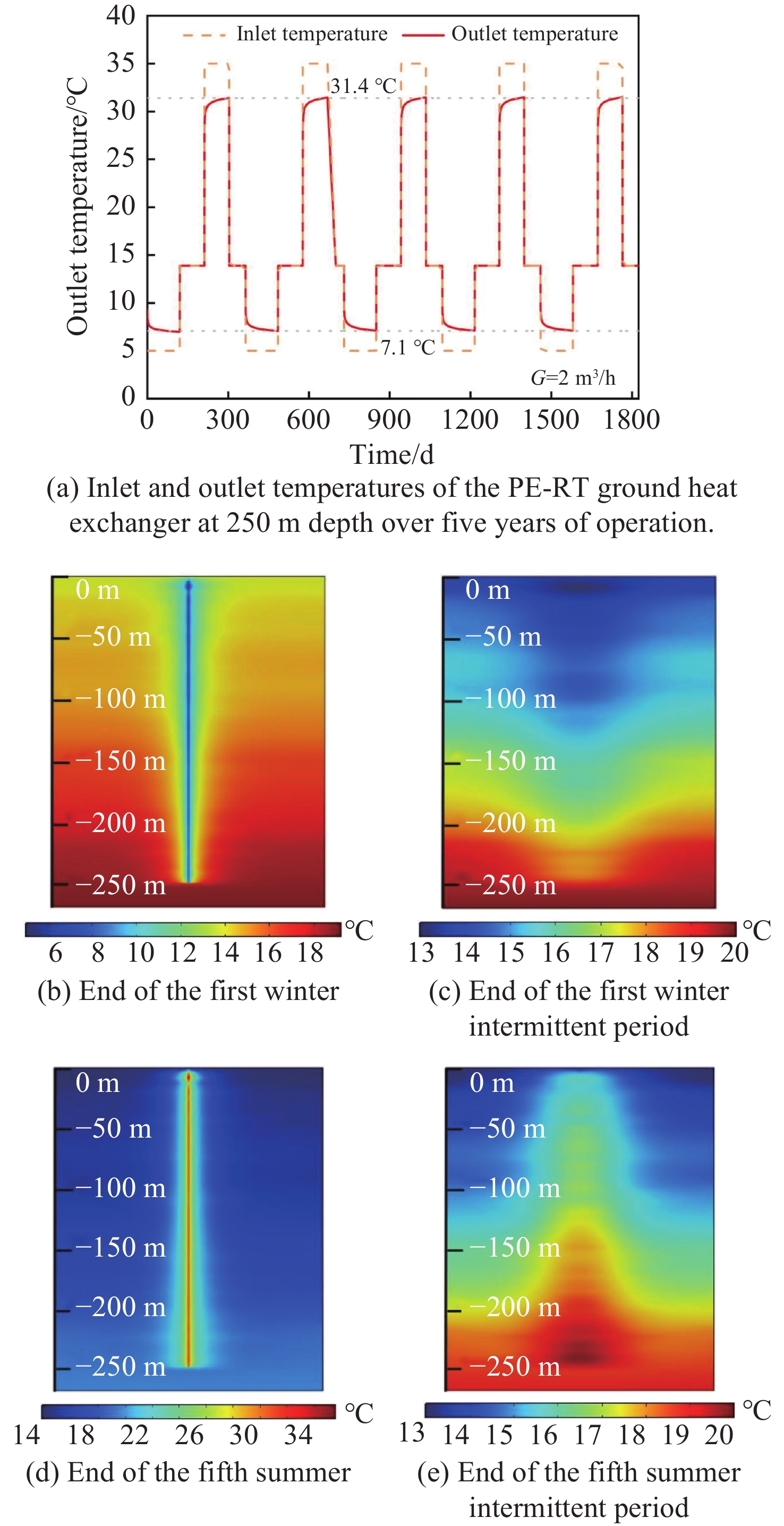
Figure 15. Temperature and typical temperature field contours for PE-RT ground source heat pump at a depth of 250 m over five years of operation
Table 1. Ground heat exchanger pipe models and geometric properties
Pipe name Outer diameter (mm) Inner diameter (mm) Wall thickness (mm) Thermal conductivity (W/(m·K)) PE 32 26 3 0.42 PE-RT 50 34 8 0.44  下载: 导出CSV
Table 2. Key input parameters used in the numerical models
Pipe type Depth Description Custom value Default value Unit PE 150 Inlet flow rate 1.4,1.7,2.0 1.2 m3/h Operation Time 120 h 200 Inlet flow rate 3,4,5 2 m3/h Operation Time 120 h PE-RT 250 Inlet flow rate 3,4,5 2 m3/h Operation Time 40,80 120 h 1,5 a Wall thickness 3,4,6 8 mm 300 Inlet flow rate 3,4,5 2 m3/h Operation Time 40,80 120 h 1,5 a Wall thickness 3,4,6 8 mm
下载: 导出CSV
Table 3. Thermal physical properties of geological materials
Typical material Density (g/cm3) Thermal conductivity (W/(m·k)) Specific heat (kJ/(kg·K)) Thermal diffusivity (mm2/s) Clay, Silt Clay 2.01 1.32 1.70 0.39 Silt-fine sand Fine-medium sand 1.97 1.60 1.40 0.58 Sand backfill 1.95 1.60 1.30 0.63 Water 1.00 0.59 4.18 0.14
下载: 导出CSV
Table 4. Thermal response test results
Pipe type Depth (m) working condition Inlet flow rate (m3/h) Temperature difference (°C) PE 200 cooling 2.06 4.66 heating 1.93 2.45 PE-RT 300 cooling 4.01 3.27 heating 4.00 2.00 heating 2.97 1.98 cooling 3.05 3.65 PE-RT 250 cooling 4.00 2.89 heating 4.00 1.50 PE 150 cooling 2.13 3.33 heating 1.95 1.83
下载: 导出CSV
-
Cao Y, Jiang P, Zhang QY, et al. 2024. The contribution of clean energy consumption and production to sustainable economic development: New insights from the PSTR model. Energy, 311: 133401. DOI: 10.1016/J.ENERGY.2024.133401. Chen Y, Mao R, Zou G, et al. 2024. Numerical simulation of the influence of karst topography on the heat transfer performance of buried pipe. International Communications in Heat and Mass Transfer, 159(PA): 108030. DOI: 10.1016/J.ICHEATMASSTRANSFER.2024.108030. Deng JW, Wei QP, Liang M, et al. 2019. Field test on energy performance of medium-depth geothermal heat pump systems (MD-GHPs). Energy and Buildings, 184: 289−299. DOI: 10.1016/j.enbuild.2018.12.006. Romanov D, Leiss B. 2022. Geothermal energy at different depths for district heating and cooling of existing and future building stock. Renewable and Sustainable Energy Reviews, 167: 112727. DOI: 10.1016/J.RSER.2022.112727. Gawecka A K, Taborda G M D, Potts M D, et al. 2020. Finite-element modeling of heat transfer in ground source energy systems with heat exchanger pipes. International Journal of Geomechanics, 20(5): 04020041. DOI: 10.1061/(ASCE)GM.1943-5622.0001658. Hasan N, Ali M H, Pratik N A, et al. 2024. Improving the thermal performance of vertical GHE by modifying spiral tube geometry: A numerical study. Heliyon, 10(15): e35718. DOI: 10.1016/J.HELIYON.2024.E35718. Le NY, Deng ZP. 2024. Study on effects of multi-climatic parameters on performance of ground source heat pump through coaxial borehole heat exchanger. International Journal of Green Energy, 21(5): 959−972. DOI: 10.1080/15435075.2023.2227697. Li GC, Yang JZ, Zhu XW, et al. 2020. Numerical study on the heat transfer performance of coaxial shallow borehole heat exchanger. Energy and Built Environment, 2(4): 445−455. DOI: 10.1016/j.enbenv.2020.10.002. Liang P, Di Qi, Li K, et al. 2015. Simulation study on the thermal performance of vertical U-tube heat exchangers for ground source heat pump system. Applied Thermal Engineering, 79: 202−213. DOI: 10.1016/j.applthermaleng.2014.12.068. Liu J, Wang FH, Yuan G, et al. 2020. Influencing factors analysis and operation optimization for the long-term performance of medium-deep borehole heat exchanger coupled ground source heat pump system. Energy and Buildings, 226: 110385. DOI: 10.1016/j.enbuild.2020.110385. Liu XY, Zhang GZ, Wu RC, et al. 2024. Performance of thermally enhanced backfill material in vertical GHEs under continuous operation in a cooling season. Applied Thermal Engineering, 257(PC): 124442. DOI: 10.1016/J.APPLTHERMALENG.2024.124442. Lyu WH, Li XT, Wang BL, et al. 2018. Energy saving potential of fresh air pre-handling system using shallow geothermal energy. Energy and Buildings, 185: 39−48. DOI: 10.1016/j.enbuild.2018.12.037. Ma H, Mao RY, Zhou JD, et al. 2023. Study on influence of geotechnical characteristics on heat transfer performance of borehole heat exchanger. Energy Sources, Part A: Recovery, Utilization, and Environmental Effects, 45(1): 1822−1841. DOI: 10.1080/15567036.2023.2181889. Martín NI, Pedro CG, et al. 2020. Geophysical prospecting for geothermal resources in the south of the Duero Basin (Spain). Energies, 13(20): 5397. DOI: 10.3390/en13205397. Minaei, A, Maerefat M. 2017. Thermal resistance capacity model for short-term borehole heat exchanger simulation with non-stiff ordinary differential equations. Geothermics, 70: 260−270. DOI: 10.1016/j.geothermics.2017.06.011. Nacer L, Abdelmalek A, Müslüm A, et al. 2023. Thermal performance of helical ground air heat exchanger under saharan climate conditions: An experimental study. Journal of Thermal Analysis and Calorimetry, 148(12): 5819−5831. DOI: 10.1007/S10973-023-12085-5. Niu ZH, Xiong JL, Ding XS, et al. 2022. Analysis of China's carbon peak achievement in 2025. Energies, 15(14): 5041. DOI: 10.3390/EN15145041. Pang ZH, Luo J, Cheng YZ, et al. 2020. Geological condition evaluation of deep geothermal energy exploitation in China. Frontiers in Geology, 27(01): 134−151. (in Chinese). DOI: 10.13745/j.esf.2020.1.15. Soni S K, Pandey M, Bartaria N V, et al. 2015. Ground coupled heat exchangers: A review and applications. Renewable and Sustainable Energy Reviews, 47: 83−92. DOI: 10.1016/j.rser.2015.03.014. Wang CL, Wang X, Lu JL, et al. 2022. A semi-analytical heat transfer model for deep borehole heat exchanger considering groundwater seepage. International Journal of Thermal Sciences, 175: 107465. DOI: 10.1016/j.ijthermalsci/2022.107465. Wang K, Zhang W, Ding G, et al. 2024. Analysis of the factors influencing heat transfer and control strategy optimization for Medium-Shallow array borehole heat exchangers. Applied Thermal Engineering, 244: 122788. DOI: 10.1016/J.APPLTHERMALENG.2024.122788. Wu Y. 2014. Geological environment problems and key technologies of shallow geothermal energy development. Ph. D. thesis. Beijing: China University of Geosciences. (in Chinese) Xu YS, Wang XW, Shen SL, et al. 2020. Distribution characteristics and utilization of shallow geothermal energy in China. Energy and Buildings, 229: 110479. DOI: 10.1016/j.enbuild.2020.110479. Zhang CX, Lu XZ, Liu YF, et al. 2023. Effect of seepage condition in geological stratification on thermal response test analysis of borehole heat exchanger. Renewable Energy, 205: 813−822. DOI: 10.1016/J.RENENE.2023.01.103. Zhang S. 2020. Analysis and optimization of medium and deep buried pipe heat pump heating system. Master's Thesis. Jianzhou: Shandong Jianzhu University. (in Chinese) DOI: 10.27273/d.cnki.gsajc.2020.000456. Zhang W, Gao Y, Yao H, et al. 2025. Heat transfer mechanism and parameter analysis of the U-tube borehole GHE of middle-shallow geothermal energy. Journal of Building Engineering, 102: 111916. DOI: 10.1016/J.JOBE.2025.111916. Zhang XY, Liu L, Liu L, et al. 2019. Numerical simulation of heat release performance of filling body under condition of heat extracted by fluid flowing in buried tube. Journal of Central South University, 26(8): 2160−2174. DOI: 10.1007/s11771-019-4163-y. Zao YH, Deng SX, Yu C. 2023. Numerical simulation and experimental validation on the heat transfer property of vertical buried tube GHE. Journal of Physics: Conference Series, 2422(1): 012016. DOI: 10.1088/jpcs/2422/1/012016. Zhao WF, Hu ZT, He W, et al. 2021. Intermittent mode analysis of a borehole GHE with novel phase change backfill materials. Applied Thermal Engineering, 189: 116716. DOI: 10.1016/j.applthermaleng.2021.116716. -


 点击查看大图

计量
- 文章访问数: 2198
- HTML全文浏览量: 707
- PDF下载量: 6
- 被引次数: 0


